Big Tech AI spending surges past $725 billion as Meta, Alphabet and Microsoft raise forecasts


24 Sources
[1]
Meta's AI Bet, and the Evolution of Smart Glasses
Meta CEO Mark Zuckerberg used the company's first-quarter earnings call on Wednesday to detail his plans to continue investing in AI, including integrating personal AI agents in Meta's popular smart glasses. Zuckerberg has long championed a future vision of "personal superintelligence," which is
[2]
US Big Tech Ratchets Up AI Spending Past $700 Billion This Year
The biggest US tech firms now plan to spend as much as $725 billion this year on capital expenditures, primarily on AI data center equipment. Alphabet Inc. and Meta Platforms Inc. both raised their full-year guidance for capex, while Microsoft Corp. gave its first estimate for spending through the
[3]
Google outpaces Big Tech rivals as AI spending plans rise to $725bn
Google outshone its rivals in first-quarter earnings with faster cloud growth as the search giant and its Big Tech peers upped their AI infrastructure spending plans again to $725bn this year. The big four "hyperscalers", which include Amazon, Meta, Microsoft and Google parent Alphabet, are
[4]
Meta lifts capital expenditure forecast, doubling down on AI push
April 29 (Reuters) - Meta Platforms (META.O), opens new tab raised its annual capital expenditure forecast on Wednesday, doubling down on its decision to plow billions into artificial intelligence infrastructure even as it seeks cost savings via planned layoffs. The Facebook-parent now expects
[5]

Why investors didn't give Meta a pass on increased spending despite a great quarter
Meta Platforms on Wednesday evening reported a truly impressive first quarter, but the stock sank on the one metric that mattered most to Wall Street. Revenue in the first quarter rose 33% year over year to $56.3 billion, crushing the LSEG-compiled analyst consensus estimate of $55.45 billion.
[6]
Meta Raises Outlook for Capital Spending in 2026; Shares Slide
Meta Platforms Inc. raised its spending outlook for the year, extending its streak of plowing historic levels of investment into the race to build ever-advancing artificial intelligence systems. The social-media giant projected full-year capital expenditures between $125 billion and $145 billion,
[7]

Meta Could Spend $145 Billion This Year Due to AI
Wednesday was a big day for the tech industry with Meta, Google, Amazon and Microsoft all reporting earnings at the same time in the afternoon. Out of the four, though, Meta was the clear loser with its shares down more than 7% even though revenue increased 33% this past quarter, the company's
[8]

Meta wants to spend more even after it lost $80 billion on the Metaverse and over 20 million users | Fortune
Despite strong first quarter results, Meta's stock plummeted nearly 9% Thursday thanks in part to a 20-million user drop and a massive spike in AI spending even as it continues to pour billions into its metaverse and virtual reality division, Reality Labs. The company, which reported its first
[9]

Meta chief Zuckerberg doubles down on AI spending
San Francisco (United States) (AFP) - Meta chief Mark Zuckerberg on Wednesday defended massive spending on artificial intelligence that dragged down shares despite strong earnings boosted by the technology. The social networking colossus raised its capital expenditures for this year to a range of
[10]

Meta, Microsoft, Amazon and Alphabet post positives quarterlies
Meta and Alphabet are bumping up capex by billions as the AI race shows no signs of slowing down. Earlier this year, Meta, Amazon, Google and Microsoft collectively announced a massive $650bn capital expenditure package as they ramped up their AI and cloud spending, sending investors into a frenzy
[11]
Meta is spending up to $145 billion this year on AI. When asked about signs of ROI, Zuckerberg said 'that's a very technical question' | Fortune
Meta Platforms is splashing some serious cash on AI infrastructure, and investors have flinched. The company reported first quarter 2026 earnings results on Wednesday and raised its full-year 2026 capital expenditure guidance to $125 billion to $145 billion, up from a previous range of $115
[12]

Meta Is Growing Faster Than It Has in Years. Why Is Its Stock Plummeting?
Get personalized, AI-powered answers built on 27+ years of trusted expertise. Meta is upping its AI investments. Wall Street's not sure how that will pay off. Social media giant Meta (META) on Wednesday raised its 2026 capital expenditures forecast to between $125 billion and $145 billion, a $10
[13]

Meta falls behind as Alphabet, Amazon outpace Facebook-parent in AI shift during earnings
Tech giants, including Google-parent Alphabet, Amazon, Microsoft, and Meta, announced their quarterly earnings on Wednesday, with the Facebook and Instagram-parent appearing to fall behind in terms of AI boost. Tech giants, including Google-parent Alphabet, Amazon, Microsoft, and Meta, announced
[14]

Meta AI 'Justifies Higher Capex', But 'Visibility' Concerns Remain - Meta Platforms (NASDAQ:META)
Meta's AI Is 'Justifying Higher Capex' -- Yet Amazon Gets The Benefit Of The Doubt That gap is where the story is. The Case For Meta: AI Is Already Paying Off Rosenblatt analyst Barton Crockett is blunt: Meta's AI spend is "justifying higher capex." The data backs that up. Revenue grew 33%
[15]
Explained: Why Meta shares crashed 7% in extended trading amid AI spending spree
Shares of Meta Platforms Inc. came under pressure on Wednesday, plunging as much as 7% in extended trade, as investors reacted to concerns around the scale of spending by major US tech firms on artificial intelligence. The company said it plans to increase investments in AI beyond earlier
[16]

Meta Crushes Wall Street Expectations But Warns of "Scrutiny On Youth-Related Issues"
Barry Diller Reveals Layoffs, C-Suite Shake Up and Name Change for IAC Meta Platforms Inc., the owner of Facebook and Instagram, crushed Wall Street expectations Wednesday, though its transition to become an AI company remains an expensive one, and legal threats around social media addiction and
[17]

Meta's AI Is Delivering but Comes With a Hefty Price Tag | PYMNTS.com
By completing this form, you agree to receive marketing communications from PYMNTS and to the sharing of your information with our sponsor, if applicable, in accordance with our Privacy Policy and Terms and Conditions. Meta is now leaning on larger, more advanced artificial intelligence systems to
[18]
Meta's Massive AI Spending Shows No Signs Of Slowing As CFO Susan Li Warns: 'We Have Continued To Underes
AI Infrastructure Push Accelerates Amid Rising Costs On Wednesday, during the company's first-quarter earnings call, CEO Mark Zuckerberg said the company is increasing its infrastructure capital expenditure forecast for the year, citing higher component costs, particularly in memory pricing. He
[19]
US Stock Market | Meta ramps up AI spending amid regulatory heat and user concerns
Meta Platforms has sharply increased its capital spending outlook, underscoring its aggressive push into artificial intelligence even as it faces intensifying regulatory scrutiny and growing backlash over the impact of social media on younger users. According to a report by Reuters, the company
[20]

Meta shares slide as tech giant hikes AI spending forecast, warns of youth social media backlash
Meta Platforms raised its annual capital spending forecast on Wednesday, plowing billions more into artificial intelligence infrastructure even as it grapples with possible losses from a global youth social media backlash. The Facebook parent projects 2026 capital expenditure between $125 billion
[21]
Meta shares fall on concerns over AI spending, legal scrutiny - The Economic Times
Meta Platforms is significantly increasing its investment in artificial intelligence infrastructure. This comes as the social media giant faces growing backlash from young users globally. The company also warns of potential impacts from legal and regulatory issues in the US and European Union.Meta
[22]
Meta lifts capital expenditure forecast, doubling down on AI push
Meta Platforms raised its annual capital expenditure forecast on Wednesday, doubling down on its decision to plow billions into artificial intelligence infrastructure even as it seeks cost savings via planned layoffs. The Facebook-parent now expects 2026 capital expenditure between $125 billion
[23]

Meta shares fall on concerns over AI spending, legal scrutiny
April 29 (Reuters) - Meta Platforms raised its annual capital spending forecast on Wednesday, signaling plans to pour billions more into artificial intelligence infrastructure even as it confronts potential losses from a global youth backlash against social media. The Facebook and Instagram parent
[24]
Meta lifts capital expenditure forecast, doubling down on AI push
April 29 (Reuters) - Meta Platforms raised its annual capital expenditure forecast on Wednesday, doubling down on its decision to plow billions into artificial intelligence infrastructure even as it seeks cost savings via planned layoffs. The Facebook-parent now expects 2026 capital expenditure
Share
Copy Link
The biggest US tech firms now plan to spend up to $725 billion this year on AI infrastructure, with Meta, Alphabet, and Microsoft all raising their capital expenditure guidance. Meta increased its spending ceiling to $145 billion, citing higher memory costs, while investor skepticism sent its stock down 6% despite strong revenue growth.
Big Tech Doubles Down on AI Infrastructure Investment
The four largest US technology companies—Meta, Alphabet, Microsoft, and Amazon—now project AI spending of up to $725 billion this year, marking a 77% increase from last year's record $410 billion
2
3
. This surge in capital expenditure comes as these hyperscalers race to build AI data center equipment and infrastructure needed to support the next generation of AI models and services.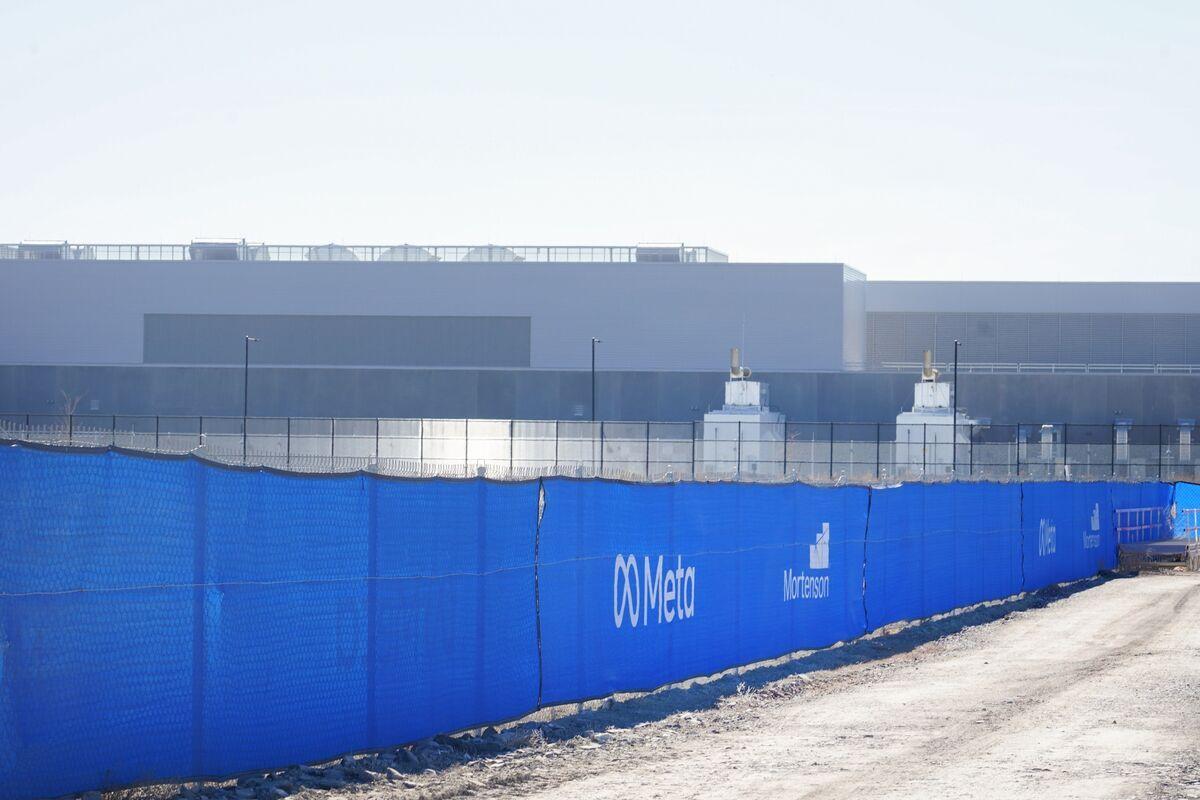
Source: Bloomberg
Meta raised its annual capital expenditure forecast to between $125 billion and $145 billion, up from a previous ceiling of $135 billion
4
. During the earnings calls, CEO Mark Zuckerberg attributed much of the increased capital expenditure to "higher component costs, particularly memory pricing," referencing the global RAM shortage driven by AI infrastructure demands1
. Alphabet and Microsoft each announced $190 billion in spending plans, while Amazon maintained its $200 billion projection2
.Investor Skepticism Clouds Meta's Strong Performance
Despite reporting its strongest revenue growth in five years—a 33% year-over-year increase to $56.3 billion—Meta's stock plunged 6% in after-hours trading
5
. The market reaction highlighted a critical vulnerability: unlike its peers, Meta lacks a public cloud computing offering to monetize excess capacity from investing in artificial intelligence infrastructure.
Source: Fortune
Investors expressed concern about what one analyst called Zuckerberg's "capital-light money machine" potentially morphing "into a capital-intensive incinerator"
3
. While Alphabet, Microsoft, and Amazon can rent out their AI infrastructure spending through cloud services, Meta's outlays primarily serve internal needs. A 5% quarter-over-quarter decline in daily active people across Meta's Family of Apps—attributed to internet outages in Iran and WhatsApp blocks in Russia—further dampened investor sentiment5
.Google Outpaces Rivals with Cloud Growth Momentum
Alphabet emerged as the standout performer among the hyperscalers, with shares rising 7% on strong cloud growth of 63% year-over-year
3
. Google Cloud revenue jumped $7.7 billion to reach $20 billion for the quarter, helping the company gain market share against Amazon and Microsoft in the $500 billion cloud computing market. The company also claimed a $460 billion backlog of contracts to rent data centers space, helping investors digest a $5 billion increase in AI infrastructure spending guidance3
.Amazon reported a $364 billion contract pipeline, bolstered by a recent $100 billion computing agreement with Anthropic, while Microsoft's 40% increase in cloud sales pushed total revenue to a record $82.9 billion
3
. Microsoft CFO Amy Hood warned that rising prices for memory chips and other component costs accounted for $25 billion of the company's record capital expenditure budget, noting the company expects to "remain constrained at least through 2026"3
.Related Stories
Meta Bets on Personal AI Agents and Smart Glasses
Zuckerberg used the earnings call to outline Meta's distinctive AI strategy, focusing on "personal superintelligence" rather than enterprise applications
1
. "My view of AI is very different from many others in the industry," Zuckerberg stated, emphasizing AI agents designed to "amplify people's ability" in personal health, learning, and relationships rather than replace workers1
.
Source: CNET
The company's recently launched Muse Spark model represents the first major product from its frontier AI lab and serves as a stepping stone toward personal AI agents integrated into Meta's smart glasses
1
. Daily AI glasses users more than tripled year over year5
. Meta's robust ad platform, powered by AI models including ad-retrieval engine Andromeda and generative recommendation model GEM, continues to drive revenue growth and support the massive AI infrastructure investments4
.What This Means for the AI Economy
The massive AI spending surge signals confidence that demand will justify the enormous outlays. "The AI economy is healthy," said Brent Thill, an analyst at Jefferies, noting that recent revenue increases suggest big players can shoulder the vast costs
3
. However, the divergent stock reactions—with Alphabet gaining 7% while Meta dropped 6%—reveal that investors scrutinize spending differently based on whether companies can monetize capacity through cloud services or rely solely on internal demand.Looking ahead, component costs remain a wildcard. Memory pricing pressures affecting all four hyperscalers could push spending even higher in 2027, with Alphabet CFO Anat Ashkenazi warning that spending would "significantly increase" next year
3
. The question facing investors: whether the return on this historic AI infrastructure spending will materialize quickly enough to justify the unprecedented capital expenditure levels, or if some companies are building capacity that outpaces actual demand.References
Summarized by

Navi
Related Stories
Meta's $30 Billion AI Gamble: Tech Giant Faces Investor Backlash Over Massive Infrastructure Spending
30 Oct 2025•Business and Economy

Meta's Q2 2024 Earnings Surpass Expectations, Boosting Stock and Outlook
31 Jul 2024

Meta Earnings Miss Expectations as Massive AI Investment Drains Cash Flow by 91%
29 Jul 2026•Business and Economy

Recent Highlights
1
OpenAI Drops 722 AI-Generated Math Proofs on Unsolved Problems, Sparking Existential Crisis
Science and Research

2
Meta Unveils Muse Wonder Frontier AI Models, Claims Performance Matching OpenAI and Anthropic
Technology

3
Microsoft and Nvidia Launch Surface Laptop Ultra: A $2,599 AI-Ready PC With RTX Spark Chip
Technology

Recent Highlights
Today's Top Stories












Don’t drown in AI news. We cut through the noise - filtering, ranking and summarizing the most important AI news, breakthroughs and research daily. Follow topics that matter to you and stay ahead.


