26 Sources
26 Sources
[1]
Meta launches new 'prescription optimized' smart glasses
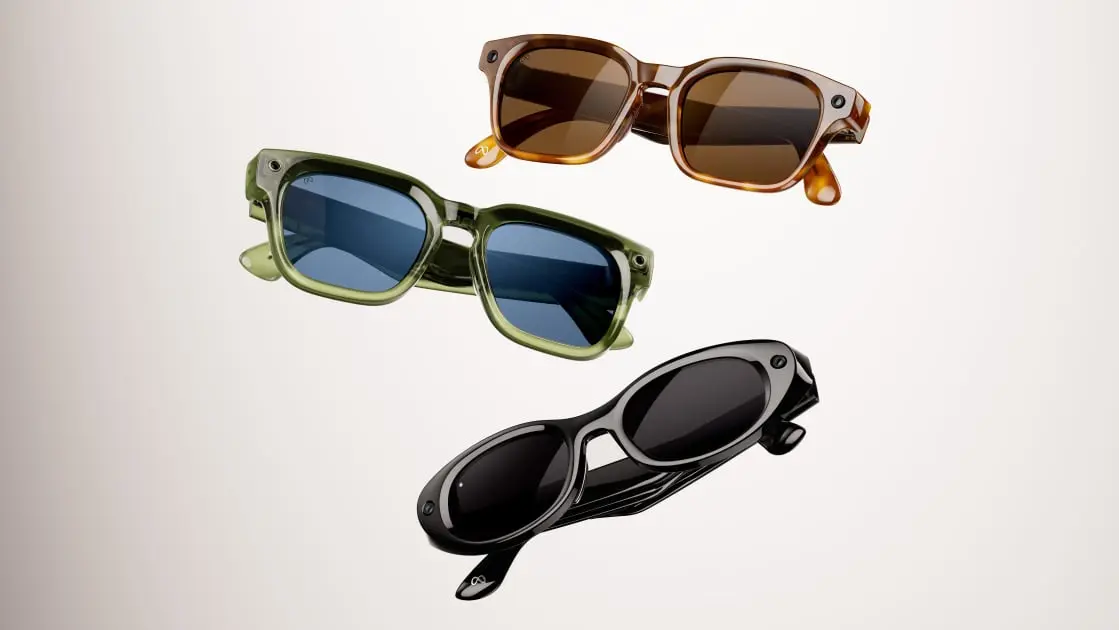
While Meta has released several versions of its AI glasses over the last few years, today it announced it's released two new styles specifically geared toward those of us with less-than-perfect vision. Dubbed the Ray-Ban Meta Optics Styles, the new frames come in a rectangular "Blayzer" style and a circular "Scriber" version. Compared to the regular Ray-Bans, these also sport overextension hinges, interchangeable nose pads, and adjustable temple tips for opticians so users can better customize fit. While the overextension hinges were introduced with the Meta Ray-Ban Display, they were absent from the regular Ray-Ban lineup. The frames will come in a variety of colors, ranging from matte and transparent black to dark olive, ice grey, and stone beige. The carrying case also comes in dark brown. The new "prescription optimized" glasses will be available starting April 14th for $499, and are currently available for preorder. According to Meta's press release, these glasses also "support nearly all prescriptions." Previously, the Ray-Ban glasses were only able to support prescriptions of ±6 (and only ±2 for the Display glasses) -- not too shabby for smart glasses, but far from "nearly all prescriptions." When asked for further clarification, Meta spokesperson Albert Aydin told The Verge that "The prescription range for Blayzer and Scriber is unrestricted. However, customers will need to check with their retailer on any range restrictions." Aydin further explained that the ±6 range still applies if you're ordering directly from Meta's site. If your prescription falls outside of that, you'll have to take the frames to an optician or a LensCrafters-type store. Meta has gotten a lot of flak recently for its smart glasses, especially with regard to privacy, a proposed facial recognition feature, and how the glasses have been misused by creeps. This rollout also highlights another obstacle for wider adoption of AI glasses: vision and fit. For many people, smart glasses can't just be gadgets -- they have to double as medical devices for vision correction. Thus far, smart glasses makers have struggled to accommodate all types of vision and face shapes. Meta also announced some new software features coming to the Ray-Bans. On the software front, Meta is adding AI-powered nutrition logging later this summer. Using the glasses, you'll be able to use a voice prompt, take a photo of your meal, and have those details added to a food log in the Meta AI app. It claims that in the future, the glasses will be able to do that automatically without prompts. The company is also adding hands-free WhatsApp summaries to its Early Access program and says these message summaries will be processed on-device with end-to-end encryption. Meanwhile, Display users are getting two new games to play: 2048 and a new platformer called GOAT, both of which are available now and use the Neural Band. The Neural handwriting feature is also rolling out more broadly in the coming weeks and will add iMessage support. Turn-by-turn navigation will also start supporting every U.S. city in May.
[2]
Meta to Launch New AI Glasses Aimed at Prescription Wearers
Meta Platforms Inc. plans to debut two new Ray-Ban smart glasses models next week intended for prescription wearers. While the company's glasses -- sold in tandem with EssilorLuxottica SA -- have long supported prescription lenses, this will mark the first time the companies are introducing Ray-Bans designed specifically for that cohort, according to people with knowledge of the matter. The new models, which will come in rectangular and rounded styles, are expected to be sold primarily through traditional prescription eyewear channels, said the people, who asked not to be identified discussing unannounced products. They do not represent a new generation of Meta's smart glasses. The social networking giant, which has made AI-enabled glasses a major part of its broader AI strategy, released its latest iteration of the Ray-Ban glasses last year, and also introduced its first model with a built-in display, the Meta Ray-Ban Displays. Codenamed Scriber and Blazer, the prescription-focused versions were first spotted in US Federal Communications Commission filings by the Verge. Details about the design and prescription-first positioning haven't been previously reported. A Meta spokesperson declined to comment. Earlier this year, Chief Executive Officer Mark Zuckerberg hinted at a broader push toward prescription users. On an earnings call, he noted that "billions of people wear glasses or contacts for vision correction," adding that "it's hard to imagine a world in several years where most glasses that people wear aren't AI glasses." Meta has had early success with the smart glasses category, which other technology companies, including Apple Inc., are racing to match. Apple is planning to begin shipping its first glasses -- models without displays or augmented reality -- as soon as next year, Bloomberg News has reported.
[3]
Meta unveils two new Ray-Ban prescription smart glasses
March 31 (Reuters) - Meta Platforms (META.O), opens new tab launched two new Ray-Ban prescription smart glasses on Tuesday, expanding its offerings in an area that has become one of the few breakthrough successes in the race for artificial intelligence-powered gadgets. The new launches will broaden the range of options for prescription eyewear users, with CEO Mark Zuckerberg noting in January that "billions of people wear glasses or contacts for vision correction." The Facebook parent has been investing hundreds of billions of dollars in its pursuit of "personal superintelligence," where advanced gadgets, among other things, would bring the benefits of AI to individual users. Meta develops its AI glasses in partnership with Ray-Ban owner EssilorLuxottica (ESLX.PA), opens new tab. Reporting by Jaspreet Singh in Bengaluru; Editing by Jonathan Ananda Our Standards: The Thomson Reuters Trust Principles., opens new tab
[4]
Meta gets ready to launch two new Ray-Ban AI glasses
This is Lowpass by Janko Roettgers, a newsletter on the ever-evolving intersection of tech and entertainment, syndicated just for The Verge subscribers once a week. Meta and its AI glasses hardware partner EssilorLuxottica are getting ready to launch the next generation of their Ray-Ban AI glasses. That's according to a series of FCC filings for two new Meta Ray-Ban models that were published by the agency earlier this month. The filings describe the tested devices as production units, suggesting that Meta may launch them soon. When the company unveiled its second-generation Ray-Bans in late 2023, it did so a little over a month after the devices passed through the FCC. Meta did not immediately respond to a request for comment. As is customary, the FCC filings are heavily redacted, so we don't know yet exactly what the two models will look like, or what new features they will offer. However, the filings did reveal a few interesting details: Some of the included documents identify the marketing names for the new models as "RayBan Meta Scriber" and "RayBan Meta Blazer," while also noting that the "Blazer" model will be available in a regular and a large size. The documents do mention a charging case as being part of the tests, suggesting that the new Ray-Bans will once again feature a case you can use to charge them on the go. The model numbers for Meta's Blazer and Scriber glasses are RW7001 and RW7002, respectively. That in itself is noteworthy, as currently available first- and second-gen Meta Ray-Ban model numbers range from RW4002 to RW4014. The big jump in the model number could suggest a significant hardware upgrade, perhaps including a newer chipset. Another difference between current-gen Ray-Bans and the two new models revealed in these FCC filings: The new models make use of the Wi-Fi 6 UNII-4 band, which could add reliability to high-speed data transfers -- a feature that could come in handy for both livestreaming and any AI features that require live video transmission. Ray-Ban AI glasses have proven to be a hit for Meta and EssilorLuxottica: The two companies sold more than seven million pairs last year, according to EssilorLuxottica's most recent earnings report. Sales for 2023 and 2024 combined amounted to two million units. The company is looking to ramp up manufacturing capacity to 20-30 million units annually by the end of this year, Bloomberg reported in January. Meta also expanded its partnership with EssilorLuxottica in 2025, launching a first pair of Oakley-branded AI glasses, as well as a first pair of Ray-Ban Display glasses with an integrated monocular display. "Sales of our glasses more than tripled last year, and we think that they're some of the fastest growing consumer electronics in history," said Mark Zuckerberg during the company's most recent earnings call, adding: "For Reality Labs, we're directing most of our investment towards glasses and wearables going forward." As part of this shift in priorities, Meta has been significantly reducing its VR investments. The company laid off 1,000 Reality Labs employees earlier this year, shuttered multiple VR game studios, and followed up with additional job cuts Wednesday. As part of these cutbacks, Meta also planned to shut down its Horizon Worlds metaverse project in VR. However, the company reversed this decision last week in response to pleas from VR users.
[5]
Meta's next AI glasses are reportedly designed with prescription lenses in mind
Two new models of Meta Ray-Ban AI glasses are on the way, and they're going to be catered towards those who use prescription lenses, according to a Bloomberg report. While these are supposed to be announced next week, Bloomberg noted that these won't be a "new generation" of Meta's smart glasses. You can already add prescription lenses to Meta Ray-Ban's AI glasses, but the upcoming models will come in rectangular and rounded styles and will be sold through traditional prescription eyewear channels. Bloomberg didn't specify how these new glasses will differ from existing options, but noted that it's the first time Meta and Ray-Ban are releasing a pair of AI glasses specifically designed for this demographic. The two models are likely the codenamed products Scriber and Blazer, which were first spotted by The Verge in filings with the Federal Communications Commission. The filings described the devices as production units, meaning Meta could be close to the actual product launch. Looking at the filings, it's unlikely these upcoming prescription AI glasses will have a display like the Meta Ray-Ban Displays. Meta CEO Mark Zuckerberg has hinted at AI glasses that are meant for prescription glasses wearers in a previous earnings call. As noted by Bloomberg, Zuckerberg previously said that "billions of people wear glasses or contacts for vision correction," adding that, "it's hard to imagine a world in several years where most glasses that people wear aren't AI glasses."
[6]
Meta's Two New Smart Glasses Are Slimmer and More Like Regular Glasses
Meta has two new pairs of AI smart glasses that are geared toward a thing that glasses have been doing for quite a whileâ€"helping you see. The Ray-Ban Meta Blayzer Optics and Scriber Optics are more focused on people who wear prescription lenses and also come in new styles that differentiate them from existing Ray-Ban-branded smart glasses. While the Blayzer is what Meta calls a "sleek rectangular frame" and comes in standard and large sizes, the Scriber has a more rounded frame. These frames are slimmer than Meta's existing AI glasses styles such as the Wayfarer, Headliner, and Skyler. According to Meta, both pairs "support nearly all prescriptions" and come with changeable nose pads and adjustable temple tips. Styles include matte black, transparent black, and transparent dark olive, but also come in "seasonal colors" like transparent "Matte Ice Grey" and transparent "Stone Beige." One thing that's a little bit different from the previous Ray-Ban lineup is that the carrying/charging case is a dark brown instead of the light brown of previous generations. For the record, neither of these glasses has a screen in them like the Meta Ray-Ban Displayâ€"these are based on Meta's non-display AI glasses. At 49g, both standard-sized pairs of the new smart glasses weigh about the same as the standard-size Ray-Ban Meta Gen 2 AI glasses, which have a weight of 51g. The large size weighs 52g. Outside of a different look and more prescription lens compatibility, Meta's new Blayzer Optics and Scriber Optics are basically the same AI glasses that the company has been selling, with the same hardware and features, including a 12-megapixel camera, speakers, 8 hours of battery, built-in Meta AI, and computer vision. Whether Meta plans to expand features to cater more to people with lower vision is anyone's guess, but they're more poised to do so now. Both pairs of smart glasses are available for preorder starting today from Meta.com and Meta retail partners in the U.S., as well as "select international markets" starting April 14. Pricing for both pairs starts at $499.
[7]
Meta launches prescription Ray-Ban smart glasses to reach billions of eyewear buyers
Meta is preparing to launch two new Ray-Ban smart glasses models designed specifically for prescription wearers, according to a Bloomberg report published on Thursday. The models, codenamed Scriber and Blazer, were first spotted in Federal Communications Commission filings and are expected to reach consumers as early as next week. They do not represent a new generation of hardware. They represent something potentially more important: a distribution strategy. Prescription eyewear accounts for roughly 69 per cent of the $223 billion global eyewear market. Meta sold more than seven million Ray-Ban and Oakley AI frames in 2025, an impressive figure for a product category that barely existed three years ago, but a rounding error against the estimated 1.5 billion people worldwide who wear corrective lenses. The new models are Meta's clearest attempt yet to move smart glasses from consumer electronics into mainstream optical retail, where the customers, the margins, and the scale are all substantially larger. Scriber and Blazer are non-display AI glasses, similar in capability to the existing Ray-Ban Meta line: camera, microphone, speakers, and Meta AI integration, but no screen. Blazer will come in regular and large sizes; Scriber appears to be a single-size offering. Both include Wi-Fi 6 UNII-4 band support, an upgrade over current models, and will ship with charging cases. The distinction matters because Meta already sells a display-equipped model. The Ray-Ban Meta Display, launched at Connect 2025, includes a full-colour heads-up display, a 12-megapixel camera with 3x zoom, and pairs with a neural wristband that reads muscle signals to navigate the interface. It costs $799. Orion, Meta's full augmented reality prototype with holographic displays, remains a research project with no consumer launch date. Scriber and Blazer sit below both in the product hierarchy. Their purpose is not to showcase Meta's most advanced technology but to put Meta AI into the frames that people already need to buy. The insight behind the move is straightforward: if someone requires prescription lenses and is going to spend several hundred dollars at an optician regardless, the incremental cost of making those lenses smart drops significantly. Mark Zuckerberg made the strategic logic explicit on a recent earnings call, noting that "billions of people wear glasses or contacts for vision correction" and suggesting it is "hard to imagine a world in several years where most glasses that people wear aren't AI glasses." The prescription pivot also runs directly into the most complex relationship in Meta's hardware business. EssilorLuxottica, the Franco-Italian conglomerate that owns Ray-Ban, Oakley, LensCrafters, and Sunglass Hut, manufactures all of Meta's smart glasses and controls the optical retail channel through which the new models will be sold. The partnership has delivered results, but it has also generated friction. Bloomberg reported in February that the two companies are working through disagreements over pricing and strategy. EssilorLuxottica's adjusted gross margin fell 2.6 percentage points in 2025 to 60.9 per cent, partly because of the higher component costs that smart glasses require compared with conventional frames. Meta wanted to offer Black Friday discounts in 2023; EssilorLuxottica, which guards its luxury positioning carefully, rejected the idea. The tension is structural: Meta wants to maximise adoption and lock users into its AI ecosystem. EssilorLuxottica wants to protect margins on a product line that is eroding them. Prescription models could ease that tension. Prescription lenses carry higher retail prices and fatter margins than non-prescription sunglasses. The lens coatings, custom grinding, and fitting appointments that prescription orders require generate additional revenue at every stage of the value chain. If smart glasses move into the prescription channel at scale, the economics improve for EssilorLuxottica even as volumes increase for Meta. The companies are reportedly considering doubling their combined production target to 20 million units per year, up from an estimated 10 million capacity by the end of 2026. Selling smart glasses through optical retail introduces complications that consumer electronics channels do not. Opticians are trained to fit lenses, not to explain AI assistants, camera privacy settings, or software updates. The customer experience in a LensCrafters is fundamentally different from the experience in a Meta Store or an Apple Store, and the staff training, product support, and return handling required for a connected device are orders of magnitude more complex than for a pair of Wayfarers. There is also the legal exposure. Solos Technology filed a patent infringement suit against Meta and EssilorLuxottica in January 2026, claiming that the Ray-Ban Meta line violates several patents covering core smart eyewear technologies and seeking "multiple billions of dollars" in damages. A second patent front, on top of the partnership tension and the margin pressure, adds risk to a product line that Meta is treating as the foundation of its wearable AI strategy. The smart glasses market itself is growing rapidly, from an estimated $2.5 billion in 2025 to a projected $14.4 billion by 2033 according to Grand View Research, but nearly all of that growth is speculative and dependent on whether consumers will choose connected frames when ordinary ones are cheaper, lighter, and carry no privacy concerns. Meta's bet is that AI functionality, specifically the ability to ask questions, get real-time information, and interact with digital services without reaching for a phone, will be compelling enough to overcome those objections. Scriber and Blazer are not the product that will test that bet definitively. They are the product that puts Meta's AI into opticians' fitting trays, onto the faces of people who were going to buy new glasses anyway, and into a distribution channel that reaches billions of potential customers. The technology is incremental. The strategic ambition is not.
[8]
Meta's reportedly launching Ray-Ban smart glasses designed for prescription lenses
As Meta continues to double down on smart glasses, the company is apparently gearing up to launch a pair of Ray-Ban smart glasses that are specifically designed for those who already wear prescription glasses. Bloomberg reports that Meta is planning to launch two new pairs of AI smart glasses with "rectangular and rounded styles" that would specifically be designed for those who require prescription lenses. You can already add prescription lenses to existing Ray-Ban Meta smart glasses, but these new models would apparently be designed especially for that use case. How they might differ is unclear, but we'd speculate that battery life and frame thickness/weight could be a part of the equation. Again, that's just a guess. These new models would apparently be sold through "traditional prescription eyewear channels." The Verge reports that these two new models, "Scriber" and "Blazer," hit FCC filings with the note that they are production models, suggesting a launch is coming sooner than later. Those filings also reveal that "Blazer" would be available in a larger size, and that the glasses will support the Wi-Fi 6 UNII-4 band, which existing models do not. That suggests improvements under the hood, and this band in particular is good at high-speed data transfers, perhaps to be used for livestreaming. It's further noted by Bloomberg that Mark Zuckerberg said during a Meta earnings call that "billions of people wear glasses or contacts for vision correction" and that "it's hard to imagine a world in several years where most glasses that people wear aren't AI glasses," possibly hinting at this launch. There's no indication of a display on these glasses, not that it would be expected.
[9]
Meta is finally building Ray-Ban smart glasses designed for prescription lenses
Meta is already miles ahead of the competition when it comes to the best smart glasses, but now the company's reportedly gearing up to debut a pair of Ray-Ban smart glasses aimed at users who actually wear glasses everyday. Codenamed Scriber and Blazer, the prescription-focused versions could launch as soon as next week, Bloomberg reports. Meta and its AI glasses hardware partner EssilorLuxottica are working on two pairs of AI smart glasses designed for people who require prescription lenses. Granted, you can already get prescription lenses fitted into existing Ray-Ban Meta smart glasses, but these new models are being built specifically with that in mind. Exactly how they'll differ isn't immediately clear, though I'd guess factors like battery life, design, and weight would be comparable to Meta's existing line. For now, though, that's just speculation. The Verge first spotted evidence of these new products in a series of FCC filings published by the agency earlier this month. The filings note Scriber and Blazer as production models, which suggests we'll see them on store shelves sooner rather than later. Since the filings are heavily redacted per usual, there's precious few details about the design or features we can expect. One interesting tidbit to note: The new models will use the Wi-Fi 6 UNII-4 band, a handy feature for reliable high-speed data transfers used for livestreaming and AI features that use live video transmission. Sources that spoke with Bloomberg on condition of anonymity said the models will come in "rectangular and rounded styles" and will be sold through "traditional prescription eyewear channels." Meta's emerging new focus All of this marks part of a broader push toward prescription users that Meta CEO Mark Zuckerberg teased in an earnings call earlier this year. "Billions of people wear glasses or contacts for vision correction. And I think that we're at a moment similar to when smartphones arrived, and it was clearly only a matter of time until all those flip phones became smartphones," he said. "It's hard to imagine a world in several years where most glasses that people wear aren't AI glasses." For those of us who have spent years navigating the world through prescription lenses, smart glasses have always felt like a gadget designed for someone else. But Meta's upcoming launch of the 'Scriber' and 'Blazer' Ray-Ban AI glasses feels like the first time the tech giant is actually speaking our language. Unlike previous models that felt like tech first and eyewear second, these new frames seem built from the ground up with four-eyes like me in mind. With sleek new rectangular and rounded styles -- and rumored Wi-Fi 6 support for faster Meta AI response times -- this might finally be the moment I trade my traditional frames for a pair that can actually talk back. Follow Tom's Guide on Google News and add us as a preferred source to get our up-to-date news, analysis, and reviews in your feeds.
[10]
Meta Has More Smart Glasses Coming Whether You Want Them or Not
After releasing (checks notes) four new pairs of smart glasses late last year, Meta appears to be back to the Ray-Ban grindstone. As noted by The Verge, the company has listings with the FCC made public earlier this month that reference two separate models with codenames. The two unreleased models referenced are the "Ray-Ban Meta Blazer" and the "Ray-Ban Meta Scriber." There's a third reference, but given the fact that it's the "Ray-Ban Meta Blazer Large," I am going to assume it's just a size variant of the Blazer. As is the case with FCC listings like this, there's not much information, and some of it is redacted, but I can make some inferences based on the language used. For me, the first thing that jumps out is that the name "Ray-Ban" is in front as opposed to "Meta," which indicates that these are likely non-display versions of its smart glasses, unlike the Meta Ray-Ban Display. There's always the chance that Meta is just tossing naming conventions to the wind and flip-flopping this time around, but that feels like an outside chance; the company has previously tried to educate us about the differences in name order. For now, we can assume that neither the Blazer nor the Scriber has a display in it. Adding to that hunch is the fact that the smart glasses are listed as "AI glasses," which is, again, the convention that Meta uses to reference its non-display models. From what we can glean from the FCC listings, there are similarities to previous models, including the AI glasses' use of Bluetooth in concert with Wi-Fiâ€"current Ray-Ban models (display and non-display) connect to your phone to do all the hardcore computing, which sounds like it's still the case here. As noted by The Verge, there are also references to a charging case, which is something that all versions of Meta's smart glasses (including Oakley-branded HSTN ones) currently have. There's nothing surprising about what we've seen or the fact that Meta has new models of Ray-Ban glasses in the pipelineâ€"clearly, it sees opportunity in that landscape. It does, however, feel oddly soon to be seeing references to new pairs. The Meta Ray-Ban Display and the Ray-Ban Meta Gen 2 AI glasses were released just last September, and, in the case of the former pair, hardware still isn't widely available for some people who want to buy one. There's also the fact that backlash against Meta's smart glasses has been building over privacy concerns. Propelling that pushback are revelations over the company's use of sensitive customer videos for training AI models (those videos showed people having sex, using the bathroom, and more) and its reported plans to add facial recognition to its smart glasses. That last possibility has already drawn the attention of U.S. senators who sent a letter to Meta asking questions about its plans while also characterizing the potential move as a threat to personal privacy. And Meta, for its crucial part in all of this, has been radio silentâ€"on both accounts. Maybe the company can just march forward and launch new pairs of Ray-Ban-branded smart glasses without scrutiny, but something tells me it may not be that easy. Either way, whether people are open to more Meta smart glasses or not, we can expect new pairs at some pointâ€"that is, if the company hasn't stumbled into getting itself banned or regulated by then.
[11]
I was in love with Meta's 'most comfortable glasses' ever, and then I saw the price tag
* Meta has two new smart glasses on the way * Blayzer and Scriber Optics shapes are designed for people who wear prescription lenses * The glasses don't come cheap Meta just debuted a duo of new AI glasses styles in its Ray-Ban smart specs lineup, and they're designed for folks who have prescriptions with designs aimed at "all-day wear." These new Blayzer and Scriber Optics shapes support "nearly all prescriptions" at launch (-6 to +6, with support for folks with astigmatism too) and according to Meta, they're the company's most comfortable AI glasses yet with overextension hinges, interchangeable nose pads, and optician-adjustable temple tips which will all allow you get a more tailored fit from your smart specs. I already think the Ray-Ban Meta smart glasses I own are comfy, but I do have a couple of fit tweaks I would make if I could -- the changeable nose pads, for example, would be a big help for making my specs fit better. The only downside is that these new glasses are a fair bit pricier than Meta's standard Ray-Ban smart glasses The glasses are available right now in the US starting at $499, while in the UK and Australia, they'll launch on April 14 for £429 / AU$709. Oh, and that's before you pay extra for your prescription lenses (which cost different amounts based on how strong your corrective lenses need to be), and for add-ons like them being transition lenses that go shaded when you're in bright light. By choosing all of the most expensive options, I found a pair costing $1,024 on the US preorder page -- though it did seem you could get a pair in the $599 to $799 range if you don't go all-out and have less severe vision correction needs. But hey, at least you get a unique Dark Brown charging case -- a change from the tan and limited edition black cases we've seen previously. If you'd rather splurge on Meta's other glasses, a few new lens and frame options are on the way to those. The Oakley Meta Vanguards are getting their first transition lenses, which is a massive win for the glasses, since their always shaded options weren't ideal for darker days. They're being joined by Black and Rose Gold lenses too. Meanwhile, the Oakley HSTN specs are getting Dark Golf and clear-to-brown transition lens options for you to choose from. Follow TechRadar on Google News and add us as a preferred source to get our expert news, reviews, and opinion in your feeds. Make sure to click the Follow button! And of course you can also follow TechRadar on TikTok for news, reviews, unboxings in video form, and get regular updates from us on WhatsApp too.
[12]
I skipped Meta's AI glasses, but they've finally fixed a fundamental problem for millions other like me
Prescription-ready Meta glasses could be the smartest wearable move of 2026 Smart glasses have always had a basic problem for people like me. They looked cool in demos, sounded futuristic in press releases, and usually came with the same quiet catch. If you already wear glasses every day, you are expected to work around them. This meant adding prescription lenses later, settling for a fit that is not quite right, or treating the whole thing as a novelty instead of something you would actually wear throughout the day. This is what makes Meta's latest announcement more exciting. The company just unveiled its first prescription-optimized AI glasses, the Ray-Ban Meta Blayzer Optics (Gen 2) and Ray-Ban Meta Scriber Optics (Gen 2), and they are explicitly designed around people who rely on prescription eyewear all day. Recommended Videos Meta says they support nearly all prescriptions, start at $499 in the US, and will be available at optical retailers beginning April 14. For me, that is the first time Meta's glasses story has felt less like wearable hype and more like something I could actually live with. Prescription wearers don't have to do extra work Billions of people around the world use glasses or contacts for vision correction, and Meta itself notes that many Ray-Ban Meta and Oakley owners already add prescription lenses to existing models. But "can be added later" is not the same thing as "built for you from the start." The new prescription-first push feels more thoughtful. Meta says that these new models were designed for all-day comfort and include features like overextension hinges, interchangeable nose pads, and optician-adjustable temple tips. These may sound like dry-product language stuff, but if you actually wear glasses every day, it is the kind of detail that decides whether something stays on your face for the next eight hours or if it gets thrown into a case after 20 minutes. Balancing act between 'gadget' and 'eyewear' Meta is not just launching two new frame styles and calling it a day. It is trying to make AI glasses feel like a normal category of eyewear rather than a niche device for early adopters. These new prescription-optimized frames aren't alone, as Meta also announced more frame and lens options across Ray-Ban Meta and Oakley Meta glasses. There's also a new software feature, like hands-free nutrition tracking, WhatsApp summaries and recall through Meta AI, and Neural Handwriting support expanding to iMessage. All of this makes these new glasses feel more natural for daily use. The tech itself is only half the story. The real breakthrough is when you don't need to accommodate the hardware. And if you already wear prescription glasses, that threshold is even higher. A smartwatch can be optional. Glasses are not. This is the first Meta glasses move that feels genuinely practical This is basically why I think these new Meta glasses matter more than they might look on paper. The usual wearable pitch is about features, AI tricks, cameras, and convenience. But for prescription wearers, such as myself, the first question is whether I would actually want to wear this all day instead of normal glasses? And for a change, Meta seems to be answering that question directly. Yes, the concerns don't disappear, and smart glasses still have the privacy baggage and hefty price tag. They also haven't proved that their AI features are useful often enough to justify becoming part of your daily routine. But this launch clears a much more fundamental barrier than people give it credit for. And for someone who already owns prescription Wayfarers and knows how much difference proper eyewear fit makes, Meta's new AI glasses suddenly feel a lot more attractive.
[13]
Meta unveils prescription-ready AI glasses to bring wearables into everyday use
Meta's new AI glasses bring vision correction and smart features together Meta has announced a new generation of AI-powered smart glasses designed specifically for prescription users, marking a major step toward making wearable technology more practical for everyday life. Developed in partnership with eyewear giant EssilorLuxottica, the new models aim to bridge the gap between traditional eyewear and AI-driven functionality. Designed for vision and intelligence The newly introduced smart glasses - part of Meta's Ray-Ban lineup - are built from the ground up to support prescription lenses across a wide range of vision needs. Unlike earlier models that offered limited compatibility, these new versions are optimized for people who rely on glasses throughout the day. Recommended Videos The glasses will be available in multiple styles, including rectangular and rounded frames, and are designed with adjustable temple tips, interchangeable nose pads, and flexible hinges for a more personalized and comfortable fit. Starting at $499, the devices will be sold through Meta's online store as well as traditional optical retailers, with availability beginning in the United States before expanding to other markets. A push toward mainstream wearable AI Meta's latest move highlights a clear shift in strategy: turning smart glasses into everyday essentials rather than niche gadgets. By integrating prescription support directly into the design, the company is addressing one of the biggest barriers to adoption. Billions of people worldwide require vision correction, and until now, many had to choose between wearing their prescription glasses or using smart eyewear. Meta's new approach eliminates that compromise, making AI glasses more practical for daily use. The glasses also continue to build on Meta's AI ecosystem, offering features like voice-controlled assistance, messaging, navigation, and content capture. New updates include tools such as hands-free nutrition tracking, message summaries, and improved navigation capabilities, signaling deeper integration of AI into everyday interactions. What's inside these glasses? Beyond the fresh looks, the Ray-Ban Meta Blayzer Optics (Gen 2) and Ray-Ban Scriber Optics (Gen 2) smart glasses share the technical architecture with the mainstream Ray-Ban Meta (Gen 2) frames. Starting with their social credentials, they can record 3K Ultra HD clips courtesy of the onboard 12-megapixel wide-angle camera. Meta is touting eight hours of operational time per charge, while the case can add 48 hours worth of juice. The audio array includes six mics, while media storage is deputed to the 32GB storage module. The more notable difference is the added 10 degrees of extra freedom with the extension hinge. Furthermore, the nose pads are interchangeable, while the temples are also comparatively more adjustable to ensure a snug fit. Why this matters for the industry The launch of prescription-ready AI glasses is significant not just for Meta, but for the broader tech industry. It reflects a growing belief that smart glasses could eventually replace or complement smartphones as primary computing devices. By focusing on usability and comfort, Meta is positioning itself ahead of competitors like Google, Snap, and emerging players in the wearable AI space. The company already leads the smart glasses market and is now doubling down on accessibility to expand its user base further. What it means for consumers For users, the biggest advantage is convenience. These glasses allow people to combine vision correction with AI-powered features in a single device, removing the need to switch between products. The improved design also suggests that Meta is targeting all-day wearability, making the glasses suitable for work, travel, and everyday activities. However, some limitations remain, such as prescription range restrictions for direct online purchases, which may require users to visit optical stores for full customization. What comes next Meta is expected to continue expanding its smart glasses ecosystem with enhanced AI capabilities, broader global availability, and deeper app integrations. Future updates could bring more personalized experiences, improved on-device processing, and tighter connections with Meta's platforms. As competition in the wearable space intensifies, Meta's prescription-focused approach signals a clear direction for the industry: smart glasses are evolving from experimental tech into practical, everyday tools. With this launch, Meta is not just improving its product - it is redefining how AI can seamlessly fit into daily life.
[14]
Meta launches new AI glasses aimed at prescription wearers
Meta is introducing two new Ray-Ban smart glasses models intended for prescription wearers. While the company's glasses -- sold in tandem with EssilorLuxottica SA -- have long supported prescription lenses, this marks the first time the companies are introducing Ray-Bans designed specifically for that cohort. The new models, which come in rectangular and rounded styles, are expected to be sold primarily through traditional prescription eyewear channels. They do not represent a new generation of Meta's smart glasses. The social networking giant, which has made AI-enabled glasses a major part of its broader AI strategy, released its latest iteration of the Ray-Ban glasses last year, and also introduced its first model with a built-in display, the Meta Ray-Ban Displays. Code-named Scriber and Blazer, the prescription-focused versions were first spotted in U.S. Federal Communications Commission filings by The Verge. Earlier this year, Chief Executive Officer Mark Zuckerberg hinted at a broader push toward prescription users. On an earnings call, he noted that "billions of people wear glasses or contacts for vision correction," adding that "it's hard to imagine a world in several years where most glasses that people wear aren't AI glasses." Meta has had early success with the smart glasses category, which other technology companies, including Apple, are racing to match. Apple is planning to begin shipping its first glasses -- models without displays or augmented reality -- as soon as next year, Bloomberg News has reported. More stories like this are available on bloomberg.com
[15]
Meta to launch AI glasses tailored for prescription lens users
Meta is set to announce two new models of AI glasses designed specifically for users of prescription lenses next week. These models will introduce rectangular and rounded styles but will not represent a new generation of Meta's existing Ray-Ban AI glasses. This upcoming announcement is significant as it marks the first time Meta and Ray-Ban are targeting prescription glasses wearers with AI glasses. The new models will be available through traditional prescription eyewear channels, expanding accessibility for millions in the market. The glasses are likely codenamed Scriber and Blazer, as identified in recent Federal Communications Commission (FCC) filings. These documents classify the models as production units, suggesting that a product launch is imminent. While current Meta Ray-Ban AI glasses can accommodate prescription lenses, it appears that the new models will not include a display feature, unlike the existing line. Bloomberg highlighted that specific differences between the new and existing glasses have not been detailed. Meta CEO Mark Zuckerberg previously hinted at the developments, stating in an earnings call, "billions of people wear glasses or contacts for vision correction." He emphasized the potential impact of AI in eyewear, declaring, "it's hard to imagine a world in several years where most glasses that people wear aren't AI glasses." Meta, a leading technology firm, has been at the forefront of integrating artificial intelligence into consumer products. The company's Ray-Ban partnership has also explored various smart eyewear applications, fostering innovative developments in the market.
[16]
Meta's New AI Glasses are Designed to Work with Prescriptions - Phandroid
Meta has just announced that it's expanding its wearable tech lineup with the launch the Ray-Ban Meta Blayzer Optics (Gen 2) and Ray-Ban Meta Scriber Optics (Gen 2), which are both designed to work with prescription lenses. According to Meta: Billions of people around the world wear glasses or contact lenses for vision correction, and many Ray-Ban Meta and Oakley Meta owners already add prescription lenses to their AI glasses. Today, we're rolling out a new, optical-forward pair of Ray-Ban Meta glasses that support nearly all prescriptions. In terms of design, the Blayzer offers a rectangular aesthetic which comes in multiple sizes, while the Scriber features a rounded frame; both include adjustable temple tips and interchangeable nose pads to ensure a tailored fit. Pre-orders open today in the U.S. starting at $499, with a wider retail launch scheduled for April 14. Meta adds that it's pushing out new software updates, which will come with access to hands-free nutrition tracking, Neural Handwriting capabilities, and Meta AI integration for WhatsApp, which includes message summaries and a "recall" feature.
[17]
Meta Ray-Ban smart glasses might soon get new Scriber and Blazer models
Meta's push into AI wearables isn't slowing down anytime soon. A new FCC filing has revealed that two upcoming Ray-Ban Meta smart glasses, namely "Scriber" and "Blazer". This listing hints at the launch being right around the corner. Recommended Videos It also describes the devices as production units, which means that Meta is already past the prototype stage and gearing up for release. What's next in Meta's smart glass lineup? The FCC database has confirmed two distinct models: Ray-Ban Meta Scriber and Ray-Ban Meta Blazer. Interestingly, the Blazer model could arrive in two sizes, including a larger variant that Meta hasn't offered before in the lineup. Both models are also expected to arrive with a portable charging case, continuing the design choice from the previous generations. It's not just a new design While finer details are still unknown, there are clear hints at meaningful upgrades. The new models carry model numbers RW7001 and RW7002, a noticeable jump from earlier generations, which could point to significant internal changes. This might include a newer chipset and support for WiFi 6 UNII-4 band that brings data speeds, connectivity reliability, and access to livestreaming and real-time AI processing. This might be more than an incremental product update. Meta's Ray-Ban smart glasses have already seen strong growth, with millions of units sold and production targets ramping up significantly. At the same time, the company is shifting focus away from VR and toward wearables. Although there are still plenty of details we don't have about Scriber and Blazer. Aspects like its final design, camera hardware, and features (like AI) are still unknown. And based on the name, these might be non-display AI glasses rather than AI-focused devices.
[18]
Meta Launches First Prescription-Focussed Smart Glasses
Ray-Ban Meta Optics Styles maintain core features of the smart glasses Meta announced the expansion of its AI-powered smart glasses lineup with the launch of Ray-Ban Meta Optics Styles on Tuesday. The smart glasses are the optical-first styles from the company designed for prescription wearers. Developed in partnership with EssilorLuxottica, the new lineup marks a continuation of the companies' multi-year collaboration, following the earlier introduction of Ray-Ban Meta glasses, Oakley Meta Glasses, and Meta Ray-Ban Display models. Ray-Ban Meta Optics Styles Price, Availability The new lineup includes Ray-Ban Meta Blayzer Optics (Gen 2) and Ray-Ban Meta Scriber Optics (Gen 2). They are priced at $499 (roughly Rs. 41,500). The glasses will be available for pre-order in the US starting March 31, with sales beginning April 14 across Ray-Ban stores, Ray-Ban.com, and select EssilorLuxottica retail outlets such as LensCrafters and Sunglass Hut. As per Meta, the smart glasses will also be sold across multiple global markets, including the UK, Canada, Australia, Europe, and the UAE. Expansion to countries like Brazil, Mexico, and India is expected later this year. Ray-Ban Meta Optics Styles Features, Specifications The new Ray-Ban Meta Optics Styles are designed with a focus on comfort and customisation, the company explained in a blog post. The frames feature a slimmer design, interchangeable nose pads, overextension hinges with an additional 10-degree rotation, and adjustable temple tips for a more personalised fit. Both Blayzer Optics and Scriber Optics frames support a wide range of lenses, including single-vision, progressive, and Transitions lenses. According to Meta, this means users can switch between indoor and outdoor environments without changing frames. On the performance front, the Ray-Ban Meta Optics Styles retain core smart features seen in earlier models. They are equipped with a 12-megapixel camera, which can capture photos and record videos in 3K resolution. There is also a six-microphone system for improved audio recording and clearer calls. Users can listen to music and podcasts via platforms like Spotify and Amazon Music, take calls, send messages, and interact with Meta AI using voice commands. A new dedicated action button allows quick access to Meta AI and enables users to capture content or trigger shortcuts instantly. The AI assistant can understand context, respond to queries, and assist with tasks based on what users see. In addition to the new Ray-Ban Meta Optics Styles, the company is introducing new seasonal colour options, including Shiny Transparent Grey (Wayfarer), Shiny Transparent Peach (Skyler), and Matte Transparent Peach (Headliner) for Ray-Ban Meta (Gen 2). New colour and lens combinations are also being rolled out for Oakley Meta models, including support for Prizm Transitions lenses for adaptive lighting conditions. New Meta AI Features Meta says it is continuing to expand AI capabilities across its smart glasses lineup with upcoming software updates. It is introducing a new nutrition tracking feature that will allow users to log meals using voice prompts or photos. Meta AI can extract key details and offer personalised insights over time. Support for hands-free WhatsApp summaries is also in the rollout stage. As the name suggests, the feature enables users to ask Meta AI for quick recaps of conversations or specific details. The company says processing is handled on-device and is protected by end-to-end encryption. Other upcoming features include Neural Handwriting, which allows users to write messages using finger gestures on surfaces, and display recording, which can combine in-lens visuals, real-world footage, and audio into shareable videos. Meta is also expanding pedestrian navigation across US cities, offering turn-by-turn directions directly in the user's field of view. The aforementioned features will be available on various Ray-Ban Meta smart glasses in the coming months.
[19]
Meta Ray-Ban prescription glasses could finally replace your normal specs
Mark Zuckerberg wants to turn your everyday specs into AI-powered assistants They might be a bit niche, but Meta's Ray-Ban glasses have their place among the best gadgets. I'm using them to listen to Spotify by the pool on holiday right now, as I type these very words. And for those of you with glasses, the next iteration could see Meta Ray-Ban prescription glasses become a reality. According to a new report from Bloomberg (via Engadget), the next pair of Meta Ray-Ban AI glasses are being designed specifically with prescription glasses wearers in mind. At least, if the latest rumours - and some rather revealing FCC filings - are to be believed. While you can technically already get prescription lenses for the current Meta Ray-Bans, these new models (reportedly codenamed Scriber and Blazer) are expected to be sold through traditional eyewear channels from the jump. They'll likely come in both rounded and rectangular styles, catering to those who prefer more traditional spec designs. Don't expect any other extras like a full augmented reality experience just yet, though. Despite Zuckerberg's frequent hints that "most glasses" will eventually be AI glasses, these upcoming models aren't expected to feature a built-in display. Instead, they'll likely stick to the camera and audio-led AI features we've seen before, albeit in a form factor that's likely more comfortable for full-time wearers. The move makes plenty of sense. Zuckerberg has previously noted that billions of people wear glasses or contacts for vision correction, and capturing that market is the quickest way to normalise wearing a computer on your face. We're expecting an official announcement as early as next week, though these are tipped to be a refinement of the current tech rather than a new generation overhaul. Either way, it's set to be unveiled soon, so watch this space.
[20]
Meta to launch new AI glasses aimed at prescription wearers - The Economic Times
While the company's glasses -- sold in tandem with EssilorLuxottica SA -- have long supported prescription lenses, this will mark the first time the companies are introducing Ray-Bans designed specifically for that cohort, according to people with knowledge of the matter.Meta Platforms Inc. plans to debut two new Ray-Ban smart glasses models next week intended for prescription wearers. While the company's glasses -- sold in tandem with EssilorLuxottica SA -- have long supported prescription lenses, this will mark the first time the companies are introducing Ray-Bans designed specifically for that cohort, according to people with knowledge of the matter. The new models, which will come in rectangular and rounded styles, are expected to be sold primarily through traditional prescription eyewear channels, said the people, who asked not to be identified discussing unannounced products. They do not represent a new generation of Meta's smart glasses. The social networking giant, which has made AI-enabled glasses a major part of its broader AI strategy, released its latest iteration of the Ray-Ban glasses last year, and also introduced its first model with a built-in display, the Meta Ray-Ban Displays. Codenamed Scriber and Blazer, the prescription-focused versions were first spotted in US Federal Communications Commission filings by the Verge. Details about the design and prescription-first positioning haven't been previously reported. A Meta spokesperson declined to comment. Earlier this year, Chief Executive Officer Mark Zuckerberg hinted at a broader push toward prescription users. On an earnings call, he noted that "billions of people wear glasses or contacts for vision correction," adding that "it's hard to imagine a world in several years where most glasses that people wear aren't AI glasses." Meta has had early success with the smart glasses category, which other technology companies, including Apple Inc., are racing to match. Apple is planning to begin shipping its first glasses -- models without displays or augmented reality -- as soon as next year, Bloomberg News has reported.
[21]
Meta's Ray-Ban Gen 3 Smart Glasses to Feature Screenless Design
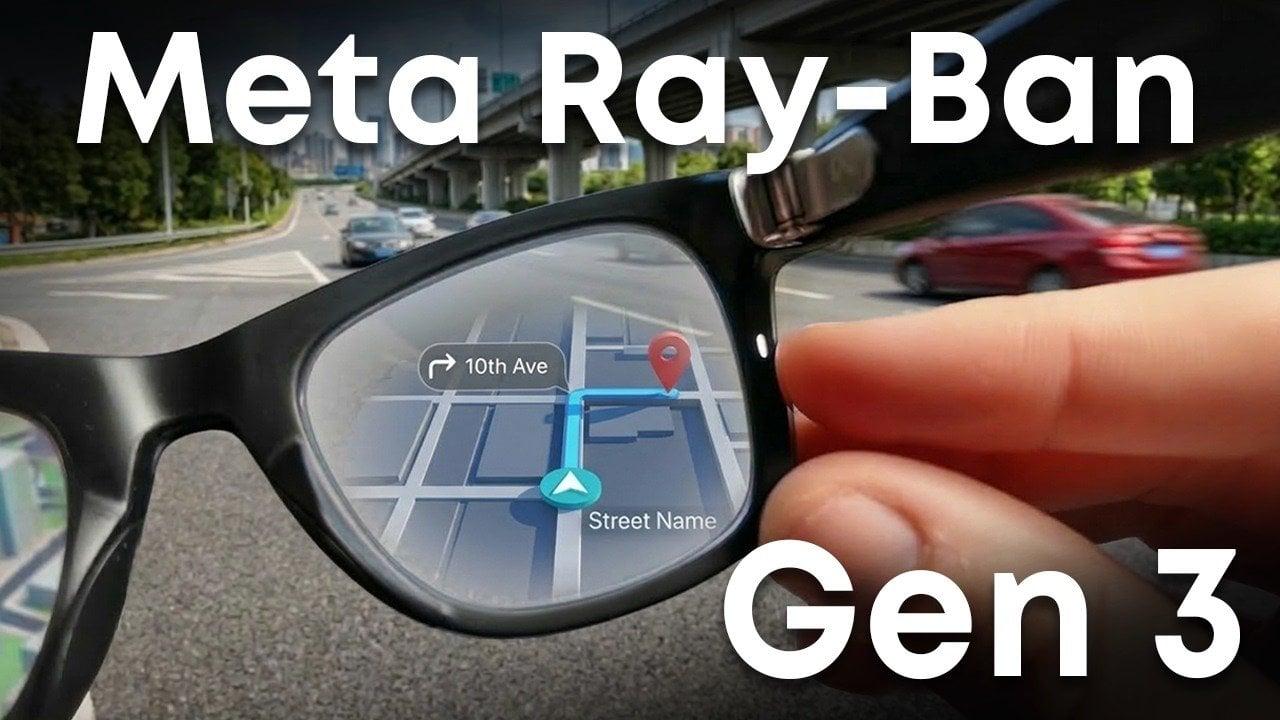
Meta's Ray-Ban Meta Gen 3 smart glasses, expected to launch in 2026, mark a notable development in wearable devices. As detailed by TechAvid, these glasses will include advanced AI capabilities for real-time object and location recognition, enhanced audio through upgraded microphones and a Qualcomm Snapdragon AR chipset for improved performance. The screenless design will be available in two models: the "Apparel" version, offering extended battery life and advanced features and the "Bellini" version, tailored for prescription glasses users seeking a more discreet option for daily wear. Discover the balance these glasses aim to strike between technological advancements and practical user needs, including features like extended battery life and privacy considerations. Gain insight into Meta's dual-model approach, the role of AI in enhancing contextual awareness and the ethical challenges tied to data use in smart eyewear. Meta's journey in wearable technology has been marked by consistent innovation, with each iteration building on the strengths of its predecessor. Below is a timeline of key milestones that have shaped the evolution of its smart glasses: While the official release is planned for 2026, logistical challenges could delay widespread availability until 2027. Despite this, the anticipation surrounding these glasses highlights their potential to influence the wearable tech landscape. The Ray-Ban Meta Gen 3 smart glasses will reportedly be available in two distinct variants, each tailored to meet the needs of different user groups: This dual-variant strategy ensures that the glasses appeal to both style-conscious individuals and those seeking practical, unobtrusive wearables. Learn more about smart glasses with other articles and guides we have written below. The third-generation Ray-Ban Meta smart glasses are expected to introduce several key upgrades, making them a versatile tool for both casual users and tech enthusiasts. These features aim to enhance usability, performance and convenience: These upgrades reflect Meta's commitment to blending innovative technology with user-friendly design, making the glasses a practical and appealing choice for a wide range of users. Privacy remains a critical issue for AI-powered wearables and the Ray-Ban Meta Gen 3 smart glasses are no exception. Reports suggest that contractors may review sensitive footage to train AI models, raising ethical questions about data handling and user consent. Additionally, the potential for real-time identification of people and objects through public databases has sparked debates about surveillance and privacy rights. To build consumer trust, Meta will need to address these concerns transparently. This could involve implementing robust data protection measures, offering clear user controls and making sure that all data collection practices comply with ethical standards. By prioritizing privacy, Meta can position its smart glasses as a responsible and trustworthy choice in the wearable tech market. Meta's strategy for the Ray-Ban Meta line focuses on enhancing cameras, audio and AI capabilities while maintaining a screenless design for the Gen 3 glasses. This approach sets them apart from display-equipped models, which are positioned as premium offerings for AR enthusiasts. By differentiating these product lines, Meta aims to cater to a broader audience, from casual users to tech-savvy individuals seeking advanced features. This strategy aligns with Meta's broader ambitions in augmented reality and wearable technology, emphasizing innovation without compromising accessibility. The Gen 3 glasses represent a key step in this vision, offering a glimpse into the future of smart eyewear. The Ray-Ban Meta Gen 3 smart glasses are poised to redefine the wearable technology landscape. With enhanced AI capabilities, improved hardware and thoughtfully designed variants, these glasses aim to seamlessly integrate functionality and style. However, their success will depend on how effectively Meta addresses privacy concerns and balances innovation with ethical considerations. As the 2026 release date approaches, these glasses could transform how you interact with the world, offering a unique blend of practicality and technological sophistication. Whether you're a casual user or a tech enthusiast, the Ray-Ban Meta Gen 3 smart glasses promise to deliver a compelling experience that bridges the gap between fashion and functionality. Disclosure: Some of our articles include affiliate links. If you buy something through one of these links, Geeky Gadgets may earn an affiliate commission. Learn about our Disclosure Policy.
[22]
Meta Might Be Preparing to Launch These New Ray-Ban Smart Glasses Soon
Model number jump suggests major hardware upgrade is coming Meta appears to be gearing up for its next generation of AI smart glasses, as new regulatory filings hint at an upcoming launch. Recent reports suggest the company is preparing new Ray-Ban Meta models, reportedly named Ray-Ban Meta Scriber and Ray-Ban Meta Blazer. While full details are still unclear, the filings indicate updated hardware that could arrive sooner rather than later. If this turns out to be true, it would mark another step in Meta's growing focus on AI-powered wearables and connected devices. Meta May Launch New Ray-Ban AI Glasses With Big Upgrades Soon In his Lowpass newsletter, Janko Roettgers claims that filings submitted to the FCC earlier this month reference two new Ray-Ban Meta smart glasses. The filings reportedly suggest the devices are final units, which points to an imminent launch. Notably, Meta launched its previous Ray-Ban smart glasses in late 2023, a little over a month after they cleared FCC certification. Much of the information in the filings remains redacted, but a few details have surfaced, according to the report. The documents list the names Ray-Ban Meta Scriber and Ray-Ban Meta Blazer. The Blazer model is expected to be available in both regular and large sizes. The filings are also said to mention a charging case, indicating that Meta may continue offering on-the-go charging. The new models reportedly carry the numbers RW7001 and RW7002, marking a significant jump from earlier generations. Current first and second-generation Meta Ray-Ban models range from RW4002 to RW4014, so this leap in model number could point to notable hardware upgrades. The report noted that another upgrade for the next-generation Ray-Ban Meta smart glasses could include support for the Wi-Fi 6 UNII-4 band, which may improve connection stability and enable better performance for features like livestreaming and AI-based video functions. According to the report, Meta and EssilorLuxottica's smart glasses have seen strong sales momentum. The companies are said to have sold more than seven million units last year, compared to a combined two million units across 2023 and 2024. They are now reportedly aiming to scale production to tens of millions of units annually. Meta has also expanded its wearable lineup with Oakley-branded AI glasses and Ray-Ban models featuring a built-in display. The report noted that at the same time, the company has reduced its focus on virtual reality, cutting around 1,000 jobs in Reality Labs, shutting down multiple VR studios, and planning to close Horizon Worlds before reversing that decision following user feedback.
[23]
Meta Ray-Ban AI glasses get prescription-optimized frames, new styles, and expanded AI features
Meta Platforms has introduced its first AI glasses designed to support prescription users. The update expands the Ray-Ban smart glasses lineup with a more optical-focused approach, aiming to serve users who rely on vision correction while using wearable AI features. The company notes that many users already add prescription lenses to existing Ray-Ban Meta and Oakley smart glasses. The new models are designed to better integrate prescription support directly into the product experience. These models are built for all-day wear and include adjustable hardware elements such as: These components allow customization based on individual face shape and prescription requirements, supporting extended daily use. Meta is expanding frame colors and lens combinations across Ray-Ban Meta and Oakley Meta models. New combinations for Vanguard and HSTN models include: These options are designed to improve visual performance across different lighting conditions and outdoor scenarios. Nutrition tracking Users can log meals using voice input or photos. Meta AI processes the input, extracts nutrition details, and stores them in the Meta AI app. Over time, the system builds a food log that enables personalized insights. Users can also ask contextual questions such as: Responses consider logged data and user goals to provide relevant guidance. This feature is intended for users aged 18 and above in the US and will be available on Ray-Ban Meta and Oakley Meta glasses, with Meta Ray-Ban Display support arriving later. Messaging, summaries, and recall Meta is introducing hands-free WhatsApp features through its Early Access Program (EAP), including: Example prompts include: These interactions are processed on-device with end-to-end encryption to maintain privacy. Neural handwriting input Meta Ray-Ban Display introduces a neural handwriting feature that allows users to: This works across Instagram, WhatsApp, Messenger, iMessage, and native Android and iOS messaging apps, enabling discreet communication. Earlier updates also introduced Instagram Reels integration, personalized Spotify shortcuts, and glanceable widgets such as reminders, weather, stocks, and calendar. The Ray-Ban Meta Blayzer Optics (Gen 2) and Scriber Optics (Gen 2) glasses are: Meta's smart glasses platform is set to receive additional software features through the spring, with further updates planned as the new devices roll out in the coming months. The company continues to expand both hardware availability and AI capabilities across its wearable ecosystem.
[24]
Meta launches prescription AI glasses starting at $499 By Investing.com
Investing.com -- Meta announced Tuesday two new prescription-optimized AI glasses models, the Ray-Ban Meta Blayzer Optics (Gen 2) and Ray-Ban Meta Scriber Optics (Gen 2), designed for users who require prescription lenses. The glasses feature overextension hinges, interchangeable nose pads, and adjustable temple tips. Pre-orders begin at $499 in the US through Meta.com and Ray-Ban.com, with availability at optical retailers in the US and select international markets starting April 14. The Facebook parent has been investing hundreds of billions of dollars in its pursuit of "personal superintelligence," where advanced gadgets would bring the benefits of AI to individual users. Meta develops its AI glasses in partnership with Ray-Ban owner EssilorLuxottica. Meta introduced new color combinations for existing Ray-Ban Meta (Gen 2) frames, including Skyler in Shiny Transparent Peach with Transitions Brown Lenses and Wayfarer in Shiny Transparent Grey with Transitions Sapphire Lenses. New Oakley Meta options include Vanguard and HSTN models with Prizm lens technology. The company announced software updates for its AI glasses lineup. A hands-free nutrition tracking feature will allow users to log food through voice prompts or photos, with Meta AI extracting nutritional information for the Meta AI app. This feature will be available to users 18 and older in the US. Additional features include WhatsApp message summaries through voice commands and Neural Handwriting functionality for Meta Ray-Ban Display glasses, which allows users to write messages by tracing letters with their finger on any surface. The feature works across Instagram, WhatsApp, Messenger, and native messaging apps. Meta's pedestrian navigation feature will expand to all US cities in May, providing turn-by-turn directions through the glasses' display. This article was generated with the support of AI and reviewed by an editor. For more information see our T&C.
[25]
Meta unveils two new Ray-Ban prescription smart glasses
March 31 (Reuters) - Meta Platforms launched two new Ray-Ban prescription smart glasses on Tuesday, expanding its offerings in an area that has become one of the few breakthrough successes in the race for artificial intelligence-powered gadgets. The new launches will broaden the range of options for prescription eyewear users, with CEO Mark Zuckerberg noting in January that "billions of people wear glasses or contacts for vision correction." The Facebook parent has been investing hundreds of billions of dollars in its pursuit of "personal superintelligence," where advanced gadgets, among other things, would bring the benefits of AI to individual users. Meta develops its AI glasses in partnership with Ray-Ban owner EssilorLuxottica. (Reporting by Jaspreet Singh in Bengaluru; Editing by Jonathan Ananda)
[26]
Meta launches Ray-Ban AI glasses with prescription support and new styles
Meta says these will support a wide range of prescriptions with improved comfort and fit. Meta has introduced its first prescription-optimised AI glasses under the Ray-Ban Meta portfolio. The new Blayzer and Scriber (Gen 2) models are designed for users who rely on prescription lenses for daily wear. Besides the prescription support, the glasses also bring Meta AI capabilities such as hands-free nutrition tracking and message summaries. This means the Meta AI glasses are now more practical for everyday users. At present, they are available for pre-order in the US only via Meta and Ray-Ban's official channels. The broader retail availability will begin on April 14 in select global markets. The Ray-Ban Meta Blayzer Optics (Gen 2) and Scriber Optics (Gen 2) are priced from $499 (roughly Rs 46,000). For now, there is no official India launch timeline yet. Like the existing Ray-Ban Meta smart glasses, these may land in India later, though. Also Read: Apple reportedly testing AirPods and Apple Watch-exclusive features for third-party devices: Why this matters The new Blayzer and Scriber frames are designed primarily for users who use prescription lenses. Meta says the glasses support nearly all prescriptions. That and the look of the frames separate them from earlier smart glasses by Meta. The glasses include adjustable temple tips, interchangeable nose pads, and overextension hinges. So, comfort-wise, this should allow a better fit across different face shapes, especially for all-day use. Since prescription glasses are worn throughout the day, these design aspects matter. Besides the prescription-first glasses, the company has announced new colourways and lens options for Ray-Ban Meta and Oakley Meta glasses, including Transitions lenses that adapt to lighting conditions. For users, this means fewer compromises between style, visibility, and functionality. Meta has announced that all of its smart glasses will feature hands-free nutrition tracking, where users can log meals via voice or images. Meta AI then analyses and tracks nutritional data. Then there are summarised end-to-end messages of WhatsApp conversations. You can ask for this with voice commands. So, you don't have to use a phone or a bigger screen. Another addition is neural handwriting. You can write messages on surfaces with your finger, and the glasses will convert them into text. This works across apps like Instagram, WhatsApp and iMessage. Meta is also expanding ecosystem integrations, including Spotify shortcuts via Spotify and on-device widgets such as reminders, weather, and calendar. Navigation features are also being rolled out across US cities, allowing turn-by-turn directions in-lens. Soon, the company says that you will be able to combine display recording with your in-lens display interactions, your view of the world, and audio into a single video. You can then easily share with your friends, family and followers. All in all, once they are available, aspects like battery life, latency, long-term comfort and data privacy would determine their adoption. Let's see. Keep reading Digit.in for similar stories.
Share
Share
Copy Link
Meta unveiled two new Ray-Ban Meta Optics Styles—Blayzer and Scriber—designed specifically for prescription wearers. Available April 14th for $499, these AI glasses support nearly all prescriptions and feature overextension hinges, interchangeable nose pads, and adjustable temple tips. The launch addresses a key barrier to wider adoption of AI-enabled glasses for billions who need vision correction.
Meta has launched two new Ray-Ban smart glasses models explicitly designed for prescription wearers, marking a shift toward integrating AI into everyday eyewear for those requiring vision correction. Dubbed the Ray-Ban Meta Optics Styles, the new frames come in a rectangular Blayzer style and a circular Scriber version, both available for preorder and shipping starting April 14th for $499
1
. While Meta's AI glasses have long supported prescription lenses, this represents the first time the company and its partner EssilorLuxottica have introduced models specifically engineered for this demographic2
.
Source: The Next Web
The prescription optimized smart glasses sport several hardware upgrades absent from regular Ray-Ban Meta models. Both Scriber and Blayzer styles feature overextension hinges, interchangeable nose pads, and adjustable temple tips that allow opticians to better customize fit for individual users
1
. The frames will be available in multiple colors, ranging from matte and transparent black to dark olive, ice grey, and stone beige, with a dark brown carrying case included. According to Meta's press release, these AI-enabled glasses for prescription wearers now "support nearly all prescriptions," a significant improvement over previous models that were limited to ±6 diopters (and only ±2 for Display glasses)1
. However, Meta spokesperson Albert Aydin clarified that while the prescription range for Blayzer and Scriber is technically unrestricted, customers ordering directly from Meta's site still face the ±6 range limitation. Those with prescriptions outside that range will need to take their frames to an optician or LensCrafters-type store for lens fitting1
.Mark Zuckerberg has been vocal about the potential market for prescription-focused wearables. During an earnings call earlier this year, the Meta CEO noted that "billions of people wear glasses or contacts for vision correction," adding that "it's hard to imagine a world in several years where most glasses that people wear aren't AI glasses"
2
5
. This launch directly addresses what Meta acknowledges as a key obstacle for wider adoption: for many people, smart glasses can't just be gadgets—they have to double as medical devices for vision correction1
. The new Ray-Ban smart glasses models are expected to be sold primarily through traditional prescription eyewear channels, expanding Meta's distribution beyond its direct-to-consumer approach2
.

Source: Reuters
Meta's AI glasses partnership with EssilorLuxottica has proven remarkably successful. The companies sold more than seven million pairs in the past year alone, compared to just two million units combined for 2023 and 2024
4
. EssilorLuxottica is ramping up manufacturing capacity to 20-30 million units annually by the end of this year to meet growing demand4
. During Meta's most recent earnings call, Zuckerberg stated that "sales of our glasses more than tripled last year, and we think that they're some of the fastest growing consumer electronics in history"4
. The Facebook parent company has been investing hundreds of billions of dollars in its pursuit of "personal superintelligence," where advanced gadgets would bring AI benefits to individual users3
.Related Stories
Alongside the hardware launch, Meta announced several software updates coming to Ray-Ban Meta AI glasses. The company is adding AI-powered nutrition logging later this summer, allowing users to take a photo of their meal with a voice prompt and have those details automatically added to a food log in the Meta AI app
1
. Meta claims that eventually, the glasses will perform this function automatically without prompts. Hands-free WhatsApp summaries are being added to the Early Access program, with message summaries processed on-device with end-to-end encryption1
. For Display users, two new games—2048 and a platformer called GOAT—are now available and use the Neural Band. Turn-by-turn navigation will start supporting every U.S. city in May1
.
Source: Geeky Gadgets
Despite commercial success, Meta has faced criticism regarding privacy concerns with its smart glasses, particularly around a proposed facial recognition feature and instances of misuse
1
. As Meta directs most of its Reality Labs investment toward glasses and wearables going forward, the company has significantly reduced VR investments, laying off 1,000 Reality Labs employees earlier this year and shuttering multiple VR game studios4
. FCC filings for the Scriber and Blayzer models revealed they utilize Wi-Fi 6 UNII-4 band technology, which could add reliability to high-speed data transfers—useful for livestreaming and AI features requiring live video transmission4
. With Apple planning to ship its first glasses models as soon as next year, the race to dominate the AI-enabled eyewear market is intensifying2
.Summarized by
Navi
[4]
1
Policy and Regulation

2
Technology

3
Technology