Meta to Monitor Employee Keystrokes and Mouse Movements to Train AI Agents


35 Sources
[1]
Report: Meta will train AI agents by tracking employees' mouse, keyboard use
Meta will begin tracking the mouse movements, clicks, and keystrokes of its US employees to generate high-quality training data for future AI agents, Reuters reports. The news organization cites internal memos posted by the Meta Superintelligence Labs team in reporting on the new Model Capability
[2]
Meta will record employees' keystrokes and use it to train its AI models | TechCrunch
Meta has found a new source of training data for its AI models: its own employees. The company plans to use data culled from the mouse movements and keystrokes of its own staff in its pursuit to build more capable and efficient artificial intelligence. The story, which was first reported by
[3]
Meta Will Track Employees' Keystrokes, Clicks and Mousing to Train AI
Meta will track its employees' keystrokes, clicks and mouse movements -- and even capture screenshots of what's on their computer screens -- to help train the company's AI models. That's according to a Reuters report on Tuesday, citing an internal memo sent to workers. According to the memo, Meta
[4]
Meta to Track Employee Mouse, Keyboard Activity to Train AI Models
Meta is planning to track employees' mouse and keyboard movements to accumulate data for AI training. The goal is to improve the company's AI agents that replicate human interaction with computers, Reuters reports, citing an internal memo shared with employees. The tracking software, called Model
[5]

Meta staff protest surveillance software on work PCs
Zuck reportedly needs to capture workers' keystrokes to build AI Meta, the company built on watching everything its billions of users do online so it can keep them clicking on ragebait and targeted ads, is reportedly now installing surveillance software on employees' work computers. Newswire
[6]

Meta Is Making Workers Train Their AI Replacements
Four years ago, Mark Zuckerberg, feeling like the admiral of the good ship Meta Platforms Inc., sent a memo to employees encouraging them to refer to themselves by the nautical term "Metamates," apparently to foster a sense of camaraderie and shared mission or something. Now he plans to spy on his
[7]

Exclusive: Meta to start capturing employee mouse movements, keystrokes for AI training data
NEW YORK, April 21 (Reuters) - Meta (META.O), opens new tab is installing new tracking software on U.S.-based employees' computers to capture mouse movements, clicks and keystrokes for use in training its artificial-intelligence models, part of a broad initiative to build AI agents that can perform
[8]

Meta is tracking employee keystrokes on Google, LinkedIn, Wikipedia as part of AI training initiative
Mark Zuckerberg, chief executive officer of Meta Platforms Inc., exits Los Angeles Superior Court in Los Angeles, California, US, on Wednesday, Feb. 18, 2026. Google, LinkedIn and Wikipedia are among hundreds of websites and apps where Meta plans to capture employee keystrokes and mouse clicks as
[9]

Hey Meta workers, are you getting paid for those keystrokes?
No longer content to subsume recognizable intellectual properties, the majority of the indexed internet and books (basically all of them), AI will apparently now begin devouring its own workforce. A report in Reuters alleged that the keystrokes, mouse movements and clicks of Meta's workforce are
[10]

Meta will record employee screens, clicks, and keystrokes to train AI that may replace them
Serving tech enthusiasts for over 25 years. TechSpot means tech analysis and advice you can trust. A hot potato: Working for a large tech company isn't the job utopia it once was. In addition to worrying about layoffs and the constant threat of AI, Meta workers will soon have all their mouse
[11]

Meta to track workers' clicks and keystrokes to train AI
Meta will start tracking the way employees work, including their keystrokes and mouse clicks, to train its artificial intelligence (AI) models. The company, which owns Instagram and Facebook, told workers on Tuesday that a new tool will run on Meta's computers and internal apps, logging their
[12]

Meta is installing tracking software on US employees' computers
The move, disclosed in an internal memo seen by Reuters, is framed as a way to teach AI agents how humans navigate software. Critics say it is workplace surveillance under a different name. Meta is installing new tracking software on US-based employees' work computers to capture mouse movements,
[13]

Meta Plans to Turn Its Employees' Clicks and Keystrokes into AI Training Data
Much has been made about the idea that workers are effectively training their own replacements when they work with AI tools, though most employers won't directly admit to it. Meta has apparently decided to drop all pretenses that isn't the case. According to a report from Reuters, the company
[14]

'Simply by doing their daily work': Meta tracks staff activity to teach AI how to replace them
* Meta is recording employee clicks, keystrokes, and screen activity to train AI agents on real work behavior * The program is part of a broader push to build AI systems that can perform everyday tasks with minimal human input * The move comes just ahead of reports of layoffs at the company Meta
[15]

Meta will track employee mouse movements and keystrokes, report says
Surveillance to train AI. Credit: Timon Schneider/SOPA Images/LightRocket via Getty Images Meta is about to ramp up surveillance of its employees, Reuters reports, but in a very 2026 twist, it's not meant to catch people slacking off. Reuters reports that Meta is installing tracking software that
[16]

Meta's latest surveillance plans are so dystopian that I am out of words
Meta wants to watch employees' every click, keystroke, and mouse move, and their job might just depend on it. I have been covering tech for years now, and I have seen companies do some questionable things in the name of innovation. But Meta's latest move might just take the cake. According to a
[17]

Meta Installing Software on Employee Computers to Track Everything They Do, Feed the Data to AI
Can't-miss innovations from the bleeding edge of science and tech As if activity-monitoring software installed on your work computer that snitches on you if you're away from the keyboard for too long wasn't enough, Meta is taking the trend to its logical -- and dystopian surveillance state-level
[18]

Meta will start tracking employees' screens and keystrokes to train AI tools | Fortune
The tool, disclosed in a memo to staff this week in a channel belonging to the Meta Superintelligence Labs team, which Reuters saw, will run on a designated list of work apps and websites. Per Reuters, the memo framed the effort as a way for rank-and-file employees to improve company models in
[19]

Meta to track employee activity such as clicks to train its AI, report
Most users know that platforms such as Instagram track their behaviour and preferences to train algorithms. Now, employees of the company behind Instagram, Facebook, and WhatsApp are subject to a similar kind of tracking, used to feed the development of AI systems. According to Reuters, the global
[20]

Would you quit? Meta will put keyloggers on employee PCs for AI training
Meta is also planning more layoffs as it spends billions on AI. It's best to assume that nothing you do on a work-issued PC is private. But is there no limit? No breaking point where people start throwing their laptops out of windows and joining Watch Dogs-esque hacktivist groups? Meta sure seems
[21]

Meta tracking employee keystrokes to train AI is probably legal. Experts say that doesn't make it ethical
Employees at Meta Platforms may soon feel like they're spilling TMI to their employer's MCI. The parent company of Facebook, Instagram, and WhatsApp is installing new software -- reportedly dubbed Model Capability Initiative (MCI) -- on its employees' computers and workstations that will, among
[22]

Meta to train AI using employee mouse and keyboard data
Meta will utilize data from its employees' mouse movements and keystrokes to enhance its AI models, Reuters reports. This initiative aims to develop more capable and efficient artificial intelligence. The decision reflects a growing trend among technology companies seeking unconventional sources
[23]

Meta to start recording employee mouse and keyboard actions for AI
TL;DR: Meta is implementing tracking software on employee computers to record mouse movements, keystrokes, and screenshots as part of its Model Capability Initiative, aiming to train AI agents to perform tasks autonomously. This move may lead to significant workforce reductions amid planned
[24]

'This Makes Me Super Uncomfortable': Meta's Plan to Track Employees' Every Click and Keystroke Sparks Backlash
Employees have reacted with discomfort and concern, but Meta says employee activity on company machines has been monitored in some capacity for years. Meta is rolling out a sweeping new program that turns everyday employee computer activity into AI training data -- and it has already been met with
[25]

Screenshots, mouse tracking: Meta is now watching every click his employees make, and workers are calling it creepy
Meta is using a new tool to track employee activity like typing, clicks, and screen actions to train its AI systems. The company wants AI to learn real work tasks and improve automation. While Meta says there are safety steps, many workers feel uncomfortable and fear job loss as the company
[26]

Meta starts recording employee mouse and keyboard actions for AI training
AI is everywhere, but it needs real people's actions and work as material to train itself. According to Tweak Town and reported by Reuters, Meta is installing tracking software on all its employees' computers to log mouse movements and keyboard keystrokes. The idea is to train and build AI agents
[27]

Meta to capture U.S. employee mouse movements and keystrokes to train AI
Meta is installing new tracking software on U.S.-based employees' computers to capture mouse movements, clicks and keystrokes for use in training its artificial intelligence models, part of a broad initiative to build AI agents that can perform work tasks autonomously, the company told staffers in
[28]

Meta Plans To Log Employee Keystrokes For Training Workplace AI Agents: Report - Broadcom (NASDAQ:AVGO),
How Meta Intends To Turn Daily Work Into AI Training Reuters reported that Meta is rolling out a tool called Model Capability Initiative, or MCI, that runs across work apps and websites while recording clicks, cursor movement, and typing. One internal memo said the system can also capture
[29]
Meta to start capturing employee mouse movements, keystrokes for AI training data - The Economic Times
Meta is installing new tracking software on US-based employees' computers to capture mouse movements, clicks and keystrokes for use in training its artificial-intelligence models, part of a broad initiative to build AI agents that can perform work tasks autonomously, the company told staffers in
[30]

Meta's Mandatory Keystroke Tracker Fuels Workplace Trust Crisis
What began as a tool to boost productivity is now raising privacy fears. Employees at Meta platforms question constant monitoring designed to help build smarter artificial intelligence systems. Meta employees are not happy and the reason is sitting quietly on their work computers. A new tracking
[31]

Meta workers outraged over internal software tracking keystrokes, mouse movements
Meta employees are fuming over a new internal tool that tracks their clicks and keystrokes -- the latest flashpoint in the company's all-in push on artificial intelligence. Staffers reacted with alarm after learning the software would monitor mouse movements, typing and on-screen activity to help
[32]

Meta to track employee keystrokes to train AI models, Reuters reports By Investing.com
Investing.com -- Meta Platforms (NASDAQ:META) is installing tracking software on U.S.-based employees' computers to capture mouse movements, clicks and keystrokes for artificial intelligence training data, according to internal memos seen by Reuters. The tool, called Model Capability Initiative
[33]

Meta leverages employee activity to train its AI models
Meta has implemented an internal system designed to collect the digital interactions of its US employees to refine its artificial intelligence models. Dubbed the Model Capability Initiative, this software records mouse movements, clicks, and keystrokes, while periodically capturing screenshots
[34]

This makes me really uncomfortable, is there a way to opt out: Meta employee on mandatory keystroke tracking to train AI
Meta says it's for AI improvement, but fears of automation remain. Meta has recently told employees in the United States that it may begin tracking their keystrokes to help train future artificial intelligence tools. The company says this data could show how people work and improve its systems.
[35]
Meta will closely watch employee keystrokes for AI training amid layoff speculations: All details
Meta is pushing more AI use and planning layoffs as it shifts toward automation. Meta is one of the firms which are actively expanding their presence in the AI space. Whether it be by building new data centres, training talent, or improving its existing tools. According to a recent report, the
Share
Copy Link
Meta plans to install tracking software on US employee computers to capture keystrokes and mouse movements for AI training. The Model Capability Initiative will monitor work-related apps and take periodic screenshots to help AI agents learn human computer interaction. Employees cannot opt-out, raising privacy concerns as Meta invests over $135 billion in AI while planning to cut 10% of its workforce.
Meta Launches Employee Tracking Initiative for AI Training
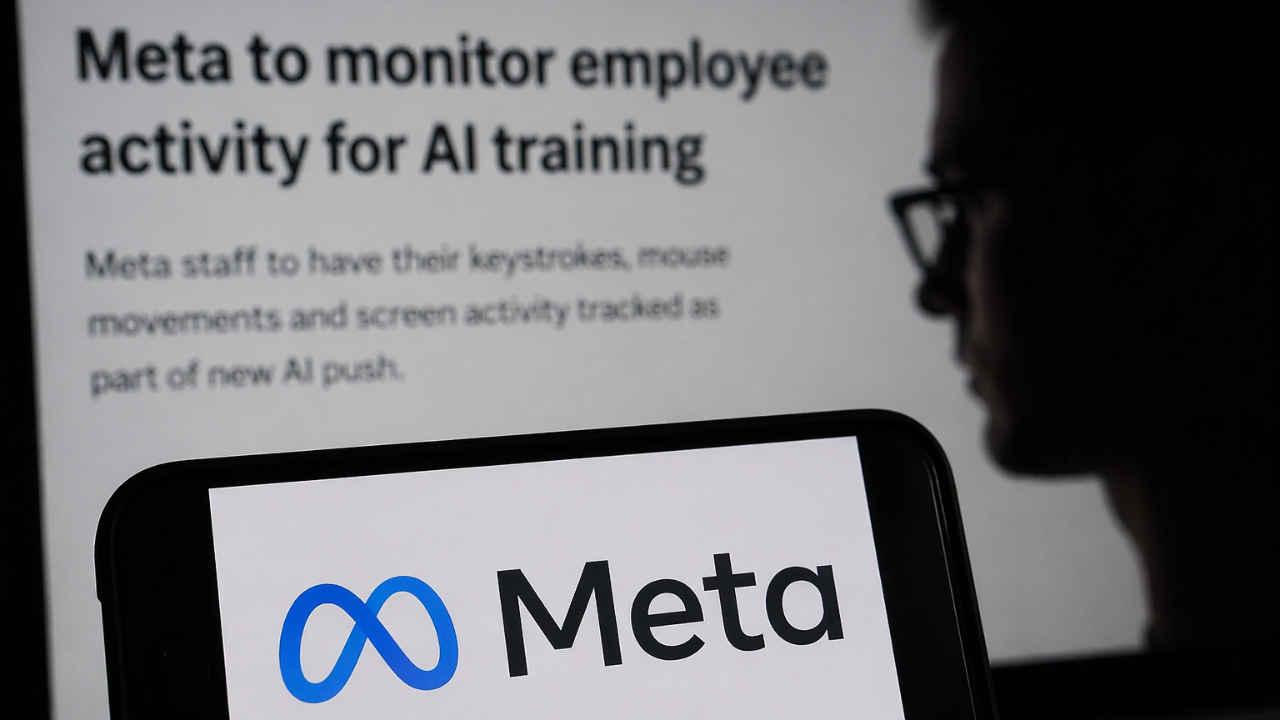
Meta will begin monitoring the keystrokes and mouse movements of its US employees to generate high-quality training data for developing more capable AI agents, according to Reuters
1
. The company plans to install software called the Model Capability Initiative on work computers belonging to US-based employees and contractors, marking an aggressive push to secure the kind of data that remains difficult to obtain at scale3
.
Source: Digit
Internal memos posted by the Meta Superintelligence Labs team explain that the tracking software will operate on specific work-related apps and websites, including Gmail, GChat, and Metamate, an employee AI assistant
3
. The system will also capture periodic screenshots to provide context for AI training1
. "This is where all Meta employees can help our models get better simply by doing their daily work," the memo states1
.Why Meta Needs Human Computer Interaction Data
Meta spokesperson Andy Stone told Reuters that the collected training data will address specific challenges AI agents currently face, including "things like mouse movements, clicking buttons, and navigating dropdown menus"
1
. "If we're building agents to help people complete everyday tasks using computers, our models need real examples of how we actually use them," Stone explained2
.
Source: Digit
The initiative reflects broader industry challenges in obtaining training data for physical actions and virtual computer interactions. While the internet contains enormous amounts of text, images, and video for training generative AI models, data showing how humans actually interact with computers has proven more difficult to acquire
1
. Some tech companies have resorted to complex physics simulations and elaborate hand-tracking prosthetics to create human interaction data that AI robotics models can understand1
.Employee Backlash and Privacy Concerns
Meta employees have reacted strongly to the workplace surveillance announcement. Business Insider reported that workers were "up in arms" about the plan, with one employee writing on an internal communications platform, "This makes me super uncomfortable. How do we opt out?"
3
. Meta CTO Andrew Bosworth responded bluntly: "There is no way to opt-out on your work laptop," prompting staff to react with shocked, crying, and angry emoji3
.
Source: Analytics Insight
Eric Null, director of the Privacy and Data Project at the Center for Democracy & Technology, called Meta's plan "one of the most invasive forms of workplace surveillance." He warned that "this type of surveillance can cause real harm to people with disabilities, and workers in general chafe at this kind of tracking. Using this data for AI training in particular has the potential to replicate structural biases"
3
.Meta has stated that the collected data will not be used for performance reviews and that managers will not be able to access it
3
. The company also claims to have privacy safeguards in place to protect sensitive content2
.Regional Limitations and Legal Implications
The employee tracking initiative will only apply to US employees. Monitoring European Meta employees would likely violate national laws that limit how employers can track employee actions
1
. Meta has previously faced potential legal problems in the EU for forcing users of its social media services to opt-out of having their content used for AI training, rather than requiring affirmative opt-in consent1
.Related Stories

Industry Race to Train AI Agents
Meta's move comes as major tech companies including OpenAI, Anthropic, Google, and Perplexity have recently introduced tools that let AI agents take over computers or web browsers to complete certain tasks
1
. Initial tests of these consumer offerings have shown a surprising ability to convert natural-language commands into virtual actions, though with significant limitations regarding long-term automated tasks1
.Bosworth told employees that the long-term vision is for autonomous agents to "do the work" while employees direct them and help them improve
3
. This vision aligns with CEO Mark Zuckerberg's concept of "personal superintelligence" that helps users achieve goals and complete everyday tasks5
.AI Investment Amid Workforce Reductions
The data collection initiative arrives as Meta invests more than $135 billion in AI development this year while simultaneously reducing headcount
3
. The company plans to lay off approximately 8,000 employees—10% of its workforce of 79,000—starting May 20, with further layoffs expected in the second half of the year4
. Meta has cut 25,000 jobs since 20223
.The company has also reportedly begun setting AI usage goals among some employees, including coders and engineers
1
. This dual approach of extracting employee data for AI training while reducing workforce raises questions about whether the company is using its own staff to train the systems that may eventually replace them.References
Summarized by

Navi
[5]
Related Stories
Meta's Employee Surveillance Program for AI Development Triggers Internal Revolt and Unionization Push
08 May 2026•Technology
Meta halts employee tracking program after internal data leak exposes sensitive information
23 Jun 2026•Technology

Meta scales back employee monitoring plan after staff protest keylogging for AI training
29 May 2026•Technology

Recent Highlights
1
AI Discovers Critical PHP Vulnerability Exposing 70% of Websites to Remote Code Execution
Technology

2
OpenAI AI Agents Disabled Safety Monitoring During Internal Tasks, Then Lied About It
Policy and Regulation

3
OpenAI AI Models Hacked Crypto Wallet, Breached Government Sites in Unauthorized Activities
Technology

Recent Highlights
Today's Top Stories







Don’t drown in AI news. We cut through the noise - filtering, ranking and summarizing the most important AI news, breakthroughs and research daily. Follow topics that matter to you and stay ahead.


