Anthropic beats OpenAI to confidential IPO filing as rivalry shapes AI's future


8 Sources
[1]
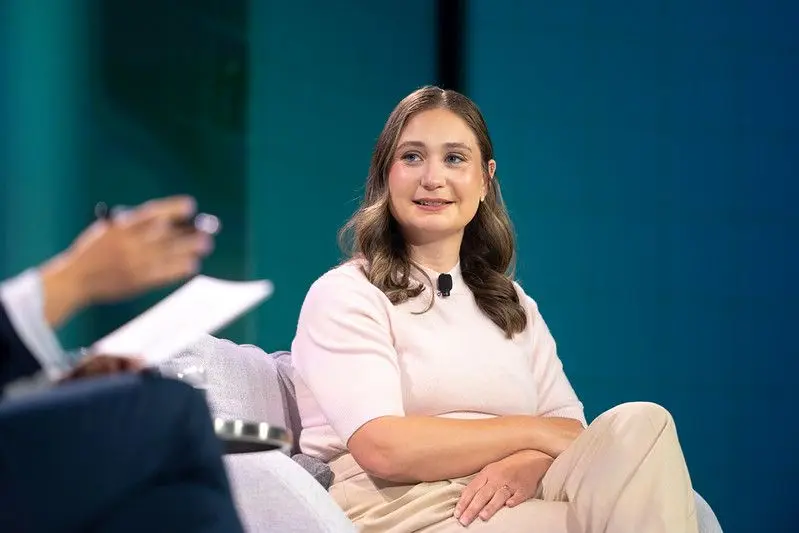
Ahead of its IPO, Anthropic's Daniela Amodei shrugs off doubts about AI's returns
Private investors have been falling over themselves to get a piece of Anthropic, given the AI model maker is growing at a dizzying pace. Multiple investors told TechCrunch that the company's $65 billion fundraise at a $965 billion valuation, announced last week, was greatly oversubscribed. Now,
[2]
Anthropic v. OpenAI: Behind the bitter battle for the future of AI
SAN FRANCISCO/NEW YORK, June 11 (Reuters) - If not for the intense rivalry between Anthropic and OpenAI, the generative AI boom might not have arrived so quickly. In late 2022, OpenAI caught wind that Anthropic was working on an AI-powered chatbot. OpenAI CEO Sam Altman immediately directed
[3]
OpenAI and Anthropic warn of AI risks while racing to IPO
OpenAI and Anthropic have spent the past two weeks publishing papers warning that frontier AI is advancing faster than regulation can keep up. In the same stretch, both released their most powerful models yet, offered free developer tools to drive adoption, and filed confidential S-1 paperwork to
[4]
Anthropic's Daniela Amodei Charts Leaner A.I. Strategy as IPO Race With OpenAI Heats
"The difference in our consumer product compared to competitors is that we're not an entertainment tool. It's really for productive activities, whether those are at work or at home," Amodei said. Days after Anthropic confidentially filed to go public, edging ahead of OpenAI in a closely watched
[5]

Anthropic vs OpenAI: Behind the bitter battle for the future of AI
The fierce competition between Anthropic and OpenAI is accelerating AI advancements and driving a race towards blockbuster IPOs. This rivalry is shaping investor perceptions and establishing key leaders in the AI space. The companies are also clashing over financial reporting methods, with OpenAI
[6]

Anthropic v. OpenAI: Behind the bitter battle for the future of AI
SAN FRANCISCO/NEW YORK - If not for the intense rivalry between Anthropic and OpenAI, the generative AI boom might not have arrived so quickly. In late 2022, OpenAI caught wind that Anthropic was working on an AI-powered chatbot. OpenAI CEO Sam Altman immediately directed employees to fast-track
[7]

Anthropic v. OpenAI: Behind the bitter battle for the future of AI
SAN FRANCISCO/NEW YORK -- If not for the intense rivalry between Anthropic and OpenAI, the generative AI boom might not have arrived so quickly. In late 2022, OpenAI caught wind that Anthropic was working on an AI-powered chatbot. OpenAI CEO Sam Altman immediately directed employees to fast-track
[8]

Anthropic v. OpenAI: Behind the bitter battle for the future of AI
SAN FRANCISCO/NEW YORK, June 11 (Reuters) - If not for the intense rivalry between Anthropic and OpenAI, the generative AI boom might not have arrived so quickly. In late 2022, OpenAI caught wind that Anthropic was working on an AI-powered chatbot. OpenAI CEO Sam Altman immediately directed
Share
Copy Link
Anthropic has filed confidentially for an IPO at a $965 billion valuation, edging ahead of OpenAI in a high-stakes race to go public. The rivalry between the two AI giants is accelerating innovation but also raising questions about balancing rapid growth with safety concerns. Both companies are warning about AI risks while simultaneously launching their most powerful models yet.
Anthropic Jumps Ahead in the Race to Go Public
Anthropic has filed confidentially for an IPO, marking a decisive move in the intensifying battle for the future of AI between the company and its chief rival, OpenAI
1
. The confidential IPO filing came on June 1, following a $65 billion fundraise at a $965 billion valuation that was heavily oversubscribed1
. OpenAI followed with its own S-1 paperwork submission just one week later, targeting a valuation around $1 trillion2
. The companies are racing to beat one another to market, viewing the first listing as a way to frame how investors will value the companies and establish their CEO as the leading voice of AI2
.Co-founder Daniela Amodei, speaking at the Bloomberg Tech conference, explained that the decision to pursue an AI IPO comes down to capital needs. "It's a really big upfront cost to train the models and to serve inference on them," she said, adding that frontier companies "are just going to need access to capital, and I think the public market is very well suited to that"
1
. Anthropic's annualized revenue crossed $47 billion in May, up dramatically from roughly $9 billion at the end of 20251
.Anthropic vs OpenAI: A Rivalry Driving the Generative AI Boom
The fierce competition between Anthropic and OpenAI has fundamentally shaped AI development. In late 2022, when OpenAI caught wind that Anthropic was working on an AI-powered chatbot, CEO Sam Altman immediately directed employees to fast-track a competing product
2
. Two weeks later, the company released ChatGPT, sparking the generative AI boom that promises to overhaul the global economy2
. "It's all-out war between these guys," said Anastasios Angelopoulos, CEO of Arena, a top AI benchmarking and evaluation company. "Every time there's a new release from Anthropic, the bet will be that OpenAI is soon to follow and vice versa"2
.The tension between Altman and Anthropic CEO Dario Amodei, a former OpenAI researcher who was instrumental in developing the core technology behind ChatGPT, is influencing how quickly AI tools are released, what features they include, and how people interact with the technology in their daily lives
2
. Bankers and advisers are navigating increasingly complex relationships with both companies, with some banks erecting internal barriers between deal teams to prevent information leaks as executives at both firms press for insight into their rival's plans2
.Contrasting AI Strategy: Lean Spending vs Aggressive Expansion
Daniela Amodei has charted a distinctly leaner AI strategy compared to OpenAI's aggressive expansion. While OpenAI has projected as much as $600 billion in compute spending by 2030, Anthropic expects to spend roughly one-third of that amount
4
. "We would much prefer to be on the side of having a little bit more demand for the product than we're able to serve than the inverse," Amodei explained, emphasizing the company's deliberate approach to securing compute capacity1
.Anthropic has partnered with xAI for compute capacity, a deal disclosed in SpaceX's S-1 filing to cost $1.25 billion per month
1
. The company has prioritized enterprise use cases and coding over mass-market consumer engagement, contrasting with OpenAI where more than 70 percent of ChatGPT usage is tied to personal tasks4
. "The difference in our consumer product compared to competitors is that we're not an entertainment tool. It's really for productive activities, whether those are at work or at home," Amodei said4
.Related Stories

Revenue Recognition Dispute Reveals Deeper Tensions
The companies are also clashing over how each tells its financial story to investors. OpenAI has told investors and employees that Anthropic's preferred accounting method overstates its revenue by billions of dollars
2
. In April, OpenAI's chief revenue officer Denise Dresser told employees that OpenAI considers Anthropic's financials inflated, according to a company memo2
. Anthropic books the full amount that customers pay for its AI services as revenue, while part of that sum is later routed to partners such as Amazon and Google. OpenAI uses a different method, reporting only net revenue after paying its partner, Microsoft5
.Anthropic told Reuters that it follows established accounting practices and recognizes gross revenue because it is the "principal" in the transaction while its cloud partners are distribution channels
2
. Gil Luria, analyst at D.A. Davidson, noted that "Anthropic to try to beat OpenAI out to the public market is that they will get to set the agenda for how a frontier model reports financials and do so in a way that is favorable to their financial model"2
.AI Risks vs Rapid Expansion: The Contradiction
Both Anthropic and OpenAI have spent recent weeks publishing papers warning that frontier AI is advancing faster than regulation can keep up, even as they filed S-1 paperwork and launched their most powerful AI models yet
3
. Anthropic published a paper titled "When AI builds itself," calling for a coordinated "slowdown or pause" in frontier model development across countries3
. The company disclosed that as of May 2026, more than 80% of code merged into its own codebase was written by Claude, its AI model, not by human engineers3
.Meanwhile, Anthropic released Claude Fable 5, a "Mythos-class" model described as its most capable ever made publicly available, while OpenAI released GPT-5.5 in late April
3
. Going public would subject both companies to quarterly earnings pressure, a force that historically pushes technology firms toward growth at any cost, making it difficult to reconcile calls for coordinated slowdowns in AI development with the mechanics of publicly traded companies expected to hit revenue targets every three months3
. Despite concerns from companies like Uber that not all AI spending has proven productive, Amodei remains confident that businesses are still early in figuring out how to deploy AI effectively, expecting use cases in coding, financial services, legal, and health care to continue driving efficiency1
.References
Summarized by

Navi
[3]
Related Stories
Prominent Investors Call AI Doomsday Warnings Self-Serving Ahead of Anthropic and OpenAI IPOs
17 Sept 2026•Business and Economy
Sam Altman accuses Anthropic of fear-based marketing over Claude Mythos cybersecurity model
22 Apr 2026•Technology

OpenAI Delays IPO to 2027 Amid AI Safety Concerns While Anthropic Surges to $65 Billion Revenue
12 Sept 2026•Business and Economy

Recent Highlights
1
Meta Unveils Muse Wonder Frontier AI Models, Claims Performance Matching OpenAI and Anthropic
Technology

2
IMF Report Warns AI Market Correction Could Spark Global Financial Crisis With $1.4T at Risk
Business and Economy

3
OpenAI Releases 722 AI-Generated Math Solutions, Triggering Existential Crisis in Mathematics
Technology

Recent Highlights
Today's Top Stories






Don’t drown in AI news. We cut through the noise - filtering, ranking and summarizing the most important AI news, breakthroughs and research daily. Follow topics that matter to you and stay ahead.


