4 Sources
[1]
Microsoft Is All-In on Agentic AI and Vibe Coding Now That It's 'Working'
During Microsoft's latest earnings call on Wednesday, CEO Satya Nadella perhaps unintentionally summed up the current state of the company's massive agentic AI push. "It sort of didn't work until it started working," Nadella said, referencing the Agent Mode feature in Microsoft Excel, "and that's just because the model showed up." Agent Mode, a feature that uses AI to create and edit Excel workbooks in tandem with your actions, is now the default mode for Microsoft 365 Copilot and Premium subscribers in Excel, Word and PowerPoint as of last week. He said Microsoft's investments in its AI infrastructure gave the company the usage capacity to implement the model that worked. (Nadella used the term Agent Mode, but officially, Microsoft has retired that term, preferring the simpler "edit with Copilot.") That capacity played a big role during the earnings call, as Microsoft shifts toward charging customers for how much they use the AI, not just for access licenses. "We have a structural position in knowledge, work, coding [and] security," he said. "And then you couple that with the right business model... which is user plus usage." Nadella said nearly 90% of Fortune 500 companies now have active agents built with "our low-code/no-code tools," and the company is seeing its Copilot Credit consumption nearly double quarter-over-quarter as customers employ custom agents tailored to their workflows. There was also a significant milestone, Nadella said: Microsoft Bing, the company's 17-year-old search service, reached 1 billion active monthly users for the first time. Nadella frequently mentioned GitHub, the software development platform that Microsoft purchased in 2018, as another standout. Starting June 1, GitHub Copilot is moving to a usage-based pricing model. The number of enterprise subscribers on the platform has nearly tripled year-over-year, he said, with nearly 140,000 organizations now using GitHub Copilot. Every GitHub Copilot plan will include a monthly allotment of GitHub AI Credits. According to the GitHub blog, "Usage will be calculated based on token consumption, including input, output and cached tokens, using the listed API rates for each model." Microsoft announced $82.9 billion in revenue for the quarter, an 18% increase from the previous year's third quarter, during the period from January to March. Capital expenditures are expected to rise to over $40 billion to build out more capacity for AI tools -- including massive data centers.
[2]
Microsoft Q3 Earnings: Nadella Says AI Agents Change How Customers Pay
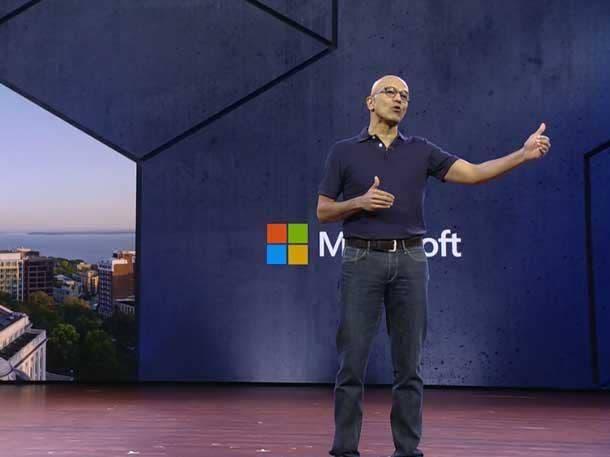
Microsoft reported $82.9 billion in total revenue from the quarter, up 15 percent year on year ignoring foreign exchange. Microsoft reported growing usage of its artificial intelligence tools while detailing a business model that is evolving beyond per-seat applications and consumption-based cloud infrastructure to an AI-era model combining the two. Satya Nadella (pictured), chairman and CEO of the Redmond, Wash.-based technology giant, said that the vendor's coding business is already user-based and usage-based at scale and described an evaluation-based or outcome-based model where customers pay based on value created by AI agents working with users or on their behalf -- a model members of Microsoft's 500,000-member partner ecosystem are also exploring with customers. "Whether it's customer service, whether it's individual productivity, team productivity, a business process, some cost per [user] is either decreasing because of the use of agents, or some revenue is increasing because of agents -- because it was able to compress these workflows," Nadella said Wednesday during the vendor's quarterly earnings call, covering its third fiscal quarter for the three months ended March 31. [RELATED: Microsoft Partner Chief Nicole Dezen Details E7, Agent 365 Push] Microsoft CFO Amy Hood said on the call that the vendor's bookings measure is also changing to have per-seat licenses and a meter like the Azure cloud business. "You'll just bill for usage," Hood said on Wednesday's call. "If that usage has great value to customers ... then you'll keep spinning [the meter], and they'll keep using those agents if they're adding direct value or growth to your business." As an example of Microsoft's Copilot AI assistant reaching a habitual level of use with customers, Nadella said that the AI tool has reached the same level of weekly engagement as Microsoft's Outlook email application. "We are at the beginning of one of the most consequential platform shifts that will change the entire tech stack as agents proliferate and become the dominant workload," Nadella said. "This will drive TAM [total addressable market] expansion and change the value creation equation across the entire economy." Nearly 60 percent of Microsoft customer service customers are already purchasing usage-based credits, Nadella said on the call. The Microsoft Copilot credit consumptive offer nearly doubled quarter over quarter as customers increasingly extend Copilot with custom agents tailored to their workflows. Microsoft is also moving GitHub Copilot to a usage-based pricing model to align pricing to actual usage and costs, Nadella said. That starts June 1. The CEO looks at seat-based pricing as an entitlement to some consumption with some base usage rights bundled in. Beyond a certain level of consumption, users can see overages into pure consumption pricing. Long-term commitments to consumption can come with discounting. Customers will evaluate where token value results in outcomes and then refine their budgets. IT budgets in the AI era could see reallocation from operating expenditures and other line items on customer income statements, the CEO said. Compared with Microsoft's business model transition in the consumption-focused cloud era, the vendor's AI margins have actually been better, Hood said. "What we've been really focused on is making sure that the business models reflect how these applications are both getting built and the value that they're bringing," the CFO said. Microsoft's CEO provided his regular updates on usage across a variety of Microsoft products and services. Microsoft Foundry, the unified Azure Platform-as-a-Service offering, saw the following. "Our North Star remains the same -- giving customer value with highest-quality and top-class innovation," Nadella said. "This is what gives me confidence in our ability to shape the next phase of growth for our company and our customers." Nadella told analysts on Wednesday's call that "overall, we feel good about our partnership with OpenAI" after revamping their deal in part to allow each company more freedom to work with rivals. The new deal reflects growth and evolution by both companies throughout the AI era plus the different customer bases "have different expectations in terms of their model diversity," Microsoft's CEO said. "I'm always very, very focused on any partnership, on ensuring that there's a win-win construct at all times," he said. "That's how you can remain good partners." Also, during the call, Nadella spoke to Microsoft still holding a significant competitive advantage in AI due in part to its prowess in the big AI addressable markets of knowledge work, coding and security. This year, some of the most exciting uses of AI are plug-ins in Word and Excel and command-line interfaces in coding tools, boding well for the productivity and developer tools giant. In infrastructure, where the cost of AI compared with its returns has been a concern for Microsoft analysts, Nadella mentioned improvements and milestones including: During Wednesday's call, Hood said that she feels "quite good about our ability to work through the physical sort of limitations" of meeting AI demand. She foresees that Microsoft will in the second half of the 2026 calendar year -- which is the first half of Microsoft's 2027 fiscal year -- get "some insights into our abilities to increasingly put pressure on efficiencies, being able to speed up the deliveries into our data centers and make that what I would call revenue ready as quickly as we can." Still, expect pressure between first-party usage and meeting Azure demand to persist, she said. Nadella added that Microsoft's capacity investments are to make sure it's ready for sudden surges in usage, using agent mode in Excel as an example. Innovation in AI models led to sudden increased demand for the offer. "You have to be ready for those opportunities," he said. Capital expenditures in the fourth fiscal quarter should increase to more than $40 billion, with $5 billion from higher component pricing and finance leases, Hood said. For calendar year 2026, Microsoft expects to invest about $190 billion in CapEx, $25 billion of that due to higher component pricing. "We remain confident in the return on these investments given higher demand signals and increasing product usage, as well as the efficiencies we're already driving across the platform," Hood said. Microsoft reported $82.9 billion in total revenue from the quarter, up 15 percent year on year ignoring foreign exchange. The vendor's operating income grew 16 percent year on year to $38.4 billion. Net income grew 23 percent year on year to $31.8 billion using GAAP. Without using GAAP, net income grew 18 percent ignoring foreign exchange. The non-GAAP percent excludes OpenAI investment impact. Microsoft's AI business surpassed an annual revenue run rate of $37 billion, more than double year on year. Microsoft Cloud revenue grew 25 percent year on year ignoring foreign exchange to $54.5 billion during the quarter. The vendor saw commercial remaining performance obligation (cRPO) almost double year on year to $627 billion. Microsoft's productivity and business processes segment -- which includes Microsoft 365 commercial cloud, M365 consumer cloud, LinkedIn and Dynamics 365 -- saw $35 billion in revenue during the quarter, up 13 percent year on year ignoring foreign exchange. M365 commercial cloud revenue grew 15 percent year on year. Consumer grew 29 percent. D365 grew 17 percent. Microsoft's "intelligent cloud" segment -- which includes Azure -- grew 28 percent year on year to $34.7 billion. Azure and other cloud services revenue grew 39 percent year on year. Microsoft's "more personal computing" segment- -- which includes Windows OEMsnand devices, Xbox and search ads- -- ell 3 percent year on year ignoring foreign exchange. Windows OEM and devices revenue fell 3 percent year on year. Hood said to expect $86.7 billion to $87.8 billion, growth of 13 percent to 15 percent year on year, in total fourth fiscal quarter revenue. The vendor will take a one-time cost of about $900 million related to its voluntary retirement program. The CFO said to expect revenue of $37 billion to $37.3 billion, growth of 12 percent to 13 percent year on year, in Microsoft's productivity and business processes segment in the fourth fiscal quarter. The M365 commercial cloud should see revenue growth to be between 15 percent and 16 percent year on year. Microsoft expects net paid seat adds to increase sequentially, which will drive continued average revenue per user growth. M365 commercial products revenue should grow in the mid-single digits. M365 consumer cloud revenue growth should be in the low 20 percent range, down sequentially with last year's price increase. Dynamics 365 revenue should grow year on year in the low double digits, down sequentially. Microsoft's intelligent cloud segment revenue should reach $37.95 billion to $38.25 billion, growth of 27 percent to 28 percent year on year. Microsoft expects Azure revenue between 39 percent and 40 percent. Azure should show modest growth acceleration in the second half of the calendar year compared with the first half, Hood said. The vendor expects on-premises server business revenue to decline in the mid-single digits. The more personal computing segment should see revenue between $11.75 billion and $12.25 billion, with "complex PC market dynamics impacted by memory prices" a factor, Hood said. Windows OEM revenue should decline in the high teens, with 6 points of impact from less benefit from last year's Windows 11 migration cycle, 6 points of impact from inventory levels and 6 points of impact "from a lower PC market as prices increase due to memory cost," the CFO said. Windows OEM and devices revenue should decline in the mid to high teens.
[3]
Microsoft Doubles Down On Agentic AI, Custom Chips And Data Center Surge As Q3 Results Shine - Microsoft
Microsoft Bets Big On 'Agentic Computing' Era Nadella outlined Microsoft's long-term strategy centered on what he called the rise of "agentic computing," where AI-powered agents evolve into the dominant workload across the technology ecosystem. To capitalize on this transition, Microsoft is executing on two core priorities: "building the world's leading cloud & AI infrastructure," and "building high-value agentic systems across core domains, such as productivity, coding, and security." The growing interest in AI is underscored by comments from Alphabet Inc. CEO Sundar Pichai, who recently stated in a CBS interview that AI represents "the most profound technology yet." Expanding Infrastructure And Efficiency To support AI growth, Microsoft is scaling its infrastructure, adding another gigawatt of capacity and aiming to double its data center footprint within two years. Foundry, Fabric Drive Enterprise AI Adoption Microsoft continues to scale its AI platforms, including Foundry and Fabric, which allow enterprises to build and deploy AI applications using multiple models. More than 300 customers are expected to process over one trillion tokens on Foundry this year, with adoption growing steadily. Fabric, Microsoft's unified data platform, is also seeing strong traction, with tens of thousands of customers using it to connect operational and analytical data for AI-driven insights. AI Expands Across Developers, Security And Business Apps Microsoft is integrating AI across its ecosystem, from GitHub Copilot for developers to AI-powered agents in Dynamics 365 and security platforms. GitHub adoption continues to surge, with nearly 140,000 organizations using the tool, while enterprise subscriptions have nearly tripled year over year. Usage is also doubling month over month. In cybersecurity, Microsoft is leveraging AI to detect and respond to threats faster, as the gap between vulnerability discovery and exploitation continues to shrink. Outlook: Positioned For Next Wave Of Computing Nadella expressed confidence that Microsoft's integrated approach -- spanning infrastructure, platforms and applications -- positions the company to lead the next wave of technological innovation. As AI agents become central to computing, Microsoft is aiming to embed itself deeply into how businesses and consumers operate in an increasingly automated world. Price Action: Microsoft shares slid 1.5% in premarket at the time of writing after falling 1.1% in regular trading on Wednesday. Benzinga Edge Stock Rankings indicate that MSFT maintains a strong pricing trend in the short term, with a solid Growth score in the 75th percentile and a Quality score in the 93rd percentile. Disclaimer: This content was partially produced with the help of AI tools and was reviewed and published by Benzinga editors. Image via Shutterstock Market News and Data brought to you by Benzinga APIs To add Benzinga News as your preferred source on Google, click here.
[4]
AI Is Fueling Microsoft's Growth. Can It Sustain the Costs? | PYMNTS.com
"We are focused on delivering cloud and AI infrastructure and solutions that empower every business to eval-max their outcomes in the agentic computing era," said Satya Nadella, chairman and chief executive officer of Microsoft. The company delivered double-digit growth across its core segments, primarily fueled by massive demand for AI and cloud services. Microsoft's AI business alone surpassed a $37 billion annual revenue run rate and grew 123% year over year; while company revenue reached $82.9 billion, up 18% year over year, and net income climbed 23% to $31.8 billion. Still, Microsoft's better-than-expected results come against a volatile backdrop for the shares in early 2026. The stock tumbled nearly 25% earlier in the year amid investor concerns over elevated capital spending and signs of a potential slowdown in cloud growth, before rebounding about 21% since late March. The return on investment (ROI) on Microsoft's aggressive push into AI infrastructure, which reached $30.9 billion for the quarter, was a focus on Wednesday's call. Microsoft's share price slipped by around 2% in after-hours trading. See also: Microsoft Agrees to End Revenue-Sharing With OpenAI The financial numbers reveal a clear hierarchy within Microsoft's business. Intelligent Cloud, anchored by Azure, grew 30% year over year to $34.7 billion, with Azure itself expanding 40%. This segment is no longer just a hosting environment; it is becoming the operating system for AI. This shift is reinforced by the company's commercial remaining performance obligation, which surged 99% to $627 billion. That backlog is effectively a forward-looking indicator of enterprise commitment to Microsoft's cloud and AI stack. It suggests that customers are not experimenting at the margins with AI but are re-architecting their operations around these platforms. And while infrastructure captures headlines, Microsoft's Productivity and Business Processes segment tells a more nuanced story about how AI is reshaping work itself. Revenue in this segment reached $35 billion, up 17%, with Microsoft 365 Commercial cloud revenue growing 19% and consumer cloud revenue surging 33%. Elsewhere, Xbox hardware revenue dropped 33%, a decline largely cushioned by continued strength in the company's commercial cloud and productivity businesses. However, the long-term margin profile of AI remains an open question. Training and deploying large-scale models is computationally expensive, and the economics of AI services are still evolving. Microsoft's scale provides a significant advantage, but it also raises the stakes. Sustaining profitability while investing aggressively in infrastructure may require continuous optimization of both hardware and software efficiency. See also: CFOs Suffer From Consumption as Tech Teams AI Tokenmaxx Microsoft's performance must be viewed in the context of a competitive AI landscape. Rivals are investing heavily in both infrastructure and models, but few can match Microsoft's combination of scale, enterprise relationships, and integrated product suite. But while the company's third-quarter results mark a moment of acceleration, they also raise questions about sustainability. Can the company maintain triple-digit growth in its AI business? Will infrastructure investments continue to deliver proportional returns? How will pricing models evolve as AI becomes ubiquitous? Microsoft and OpenAI on Monday (April 27) revised their partnership agreement in a way that loosened the startup's ties to the software giant, allowing it greater latitude to work with Microsoft competitors, including Amazon. The agreement also placed a ceiling on the revenue OpenAI must share with Microsoft through 2030. PYMNTS covered Tuesday (April 28) that Citigroup increased its global AI market forecast to exceed $4.2 trillion by 2030 amid rising enterprise adoption. And findings in the January edition of "The CAIO Report" from PYMNTS Intelligence reveal that, across industries, companies are converging on the same handful of high-impact uses for AI. Rather than fragmenting into niche or industry-specific uses, the report found agentic AI adoption is clustering around a common set of high-leverage functions: customer insight, product life cycle management and strategic analytics. Separate data in the PYMNTS Intelligence report "Smart Spending: How AI Is Transforming Financial Decision Making" found that more than 8 in 10 CFOs at large companies are either already using AI or considering adopting it.
Share
Copy Link
Microsoft reported $82.9 billion in quarterly revenue, marking an 18% year-over-year increase driven by surging demand for AI agents. CEO Satya Nadella announced a fundamental shift in how the company charges customers, moving from traditional seat-based licensing to a hybrid model combining user access with consumption-based pricing. The tech giant's AI business now exceeds a $37 billion annual run rate.
Microsoft is undergoing a fundamental transformation in how it delivers and monetizes artificial intelligence, with CEO Satya Nadella declaring the company is "at the beginning of one of the most consequential platform shifts" during the company's latest earnings call
2
. The Redmond-based tech giant reported $82.9 billion in revenue for the quarter ending March 31, representing an 18% increase from the previous year's third quarter1
. Net income climbed 23% to $31.8 billion, with the company's AI business alone surpassing a $37 billion annual revenue run rate and growing 123% year over year4
.
Source: CRN
The results reflect Microsoft's aggressive bet on agentic computing, where AI agents become the dominant workload across the technology ecosystem. Nadella outlined the company's dual strategy: building the world's leading cloud and AI infrastructure while developing high-value agentic systems across productivity, coding, and security domains
3
.Microsoft is fundamentally changing its AI business model, moving beyond traditional per-seat licensing to a hybrid approach that combines user access with consumption-based charges. Nadella emphasized the company's "structural position in knowledge, work, coding [and] security" paired with "the right business model... which is user plus usage"
1
. CFO Amy Hood explained that Microsoft's bookings measure is evolving to include both per-seat licenses and metered usage similar to the Azure cloud business, where customers "just bill for usage"2
.This shift reflects how AI agents are creating measurable business value. Nadella described an outcome-based model where customers pay based on value created by AI agents working alongside users or autonomously, whether through decreased costs or increased revenue from compressed workflows
2
. Nearly 60% of Microsoft customer service customers are already purchasing usage-based credits, while Copilot Credit consumption nearly doubled quarter-over-quarter as customers deploy custom agents tailored to their specific workflows2
.Starting June 1, GitHub Copilot is transitioning to usage-based pricing to align costs with actual consumption
1
. The developer platform, which Microsoft acquired in 2018, has seen GitHub Copilot enterprise subscribers nearly triple year-over-year, with nearly 140,000 organizations now using the AI coding assistant1
. Every GitHub Copilot plan will include a monthly allotment of GitHub AI Credits, with usage calculated based on token consumption, including input, output, and cached tokens1
.
Source: CNET
The coding business represents Microsoft's most mature usage-based model at scale, with adoption doubling month over month
3
. Nadella noted that Copilot has achieved the same level of weekly engagement as Microsoft's Outlook email application, signaling habitual usage patterns among customers2
.To support the surge in demand for AI and cloud services, Microsoft is scaling its infrastructure aggressively. Capital expenditures are expected to rise to over $40 billion to build additional capacity for AI tools, including massive data centers
1
. The company spent $30.9 billion on infrastructure during the quarter and plans to add another gigawatt of capacity while aiming to double its data center footprint within two years3
.Intelligent Cloud, anchored by Azure, grew 30% year-over-year to $34.7 billion, with Azure itself expanding 40%
4
. The segment is evolving beyond a hosting environment to become the operating system for AI. Microsoft's commercial remaining performance obligation surged 99% to $627 billion, indicating deep enterprise commitment to the company's cloud and AI infrastructure stack4
.Related Stories
Nearly 90% of Fortune 500 companies now have active agents built with Microsoft's low-code/no-code tools
1
. Microsoft Foundry, the unified Azure Platform-as-a-Service offering, is seeing strong traction with more than 300 customers expected to process over one trillion tokens this year3
. Microsoft Fabric, the company's unified data platform, is also gaining adoption with tens of thousands of customers using it to connect operational and analytical data for AI-driven insights3
.
Source: PYMNTS
The Productivity and Business Processes segment reached $35 billion in revenue, up 17%, with Microsoft 365 Commercial cloud revenue growing 19% and consumer cloud services revenue surging 33%
4
. Microsoft is integrating AI across its ecosystem, from developer tools to AI-powered agents in Dynamics 365 and security platforms3
. Additionally, Microsoft Bing reached 1 billion active monthly users for the first time in the search service's 17-year history1
.Microsoft and OpenAI recently revised their partnership agreement, loosening ties to allow OpenAI greater freedom to work with Microsoft competitors, including Amazon, while placing a ceiling on revenue sharing through 2030
4
. Nadella told analysts that the new deal reflects growth and evolution by both companies throughout the AI era, with different customer bases having different expectations regarding model diversity2
. He emphasized maintaining a "win-win construct" to preserve the partnership's strength2
.Despite the strong financial results, Microsoft shares slipped around 2% in after-hours trading following the earnings announcement
4
. The stock had experienced volatility earlier in 2026, tumbling nearly 25% amid investor concerns over elevated capital expenditures and potential cloud growth slowdowns, before rebounding about 21% since late March4
. The sustainability of triple-digit AI revenue growth and whether infrastructure investments will continue delivering proportional returns remain key questions for investors watching Microsoft's aggressive AI expansion.Summarized by
Navi
[3]
28 Oct 2024•Business and Economy

30 Jul 2025•Business and Economy

30 Oct 2025•Business and Economy

1
Policy and Regulation

2
Science and Research

3
Entertainment and Society