Microsoft Maia 300: Third-Generation AI Chip Aims to Cut Nvidia Dependence by 2027


12 Sources
[1]
Microsoft's new AI chip makes it less reliant on Nvidia's GPUs
Microsoft is announcing its third-generation Maia in-house AI chip today, designed to be the "primary AI inference system" for Microsoft's products and services. Maia 300 not only improves the cost and efficiency of running AI workloads in the cloud, it's also more capable of handling the latest
[2]
Microsoft plans huge deployment of its own AI chips, with an eye on saving costs
SAN FRANCISCO, Oct 12 (Reuters) - Microsoft (MSFT.O), opens new tab announced the next generation of its custom AI chip on Monday and said it plans to deploy potentially more than a million of them next year to back its internal AI services. The Maia 300, as the chip is called, is the third
[3]
Microsoft to rely more on homegrown AI chips, reducing dependence on Nvidia
* Microsoft said it will eventually have multiple gigawatts worth of its Maia AI chips. * The company intends to make Maia its primary architecture for running AI models. * The next-generation Maia 300 chip enters production in 2027. In this article * MSFT Follow your favorite stocksCREATE
[4]
Microsoft makes 'biggest bet yet' on its own silicon, unveils new AI chip to reduce reliance on Nvidia
Microsoft plans to run most of its AI services on chips it designs itself, a shift that could save the company billions of dollars and reduce its dependence on industry juggernaut Nvidia. The company on Monday unveiled Maia 300, the third generation of its custom AI chip, saying it will begin
[5]

Microsoft says Maia 300 chip will run its AI services from 2027
Maia will become the main system for running AI models in Copilot and other Microsoft products, the company said. Microsoft will make its own Maia chips the primary system for running AI in its products starting in 2027. The company set out the plan on Monday as it unveiled the Maia 300, the third
[6]

Microsoft unveils Maia 300, its most powerful AI chip yet - and it might make using Teams, Copilot and Cowork much better at last
* Microsoft reveals Maia 300, its latest AI chip * Designed for "inference-first", Maia 300 offers huge improvements in efficiency and power * Maia 300 will begin deploying in 2027 Microsoft has revealed Maia 300, the next generation of its Azure hardware as it prepares to scale up its in-house
[7]

Microsoft Maia 300 AI chip to lead inference workloads
Starting with the third-generation Maia 300, Microsoft says it will rely on its own silicon to handle incoming AI model requests Microsoft $MSFT unveiled its third-generation Maia 300 AI accelerator on Monday and said it will use its homegrown chips as the primary architecture for running AI
[8]

Microsoft plans huge deployment of its own AI chips, with an eye on saving costs
The Maia 300, as the chip is called, is the third generation of the company's custom chips designed to handle AI data crunching such as coding and carrying out complex business tasks on a user's behalf. Its predecessor is already running Microsoft's in-house AI models, as well as models from OpenAI
[9]

Microsoft to scale custom AI chips in multi-gigawatt push to cut costs By Investing.com
Investing.com -- Microsoft Corporation (NASDAQ:MSFT) plans to deploy custom-designed artificial intelligence processors across its global datacenter footprint at a multi-gigawatt scale starting in 2027, marking a aggressive push to curb reliance on third-party hardware vendors and lower operating
[10]

Microsoft plans to rely on its own Maia chips for AI infrastructure
On its official blog, Microsoft has announced plans to use its own Azure Maia chip family for multigigawatt deployments as part of its AI infrastructure starting in 2027, with the aim of making it the primary inference system for its products and services. The Redmond, Washington-based group noted
[11]
Microsoft plans huge deployment of its own AI chips, with an eye on saving costs
SAN FRANCISCO, Oct 12 (Reuters) - Microsoft announced the next generation of its custom AI chip on Monday and said it plans to deploy potentially more than a million of them next year to back its internal AI services. The Maia 300, as the chip is called, is the third generation of the company's
[12]

Microsoft unveils Maia 300 AI chip to reduce reliance on Nvidia, promises 40 pct greater efficiency
HIGHLIGHTS Microsoft unveils Maia 300 AI chip for better efficiency. The chip promises 40 per cent more AI tokens per watt. Maia 300 deployments are expected to begin in 2027. Microsoft has officially unveiled Maia 300, its third-generation in-house artificial intelligence chip, designed to run
Share
Copy Link
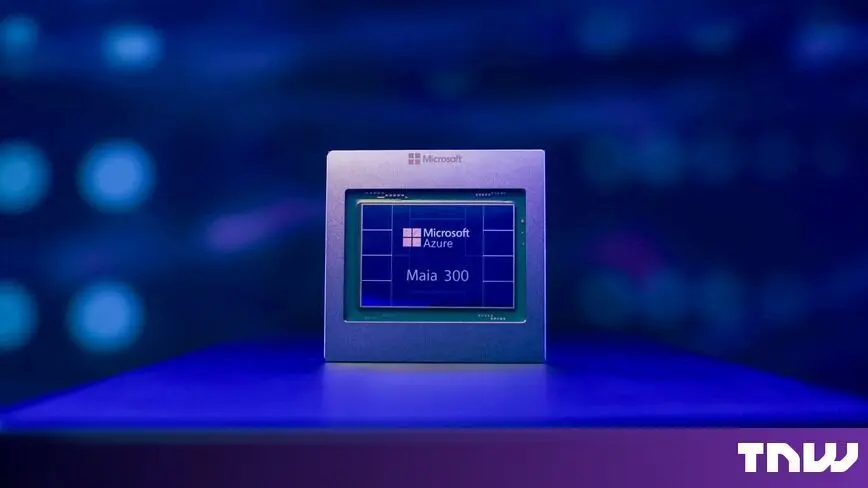
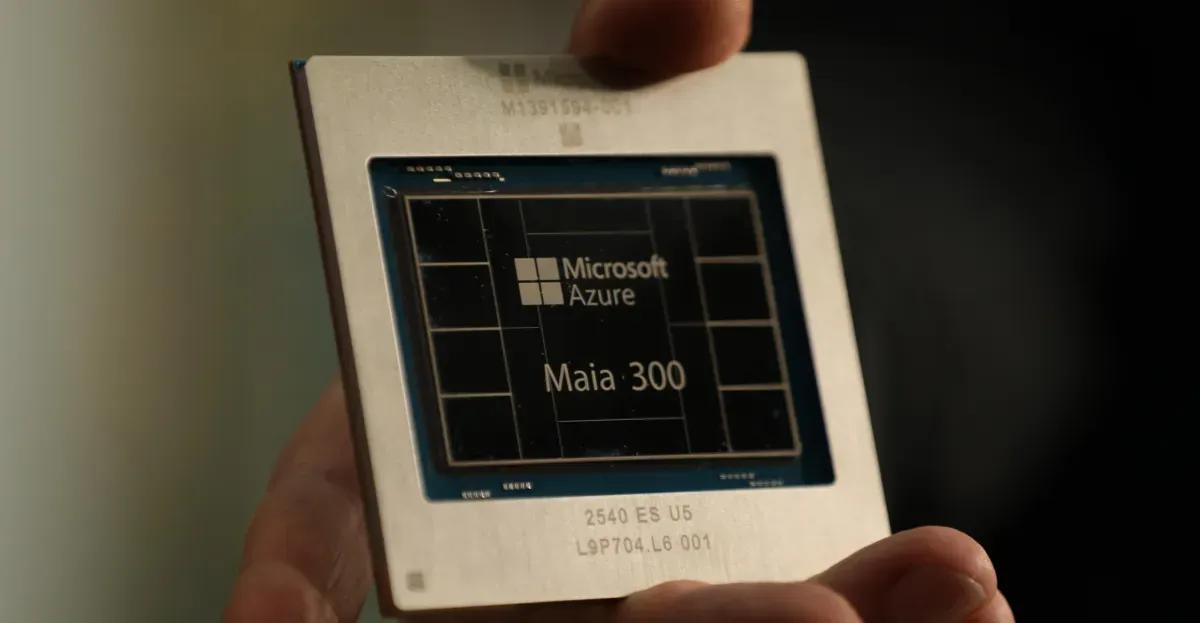
Microsoft announced its third-generation in-house AI chip, Maia 300, designed to become the primary AI inference system across its products starting in 2027. The custom AI chip delivers 40% more tokens per megawatt than leading GPU-based systems and up to 7x the rack-scale throughput of its predecessor, marking the company's biggest bet yet on self-designed silicon to reduce reliance on Nvidia.
Microsoft Unveils Maia 300 as Primary AI Inference System
Microsoft announced Maia 300, its third-generation in-house AI chip, positioning it to become the primary AI inference system for Microsoft products and services starting in 2027
1
. CEO Satya Nadella called this move "our biggest bet yet on our own silicon," signaling a strategic shift to reduce reliance on Nvidia's GPUs4
. The custom AI chip is designed specifically for AI workloads including long-context reasoning, latency-sensitive conversational experiences, and sustained multi-step agentic tasks that are rapidly emerging in the AI landscape1
.
Source: The Next Web
Efficiency Gains Drive Vertical Integration Strategy
The Maia 300 delivers substantial efficiency improvements through innovative chiplet architecture built on TSMC's N2P process node
1
. Microsoft expects the chip to produce 40% more tokens per megawatt compared to leading GPU-based systems, translating directly into operational cost savings for data center operations3
. In a full 96-accelerator configuration, each data center rack delivers up to 7x the rack-scale token throughput of Maia 200, its predecessor1
. These racks consume approximately 167 kilowatts of power, compared to Nvidia's GB300 AI server racks with 72 GPUs that draw about 142 kilowatts2
.Multi-Gigawatt Deployments Signal Massive Scale
Microsoft plans multi-gigawatt deployments of its homegrown AI chips starting in 2027, potentially representing more than a million Maia 300 chips
2
5
. Scott Guthrie, executive vice president of Microsoft's cloud group, stated that "we will scale our Azure Maia family to multi-gigawatt deployments starting in 2027, making Maia the primary AI inference system for Microsoft products and services"1
. This deployment scale comes as Microsoft expects to spend more than $175 billion in capital expenditures this calendar year2
. Evercore ISI analysts estimate that Maia will represent approximately 10% of Microsoft's spending on AI chips by the first quarter of 20273
.
Source: The Verge
Chiplet Architecture Enables Performance Breakthrough
The proprietary AI chips leverage a new chiplet architecture that separates compute, memory controller, and I/O functions across different process nodes
1
. The central computing processor uses specialized chiplets bonded together, with 2-nanometer technology from TSMC for key computing functions and cheaper 3-nanometer tech for data movement and other functions2
. "This increases the silicon area dedicated to compute performance and allows each function to use the technology best suited to its role," according to Microsoft's Azure hardware and infrastructure team1
. Each chip carries eight stacks of HBM4 memory, optimizing performance across the entire system5
.Current Maia 200 Already Powers Microsoft Services
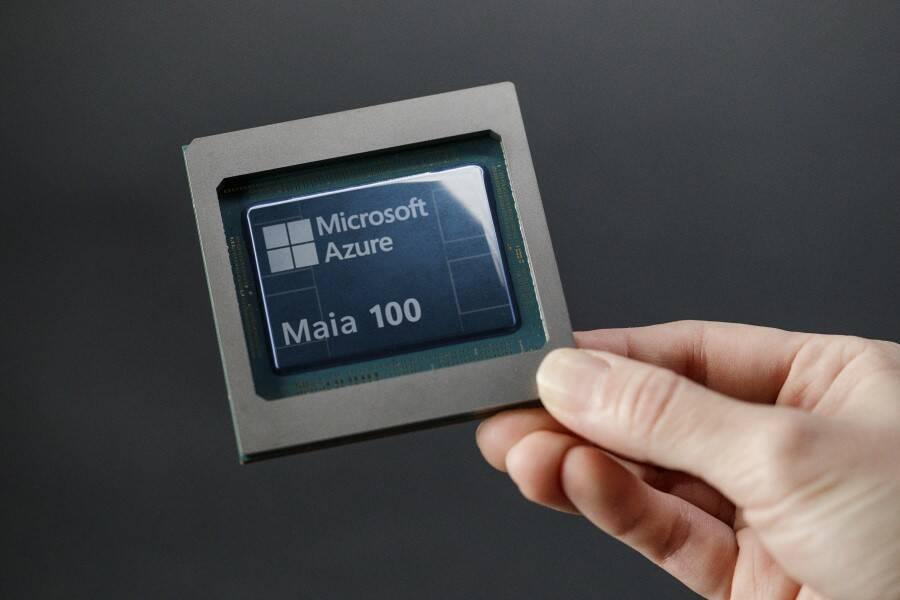
Maia 200, announced in January, is already running production AI workloads across Microsoft's ecosystem, including Microsoft Copilot, GitHub Copilot, Microsoft Foundry, and Microsoft's own AI models
1
. Guthrie noted that "Maia 200 is the best performing AI infrastructure in our fleet, measured in real world metrics for AI services"1
. The chip also runs OpenAI models delivered on Microsoft's Azure cloud computing service2
. CEO Satya Nadella stated in July that Maia 200 "delivers 30% better performance per dollar than the latest generation hardware in our fleet"3
.Related Stories



Strategic Implications for Microsoft's AI Ambitions
The self-designed silicon strategy is critical for Microsoft's goal of competing with Google DeepMind, OpenAI, and Anthropic in AI model development. Microsoft AI CEO Mustafa Suleyman emphasized: "We have to work across the full stack, all the way down to the silicon. At that scale we need a platform that we own, and that we co-design with our models. That's why running our Microsoft AI models on top of the Maia chip is a critical focus for our team"
1
. Rani Borkar, president of Azure hardware systems and infrastructure, explained that the chip is "basically delivering more intelligence for every watt, every dollar, and every byte of memory by optimizing across the entire system"2
.
Source: ET
Industry Context and Competitive Landscape
Microsoft's move reflects a broader industry trend as tech giants design their own AI chips to loosen Nvidia's grip on the AI computing market
2
. Google has started selling its Tensor Processing Units directly to customers, Amazon has won over companies like Anthropic with its Trainium chips, Meta has rolled out its own AI chips, and OpenAI unveiled its first custom chip built with Broadcom in June4
. However, Microsoft and Nvidia remain significant partners—Nadella and Nvidia CEO Jensen Huang shared the stage last week to launch Windows PCs built on Nvidia chips, and Nvidia continues as a key supplier for Microsoft's data centers, particularly for training models3
4
. Microsoft plans to share more details about Maia 300 at its Ignite conference in San Francisco next month4
5
.References
Summarized by

Navi
[4]
[5]
Related Stories
Recent Highlights
1
Microsoft and Nvidia Launch Surface Laptop Ultra: A $2,599 AI-Ready PC With RTX Spark Chip
Technology

2
Meta Muse AI Agent Surges to 6.6M Downloads Despite Privacy and Security Controversies
Technology

3
Scientists Build AI Model That Reconstructs Images From Brain Scans in Record Time
Science and Research
Recent Highlights
Today's Top Stories









Don’t drown in AI news. We cut through the noise - filtering, ranking and summarizing the most important AI news, breakthroughs and research daily. Follow topics that matter to you and stay ahead.


