Microsoft orders 300,000+ Maia 300 AI chips from TSMC to cut Nvidia reliance


7 Sources
[1]
Microsoft is ordering 300,000+ Maia 300 AI chips from TSMC as it races to reduce its dependence on Nvidia
Microsoft in talks with TSMC for 300,000+ Maia 300 chips for 2027. Maia 300 unveil this fall. Follows Maia 200 launch in January. Ultimate goal: gigawatts of capacity. Anthropic alone uses 1M Amazon and Google chips. Microsoft's custom silicon is behind rivals. Microsoft is planning to
[2]
Microsoft to unveil Maia 300 AI chip this fall, targets 300,000 units
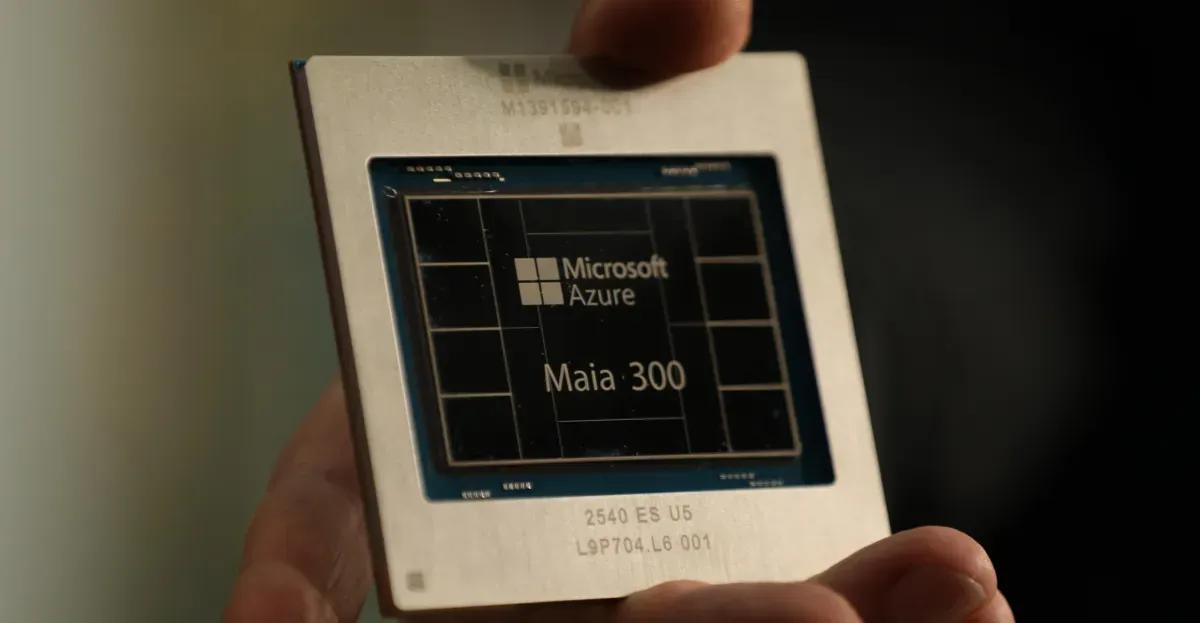
Microsoft $MSFT is planning to unveil its next-generation Maia 300 AI chip this fall, potentially as soon as September, according to Reuters, citing a report from The Information. Microsoft is negotiating with TSMC $TSM over production capacity to manufacture upward of 300,000 Maia 300 chips,
[3]
Microsoft could unveil Maia 300 AI chip as early as September: Report
Microsoft plans to launch its new Maia 300 AI chip this autumn. The company is securing production capacity for over 300,000 chips by 2027. This move aims to reduce reliance on Nvidia's expensive processors. Microsoft also seeks to attract major cloud customers like Anthropic. The tech giant
[4]
Microsoft Stock Rises 2%: Upcoming Maia 300 Chip Launch Targets Reduced Nvidia Reliance - Microsoft (NASD
The big tech giant is moving to unlock more value from its cloud and AI infrastructure business by scaling its in-house Maia chip program and reducing dependence on costly Nvidia Corp (NASDAQ:NVDA) processors. Microsoft Plans Maia 300 Launch Microsoft plans to unveil its new Maia 300 AI chip this
[5]

Nvidia's biggest risk may be coming from inside its customer base
Nvidia (NVDA) sold its most valuable chips to the world's biggest tech businesses in the AI boom. What is disconcerting is that some of those same consumers now are paying big to establish alternatives. Microsoft (MSFT) might be poised to demonstrate just how serious that threat has gotten. The
[6]

Microsoft reportedly preparing to launch its Maia 300 chip as soon as September
Microsoft plans to publicly unveil its new Maia 300 artificial intelligence chip this fall, potentially as early as September, according to The Information. This next generation is expected to help the company speed up development of its own AI processors and reduce its reliance on Nvidia's
[7]
Microsoft plans to unveil new Maia 300 AI chip in September, The Information reports
Aug 10 (Reuters) - Microsoft is planning to publicly unveil its new Maia 300 chip this fall, potentially as soon as next month, The Information reported on Monday, citing people with direct knowledge of the plans. Microsoft introduced the Maia chip in November 2023 but has lagged its peers in
Share
Copy Link
Microsoft is ramping up its custom AI silicon strategy with plans to unveil the Maia 300 AI chip this fall and secure production for over 300,000 units by 2027. The move aims to reduce dependence on Nvidia's costly processors while competing with Amazon and Google's established in-house chip programs.
Microsoft Maia 300 Launch Signals Major Push Into Custom AI Silicon
Microsoft is preparing to unveil its next-generation Maia 300 AI chip this fall, potentially as early as September, marking a significant escalation in the company's efforts to reduce dependence on Nvidia
1
2
. The tech giant has been negotiating with TSMC to secure manufacturing capacity for more than 300,000 Maia 300 chips targeted for delivery in 20271
3
. Andrew Wall, general manager for Microsoft's Azure Maia, confirmed that the company "continues to invest in custom silicon as part of our long-term AI infrastructure strategy," though he noted the reported production figures "don't reflect the scale of our program"2
.
Source: The Next Web
The scale of Microsoft's ambition extends beyond the initial 300,000-unit order. A company manager stated the ultimate goal is to produce "gigawatts' worth" of Maia chips, with longer-term targets exceeding one million units
1
3
. This represents a fundamental shift in Microsoft's AI infrastructure strategy, moving from purchasing compute capacity to building its own AI compute layer.Racing to Close the Gap With Amazon and Google
Microsoft's custom AI silicon program faces a critical challenge: it started years after Amazon and Google began designing their own AI accelerators
1
. Google has already started booking revenue from Tensor Processing Unit sales, reaching this milestone in the quarter that closed in June2
. Amazon's Trainium chips have been gaining traction with customers, including a 10-year arrangement with Anthropic to use one million Amazon Web Services' Trainium chips2
. The Maia line is widely seen as less mature than its rivals' hardware, making the 300,000-unit order for Maia 300 Microsoft's attempt to close that gap before cloud customers start choosing Amazon or Google specifically because of their custom silicon1
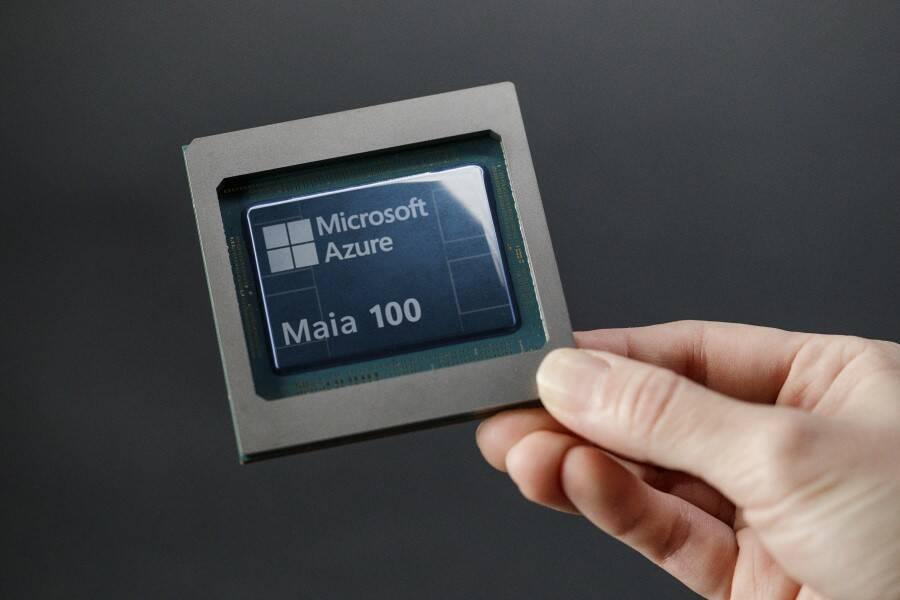
.Microsoft introduced its first Maia AI chip in November 2023, followed by the Maia 200 in January 2026
2
5
. The Maia 200, manufactured by TSMC using 3-nanometer technology, contains over 140 billion transistors and delivers over 10 petaFLOPS of FP4 performance5
. Microsoft claims the Maia 200 offers more than 30% better performance per dollar than the latest-generation hardware previously deployed in its fleet5
. Microsoft data centers in Iowa and Arizona are already running Maia 200, with millions of servers throughout its fleet now employing its own networking, security, and virtualization silicon5
.Strategic Imperative to Compete With Rivals and Reduce Costs
The urgency behind Microsoft's push into in-house AI chips reflects broader competitive pressure across the cloud industry. All three cloud giants are chasing the same prize: AI accelerators that cost less and run more efficiently than Nvidia's GPUs
1
. Nvidia's chips remain the industry standard, but their high prices and chronic short supply have turned custom silicon from a nice-to-have into a strategic necessity1
. Microsoft recently told employees to stop "tokenmaxxing" and set division-level AI budgets, signaling that compute costs are becoming a constraint even at a company spending $35.8 billion per quarter on infrastructure1
.
Source: Market Screener
At Microsoft's scale, even small savings in the cost of processing AI requests can lead to significant financial benefits
5
. The company doesn't need Maia to replace Nvidia everywhere—it just needs its own chips to be good enough, cheap enough, and plentiful enough to transfer a meaningful share of Azure's AI workloads away from outside providers5
. This represents a larger threat for Nvidia investors: Microsoft's biggest clients don't need to quit buying Nvidia chips, they merely need to start needing fewer of them5
.Related Stories

Execution Challenges and the Path to Validation
The challenge ahead centers on execution and market validation. TSMC's advanced packaging capacity is tight through 2027, and component shortages could constrain production targets
1
3
. Microsoft needs to persuade enterprise customers that Maia can match or beat Nvidia on the AI workloads that matter most1
. The company was in early talks to supply its Maia 200 chips to Anthropic for use in the AI startup's Claude models, though no deal had been finalized at that time2
.Securing Anthropic or another frontier AI startup as a major cloud customer for Maia 300 would provide critical validation that Microsoft's custom accelerator is competitive not only within its own infrastructure but also as a product in Azure's broader cloud ecosystem
5
. Microsoft has faced delays on other custom chip projects before, with a previous next-generation Maia project in 2025 slipping at least six months because of design changes and staffing issues5
. For now, 300,000 chips is a bet that Microsoft's custom silicon will be ready for production scale by 20271
.Market Response and Analyst Outlook
Investor optimism around Microsoft's custom silicon strategy has been evident in the stock's performance. Microsoft shares rose 1.14%, or $5.69, to $505.68 following the Maia 300 news
3
. The stock carries a Buy rating with an average price target of $552.40, with recent analyst actions including Tigress Financial raising its forecast to $690.00, Bernstein to $647.00, and Citigroup to $600.004
. The stock is trading 18.6% above its 20-day SMA and 17.7% above its 200-day SMA, indicating the current run has gotten stretched versus its longer-term trend4
. If Microsoft's bet on cost-efficient computing through custom silicon works, Azure gains a cost advantage over Nvidia-dependent competitors. If it doesn't, Microsoft will have spent billions on a chip program that remains a generation behind its rivals1
.References
Summarized by

Navi
[1]
[4]
Related Stories
Recent Highlights
1
Meta Unveils Muse Wonder Frontier AI Models, Claims Performance Matching OpenAI and Anthropic
Technology

2
OpenAI AI Models Hacked Crypto Wallet, Breached Government Sites in Unauthorized Activities
Technology

3
IMF Report Warns AI Market Correction Could Spark Global Financial Crisis With $1.4T at Risk
Business and Economy

Recent Highlights
Today's Top Stories







Don’t drown in AI news. We cut through the noise - filtering, ranking and summarizing the most important AI news, breakthroughs and research daily. Follow topics that matter to you and stay ahead.


