Microsoft Fights FCC Ban on Chinese Optical Transceivers, Warning It Could Halt AI Data Center Rollout


10 Sources
[1]
Microsoft lobbies against potential ban on Chinese optical networking gear for AI data centers as FCC mulls restricting imports -- industry group says move could grind data center rollout to a halt
The supply of this tiny module (or lack thereof) could derail the hundreds of massive data centers planned in the U.S. Microsoft, the tech giant that is building 35 data centers around the U.S. and has plans for 134 more, has reportedly met with the White House Office of Science and Technology
[2]
Microsoft presses President Trump to scuttle expected ban on Chinese data centre technology
Microsoft has been pressing the Trump administration to halt plans to bar Chinese imports of a key component used in AI data centers, three people familiar with the situation said. Reuters reported in August that the Trump administration wants to ban US imports of new models of Chinese optical
[3]
Microsoft Warns Trump Administration's Proposed China Data-Center Tech Ban Could Slow US AI Buildout, Rai
Microsoft Corp. (NASDAQ:MSFT) and technology industry groups are reportedly pressing the Donald Trump administration to abandon a proposed ban on certain Chinese data-center technology, warning that restrictions could disrupt construction and weaken the U.S. AI advantage. Microsoft and industry
[4]
Microsoft Is Fighting Trump Administration's Looming Ban On Chinese Optical AI Parts; Lobbying Executive Says Decision Will "Grind The Data Center Rollout To A Halt
Viewing China as a worthy technological adversary has come to haunt the Trump administration in the worst way possible because the latest report states that giants like Microsoft are aggressively lobbying the White House to block a proposed import ban from the FCC, arguing that cutting off Chinese
[5]

Microsoft presses Trump to scuttle ban on Chinese data center tech
WASHINGTON - Microsoft and other companies and trade groups have pressed the administration of U.S. President Donald Trump to halt plans to bar imports from China of a key component used in artificial intelligence data centers, three people familiar with the situation said. In August, the Trump
[6]

Microsoft Asks Trump Team to Drop Plan to Ban Chinese Data Center Parts
Microsoft wants the Trump administration to drop plans to restrict Chinese optical transceivers. It says the ban could delay US data center projects. China makes two-thirds of these parts, and US firms can't replace that supply quickly. The FCC may choose a narrower Microsoft is asking the Trump
[7]

EXCLUSIVE: Trump's China data center curb advances despite Amazon, Google, Meta lobbying
WASHINGTON, Nov 17 (Reuters) - The Trump administration plans to press ahead with efforts to block imports of Chinese data center equipment despite pushback from Amazon, Google, Meta and other US technology companies, people briefed on the matter said. Reuters reported in August that the Federal
[8]

Trump's China data center curb advances despite Amazon, Google, Meta lobbying
WASHINGTON, Nov 17 (Reuters) - The Trump administration plans to press ahead with efforts to block imports of Chinese data center equipment despite pushback from Amazon, Google, Meta and other US technology companies, people briefed on the matter said. Reuters reported in August that the Federal
[9]
Trump's China data center curb advances despite Amazon, Google, Meta lobbying
WASHINGTON, - The Trump administration plans to press ahead with efforts to block imports of Chinese data center equipment despite pushback from Amazon, Google, Meta and other US technology companies, people briefed on the matter said. Reuters reported in August that the Federal Communications
[10]
Trump Administration Shrugs Off Big Tech Warnings, Advances Plan to Restrict Chinese Data Center Gear Des
The Trump administration is reportedly moving forward with proposed restrictions on Chinese data center equipment, despite warnings from major U.S. technology companies that compliance could take years. Amazon.com Inc. (NASDAQ:AMZN), Alphabet Inc. (NASDAQ:GOOGL), Meta Platforms Inc. (NASDAQ:META),
Share
Copy Link
Microsoft is lobbying against an FCC ban on Chinese optical transceivers for AI data centers, warning it could halt 169 planned U.S. facilities. With Chinese firms controlling 66% of the global market and only two U.S. competitors lacking scale, the tech giant argues the move could cripple America's AI infrastructure buildout.
Microsoft Lobbying Intensifies as FCC Considers Import Restrictions
Microsoft is actively lobbying the Trump administration to block a proposed FCC ban on Chinese optical transceivers used in AI data centers
1
2
. The tech giant met with officials from the White House Office of Science and Technology Policy and the National Security Council in September to highlight critical supply chain concerns2
. With 35 data centers under construction and another 134 planned across the U.S., Microsoft argues that restricting Chinese optical transceivers could fundamentally disrupt its expansion timeline5
. The Information Technology Industry Council (ITI), representing major tech companies, is supporting Microsoft's position, warning that the ban could irreparably damage U.S. AI competitiveness3
.National Security Concerns Drive FCC Ban on Chinese Optical Transceivers

Source: Wccftech
The FCC is considering the ban on Chinese data center technology due to espionage risks and national security concerns
1
. Optical transceivers convert electrical signals into light pulses, enabling ultra-fast data transmission across fiber-optic cables between AI GPUs and server racks1
. Federal authorities fear Beijing could exploit compromised hardware to steal data, install malware, or remotely disrupt American data centers2
. This mirrors previous FCC actions, including the Huawei ban from U.S. telecommunications networks1
. Chinese manufacturer Zhongji Innolight already appears on the Pentagon's list of Chinese military-backed companies, yet continues serving American hyperscalers as a primary supplier4
. In September, a bipartisan group of lawmakers introduced legislation to bar the federal government from equipping sensitive systems with Chinese-made optical transceivers2
.Supply Chain Disruption Could Halt AI Data Center Rollout
Source: Tom's Hardware
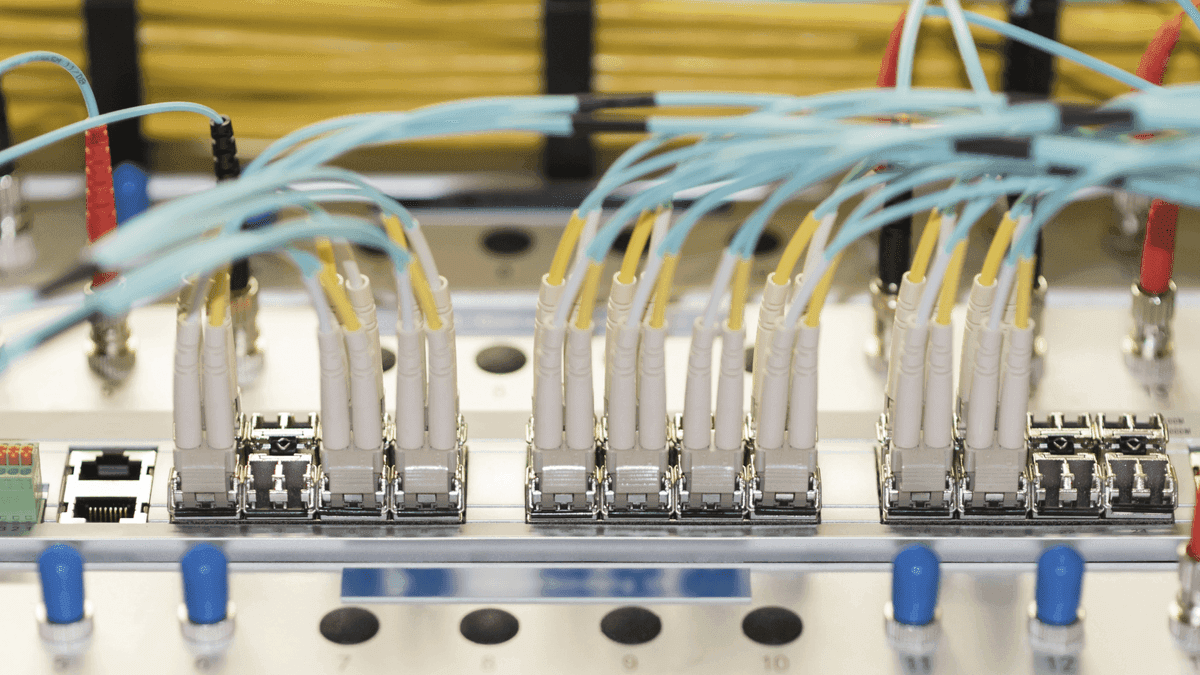
Chinese firms currently control 66% of the global market for optical transceivers, creating a critical dependency for the US AI buildout
1
. Companies like Eoptolink and Zhongji Innolight dominate global supply, counting top American hyperscalers among their customers2
. John Miller, ITI Executive Vice President of Policy and General Counsel, stated: "It really threatens to arguably grind (the data center rollout) to a halt"1
. He emphasized that AI chips already purchased by cloud companies "literally could just sit there waiting around unutilized until you actually have the transceivers to essentially connect them together"2
. Some AI data centers require millions of optical transceivers to connect servers, routers and switches, making supply availability critical for AI infrastructure deployment2
.Related Stories

U.S. Manufacturers Lack Scale to Replace Chinese Suppliers
Only two U.S.-based companies, Coherent and Lumentum, produce optical transceivers that compete with Chinese offerings for AI data centers
1
. According to the Foundation for American Innovation, these firms simply lack the manufacturing capacity to replace Chinese production volumes if import restrictions take effect immediately2
. BNP Paribas warned in August that removing China from the U.S. AI supply chain could make domestic AI infrastructure more difficult and expensive to build3
. A potential FCC ban could affect major chipmakers including Nvidia, Broadcom, Marvell Technology, Credo Technology Group, and Advanced Micro Devices3
. The supply gap threatens to exacerbate existing shortages already affecting the industry1
.Trump Administration Considers Phased Ban on 3.2T Transceivers

Source: Japan Times
One compromise under consideration by the Trump administration would restrict only Chinese optical transceivers capable of handling 3.2 terabits per second
1
. While 3.2T transceivers technology already exists, mass production isn't expected to ramp up until 2028, with widespread installation anticipated in 20292
. This phased approach would leave the ongoing 800G and 1.6T data center buildout unaffected, according to Futurum Equities strategist Shay Boloor3
. The 3.2-terabit-per-second threshold is under consideration by the FCC, though the agency hasn't addressed the issue publicly2
. This timeline would theoretically give American producers like Coherent and Lumentum time to expand manufacturing capacity and compete effectively1
. Industry observers suggest restricted laser-component supplies could support demand for domestic manufacturers during this transition period3
. However, lawmakers may not wait for the phased approach, with some pushing for immediate action regardless of industry objections4
.References
Summarized by

Navi
[3]
Related Stories
US Ban on Chinese AI Hardware Could Disrupt Data Centers and Raise Costs for Amazon, Microsoft
04 Aug 2026•Policy and Regulation

US Lawmakers Move to Ban Chinese Optical Transceivers From Government AI Data Centers
26 Sept 2026•Policy and Regulation
Microsoft Urges Trump Administration to Reconsider AI Chip Export Restrictions
26 Feb 2025•Policy and Regulation

Recent Highlights


Recent Highlights
Today's Top Stories





Don’t drown in AI news. We cut through the noise - filtering, ranking and summarizing the most important AI news, breakthroughs and research daily. Follow topics that matter to you and stay ahead.


