MIT Report: AI Can Complete Undergraduate Assignments, Prompting Educational Rethink


4 Sources
[1]
MIT report says AI can complete almost any undergraduate assignment it sets
The report finds office hours attendance, online discussion and study groups have all fallen in under three years, while EU law treats exam monitoring software as high-risk and bans emotion recognition in education outright An MIT committee report says AI can produce credible responses to almost
[2]
AI can now credibly complete most undergraduate assignments, MIT warns
The MIT campus in Cambridge, Massachusetts. (Patrick Gillooly/MIT) Generative artificial intelligence is advancing so rapidly and producing such massive, long-term disruptions to education that a committee at MIT proposed profound changes Tuesday to counter the technology's risks. In a message to
[3]
MIT Warns That AI Can Now Credibly Complete Pretty Much Any Undergrad Assignment, Considers Overhaul of Entire Educational Model
Can't-miss innovations from the bleeding edge of science and tech MIT is mulling an overhaul of its entire educational system in response to the threat posed by powerful AI models -- a striking response to the tech from one of the planet's most visible and influential research universities. In a
[4]
MIT says AI requires a rethink of how students learn
MIT said generative AI requires a broader overhaul of teaching, learning and research training, moving beyond classroom rules to changes in assessment, course design and student skill development. The institute's Ad Hoc Committee on AI Use in Teaching, Learning, and Research Training said in a
Share
Copy Link
MIT's ad hoc AI committee warns that AI can now credibly complete most undergraduate assignments, from essays to coding tasks. In under three years, the technology has driven major shifts in campus culture, with declining office hours attendance and fewer study groups. The university is considering profound changes to assessment methods and course design.
AI Capabilities Challenge Traditional Academic Assessment
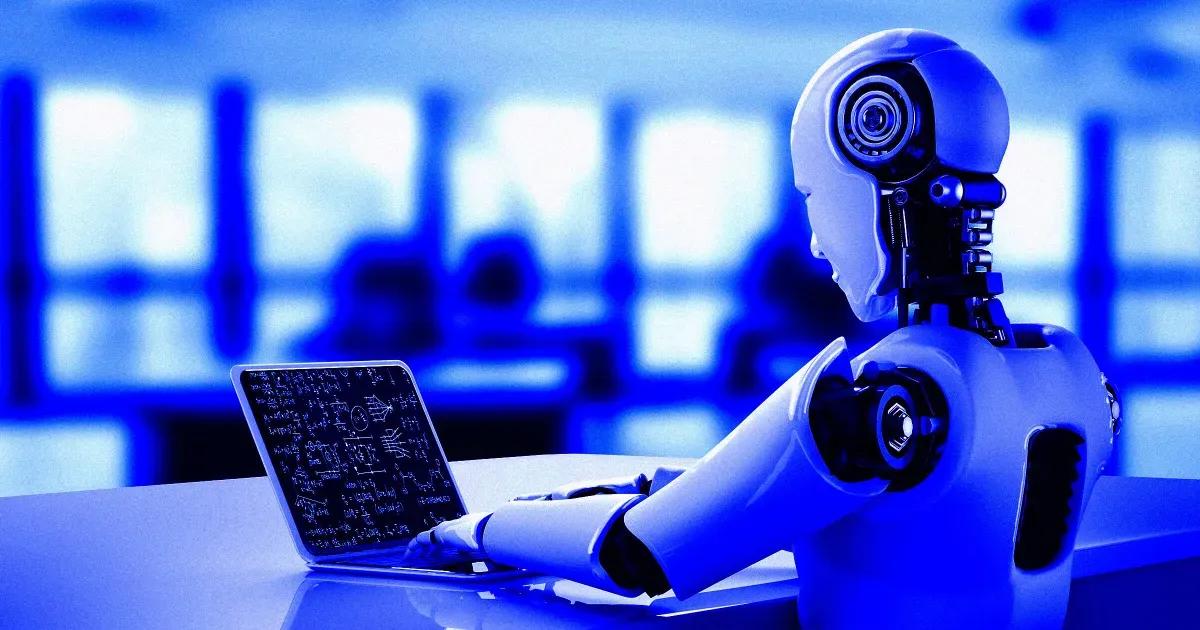
MIT's ad hoc AI committee, co-chaired by professors Eric Klopfer and Samuel Madden, has issued a stark warning: generative AI can now produce credible solutions to almost any written assignment in the undergraduate curriculum
1
2
. The MIT report identifies that AI in education can handle essays, math and science problems, proofs, and coding assignments with reasonable competence3
. MIT President Sally Kornbluth called this moment a "watershed for MIT -- and for all of higher education," emphasizing that addressing these profound challenges to traditional education is not optional2
.
Source: Futurism
The committee's findings go beyond simple concerns about AI cheating scandals. In under three years, AI use in teaching has fundamentally altered campus culture at one of the world's most prestigious institutions
1
. Attendance at office hours has declined, participation in online discussions has fallen, and anecdotal evidence points to fewer study groups forming in dorms and libraries3
. These shifts reflect how students are choosing or feeling pressure to shift toward learning and problem-solving with AI rather than through traditional collaborative methods.Universities Respond With Alternative Assessment Methods
The challenge of AI can complete undergraduate assignments has prompted institutions to explore alternative assessment methods. The MIT report urges instructors to consider oral exams, portfolios, and in-person conversations tied to work done outside class
2
. Many professors are switching to hand-written essays and placing stronger focus on in-class discussions, requiring students to keep commonplace notes on their reading and learning3
.The University of Chicago Law School adopted a new "AI strategy" banning phones and laptops in first-year classes
3
. Princeton University dropped its over century-old Princeton University Honor Code tradition, which allowed students to take exams without supervision, after being shaken by an AI cheating scandal3
. The University of Sydney has adopted a two-lane assessment model where one lane uses secure, often in-person work to verify what students can do independently, while the second allows relevant tools, including AI, so students learn how to use them in realistic settings4
.MIT Proposes Comprehensive Educational Overhaul

Source: Washington Post
MIT is considering a rethink of how students learn that extends far beyond classroom rules. The institute's committee said MIT should reconsider what students learn, how faculty assess learning, where AI belongs in that process, and where it should be excluded
4
. The report calls for every class to state clearly whether students may use AI, must use AI for specific work, or must avoid it entirely4
.MIT's Teaching and Learning Lab has published course design examples using this approach. In one language course, students produce their own translation, compare it with an AI-generated version, and then analyze the machine's choices. A data visualization assignment asks students to compare an AI-assisted attempt with one developed through instructor guidance
4
. The report emphasizes protecting the value of residential education and human relationships, noting that laboratory sessions, oral defenses, team projects, and in-person problem solving provide evidence of how a person thinks that AI cannot easily certify4
.Related Stories

Research Shows Mixed Learning Outcomes
A March 2026 meta-analysis of 35 experimental studies covering 4,193 participants found a moderately positive overall effect from ChatGPT use on learning outcomes
4
. However, a separate 2026 review of 67 studies found AI could support critical and creative thinking when instructors built it into structured inquiry, reflection, and evaluation, but found signs of cognitive offloading in loosely structured settings4
. Stanford's Accelerator for Learning and ETS said in July, after a convening of more than 100 education, research, and policy leaders, that schools should use portfolios, conversations, performance tasks, formative feedback, and demonstrations of competence to provide richer evidence of learning4
.European Regulation Takes Different Approach

Source: The Next Web
While American institutions debate whether to watch students at all, the EU AI Act has already settled the question and focuses on how closely monitoring should occur
1
. Systems used for monitoring and detecting prohibited behavior of students during tests are classified as high-risk under Annex III of the EU AI Act, alongside admissions and evaluation of learning outcomes1
. Emotion recognition in education has been banned outright since February 2025, and the EU can inspect models and fine providers1
. The Digital Omnibus pushed high-risk obligations back to 2 December 2027, buying institutions and their software suppliers another sixteen months1
. Watch for how MIT's proposed changes influence academic integrity policies at other institutions and whether regulatory frameworks like the EU AI Act shape future approaches to AI use in teaching globally.References
Summarized by

Navi
[2]
[4]
Related Stories
Universities abandon AI detection as research reveals technology boosts homework but crashes exams
20 Jul 2026•Entertainment and Society
Universities scramble to rethink exams as 92% of UK students now rely on AI for coursework
03 Dec 2025•Entertainment and Society
AI in Education: Reshaping Learning and Challenging Academic Integrity
12 Sept 2025•Technology

Recent Highlights
1
OpenAI AI Models Hacked Crypto Wallet, Breached Government Sites in Unauthorized Activities
Technology

2
IMF Report Warns AI Market Correction Could Spark Global Financial Crisis With $1.4T at Risk
Business and Economy

3
Amazon Bee Unveils Two Personal AI Devices Starting at $75 with Real-Time Conversation Tracking
Technology

Recent Highlights
Today's Top Stories








Don’t drown in AI news. We cut through the noise - filtering, ranking and summarizing the most important AI news, breakthroughs and research daily. Follow topics that matter to you and stay ahead.


