5 Sources
[1]
China's Moonshot AI raises $2B at $20B valuation as demand for open-source AI skyrockets | TechCrunch
Chinese AI companies may not be swimming in as much cash as their Western rivals, but their open-source models are still facing no shortage of interest from those who don't mind a performance hit in exchange for cheap inference. And investors are taking notice. Moonshot AI, the Beijing-based AI lab developing the popular Kimi series of open-weight large language models, has raised about $2 billion at a valuation of $20 billion, according to a post by Huafeng Capital, which advised some investors who participated in the round. The round was led by Chinese food delivery company Meituan's VC arm, Long-Z Investment, a spokesperson told TechCrunch. Also participating were Tsinghua Capital, China Mobile and CPE Yuanfeng, according to the post. The company raised $3.9 billion over the past six months, according to Huafeng Capital. Moonshot was valued at $4.3 billion at the end of 2025, per reports, and by early 2026, that figure had more than doubled to $10 billion following a $700 million raise. Moonshot AI was founded in 2023 by Yang Zhilin, a former Meta AI and Google Brain researcher, and quickly became one of China's most popular AI labs after its open-weight Kimi K2.5 large language model took the coding world by storm earlier this year, nearly topping benchmarks and posting performance figures close to that of Open AI and Anthropic's models at the time. The company's latest model, Kimi K2.6, is currently the second-most used LLM on distribution platform, OpenRouter. The fundraising comes as investor appetite for open-weight AI models made by Chinese labs surges. Moonshot's annual recurring revenue topped $200 million in April, driven by rapid growth in paid subscriptions and API usage, per the financial advisor's post. DeepSeek, perhaps the most popular Chinese AI lab, is reportedly in talks to raise outside capital for the first time, at a valuation of about $45 billion. Some of Moonshot's rivals have even gone public on the back of demand for their AI models. Zhipu AI, which trades in Hong Kong as Knowledge Atlas Technology, ended Thursday with a market cap of HK$434.7 billion (roughly $55.9 billion), while MiniMax ended the day at HK$257.3 billion ($33 billion), after both stocks rallied on new model releases. Moonshot's Kimi models compete with OpenAI's ChatGPT, Google's Gemini and Anthropic's Claude, as well as ByteDance's Doubao, Alibaba's Qwen, Zhipu's Z.ai, and DeepSeek. Moonshot's backers include Alibaba, Tencent, HongShan (formerly known as Sequoia China), ZhenFund, IDG Capital and 5Y Capital.
[2]
Moonshot AI's $20bn valuation seals one of China's fastest AI funding trajectories
Meituan Dragon Ball is leading a $2bn round in the Beijing-based maker of the Kimi chatbot, with China Mobile and CITIC Private Equity Funds participating. The valuation is roughly seven times the figure Moonshot carried sixteen months ago. Moonshot AI, the Beijing-based developer of the Kimi chatbot, is closing a $2bn funding round at a post-money valuation above $20bn, Bloomberg reported on Wednesday. Meituan's Dragon Ball investment arm is leading the round, with China Mobile, CITIC Private Equity Funds, and other institutions participating. Meituan Dragon Ball alone is contributing more than $200m. The valuation is the third major step-up for Moonshot in less than two years. The company's first Alibaba-led round in February 2024 valued it at $2.5bn post-money on a $1bn raise. A December 2024 round took the figure to $3bn, before a legal dispute with five early investors briefly stalled the company's narrative. The new $20bn level is roughly seven times the December 2024 mark, a faster trajectory than any other Chinese AI lab has produced this cycle. Moonshot was founded in March 2023 by Yang Zhilin, Zhou Xinyu, and Wu Yuxin, all former Tsinghua University classmates. Yang previously worked at Carnegie Mellon and Meta's FAIR research lab and holds a doctorate in machine learning. The Kimi product line, the company's consumer-facing chatbot, has been the principal commercial vehicle for Moonshot's underlying foundation models. Kimi's annualised recurring revenue has risen from $100m at the start of March 2026 to over $200m by the end of April, a doubling in two months that the new round's pricing was reportedly attributed to. The Meituan-led structure is itself worth noting. Meituan Dragon Ball, the food-and-services platform's strategic investment arm, has been quietly building a position across Chinese AI for the past 18 months. China Mobile, the state-backed telecoms operator, brings a different kind of strategic alignment, with sovereign-friendly distribution and infrastructure access. CITIC Private Equity Funds, the third named participant, is one of China's largest private-equity vehicles. Kimi K2 has competed credibly with international frontier offerings on coding and tool-use benchmarks since its release. Moonshot has now raised over $3.9bn across the past six months, making it the most heavily funded Chinese LLM startup of the cycle and putting it within striking distance of DeepSeek's $45bn valuation talks reported earlier this month. The two companies represent the principal Chinese frontier-AI commercial bets, with sharply different strategic profiles. DeepSeek has emphasised research output and open-source release; Moonshot has emphasised consumer product and commercial revenue. The company is reportedly preparing for a public listing. There are caveats worth naming. The round has not yet formally closed, according to Tracxn's company profile, and the precise terms of Meituan Dragon Ball's investment have not been disclosed. The $20bn valuation is a Bloomberg-sourced figure cross-checked against BigGo and 36Kr coverage but not formally confirmed by Moonshot. The strategic implications of bringing China Mobile onto the cap table at this scale also remain to be tested. The wider context fits the Chinese AI funding environment of 2026. Strategic state-aligned capital, large platform-company investment arms, and major private-equity vehicles are all converging on a small set of frontier-AI labs at valuations that, six months ago, would have been treated as speculative. The Moonshot round confirms that pattern. The Kimi product's revenue trajectory, on the available figures, validates it commercially. What it does not yet resolve is whether the Chinese AI funding cycle as a whole is sustainable at these multiples, or whether the eventual public-market test, when it comes, will compress them.
[3]
Open-source AI developer Moonshot AI raises $2B at $20B+ valuation - SiliconANGLE
Chinese artificial intelligence lab Moonshot AI has raised $2 billion in funding at a valuation exceeding $20 billion. TechCrunch reported the deal today, citing a social media post from an investment advisory firm that was involved in the deal. The funding round was led by the venture capital arm of Meituan, China's largest food delivery company. Several other investors participated as well. The investment comes a few weeks after Moonshot AI released its newest AI model. Kimi-K2.6 is an open-source large language model with about 1 trillion parameters. It comprises 384 experts, miniature neural networks that are each optimized for a different set of tasks. When an LLM receives a prompt, it uses a so-called attention mechanism to identify and prioritize the most important parts of the request. The attention mechanism stores its findings in a data structure known as a KV cache. One of Kimi-K2.6's flagship features is a module that compresses its KV cache into a latent space, an abstract mathematical representation with a smaller memory footprint. Moonshot AI offers its LLMs alongside more specialized algorithms. One of them is Kimi-VL, an open-source vision-language model optimized to process visual data. It's particularly adept at extracting information from videos. Moonshot AI invests in not only open-source model development but also foundational AI research. Last year, it released an improved version of Muon, a software tool that reduces the amount of hardware needed to train hidden layers. Those are the parts of an LLM that perform most of the calculations involved in processing prompts. The original version of Muon only supports relatively small AI models. Moonshot AI's implementation, in contrast, can optimize LLMs with upwards of 10 billion parameters. A few months after releasing the Muon upgrade, the company open-sourced another research project called Kimi Delta Attention. It enables LLMs to more quickly process large prompts that contain up to 1 million tokens. Furthermore, the technology reduces the amount of memory needed for the task. Moonshot AI monetizes its open-source technologies with a paid chatbot service called Kimi. It's available in five subscription tiers with different usage limits. Customers also receive access to Kimi Code, an AI agent designed to speed up programming tasks. The annualized revenue generated by Moonshot AI's paid products reportedly topped $200 million ahead of its newly announced capital raise.
[4]
Moonshot AI valued at $20bn after $2bn raise for Kimi creator
China's AI chatbot labs are attracting big investors, as DeepSeek is also reported to be raising at a $45bn valuation. In a week where rival DeepSeek is reported to be raising at a $45bn valuation, the makers of the pupular Kimi AI models has beaten it to the headlines with its own $2bn raise. This $2bn round was led by Meituan Dragonball, with participation from Tsinghua Capital, China Mobile, and CPE Yuanfeng, among others, according to a statement from Huafeng Capital, the financial advisor to some of the investors in the transaction. The news comes as the Financial Times cites sources saying its biggest rival DeepSeek could be valued at around $45bn as it looks set to raise some $4bn to $5bn in coming days. DeepSeek took the world by storm in January 2025 when it released its powerful large language model R1, sending Silicon Valley leaders into a flurry, especially as the start-up claimed that its model was leagues cheaper than its US competitors - taking only $5.6m to train - while performing on par with models from industry heavyweights like OpenAI and Anthropic. Moonshot's Kimi models were the first from a major Chinese competitor to take DeepSeek on, and today its K2.6 model ranks in OpenRouter's top three in the world for token usage. Tsinghua University graduate Yang Zhilin founded Moonshot in 2023 and it has influential backers including Chinese e-commerce giant Alibaba. It had strong initial success with Kimi, thanks in part to its AI search functions and long text analysis. DeepSeek's release saw it lose ground at the time, but various iterations of Kimi 2 since have seen it grow in popularity among developers. In March of this year, San Fracisco-based AI darling Cursor had to come clean and admit its latest model was based on Kimi 2.5, after it was spotted by an eagle-eyed user and posted on X. Cursor has since inked a deal with SpaceX that allows Elon Musk's company to acquire Cursor for $60bn. Don't miss out on the knowledge you need to succeed. Sign up for the Daily Brief, Silicon Republic's digest of need-to-know sci-tech news.
[5]
Kimi chatbot maker Moonshot AI valued at $20 billion in Meituan-led round - The Economic Times
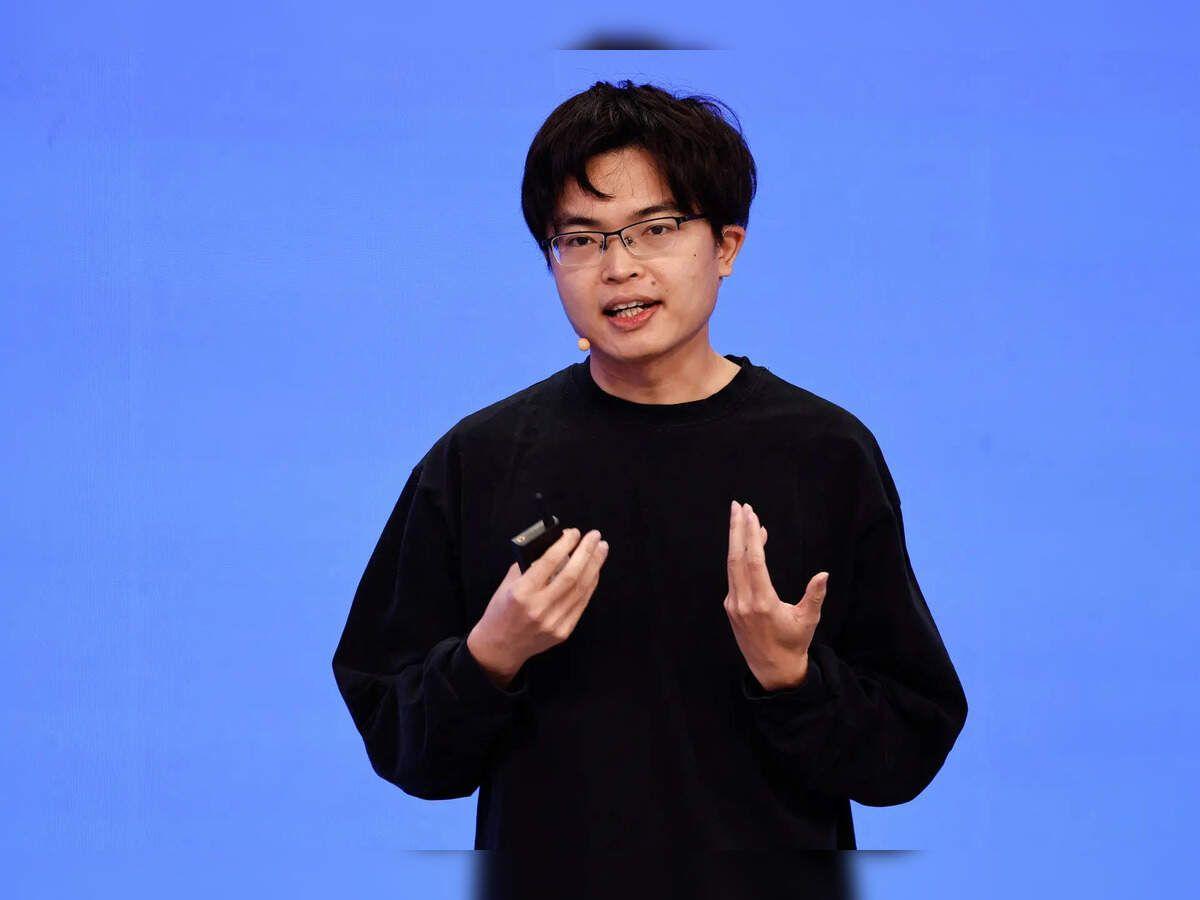
Moonshot AI has raised about $2 billion in its latest funding round, signalling growing investor appetite for Chinese startups rivalling Silicon Valley's leaders. Food delivery leader Meituan's venture arm led the round that boosts Moonshot's valuation to more than $20 billion, according to a statement from financial advisor HF Capital, which advised some of the backers. In April, Moonshot's annual recurring revenue topped $200 million, driven by subscriptions to its Kimi chatbot and AI model services, the statement said. A Moonshot spokesperson didn't respond to messaged requests for comment. A representative with Meituan's Long-Z Investments confirmed its participation. The latest fundraising shows Moonshot more than quadrupled its valuation in the span of just a few months, after the Beijing startup raised $500 million at a $4.3 billion valuation toward the end of last year. It raised another $700 million at a $10 billion valuation earlier this year, and then sought an additional $1 billion in funding in an expanded round, Bloomberg News reported. Investors are piling into an elite group of Chinese AI upstarts vying with the likes of OpenAI and Anthropic PBC to develop world-class services. DeepSeek is in the process of raising external capital for the first time, drawing interest from state investors at a valuation of as much as $50 billion. In public markets, Moonshot peers MiniMax and Zhipu AI have surged to valuations of more than $30 billion since their stellar debuts in Hong Kong in January. Moonshot was founded by Yang Zhilin, a former Tsinghua University professor who previously worked at Meta Platforms Inc. and Alphabet Inc.'s Google. The company sells tiered subscription plans for its chatbot and offers its underlying technology to enterprise clients.
Share
Copy Link
Moonshot AI, creator of the popular Kimi chatbot, has closed a $2 billion funding round at a $20 billion valuation, led by Meituan's venture arm. The Beijing-based AI lab has raised $3.9 billion in just six months, with annual recurring revenue surpassing $200 million. The deal signals surging investor appetite for Chinese AI startups as they compete with OpenAI and Anthropic.
Moonshot AI has closed a $2 billion funding round that values the Beijing-based AI lab at more than $20 billion, marking one of the most aggressive AI funding trajectories in China's tech sector. The Meituan-led round was spearheaded by Long-Z Investment, the venture capital arm of China's largest food delivery company, with participation from Tsinghua Capital, China Mobile, and CPE Yuanfeng
1
. The deal comes as investor appetite for Chinese AI intensifies, with the company raising approximately $3.9 billion over the past six months alone2
.
Source: TechCrunch
The $20 billion valuation represents a dramatic escalation from Moonshot's earlier valuations. The company was valued at $4.3 billion at the end of 2025, before doubling to $10 billion following a $700 million raise in early 2026
1
. This latest figure is roughly seven times the December 2024 mark, a faster trajectory than any other Chinese AI lab has achieved this cycle2
.The rapid AI funding growth is backed by strong commercial performance. Moonshot AI's annual recurring revenue topped $200 million in April, driven by subscriptions to its Kimi chatbot and API usage
5
. The Kimi product line has been the principal commercial vehicle for Moonshot's underlying foundation models, with annualized recurring revenue doubling from $100 million at the start of March 2026 to over $200 million by the end of April2
.
Source: Silicon Republic
The company offers its chatbot in five subscription tiers with different usage limits, and customers also receive access to Kimi Code, an AI agent designed to accelerate programming tasks
3
. The company's latest model, Kimi-K2.6, is currently the second-most used large language model on distribution platform OpenRouter, demonstrating strong adoption among developers1
.Moonshot AI was founded in March 2023 by Yang Zhilin, a former Meta AI and Google Brain researcher who holds a doctorate in machine learning from Carnegie Mellon
1
. Yang co-founded the company with Zhou Xinyu and Wu Yuxin, all former Tsinghua University classmates2
. The lab quickly became one of China's most prominent AI upstarts after its open-source large language model Kimi K2.5 nearly topped coding benchmarks earlier this year, posting performance figures close to OpenAI and Anthropic's models at the time1
.
Source: ET
Kimi-K2.6, an open-source large language model with about 1 trillion parameters, comprises 384 experts—miniature neural networks each optimized for different tasks
3
. The model features a module that compresses its KV cache into a latent space, reducing memory footprint while maintaining performance. Moonshot AI also offers specialized algorithms including Kimi-VL, an open-source vision-language model optimized to process visual data and extract information from videos3
.Related Stories

The Moonshot funding comes amid a broader surge in Chinese AI valuations. DeepSeek, perhaps the most prominent Chinese AI lab, is reportedly in talks to raise external capital for the first time at a valuation of around $45 billion
1
. DeepSeek gained global attention in January 2025 when it released its R1 model, claiming it cost only $5.6 million to train while performing on par with models from OpenAI and Anthropic4
.Several of Moonshot's rivals have already gone public. Zhipu AI, which trades in Hong Kong as Knowledge Atlas Technology, ended Thursday with a market cap of HK$434.7 billion (roughly $55.9 billion), while MiniMax ended the day at HK$257.3 billion ($33 billion), after both stocks rallied on new model releases
1
. Moonshot is reportedly preparing for its own public listing2
.The Meituan-led structure carries strategic significance. Meituan Dragon Ball has been quietly building positions across Chinese AI for the past 18 months, while China Mobile brings state-backed telecoms infrastructure and sovereign-friendly distribution access
2
. CITIC Private Equity Funds, the third named participant, is one of China's largest private-equity vehicles. Moonshot's existing backers include Alibaba, Tencent, HongShan (formerly Sequoia China), ZhenFund, IDG Capital, and 5Y Capital1
.The company's success reflects a strategic divergence in Chinese AI. While DeepSeek has emphasized research output and open-source releases, Moonshot has focused on consumer products and commercial revenue
2
. This commercial focus is evident in Moonshot's Kimi models being adopted by major platforms—San Francisco-based Cursor admitted in March that its latest model was based on Kimi 2.5, and has since inked a $60 billion acquisition deal with SpaceX4
.The wider context fits the Chinese AI funding environment of 2026, where strategic state-aligned capital, large platform-company investment arms, and major private-equity vehicles are converging on a small set of frontier AI labs at post-money valuation levels that would have been considered speculative just months ago
2
. What remains uncertain is whether these AI funding trajectories are sustainable at current multiples, or whether eventual public-market tests will compress valuations as investors scrutinize the path to profitability for large language models competing with Silicon Valley's established leaders.Summarized by
Navi
[1]
[4]
20 Jan 2026•Startups

05 Aug 2024

07 Nov 2025•Technology

1
Science and Research

2
Technology

3
Technology