3 Sources
[1]
Morgan Stanley doubles China humanoid robot shipment forecast as commercialization accelerates
Geopolitical tensions remained a challenge as companies expanded overseas. Morgan Stanley has sharply raised its outlook for China's humanoid robotics market, saying the industry's shift from demonstration to commercial deployment has proved faster than expected. The Wall Street bank upgraded its forecast for China's humanoid robot shipments for a second time this year on Tuesday, expecting 50,000 units to ship this year, nearly double its previous projection of 28,000. The bank had already doubled its initial January forecast of 14,000 units. Morgan Stanley estimated China's humanoid robot market will reach $2 billion this year and grow to $15 billion by 2030. Annual shipments are forecast to reach 446,000 units by then. The forecast includes only external sales, excluding those produced for prototypes, pre-order trials, or internal use. "Commercial verification, policy support, and supply-chain feedback point to faster humanoid adoption in China," Sheng Zhong, equity analyst at Morgan Stanley, said in a note Tuesday. China has accelerated its push to dominate the industry, with a growing roster of domestic manufacturers racing to scale production and deploy robots in real-world settings such as factories, convenience stores and restaurants. Beijing has also made developing "embodied AI" -- artificial intelligence embedded in physical systems such as robots -- a priority for the coming five years, directing local governments to subsidize startups with land and office space while ordering banks to extend favorable lending terms. Last year, about 13,000 humanoids were shipped worldwide, according to research firm Omdia. Chinese companies dominated the top five positions by shipments, while American rival Figure AI ranked seventh, and Tesla was ninth. Tesla CEO Elon Musk said earlier this year that the company's Optimus humanoid robot wouldn't start sales to the public until the end of 2027. Humanoid robotics could become the "next big frontier" for investors eyeing China's rapid tech development, said Joe Ngai, senior partner and chairman of McKinsey Greater China. "When you walk outside [in China], you see all these startups and more advanced companies, all these robots dancing -- but robotics usage on the industrial side is often a below-the-radar story," Ngai told CNBC's Elaine Yu on Wednesday on the sidelines of the World Economic Forum's Annual Meeting in the city of Dalian. "If you go to any Chinese factory right now, there's more automation and robotics that's been deployed than anywhere else in the world," Ngai added. Morgan Stanley's supply chain field research also pointed to faster commercialization, citing factory and logistics settings, as well as further rollouts in unmanned retail stores and interactive commercial services. The bank named Shanghai-listed Leaderdrive as a major beneficiary of the rise in humanoids, raising its 12-month target price to 464 yuan ($68) from 269 yuan. The Suzhou-headquartered company supplies precision robotic components to domestic humanoid makers such as Ubtech and Galbot. Leaderdrive could hold a 40% global market share this year and 25% over the longer term, Zhong said, supported by robust shipments and its strong customer exposure. Chinese robotic firms are also increasingly eyeing overseas expansion. Seer Intelligent, a Shanghai-based robotics company that began trading in Hong Kong on Wednesday, has expanded beyond China since 2021, with overseas revenue from more than 65 countries contributing 18% of its total sales last year, according to Jonathan Fan, the company's chief operating officer. But geopolitical uncertainty and simmering trade tensions remain the most significant headwind, Fan told CNBC's Emily Chan on Monday. He said the company was focusing on geographic diversification to reduce reliance on a single market and strict compliance with local regulations in each market it operates. Policymakers in Washington have grown alarmed at China's progress in artificial intelligence and the risks of growing dependence on Chinese technology in recent years. "If Washington treats the contest solely as a race to hit new capability benchmarks, it could lead in invention but fall behind in influencing where and how AI is used worldwide," Suzanne Nossel, Lester Crown senior fellow for U.S. foreign policy and international order at the Chicago Council on Global Affairs, said in an opinion piece published on Foreign Policy this week. "A sales campaign for the U.S. AI stack will not jump-start adoption fast enough to keep pace with China," she noted. -- CNBC's Evelyn Cheng contributed to this report. Choose CNBC as your preferred source on Google and never miss a moment from the most trusted name in business news.
[2]
China humanoid robot forecast doubles to 50,000
Morgan Stanley has doubled its forecast for China humanoid robot shipments again, to 50,000 this year. The bank says the machines are moving from stage demos to real factories, shops and restaurants. China's robots are leaving the showroom and reaching the shop floor. Morgan Stanley has doubled its forecast for China humanoid robot shipments for the second time this year, CNBC reported. The bank now expects 50,000 units to ship in 2026. The jump is steep. The bank started the year predicting 14,000 units. It doubled that to 28,000 in January, and has now nearly doubled it again. The reason, it says, is speed. The shift from demonstration to commercial use has come faster than expected. The numbers behind the call Morgan Stanley puts China's humanoid market at $2bn this year, rising to $15bn by 2030. It sees annual shipments reaching 446,000 units by then, up from an earlier estimate of 262,000, SCMP reported. Those figures count only external sales, not prototypes or robots a maker uses in-house. "Commercial verification, policy support, and supply-chain feedback point to faster humanoid adoption in China," said Sheng Zhong, an equity analyst at the bank. In short, the orders are real, the state is helping, and the parts are flowing. Zoom out and the global picture is bigger still. Morgan Stanley expects the worldwide humanoid market to grow from about $3bn in 2025 to $28bn by 2030. Only around 13,000 humanoids shipped globally last year, on one industry count, so the bank is betting on a near-vertical climb. From dancing robots to the night shift The deployments are getting practical. Chinese makers are racing to scale production and putting humanoids into factories, convenience stores and restaurants, not just trade-show stages. A growing list of firms, including the EV maker Xpeng, plan mass production by the end of the year. Morgan Stanley's own supply-chain checks pointed the same way. Its analysts cited factories, logistics sites, unmanned shops and interactive services as the early proving grounds. The story has moved from spectacle to shift work. Outsiders see the same momentum. "If you go to any Chinese factory right now, there's more automation and robotics deployed than anywhere else in the world," said Joe Ngai, McKinsey's Greater China chairman. He called humanoids a possible "next big frontier" for investors. The ambitions stretch beyond the back office. BYD wants humanoids on its showroom floors to help sell cars within a year or two, its second-in-command told Business Insider. The pitch is no longer purely industrial. It is starting to reach the customer. Beijing's heavy hand The state is a big part of the story. Beijing has made "embodied AI," the term for intelligence inside a physical machine, a priority for the next five years. It has told local governments to hand startups cheap land and office space, and pushed banks to lend on easy terms. That support shows in the league table. Chinese firms shipped more than 80% of the world's humanoids last year and took the top five spots by volume, Business Insider reported, citing Omdia. Names like Unitree led the way. America's Figure AI came seventh and Tesla ninth. Tesla does not plan public Optimus sales until the end of 2027. Where the money goes For investors, the bank's tip is a parts supplier, not a robot maker. Morgan Stanley named Shanghai-listed Leaderdrive a major winner and lifted its 12-month target to 464 yuan ($68) from 269 yuan. The firm sells precision components to humanoid builders such as Ubtech and Galbot, and could hold 40% of the global market this year. It is the classic picks-and-shovels bet. When dozens of robot brands fight it out, the suppliers of joints, gears and hands often win either way. Leaderdrive could keep about a quarter of that market over the longer term, the bank reckons. The same logic is pulling robotics firms toward public markets fast. A wave of listings is following the money, with firms like Seer Intelligent now trading in Hong Kong. Seer earns 18% of its sales abroad, across more than 65 countries, a rare sign of reach beyond China. The two biggest makers, Unitree and AgiBot, are lining up listings that could value them together at around $13bn. The headwind One thing could slow it all: politics. Geopolitical tension and trade friction are the biggest risk, Chinese robot executives say. Washington has grown alarmed at China's AI progress, and at the prospect of the world depending on Chinese machines. That makes overseas expansion harder. Chinese firms are spreading across markets and stressing local compliance to reduce the danger of a single-country shock. The robots may be ready before the politics are. Analysts frame it as more than a hardware race. If Washington chases capability benchmarks alone, one argued this week, it may lead on invention but lose on where and how AI gets used. China is selling deployment, not just demos. The case for caution The forecast itself is a warning. A number that doubles twice in six months can move the other way just as fast. Momentum is not the same as durable demand. The math invites scepticism, too. More than 150 firms are chasing a home market that delivered only about 14,000 robots last year. Most will not survive. A shake-out looks likely, and the winners will be those that actually solve commercial deployment, not those with the best stage show. There are softer signals as well. One recent read of the market found 150 firms chasing buyers who are mostly unimpressed, with only a minority satisfied by the robots on offer. Most deployments still sit in controlled factories, where the work is predictable. Homes and busy streets remain hard. Still, the direction is hard to miss. China has decided humanoids are a national project, and the money, the policy and the supply chain are lining up behind that bet. Whether 50,000 ship this year or not, the country is building the machines, and the market, faster than anyone else. The open question is who ends up buying them.
[3]
Morgan Stanley Sees 50,000 Robots Shipping This Year, But Prediction Markets Say Tesla Isn't Involved - T
Morgan Stanley (NYSE:MS) has doubled its humanoid robot forecast again and now expects 50,000 of the machines to ship in China this year. The bullish call lands as Wall Street piles into the robot trade, yet prediction market traders are not betting that Tesla (NASDAQ:TSLA) ships a single one to the public. The bank lifted its 2026 China shipment estimate to 50,000 units, nearly double an earlier 28,000 projection and more than triple a January forecast of 14,000. It also sees the market reaching $15 billion by 2030, with annual shipments climbing toward 446,000. That growth is being driven by cheap Chinese hardware already on factory floors. Unitree, whose roughly $16,000 G1 undercuts Elon Musk's theoretical $20,000 Optimus target, has reportedly deployed robots at automakers including BYD, Geely and NIO. Morgan Stanley has called the G1 likely the most used humanoid robot in the world. What Polymarket Says About Tesla's Optimus Traders on Polymarket give Tesla only a 14% chance of releasing a consumer Optimus this year. Each Optimus reportedly costs between $50,000 and $100,000 to build, far more than Tesla's $20,000 to $30,000 consumer target. So far, Optimus isn't actually doing anything useful. The units Tesla has built stay inside its factories, gathering data to train the AI rather than doing real work. No consumer layer exists yet, from home software to a service network to safety certification, which could add a year or more to any launch. Wall Street's Own Caution Signal Morgan Stanley's China analyst has said a shakeout may be coming, with production likely running ahead of real sales as makers build robots for training rather than paying customers. A survey found just 23% of companies were satisfied with the robots available. The surest way to play the trend may be the parts, not the robots. Morgan Stanley flagged makers of harmonic reducers, ballscrews and torque motors as the components every humanoid needs, whoever builds it. Why It Matters For Tesla Stock Musk has called Optimus potentially Tesla's most valuable product ever, and much of the bull case depends on it, but Tesla is still talking about robots that work, while rivals are already running them. Figure AI's humanoids work the BMW line in Spartanburg, and Agility's robots haul boxes around Amazon (NASDAQ:AMZN) warehouses. The distance between what Tesla promises and what it has shipped is what traders appear to be betting against. Image: Shutterstock Market News and Data brought to you by Benzinga APIs To add Benzinga News as your preferred source on Google, click here.
Share
Copy Link
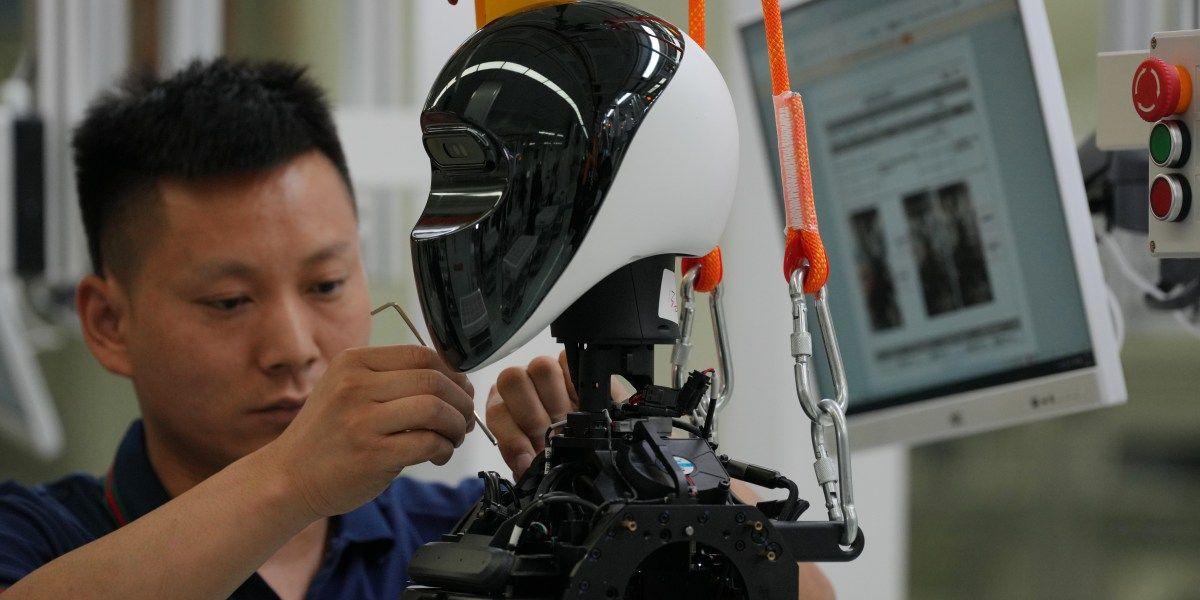
Morgan Stanley has sharply raised its outlook for China's humanoid robotics market for the second time this year, now expecting 50,000 units to ship in 2026. The Wall Street bank says the industry's shift from demonstration to commercial deployment has proved faster than expected, driven by policy support and supply-chain advancements.
Morgan Stanley has doubled its China humanoid robot forecast for the second time this year, now projecting 50,000 units to ship in 2026
1
. The Wall Street bank initially forecast 14,000 units in January, revised it to 28,000, and has now nearly doubled that figure again2
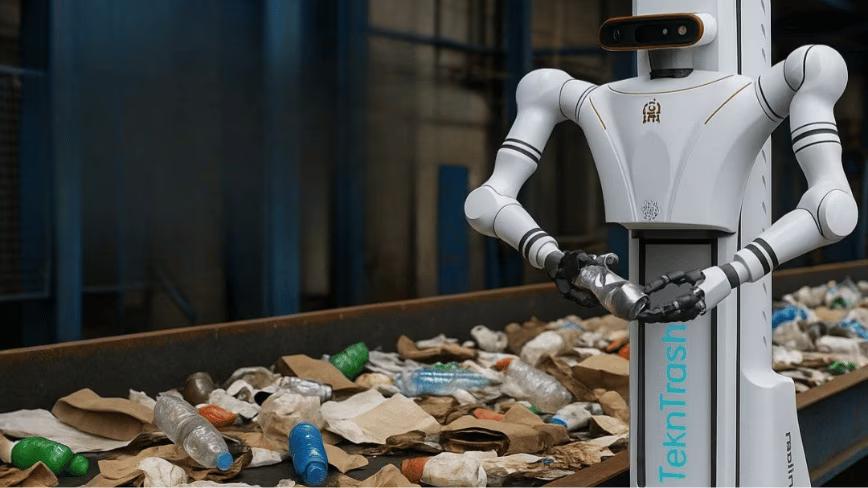
. The aggressive revision reflects how rapidly the commercialization of robots has progressed, with AI-powered humanoid robots moving from demonstration stages to real-world deployments in factories, convenience stores, and restaurants across China.
Source: The Next Web
The bank estimates China's humanoid robot market will reach $2 billion this year and expand to $15 billion by 2030, with annual humanoid robot shipments forecast to hit 446,000 units by then
1
. These projections include only external sales, excluding prototypes, pre-order trials, or internal use. "Commercial verification, policy support, and supply-chain feedback point to faster humanoid adoption in China," said Sheng Zhong, equity analyst at Morgan Stanley1
.Beijing has made developing embodied AI—artificial intelligence embedded in physical systems such as robots—a priority for the coming five years
1
. This policy support has translated into tangible benefits for startups, with local governments directed to subsidize companies with land and office space while banks extend favorable lending terms. The state-backed push has accelerated China's dominance in the robotics market, with Chinese companies shipping more than 80% of the world's humanoids last year and occupying the top five positions by shipments2
.Last year, approximately 13,000 humanoids were shipped worldwide, according to research firm Omdia
1
. Chinese firms like Unitree led the rankings, while American rival Figure AI ranked seventh and Tesla ninth. Tesla CEO Elon Musk indicated earlier this year that the company's Tesla Optimus humanoid robot wouldn't start public sales until the end of 20271
. Prediction market traders on Polymarket give Tesla only a 14% chance of releasing a consumer Optimus this year3
.
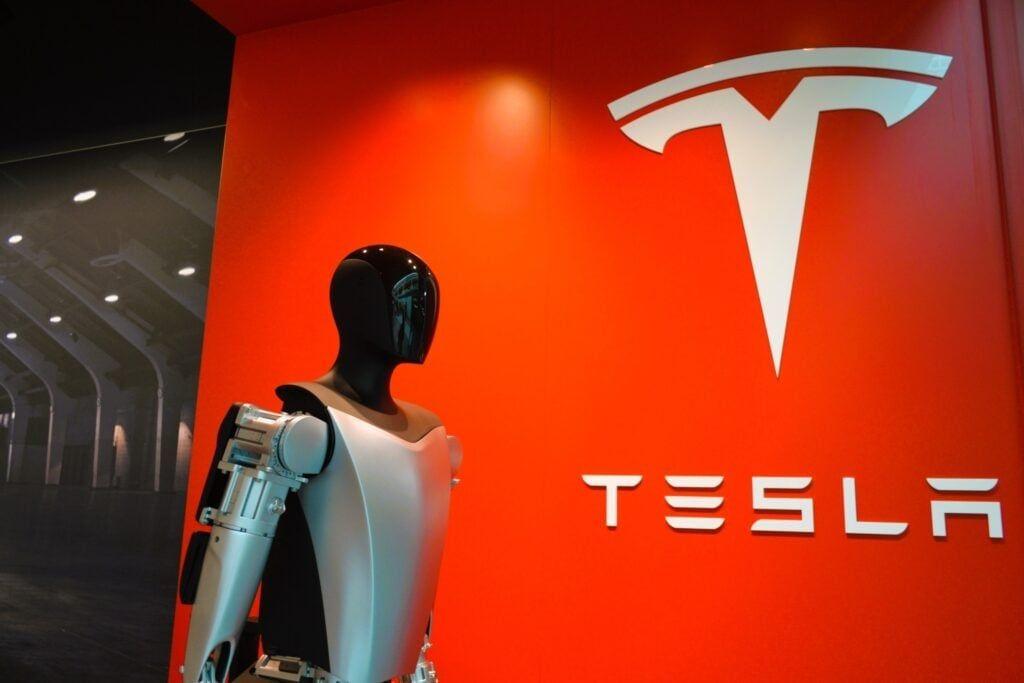
Source: Benzinga
Morgan Stanley's supply-chain field research pointed to faster commercialization in industrial settings, citing factory and logistics environments, as well as further rollouts in unmanned retail stores and interactive commercial services
1
. Joe Ngai, senior partner and chairman of McKinsey Greater China, noted that humanoid robotics could become the "next big frontier" for investors eyeing China's rapid tech development. "If you go to any Chinese factory right now, there's more automation and robotics that's been deployed than anywhere else in the world," Ngai told CNBC1
.The deployments extend beyond back-office operations. BYD has expressed interest in placing humanoids on showroom floors to help sell cars within a year or two
2
. Unitree's G1 model, priced at roughly $16,000, has reportedly been deployed at automakers including BYD, Geely, and NIO3
.Related Stories
Morgan Stanley named Shanghai-listed Leaderdrive as a major beneficiary of the rise in humanoids, raising its 12-month target price to 464 yuan ($68) from 269 yuan
1
. The Suzhou-headquartered company supplies precision robotic components to domestic humanoid makers such as Ubtech and Galbot. Leaderdrive could hold a 40% global market share this year and 25% over the longer term, supported by robust shipments and strong customer exposure1
. Component suppliers producing harmonic reducers, ballscrews, and torque motors represent a strategic play, as these parts are essential for every humanoid regardless of manufacturer3
.While Chinese robotic firms increasingly eye overseas expansion, geopolitical tensions remain a significant headwind. Seer Intelligent, a Shanghai-based robotics company that began trading in Hong Kong, has expanded beyond China since 2021, with overseas revenue from more than 65 countries contributing 18% of its total sales last year
1
. However, Jonathan Fan, the company's chief operating officer, identified geopolitical uncertainty and trade tensions as the most significant challenge, prompting the company to focus on geographic diversification and strict compliance with local regulations1
.Policymakers in Washington have grown alarmed at China's progress in artificial intelligence and the risks of growing dependence on Chinese technology. Suzanne Nossel, senior fellow at the Chicago Council on Global Affairs, warned that "if Washington treats the contest solely as a race to hit new capability benchmarks, it could lead in invention but fall behind in influencing where and how AI is used worldwide"
1
. The market dynamics suggest China is prioritizing deployment and practical application over pure technological demonstration, potentially reshaping how AI integration unfolds globally.Summarized by
Navi
[1]
[2]
03 Sept 2025•Technology

03 Jun 2026•Business and Economy

23 Aug 2024

1
Policy and Regulation

2
Policy and Regulation

3
Policy and Regulation