6 Sources
6 Sources
[1]
A mystery AI model has developers buzzing: Is this DeepSeek's latest blockbuster?
BEIJING, March 18 (Reuters) - A powerful artificial intelligence model that appeared anonymously on a developer platform last week has sparked speculation that Chinese startup DeepSeek may be quietly testing its next-generation system ahead of an official launch. The free model, called Hunter Alpha, surfaced on the AI gateway platform OpenRouter on March 11 without any developer attribution and was later described by the platform as a "stealth model." During tests conducted by Reuters, the Hunter Alpha chatbot described itself as "a Chinese AI model primarily trained in Chinese" and said its training data extended to May 2025, the same knowledge cutoff point reported by DeepSeek's own chatbot. When asked about its creator, however, the system declined to identify its developer. "I only know my name, my parameter scale and my context window length," the chatbot said. Neither DeepSeek nor OpenRouter has identified the model's creator and they did not respond to requests for comment. Hunter Alpha's profile page describes it as a 1-trillion-parameter model, meaning it was trained using roughly one trillion adjustable values that determine how the system processes language and generates responses. Models with more parameters generally require significantly more computing power to operate. The system also advertises a context window of up to one million tokens, a measure of how much text an AI model can process or remember during a single interaction. A token roughly corresponds to a short piece of text, such as part of a word. "The combination that stood out was Hunter Alpha's 1 million token context paired with reasoning capability and free access," said Nabil Haouam, an engineer who builds AI agent systems. "Most frontier models with that context window come with real cost at scale," he added. Those specifications resemble expectations in local media for DeepSeek's next-generation V4 model, which Chinese outlets have reported could launch as early as April. DeepSeek, like many of its Chinese competitors, is well-funded, though it has an unusual structure given its parent company is a quantitative hedge fund rather than a tech conglomerate. While the overlap does not establish a direct connection, it has intensified speculation among developers that the anonymous system could be an early test version of the upcoming release by DeepSeek. "The chain-of-thought pattern is probably the strongest signal," said Daniel Dewhurst, an AI engineer who analysed the model after its release, referring to how the AI model reasons. "Reasoning style is hard to disguise and tends to reflect how a model was trained." Hunter Alpha's scale and memory capacity also match specifications that have circulated for DeepSeek V4 since early this year, he said. Still, some developers cautioned that the evidence linking the model to DeepSeek was inconclusive. "My analysis suggests Hunter Alpha is likely not DeepSeek V4," said Umur Ozkul, who runs independent AI benchmark tests, citing differences in token-related behaviour and architectural patterns when compared with DeepSeek's existing systems. He said speculation connecting the model to DeepSeek was understandable given the timing and capabilities advertised. DEVELOPER TESTING Anonymous model launches are not unusual, as platforms like OpenRouter allow developers to send queries to dozens of AI models through a single interface, making them a popular testing ground for new systems. An anonymous model called Pony Alpha appeared on OpenRouter in February before Chinese firm Zhipu AI confirmed it was part of its GLM-5 system five days later. A notice on Hunter Alpha's profile page said all prompts and completions for the model "are logged by the provider and may be used to improve the model," underscoring the industry-wide practice of using stealth model launches for unbiased feedback. The model was adopted rapidly after appearing on the platform and processed more than 160 billion tokens as of Sunday, according to OpenRouter statistics. Much of the activity came from software development tools and AI agent frameworks like OpenClaw, which allow AI systems to autonomously plan tasks and interact with external software. Reporting by Eduardo Baptista; Editing by Thomas Derpinghaus Our Standards: The Thomson Reuters Trust Principles., opens new tab * Suggested Topics: * Artificial Intelligence Eduardo Baptista Thomson Reuters Eduardo Baptista is a Senior Correspondent for Reuters based in Beijing, covering China's technology, space, and automotive industries. He has led enterprise and investigative reporting on China's military-linked companies, artificial intelligence and semiconductor supply chains, as well as macroeconomic and industrial policy. Baptista has reported from China for nearly a decade and holds a BA in History from the University of Cambridge.
[2]
Mystery AI model Hunter Alpha may be DeepSeek V4 in disguise
A powerful, anonymous AI model quietly appeared on the developer platform OpenRouter last week and promptly sent the tech world into a speculative frenzy that it's a stealth test run from Chinese AI startup DeepSeek. The model, called Hunter Alpha, surfaced on March 11 with no developer attribution attached. According to Reuters, when tested directly, the chatbot described itself as a Chinese AI model with a training data cutoff of May 2025 -- the same cutoff as DeepSeek's own chatbot. When asked who built it, the system declined to answer. Neither DeepSeek nor OpenRouter has claimed it, and neither responded to Reuters' request for comment. The company released its latest models this past December: DeepSeek-V3.2 and DeepSeek-V3.2-Speciale, both free to use. The company positioned V3.2 as an everyday AI assistant on par with OpenAI's GPT-5, while V3.2-Speciale was aimed at more advanced reasoning tasks, with DeepSeek claiming the model posted gold-medal results on the International Math Olympiad. The main fuel for the speculation is the model's specs. Hunter Alpha is advertised on Open Router as a one-trillion-parameter model with a context window of up to one million tokens -- a combination that, according to Reuters, lines up closely with what Chinese outlets have been reporting about DeepSeek's forthcoming V4 model, expected as early as April. "Reasoning style is hard to disguise and tends to reflect how a model was trained," AI engineer Daniel Dewhurst told Reuters, pointing to the model's chain-of-thought patterns as the strongest signal pointing toward DeepSeek. Not everyone is convinced. Independent benchmark tester Umur Ozkul told Reuters that his analysis suggests Hunter Alpha is unlikely to be DeepSeek V4, citing architectural differences from DeepSeek's existing systems. Whatever it is, the model has already processed more than 160 billion tokens since appearing on the platform, so anonymous or not, people are using it.
[3]
Mystery AI model suspected to be DeepSeek V4 is revealed to be from Xiaomi - The Economic Times
The release of DeepSeek's low-cost models DeepSeek-V3 and R1 triggered a global tech stock selloff last year, causing investors to question whether U.S. AI firms needed to spend billions of dollars on AI computing power. Since then, there has been a great deal of interest in DeepSeek-V4, a next-generation model that has yet to be released.A powerful artificial intelligence model that appeared anonymously on a developer platform last week was revealed on Wednesday to be from Chinese smartphone and EV giant Xiaomi, after it fueled speculation that startup DeepSeek was quietly testing its next-generation system ahead of a launch. The release of DeepSeek's low-cost models DeepSeek-V3 and R1 triggered a global tech stock selloff last year, causing investors to question whether U.S. AI firms needed to spend billions of dollars on AI computing power. Since then, there has been a great deal of interest in DeepSeek-V4, a next-generation model that has yet to be released. The mysterious free model, called Hunter Alpha, surfaced on the AI gateway platform OpenRouter on March 11 without any developer attribution and was later described by the platform as a "stealth model." Xiaomi's AI model team MiMo, run by former DeepSeek researcher Luo Fuli, on Wednesday said Hunter Alpha was an "early internal test build of MiMo-V2-Pro," a model designed to serve as the "brain" of AI agents, tools that can allow users to execute complex tasks with fewer human prompts and supervision when compared with a chatbot. Xiaomi's release comes at a time when OpenClaw, an open-source agent framework, is being rapidly adopted by users of all stripes in China. "I call this a quiet ambush - not because we planned it, but because the shift from chat to agent paradigm happened so fast, even we barely believed it," Luo said in an X post on Thursday. "People ask why we move so fast. I saw it firsthand building DeepSeek R1." The mysterious Chinese model During tests conducted by Reuters, the Hunter Alpha chatbot described itself as "a Chinese AI model primarily trained in Chinese" and said its data extended back to May 2025, the same knowledge cutoff point that was reported by DeepSeek's own chatbot. When asked about its creator, however, the system declined to identify its developer. "I only know my name, my parameter scale and my context window length," the chatbot said. Hunter Alpha's profile page describes it as a 1-trillion-parameter model, meaning it was trained using roughly one trillion adjustable values that determine how the system processes language and generates responses. The system also advertises a context window of up to one million tokens, a measure of how much text an AI model can process or remember during a single interaction. A token roughly corresponds to a short piece of text, such as part of a word. "The combination that stood out was Hunter Alpha's 1-million-token context paired with reasoning capability and free access," said Nabil Haouam, an engineer who builds AI agent systems. "Most frontier models with that context window come with real cost at scale," he added. Those specifications resembled expectations in local media for DeepSeek's next-generation V4 model, which Chinese outlets have reported could launch as early as April. Umur Ozkul, who runs independent AI benchmark tests, said speculation connecting the model to DeepSeek was understandable given the timing and capabilities advertised. Stealth testing Anonymous model launches are not unusual, as platforms like OpenRouter allow developers to send queries to dozens of AI models through a single interface, making them a popular testing ground for new systems. An anonymous model called Pony Alpha appeared on OpenRouter in February before Chinese firm Zhipu AI confirmed it was part of its GLM-5 system five days later. A notice on Hunter Alpha's profile page said all prompts and completions for the model "are logged by the provider and may be used to improve the model," underscoring the industry-wide practice of using stealth model launches for unbiased feedback. The model was adopted rapidly after appearing on the platform, surpassing one trillion tokens in total usage and topping the leaderboard charts on OpenRouter, according to MiMo.
[4]
Mystery AI model suspected to be DeepSeek V4 is revealed to be from Xiaomi
A powerful artificial intelligence model that appeared anonymously on a developer platform last week was revealed on Wednesday to be from Chinese smartphone and electric vehicle giant Xiaomi, after it fueled speculation that startup DeepSeek was quietly testing its next-generation system ahead of a launch. The release of DeepSeek's low-cost models DeepSeek-V3 and R1 triggered a global tech stock selloff last year, causing investors to question whether U.S. AI firms needed to spend billions of dollars on AI computing power. Since then, there has been a great deal of interest in DeepSeek-V4, a next-generation model that has yet to be released. The mysterious free model, called Hunter Alpha, surfaced on the AI gateway platform OpenRouter on March 11 without any developer attribution and was later described by the platform as a "stealth model."
[5]
A mystery AI model has developers buzzing: Is this DeepSeek's latest blockbuster? - The Economic Times
The free model, called Hunter Alpha, surfaced on the AI gateway platform OpenRouter on March 11 without any developer attribution and was later described by the platform as a "stealth model."A powerful artificial intelligence model that appeared anonymously on a developer platform last week has sparked speculation that Chinese startup DeepSeek may be quietly testing its next-generation system ahead of an official launch. The free model, called Hunter Alpha, surfaced on the AI gateway platform OpenRouter on March 11 without any developer attribution and was later described by the platform as a "stealth model." During tests conducted by Reuters, the Hunter Alpha chatbot described itself as "a Chinese AI model primarily trained in Chinese" and said its training data extended to May 2025, the same knowledge cutoff point reported by DeepSeek's own chatbot. When asked about its creator, however, the system declined to identify its developer. "I only know my name, my parameter scale and my context window length," the chatbot said. Neither DeepSeek nor OpenRouter has identified the model's creator and they did not respond to requests for comment. Hunter Alpha's profile page describes it as a 1-trillion-parameter model, meaning it was trained using roughly one trillion adjustable values that determine how the system processes language and generates responses. Models with more parameters generally require significantly more computing power to operate. The system also advertises a context window of up to one million tokens, a measure of how much text an AI model can process or remember during a single interaction. A token roughly corresponds to a short piece of text, such as part of a word. "The combination that stood out was Hunter Alpha's 1 million token context paired with reasoning capability and free access," said Nabil Haouam, an engineer who builds AI agent systems. "Most frontier models with that context window come with real cost at scale," he added. Those specifications resemble expectations in local media for DeepSeek's next-generation V4 model, which Chinese outlets have reported could launch as early as April. DeepSeek, like many of its Chinese competitors, is well-funded, though it has an unusual structure given its parent company is a quantitative hedge fund rather than a tech conglomerate. While the overlap does not establish a direct connection, it has intensified speculation among developers that the anonymous system could be an early test version of the upcoming release by DeepSeek. "The chain-of-thought pattern is probably the strongest signal," said Daniel Dewhurst, an AI engineer who analysed the model after its release, referring to how the AI model reasons. "Reasoning style is hard to disguise and tends to reflect how a model was trained." Hunter Alpha's scale and memory capacity also match specifications that have circulated for DeepSeek V4 since early this year, he said. Still, some developers cautioned that the evidence linking the model to DeepSeek was inconclusive. "My analysis suggests Hunter Alpha is likely not DeepSeek V4," said Umur Ozkul, who runs independent AI benchmark tests, citing differences in token-related behaviour and architectural patterns when compared with DeepSeek's existing systems. He said speculation connecting the model to DeepSeek was understandable given the timing and capabilities advertised. Developer testing Anonymous model launches are not unusual, as platforms like OpenRouter allow developers to send queries to dozens of AI models through a single interface, making them a popular testing ground for new systems. An anonymous model called Pony Alpha appeared on OpenRouter in February before Chinese firm Zhipu AI confirmed it was part of its GLM-5 system five days later. A notice on Hunter Alpha's profile page said all prompts and completions for the model "are logged by the provider and may be used to improve the model," underscoring the industry-wide practice of using stealth model launches for unbiased feedback. The model was adopted rapidly after appearing on the platform and processed more than 160 billion tokens as of Sunday, according to OpenRouter statistics. Much of the activity came from software development tools and AI agent frameworks like OpenClaw, which allow AI systems to autonomously plan tasks and interact with external software.
[6]
A mystery AI model has developers buzzing: Is this DeepSeek's latest blockbuster?
BEIJING, March 18 (Reuters) - A powerful artificial intelligence model that appeared anonymously on a developer platform last week has sparked speculation that Chinese startup DeepSeek may be quietly testing its next-generation system ahead of an official launch. The free model, called Hunter Alpha, surfaced on the AI gateway platform OpenRouter on March 11 without any developer attribution and was later described by the platform as a "stealth model." During tests conducted by Reuters, the Hunter Alpha chatbot described itself as "a Chinese AI model primarily trained in Chinese" and said its training data extended to May 2025, the same knowledge cutoff point reported by DeepSeek's own chatbot. When asked about its creator, however, the system declined to identify its developer. "I only know my name, my parameter scale and my context window length," the chatbot said. Neither DeepSeek nor OpenRouter has identified the model's creator and they did not respond to requests for comment. Hunter Alpha's profile page describes it as a 1-trillion-parameter model, meaning it was trained using roughly one trillion adjustable values that determine how the system processes language and generates responses. Models with more parameters generally require significantly more computing power to operate. The system also advertises a context window of up to one million tokens, a measure of how much text an AI model can process or remember during a single interaction. A token roughly corresponds to a short piece of text, such as part of a word. "The combination that stood out was Hunter Alpha's 1 million token context paired with reasoning capability and free access," said Nabil Haouam, an engineer who builds AI agent systems. "Most frontier models with that context window come with real cost at scale," he added. Those specifications resemble expectations in local media for DeepSeek's next-generation V4 model, which Chinese outlets have reported could launch as early as April. DeepSeek, like many of its Chinese competitors, is well-funded, though it has an unusual structure given its parent company is a quantitative hedge fund rather than a tech conglomerate. While the overlap does not establish a direct connection, it has intensified speculation among developers that the anonymous system could be an early test version of the upcoming release by DeepSeek. "The chain-of-thought pattern is probably the strongest signal," said Daniel Dewhurst, an AI engineer who analysed the model after its release, referring to how the AI model reasons. "Reasoning style is hard to disguise and tends to reflect how a model was trained." Hunter Alpha's scale and memory capacity also match specifications that have circulated for DeepSeek V4 since early this year, he said. Still, some developers cautioned that the evidence linking the model to DeepSeek was inconclusive. "My analysis suggests Hunter Alpha is likely not DeepSeek V4," said Umur Ozkul, who runs independent AI benchmark tests, citing differences in token-related behaviour and architectural patterns when compared with DeepSeek's existing systems. He said speculation connecting the model to DeepSeek was understandable given the timing and capabilities advertised. DEVELOPER TESTING Anonymous model launches are not unusual, as platforms like OpenRouter allow developers to send queries to dozens of AI models through a single interface, making them a popular testing ground for new systems. An anonymous model called Pony Alpha appeared on OpenRouter in February before Chinese firm Zhipu AI confirmed it was part of its GLM-5 system five days later. A notice on Hunter Alpha's profile page said all prompts and completions for the model "are logged by the provider and may be used to improve the model," underscoring the industry-wide practice of using stealth model launches for unbiased feedback. The model was adopted rapidly after appearing on the platform and processed more than 160 billion tokens as of Sunday, according to OpenRouter statistics. Much of the activity came from software development tools and AI agent frameworks like OpenClaw, which allow AI systems to autonomously plan tasks and interact with external software. (Reporting by Eduardo Baptista; Editing by Thomas Derpinghaus)
Share
Share
Copy Link
An anonymous AI model called Hunter Alpha appeared on OpenRouter on March 11, sparking intense developer speculation that it was DeepSeek's next-generation V4 system. The powerful model featured 1-trillion parameters and a 1-million-token context window, matching expectations for DeepSeek V4. But Xiaomi revealed it was actually their MiMo-V2-Pro, designed for AI agents and built by a former DeepSeek researcher.
A powerful AI model that surfaced anonymously on the OpenRouter platform on March 11 sent the tech community into a speculative frenzy about its origins
1
. The mystery AI model, dubbed Hunter Alpha, appeared without any developer attribution and was quickly labeled a "stealth model" by the platform5
. When tested by Reuters, the chatbot described itself as "a Chinese AI model primarily trained in Chinese" with training data extending to May 2025, the same knowledge cutoff point as DeepSeek's chatbot1
. Yet when asked about its creator, the system cryptically responded: "I only know my name, my parameter scale and my context window length"5
.The developer speculation intensified due to Hunter Alpha's remarkable technical capabilities. The 1-trillion-parameter model advertised a context window of up to 1-million tokens, allowing it to process or remember extensive text during interactions
1
. "The combination that stood out was Hunter Alpha's 1 million token context paired with reasoning capability and free access," said Nabil Haouam, an engineer who builds AI agent systems. "Most frontier models with that context window come with real cost at scale"3
.
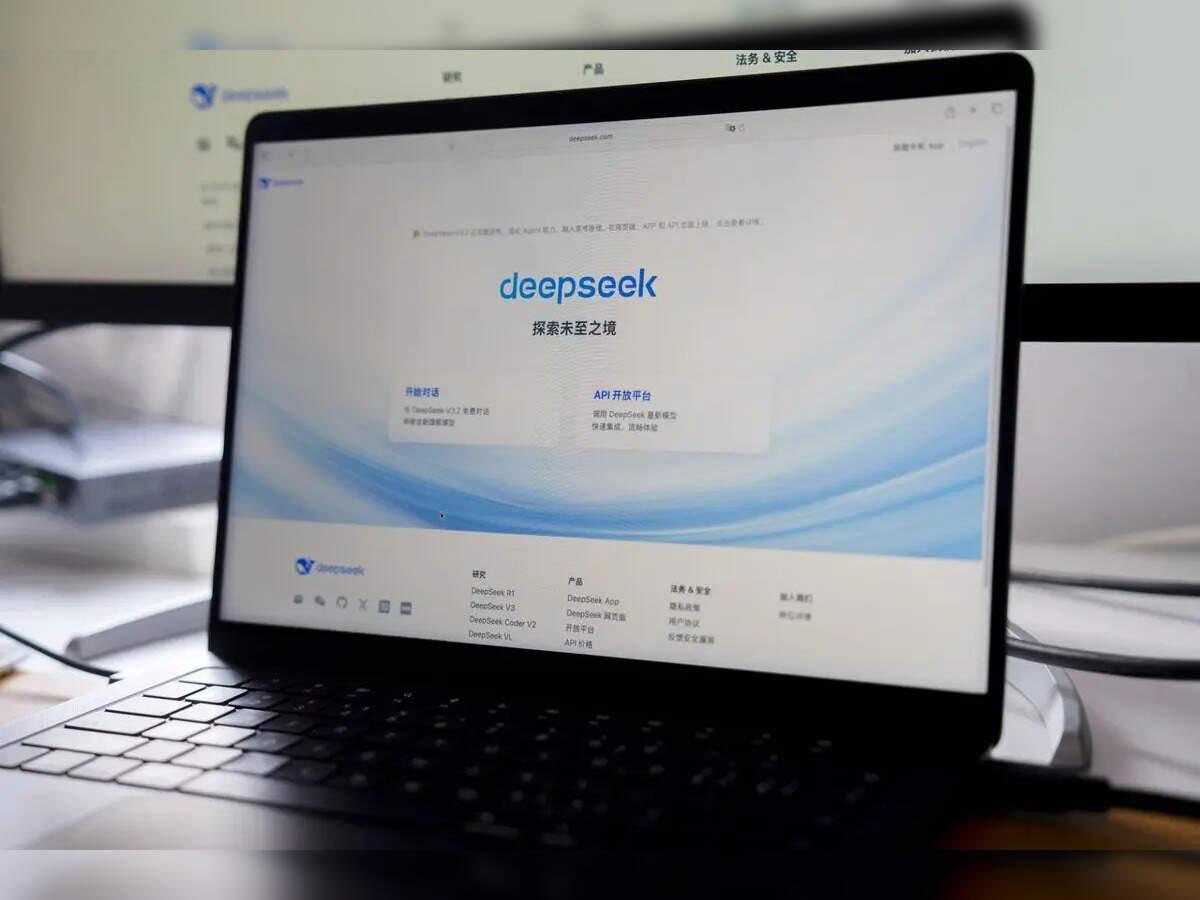
Source: ET
These specifications closely resembled expectations circulating in Chinese media for DeepSeek V4, which outlets reported could launch as early as April
1
. AI engineer Daniel Dewhurst analyzed the model and pointed to its reasoning style as the strongest signal. "The chain-of-thought pattern is probably the strongest signal," he said. "Reasoning style is hard to disguise and tends to reflect how a model was trained"5
.The mystery unraveled on Wednesday when Chinese smartphone and electric vehicle giant Xiaomi claimed ownership of Hunter Alpha
3
.
Source: Japan Times
Xiaomi's AI model team MiMo, run by former DeepSeek researcher Luo Fuli, revealed that Hunter Alpha was an "early internal test build of MiMo-V2-Pro," a model designed to serve as the "brain" of AI agents
3
. These tools enable users to execute complex tasks with fewer human prompts compared to traditional chatbots. "I call this a quiet ambush - not because we planned it, but because the shift from chat to agent paradigm happened so fast, even we barely believed it," Luo said in an X post. "People ask why we move so fast. I saw it firsthand building DeepSeek R1"3
. The connection to DeepSeek through Luo Fuli helps explain why the model's characteristics triggered such intense speculation among developers familiar with the Chinese AI startup's work.Related Stories
The Hunter Alpha episode highlights how stealth model launches have become standard practice in the AI industry. Platforms like OpenRouter allow developers to query dozens of AI models through a single interface, making them attractive testing grounds for new systems
1
. A similar pattern emerged in February when an anonymous model called Pony Alpha appeared on OpenRouter before Chinese firm Zhipu AI confirmed it was part of its GLM-5 system five days later3
. Hunter Alpha's profile page explicitly stated that all prompts and completions "are logged by the provider and may be used to improve the model," reflecting the industry-wide practice of using these launches for unbiased feedback5
. The model was adopted rapidly, processing more than 160 billion tokens as of Sunday according to OpenRouter statistics, with much activity coming from software development tools and AI agent frameworks like OpenClaw1
. By Wednesday, the model had surpassed one trillion tokens in total usage and topped the leaderboard charts on OpenRouter, according to MiMo3
.Xiaomi's release comes at a critical moment as OpenClaw, an open-source agent framework, experiences rapid adoption across China
3
. The focus on AI agents rather than traditional chatbots signals a broader industry shift toward autonomous systems capable of planning and executing tasks with minimal supervision. This development matters because it demonstrates how Chinese companies continue to advance AI capabilities despite U.S. export restrictions on computing power. The release of DeepSeek's low-cost models DeepSeek-V3 and R1 previously triggered a global tech stock selloff, causing investors to question whether U.S. AI firms needed to spend billions of dollars on AI computing power3
. Not all experts were convinced by the DeepSeek connection before the reveal. Umur Ozkul, who runs independent AI benchmark tests, had suggested Hunter Alpha was likely not DeepSeek V4, citing differences in token-related behaviour and architectural patterns compared with DeepSeek's existing systems1
. The developer platform continues to serve as a crucial testing ground where companies can gather real-world feedback while maintaining competitive secrecy until official launches.Summarized by
Navi
[3]
12 Feb 2026•Technology

03 Apr 2026•Technology

09 Jan 2026•Technology

1
Policy and Regulation

2
Technology

3
Policy and Regulation