Google AI Satellite Sends First Haiku from Space as Project Suncatcher Reaches Milestone


11 Sources
[1]
Google's first data center satellite is online and writing poetry
Google Suncatcher's prototype space data center is online and communicating with the ground after launching earlier this month alongside more than 100 other spacecraft on a SpaceX Falcon 9 rocket. The satellite, which carries a single Google Tensor Processing Unit (TPU) and generates up to 1 kW of
[2]
Google's satellite AI server transmits its first response to Earth
The Project Suncatcher satellite generated a haiku about being in space. Google's AI chip-equipped satellite has generated its first response from space. In a blog post on Friday, Google says it successfully booted up the satellite's Tensor Processing Units (TPUs), allowing the on-board Gemma 4
[3]
Google Scores Big Win in Quest to Put Data Centers in Space
The prototype satellite for Project Suncatcher was able to beam back a short haiku about being in space, generated by Google's Gemma 4 open-source AI model. Google has just hit a big milestone in its "moonshot" project to put functional solar-powered data centers in space. The tech giant has now
[4]
Google's AI satellite sends a very expensive haiku to Earth
Experimental orbital datacenter prototype puts its TPU to work producing poetry Google on Friday celebrated receiving a poem from its first experimental orbital AI datacenter satellite. The company's Suncatcher satellite, launched at the start of the month and put into low Earth orbit, has
[5]

Google's space data center chip writes its first-ever poem in orbit
The prototype completed approximately three weeks of commissioning before running its first machine learning workloads. Google has successfully run its first machine learning prompt on a satellite-mounted processor, bringing its space-based computing experiment closer to reality. The prototype
[6]

We've received our first response from the Project Suncatcher prototype satellite.
On October 1, we launched our prototype satellite for Project Suncatcher. The launch marked the first step in our long-term research moonshot to explore powering AI compute in space. Since then, we've spent the last few weeks completing our commissioning checklist, which included powering up the
[7]

Google Suncatcher Satellite AI Response in Orbit
Next, Google will test the TPUs' performance under thermal stress and radiation exposure in orbit. Google said on October 30 that its Project Suncatcher prototype satellite had generated its first artificial intelligence response using a data centre-class tensor processing unit (TPU) in orbit. The
[8]

Google's Project "Suncatcher" Successfully Runs AI in Orbit
Earlier this month, Google announced that it kicked off "Project Suncatcher," a prototype satellite which is designed to explore and study compute AI operations in space. Following a multi-week commissioning phase, it looks like company reached a key milestone this week by generating the first-ever
[9]

Google Project Suncatcher: Google's 'Project Suncatcher' achieves first successful AI response from space
In a groundbreaking achievement, Google has successfully implemented an artificial intelligence model aboard a prototype satellite, marking a significant milestone for Project Suncatcher. Once launched, the satellite underwent initial tests where it powered its TPU and creatively generated a haiku
[10]
Google's Space AI just wrote a Haiku from orbit; here's how it did it
Google launched its Project Suncatcher prototype satellite on October 1, 2026, aboard SpaceX's Transporter-18 mission. Following initial checks, the satellite completed early machine learning tests with its onboard Gemma AI model. During a ground-station pass, the satellite generated a haiku about
[11]

Google Tests AI in Space, Receives First TPU-Generated Response
Google has received its first AI-generated response from a satellite in orbit using its TPU and Gemma 4 model. The Project Suncatcher experiment marks progress towards space-based AI data centres. Google has achieved a significant milestone in its efforts to explore artificial intelligence (AI)
Share
Copy Link
Google's Project Suncatcher satellite successfully transmitted its first AI-generated response from orbit, marking a significant step toward space-based computing. The spacecraft used a Tensor Processing Unit to generate a haiku about being in space, demonstrating that AI workloads can execute in low Earth orbit despite challenges from cosmic radiation and thermal stress.

Google AI Satellite Completes First Orbital Response
Google's Project Suncatcher satellite has successfully transmitted its first AI-generated response from orbit, marking a significant milestone in the company's ambitious plan to establish space data centers. The prototype spacecraft, which launched on October 1 aboard a SpaceX Falcon 9 rocket alongside more than 100 other spacecraft, used its onboard Tensor Processing Unit to generate a haiku about being in space.
1
After approximately three weeks of commissioning to test the satellite's subsystems, engineers transmitted their first prompt to the spacecraft during a ground-station pass. They asked the onboard Gemma 4 AI model to write a haiku from the perspective of a TPU orbiting Earth. As the satellite passed over Svalbard, Norway, it responded: "Blue marble below / Data streams in silent grace / Starlight feeds my core."
2
The successful transmission confirms that the satellite can receive instructions from Earth, process them using AI workloads in space, and return generated information.5
Technical Challenges of Space-Based Computing
The spacecraft carries four Google TPUs but can only operate one processor at a time due to power constraints. The satellite generates up to 1 kilowatt of electricity, which limits individual TPU operating sessions to roughly 20 minutes at a time.
1
This power limitation complicates the already challenging task of space-to-ground communications and demonstrates the engineering hurdles facing orbital AI datacenters.Following the initial haiku generation, Google tested the Gemma 4 AI model with additional space-themed limericks and telemetry prompts to assess the spacecraft's technical status.
4
A Google spokesperson confirmed the satellite was operating nominally, paving the way for more extensive machine learning tests in the harsh environment of low Earth orbit.1
Radiation and Thermal Stress Testing Ahead
The ongoing test campaign will examine how the Tensor Processing Units perform under thermal stress and cosmic radiation exposure. Space radiation presents a particular challenge for AI data centers in orbit, as high-energy particles can cause "bit flips" that change stored values in computer memory, potentially corrupting data without triggering standard monitoring tools.
1
Google has extensively tested its TPUs using particle accelerators on Earth, including exposing its Trillium Cloud TPU and AMD host server to a 67 megaelectronvolt proton beam. Laboratory testing suggested that the system's high-bandwidth memory shows sensitivity at a total ionizing dose of 2 kilorads, approximately three times Google's minimum requirement of 750 rads.
4
Ground-based simulations indicated that radiation's impact would be minimal for distributed AI inference workloads but more problematic for training models. Now, the Google team will assess these dynamics in reality rather than simulation.1
Researchers estimate a silent data corruption rate of approximately one event per 17 rads. At an estimated orbital dose of 150 rads per year in low Earth orbit, this translates to a very low failure probability of roughly 1 per 3 million inferences, assuming 1 inference per second.
4
Related Stories
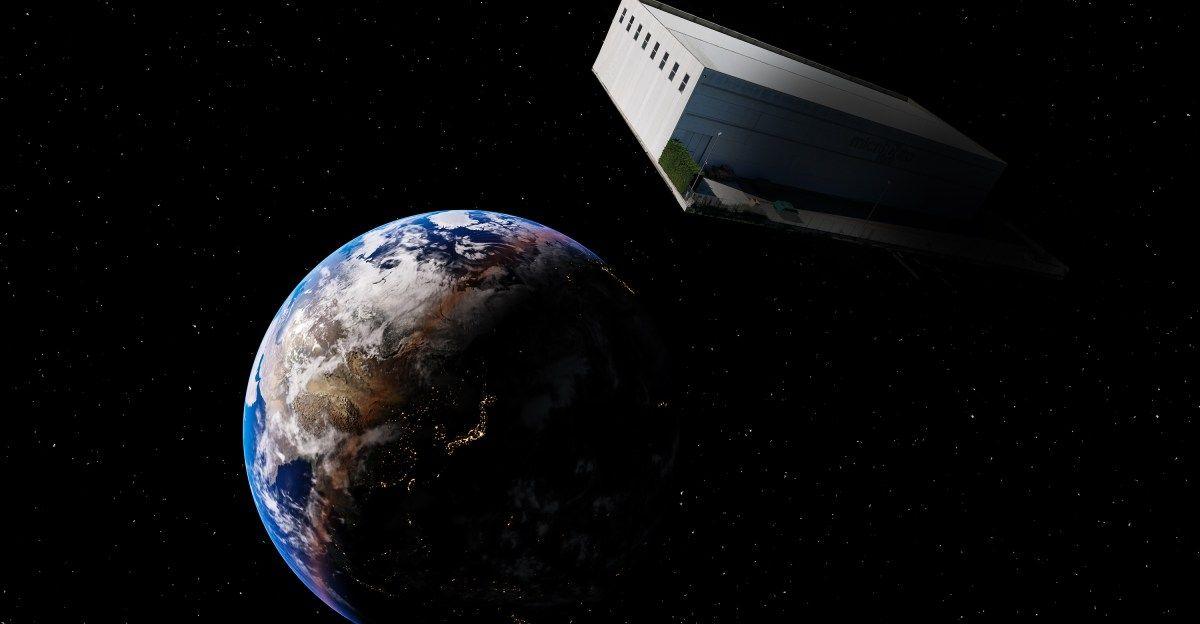
Path Toward Orbital Computing Networks
If the TPU onboard this spacecraft proves capable, Google plans to launch two additional satellites equipped with advanced chips in 2027. Those spacecraft will support higher power generation and demonstrate inter-satellite optical communication links between satellites.
1
These optical links are essential for coordinating workloads across multiple spacecraft, distinguishing Google's approach from competitors.Google's Starcloud initiative largely stands alone among visions for space-based computing in planning high-speed connections between satellites to support coherent distributed workloads. Other companies like Starcloud and Cowboy Space expect to perform inference loads on individual satellites rather than networked systems.
1
SpaceX's data centers are also expected to use laser links but orbit too far apart to share processing effectively.1
Google has told the New York Times it has designs for fleets of more than 80 satellites that will fly in close formation and communicate with one another. The company is also reportedly meeting with designers to potentially create a custom satellite the length of a soccer field.
3
Economic Viability and Launch Dependencies
Project Suncatcher represents a classic Google moonshot, with the company focusing on designing infrastructure that will be economical in the 2030s. Both Google and SpaceX's visions for orbital computing depend heavily on Starship, SpaceX's still-in-development heavy-lift rocket, becoming fully and rapidly reusable.
1
In a peer-reviewed analysis published earlier this month, Suncatcher researchers estimated that SpaceX would need to fly Starship 1,800 times to achieve the same learning-driven cost reductions it saw with earlier vehicles.
1
According to Google's calculations, if launch costs can be reduced to $200 per kilogram, the launch cost amortized over a satellite's useful life could range from $810 to $7,500 per kilowatt per year, comparable to current electricity spending for terrestrial datacenters in the United States at $570 to $3,000 per kilowatt per year.4
Alphabet, Google's parent company, holds a significant investment stake in SpaceX, aligning the two companies' interests in advancing space-based computing. However, Alphabet saw its stock plunge this week after reporting that efforts to insert AI into its search businesses are hurting ad revenue growth, highlighting the near-term pressures the company faces while pursuing long-term space initiatives.
1
Google has acknowledged that scalable AI compute in space won't happen all at once and that these early launches are about identifying points of failure and applying findings to future missions.3
References
Summarized by

Navi
[3]
[4]
[5]
Related Stories
Google Launches Project Suncatcher to Test AI Data Centers in Space with TPUs Aboard SpaceX Rocket
01 Oct 2026•Technology

Google Launches First AI Satellite Test for Project Suncatcher on October 1
24 Sept 2026•Technology

Google Announces Project Suncatcher: Ambitious Plan for AI Data Centers in Space
04 Nov 2025•Technology

Recent Highlights


Recent Highlights
Today's Top Stories











Don’t drown in AI news. We cut through the noise - filtering, ranking and summarizing the most important AI news, breakthroughs and research daily. Follow topics that matter to you and stay ahead.


