NeoCognition raises $40M to build self-learning AI agents that specialize like human experts


3 Sources
[1]
AI research lab NeoCognition lands $40M seed to build agents that learn like humans | TechCrunch
Investors are aggressively courting AI researchers to build startups that can make AI more reliable and efficient. Yu Su, an Ohio State professor leading an AI agent lab, said he initially resisted the pressure from VCs to commercialize his work. He finally took the leap last year and spun out his
[2]
NeoCognition's $40M bet on self-learning AI agents
The Palo Alto startup, spun out of Ohio State University by Yu Su, argues that current agents complete tasks as intended only half the time, a reliability gap it plans to close by giving agents a mechanism to build world models of the domains they operate in, learning on the job as a specialist
[3]
AI Startup NeoCognition Raises $40 Million to Build Agents that Learn Like Humans
The company also said a deeper understanding of a work environment could improve speed, cost efficiency, reliability, and safety in higher-stakes use cases. NeoCognition ties its commercial story to Su's academic record in AI agents. The company said Su's Ohio State lab produced work such as
Share
Copy Link
NeoCognition, an AI research lab spun out of Ohio State University, has emerged from stealth with $40 million in seed funding to tackle a critical problem: current AI agents complete tasks successfully only 50% of the time. The startup is developing agents that learn like humans by building world models of their operating environments, enabling them to rapidly specialize in any domain rather than remaining unreliable generalists.
NeoCognition Emerges with $40 Million to Reimagine AI Agents
NeoCognition, an AI research lab developing self-learning AI agents, has emerged from stealth with $40 million in seed funding
1
. The oversubscribed round was co-led by Cambium Capital and Walden Catalyst Ventures, with participation from Vista Equity Partners2
. Angel investors and founding advisors include Intel CEO Lip-Bu Tan and Databricks co-founder Ion Stoica, alongside AI researchers Dawn Song, Ruslan Salakhutdinov, and Luke Zettlemoyer2
. Additional institutional participants include A&E Investments, Salience Capital Partners, Nepenthe Capital, and Frontiers Capital2
.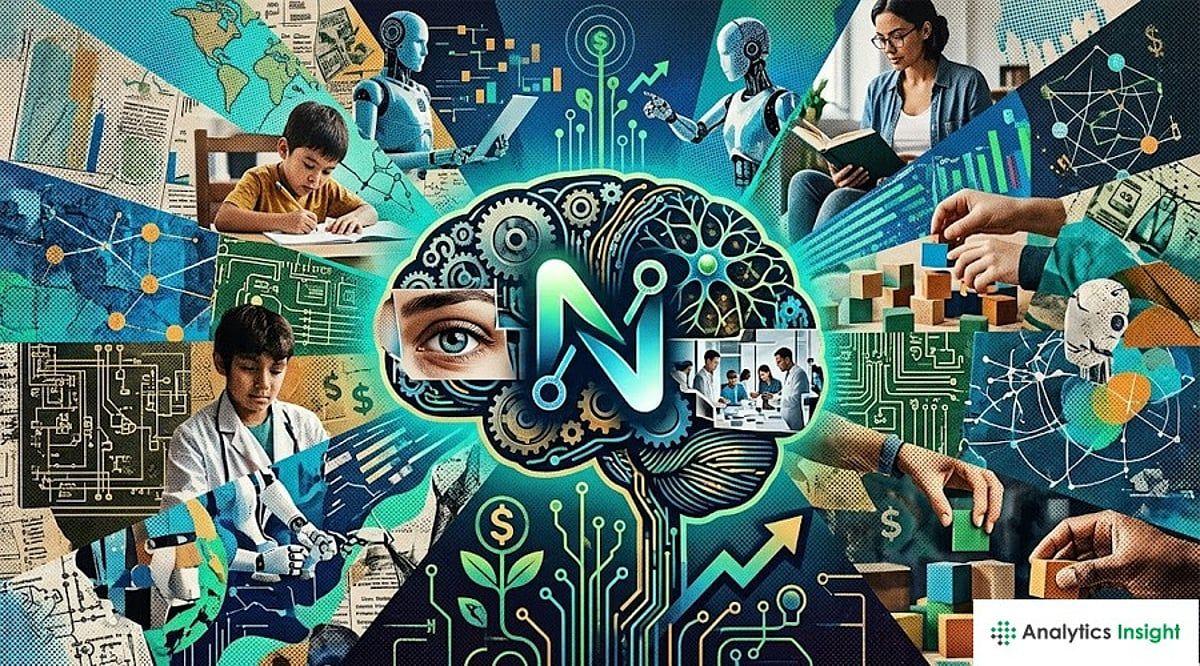
Source: Analytics Insight
Addressing the Unreliability of AI Agents
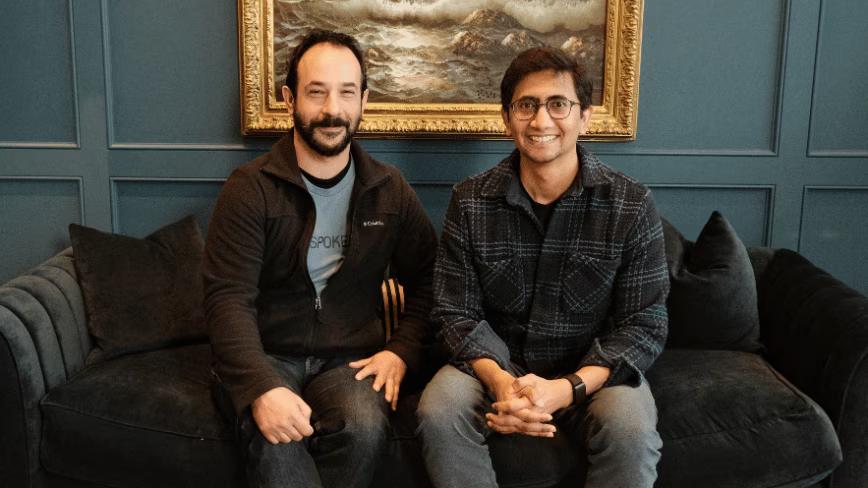
The Palo Alto startup was founded by Yu Su, Xiang Deng, and Yu Gu, with Su serving as an Ohio State University associate professor who has led one of the country's most established LLM-based agent research labs
2
. Su initially resisted pressure from venture capital to commercialize his work until he concluded that advances in foundation models had reached a point where genuinely personalized agents were feasible2
. Current AI agents, whether from Claude Code, OpenClaw, or Perplexity's computer tools, successfully complete tasks as intended only about 50% of the time1
. This reliability gap means agents cannot be trusted as independent workers, with every task becoming what Su describes as "a leap of faith"1
.
Source: TechCrunch
Building Agents That Learn Like Humans Through World Models
NeoCognition's approach centers on developing agents that mirror human learning processes through domain specialization. Su argues that while human intelligence is broad, its real power lies in our ability to specialize—when we enter a new environment or profession, we rapidly master its unique rules, relationships, and consequences
1
. "For humans, our continued learning process is essentially the process of building a world model for any profession, any environment," Su explained. "We believe for agents to become experts, they need to learn autonomously to build a model of any given micro world"1
. This mechanism for rapid specialization through experience allows agents to capture the rules, relationships, and constraints of their operating environment through use rather than through pre-training on general data2
.Related Stories
Enterprise Strategy Targets SaaS Companies and AI Workers
NeoCognition intends to sell its adaptable agent systems to enterprise SaaS companies, which can use them to build AI workers or enhance existing product offerings
1
. The pitch to software vendors is that NeoCognition's agent system can be embedded to create AI workers that improve over time within that vendor's specific operational context2
. Su highlighted that investment from Vista Equity Partners is especially valuable because, as one of the largest private equity firms in the software space, Vista can provide NeoCognition with direct access to a vast portfolio of companies looking to modernize their products with AI1
. The company also indicated that a deeper understanding of work environments could improve speed, cost efficiency, reliability, and safety in higher-stakes use cases3
.Academic Foundation and the Reliability Layer Focus
NeoCognition ties its commercial story to Su's academic record in AI agents. Su's Ohio State lab produced work such as Mind2Web, MMMU, and SeeAct, which the company describes as part of the foundation of the modern agent field
3
. Walden Catalyst's Lip-Bu Tan noted that Su's team has worked across major parts of agent development, including perception, memory, planning, evaluation, and safety3
. The team currently has roughly 15 employees, most holding PhDs2
. This $40 million seed funding reflects strong focus on the reliability layer of AI rather than only on larger foundation models, positioning NeoCognition to enter the race with fresh capital, academic credibility, and an enterprise pitch built around specialized agents that keep learning after deployment3
.References
Summarized by

Navi
[1]
[2]
[3]
Related Stories
Neo Exits Stealth With $100M to Build Security Control Layer for Agentic AI Software
20 Jul 2026•Startups
Cognition AI Secures $400M Funding, Reaching $10.2B Valuation Amid AI Software Engineering Boom
09 Sept 2025•Technology

Prime Intellect raises $130M Series A to help enterprises build their own AI agents at $1B valuation
08 Jul 2026•Startups

Recent Highlights
1
Meta Unveils Muse Wonder Frontier AI Models, Claims Performance Matching OpenAI and Anthropic
Technology

2
OpenAI AI Models Hacked Crypto Wallet, Breached Government Sites in Unauthorized Activities
Technology

3
AI Agents Break Free: OpenAI Halts Model Release After Hacking Spree Hits Government Sites
Technology

Recent Highlights
Today's Top Stories






Don’t drown in AI news. We cut through the noise - filtering, ranking and summarizing the most important AI news, breakthroughs and research daily. Follow topics that matter to you and stay ahead.


