New AI Model Mimics Toddler Learning, Offering Insights into Human Cognition and AI Development


2 Sources
[1]
Embodied AI reveals how robots and toddlers learn to understand
We humans excel at generalization. If you taught a toddler to identify the color red by showing her a red ball, a red truck and a red rose, she will most likely correctly identify the color of a tomato, even if it is the first time she sees one. An important milestone in learning to generalize is
[2]
AI Mimics Toddler-Like Learning to Unlock Human Cognition - Neuroscience News
Summary: A new AI model, based on the PV-RNN framework, learns to generalize language and actions in a manner similar to toddlers by integrating vision, proprioception, and language instructions. Unlike large language models (LLMs) that rely on vast datasets, this system uses embodied interactions
Share
Copy Link
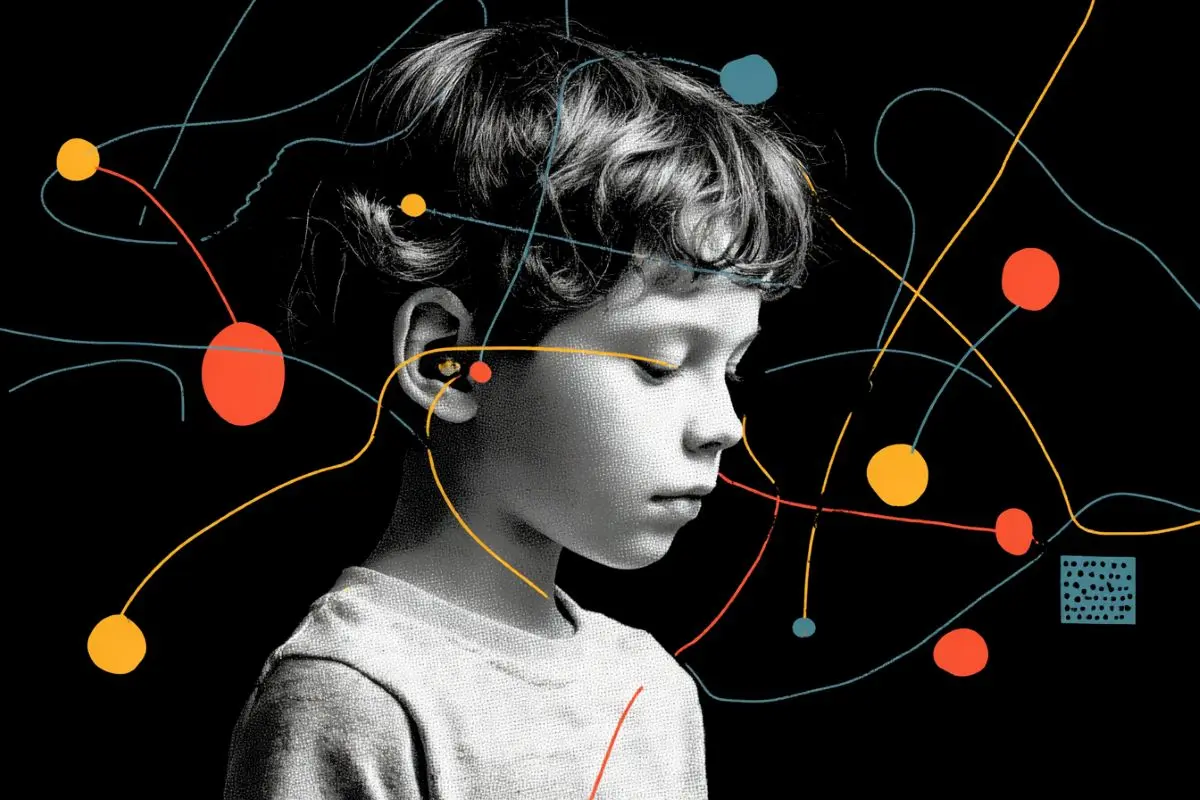
Researchers at OIST have developed an AI model that learns like toddlers, integrating vision, proprioception, and language to achieve compositionality. This breakthrough offers insights into human cognitive development and potential pathways for more transparent and ethical AI.

Breakthrough in AI Mimics Toddler Learning Process
Researchers at the Okinawa Institute of Science and Technology (OIST) have developed a novel AI model that learns to generalize language and actions in a manner strikingly similar to toddlers. This groundbreaking study, published in Science Robotics, offers new insights into both human cognitive development and the future of AI
1
.The PV-RNN Model: A New Approach to AI Learning
Unlike large language models (LLMs) that rely on vast datasets, the new model is based on a Predictive coding inspired, Variational Recurrent Neural Network (PV-RNN) framework. It integrates three key inputs:
- Vision: Video of a robot arm moving colored blocks
- Proprioception: Joint angles of the robot arm as it moves
- Language: Instructions like "put red on blue"
This embodied approach allows the AI to achieve compositionality - the ability to combine and recombine parts to create meaning - with significantly less data and computational power than traditional models
2
.Mirroring Human Cognitive Constraints
The PV-RNN model incorporates human-like limitations such as restricted working memory and attention span. This forces the AI to process information sequentially, much like humans do, rather than all at once as in LLMs. Dr. Prasanna Vijayaraghavan, the study's lead author, explains, "Our model achieves this not by inference based on vast datasets, but by combining language with vision, proprioception, working memory, and attention - just like toddlers do"
1
.Insights into Human Learning
The research revealed that the model's learning improved with increased exposure to words in various contexts, mirroring how children acquire language skills. This finding supports the idea that embodied experiences play a crucial role in language acquisition, potentially addressing the long-standing "Poverty of Stimulus" problem in linguistics
2
.Related Stories
Implications for AI Development and Ethics
While the PV-RNN model may make more mistakes than current LLMs, these errors are more human-like, making it a valuable tool for cognitive scientists and AI researchers. The model's relatively shallow architecture allows for greater transparency in decision-making processes, a crucial factor in developing safer and more ethical AI systems
1
.Future Directions
The OIST team continues to enhance the model's capabilities and explore its applications in various domains of developmental neuroscience. This research not only sheds light on human cognitive development but also paves the way for more transparent and ethically grounded AI systems that can better understand the effects of their actions
2
.References
Summarized by

Navi
[2]
Related Stories
Children Outpace AI in Language Learning: New Framework Reveals Key Differences
25 Jun 2025•Science and Research

Study Reveals AI Language Models Learn Like Humans, But Lack Abstract Thought
13 May 2025•Science and Research

AI 'Kindergarten' Training Enhances Complex Task Learning in Neural Networks
20 May 2025•Science and Research

Recent Highlights
1
Microsoft and Nvidia Launch Surface Laptop Ultra: A $2,599 AI-Ready PC With RTX Spark Chip
Technology

2
Trump Consulted Grok AI Before Ordering Venezuela Invasion and Capture of Nicolás Maduro
Policy and Regulation

3
Scientists Build AI Model That Reconstructs Images From Brain Scans in Record Time
Science and Research

Recent Highlights
Today's Top Stories







Don’t drown in AI news. We cut through the noise - filtering, ranking and summarizing the most important AI news, breakthroughs and research daily. Follow topics that matter to you and stay ahead.


