6 Sources
[1]
The robotaxi law that could ban Tesla
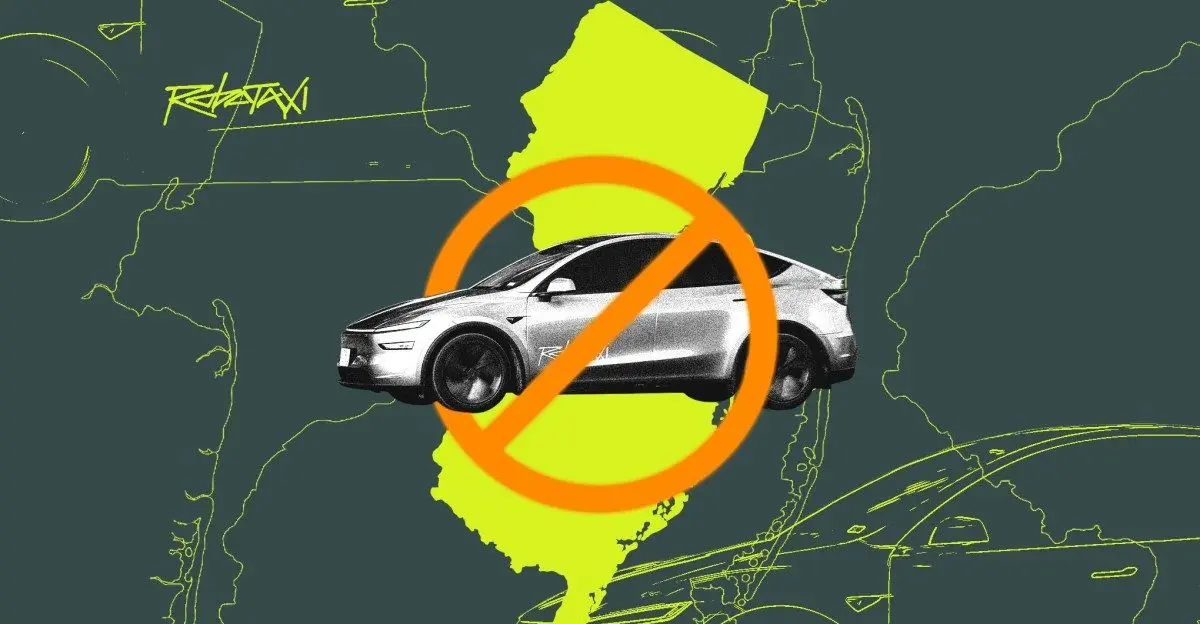
New Jersey wants driverless cars, so long as they have lidar. But Tesla's are camera-only. For more than a decade, one question has loomed over the race to build autonomous vehicles: Are cameras alone enough to safely replace human drivers, or do truly driverless cars need additional, overlapping sensors like lidar and radar to navigate the world reliably? Tesla has bet billions of dollars that artificial intelligence and cameras are sufficient. Nearly every other major autonomous vehicle developer has gone the opposite direction. Until now, that argument has largely been left to executives and engineers. New Jersey lawmakers are trying to settle it in state law. A bill expected to come up for a vote later this year would require companies seeking to operate fully autonomous vehicles in New Jersey to use cameras plus two other sensing technologies, most commonly lidar and radar. If enacted, New Jersey would be the first state to codify such a hardware mandate into law, moving ahead of a nearly identical proposal currently pending action in neighboring New York. The measure would also effectively prevent Tesla's camera-only Robotaxi system from operating in New Jersey unless the company changed its hardware. "This is not anti-Tesla," Democratic state Sen. Andrew Zwicker, the bill's primary sponsor, told The Verge. "I'm pro-New Jersey safety." Zwicker, a physicist who works at the Princeton Plasma Physics Laboratory (New Jersey doesn't restrict legislators from outside jobs), said after riding in a Waymo robotaxi in Phoenix he became convinced autonomous vehicles could transform transportation. "I was amazed how quickly you get used to it," he said. The technology, he argues, could dramatically expand mobility, reduce traffic deaths, and make transportation more accessible. But he believes the technology should roll out cautiously in the nation's most densely populated state. "At this point, I don't think the evidence is sufficient that a single sensor with software can handle situations that humans can," Zwicker said. "Can we get there? Maybe. But we're not there yet." The proposal would establish a three-year pilot program governing the testing and deployment of fully autonomous vehicles in New Jersey. Companies would have to use multiple sensing technologies, report certain crashes, and receive state authorization before operating fully driverless commercial services. They would also have to complete at least 50,000 miles of supervised testing in New Jersey without a major incident before removing the human safety driver. While state battles over autonomous vehicles have largely centered on safety performance, oversight, and potential job losses, New Jersey is attempting something different: legislating how the vehicles themselves should be built. The sensor requirement is by far the bill's most consequential provision and it would have repercussions beyond Tesla. Elon Musk has long argued that cameras paired with increasingly capable artificial intelligence are the best and most cost effective way to operate autonomous vehicles. Humans navigate the world using vision alone, Musk has said, so sufficiently advanced AI should eventually be able to do the same. Eliminating lidar and radar also dramatically lowers hardware costs, making it easier to build robotaxis cheaply enough to deploy at massive scale. Musk has even argued that adding more sensors can reduce safety by forcing software to reconcile conflicting information. "Lidar and radar reduce safety due to sensor contention. If lidars/radars disagree with cameras, which one wins?" he wrote on X last year. "We turned off the radars in Teslas to increase safety. Cameras ftw." Most of the rest of the autonomous vehicle industry disagrees. Companies including Waymo and Zoox combine cameras with lidar and radar, arguing that each sensing technology has different strengths and weaknesses. Cameras capture rich visual detail, allowing vehicles to recognize colors, traffic signs, lane markings, and pedestrians, but they can struggle in poor weather, darkness, or glare. Radar performs better in rain and fog and excels at measuring the distance and relative speed of nearby objects. Lidar uses lasers to create detailed three-dimensional maps of a vehicle's surroundings, making it particularly effective at determining the shape and distance of nearby objects. Rather than relying on a single sensor, those companies combine the strengths of all three, arguing that redundancy makes autonomous driving safer. Philip Koopman, a Carnegie Mellon electrical and computer engineering professor and autonomous vehicle safety expert, said camera-only systems may eventually become capable enough for fully autonomous driving. But he doesn't believe they are today. As Koopman put it, "eyeballs are better than cameras for many reasons" and "human brains are fundamentally more powerful than AI because we understand." While there are situations where Koopman said camera-only works just fine -- clear weather, favorable lighting, and less complex roads -- he believes it's not ready for broad consumer use. "To run 24/7 across the majority of public roads in New Jersey today, it needs lidar," he said. "It's pretty clear that today camera-only technology is not up to the challenge." Koopman supports the New Jersey proposal but said he would prefer even stronger safeguards, such as requiring conventional driving controls like steering wheels and pedals so first responders could move disabled vehicles (so no Cybercabs, which don't have either), and limits on how many AVs can be on the road during the pilot (a potential provision Zwicker said he's considering). "The difference between 100 cars and 10,000 cars is night and day," Koopman said. When the scale is small, "There's just not enough cars for that much weird stuff to happen to them." He pointed to Waymo, which now operates more than 3,500 commercial robotaxis across 11 US metro areas. "They never used to have problems with floodwaters and school buses -- not because they could do floodwaters and school buses," Koopman said. "But with 100 cars it just doesn't happen that often." Despite a lot of fanfare, Tesla currently only has a handful of unsupervised Robotaxis on the road, mostly in Texas, according to data from Robotaxi Tracker, suggesting it hasn't been as easy to scale the camera-only approach as Musk had previously promised. Last year he predicted that Tesla would have hundreds of thousands of fully self-driving Teslas operating by the end of 2026. (Tesla did not respond to requests for comment for this article.) Many of the bill's provisions mirror recommendations from SAVE-US, a nonprofit that advocates for stricter autonomous vehicle regulation. Physicist and SAVE-US national campaign director Shua Sanchez said the group formed because Congress has failed to establish national rules while autonomous vehicle companies have expanded into states with dramatically different levels of oversight. "California has the best safety regulations in the country," he said. "Texas, Arizona, and Georgia have almost no state oversight." Among the organization's priorities is requiring redundant sensing systems. "We don't have a problem with Tesla as a company," Sanchez said. "We have a problem with camera-only autonomous vehicles." Nearly every major stakeholder has sought changes to the bill. Waymo successfully pushed to remove a requirement that safety drivers remain in vehicles throughout the pilot, and Uber argued the state should continue requiring human drivers for most rides, according to Zwicker. Tesla has been lobbying against the legislation in New Jersey, according to Zwicker, who said company representatives met with lawmakers to argue that advances in artificial intelligence make additional sensor types unnecessary. Zwicker said that while the tech has gotten better, "I'm not convinced yet that they're ready to go." The debate has spilled beyond the state House. "As written, the legislation imposes restrictions so severely that Tesla's autonomous vehicle technology couldn't legally operate in New Jersey," read a Tesla missive to New Jersey Tesla owners encouraging them to contact lawmakers. "Rather than prioritizing real safety outcomes and performance, the bill specifically bans Tesla from the New Jersey market." Zwicker said his office received roughly 4,000 emails within a day. "The messaging wasn't about the details of the bill," he said. "It was that Zwicker is trying to take away your Autopilot." Zwicker rejects that characterization. The legislation applies only to fully autonomous vehicles operating under the proposed state pilot program -- not driver-assistance systems that require a licensed human driver to remain behind the wheel. The fight in New Jersey reflects a broader vacuum in autonomous vehicle regulation. Congress has debated national autonomous vehicle legislation for years without passing a comprehensive framework, leaving states to develop their own rules as commercial robotaxi services expand. Robotaxi services already operate in states including California, Texas, Arizona, and Georgia under dramatically different regulatory systems. While California requires extensive testing permits and public reporting, it doesn't specify which tech the AVs need to get there. Texas has adopted a far lighter-touch approach, which lets automakers self-certify that their autonomous vehicles are ready for the road. New Jersey's bill raises the possibility that AV tech there could differ from that of other states. Zwicker says that isn't his concern. "The technology doesn't exist in the Northeast at all," he said. "The goal is to start now, do it safely, and build public trust." Sanchez sees the sensor requirement as a common-sense safeguard rather than a restriction on innovation. "There are absolutely brilliant people working at Tesla trying to make camera-only autonomy work," he said. "But they're trying to do it with one arm tied behind their back."
[2]
New Jersey's robotaxi bill could ban Tesla over lidar
New Jersey is about to become the first state to write a sensor mandate into law, requiring driverless cars to carry a camera plus two backup sensing systems. Tesla, which bet everything on cameras alone, would be shut out unless it changes its hardware. For more than a decade, the biggest fight in self-driving cars has played out in boardrooms and engineering labs. New Jersey now wants to settle it in law. A bill moving through the state legislature would force any company running fully driverless cars in New Jersey to fit them with a camera system plus two other ways of sensing the road, in practice lidar and radar. Tesla builds its cars with cameras alone. If the bill passes, its Robotaxi could not operate in the state unless it changed the hardware. The Verge first reported the details. The measure would make New Jersey the first state to write a sensor mandate into law. A near-identical bill is already pending next door in New York. If either passes, other states could follow, and the domino effect would land squarely on Elon Musk's camera-only bet. What the bill actually says The legislation is a Senate committee substitute for Senate Bill 1677, which the Senate Transportation Committee adopted on 11 May. Its sponsor is state Senator Andrew Zwicker, a physicist who works at the Princeton Plasma Physics Laboratory. It sets up a three-year pilot programme for fully autonomous vehicles, with the Department of Transportation deciding who gets in. The sensor rule sits in section four. Every car in the pilot must carry "a camera system and two distinct sensing modalities" that can still spot and track obstacles if the cameras fail. Those systems have to handle pedestrian detection, automatic emergency braking, and lane keeping. In plain terms, a camera is not enough on its own. There is more in the bill that Tesla will not like. Cars must log data from 30 seconds before any crash, clock 50,000 miles of testing before going driverless, and carry at least $5m of insurance. They cannot drive in school zones, construction zones, or places with high rates of pedestrian collisions. A quiet shot at 'Full Self-Driving' One section takes aim at how these systems are sold. Dealers and carmakers must hand buyers a written description of what a partial automated system can and cannot do. They cannot market a partial system in a way that implies the car can drive itself. Break that rule and it counts as consumer fraud under state law. Tesla sells a driver-assist package it calls Full Self-Driving, which still requires a human to pay attention. The naming has drawn lawsuits and regulator scrutiny for years. New Jersey wants that gap between the label and the reality spelled out at the point of sale. Cameras against the world Musk has staked billions on the idea that cameras and artificial intelligence can do the whole job. "We turned off the radars in Teslas to increase safety," he wrote last year. "Cameras for the win." He argues that piling on extra sensors creates conflicting signals, a problem he calls sensor contention. Almost everyone else in the field disagrees. Waymo, the clear market leader, runs cameras alongside lidar and radar, which cope far better in fog, rain, and darkness. In Europe, one startup is even testing a Level 4 car that uses no AI at all to drive, leaning entirely on sensors and rules. "To run 24/7 across the majority of public roads in New Jersey today, it needs lidar," Carnegie Mellon professor Philip Koopman told The Verge. "It's pretty clear that today camera-only technology is not up to the challenge." The scoreboard backs him up. Tesla runs a fleet of 42 driverless Robotaxis on public roads in Texas. Waymo has 577 authorised in the same state, plus several thousand more across ten US metro areas. Musk promised hundreds of thousands of Tesla robotaxis by the end of this year. That has not happened. Not anti-Tesla, says the sponsor Zwicker rejects the idea that he is targeting one company. "This is not anti-Tesla," he told The Verge. "I'm pro-New Jersey safety." He became a believer in the technology after riding a Waymo in Phoenix, and it struck him how quickly the ride felt normal. His worry is not the promise but the timeline. He is not convinced cameras and software alone can yet handle everything a human driver can. Tesla is not waiting quietly. Company representatives are lobbying lawmakers, and Tesla has emailed its New Jersey customers, urging them to contact the legislature and oppose the bill. Why it matters There is no federal rulebook for driverless cars, so each state writes its own. That patchwork has let Tesla push its Robotaxi forward in friendly states while safety questions pile up. New Jersey, and New York close behind, would flip the logic, turning a hardware choice into a legal line. Europe is tightening its own driving rules in parallel, with new cars there now needing a raft of mandatory safety aids. If the sensor mandate spreads, Musk faces an expensive choice: bolt lidar onto his cars, or watch them shut out of some of the richest markets in the country.
[3]
Elon Musk's Stubborn Insistence on Cameras Could Get Tesla's Robotaxis Banned in New Jersey
Elon Musk's robotaxi dreams could hit a dead end in New Jersey. A proposed bill in the state aims to create a three-year pilot program to test and deploy fully autonomous vehicles in New Jersey. The bill, which is expected to be voted on later this year, would require companies to complete at least 50,000 miles of supervised testing on New Jersey roads without a major incident before removing human safety monitors. Companies would also have to report certain crashes and receive state approval before launching commercial services. But the most noteworthy part of the bill could become a huge problem for Tesla. If the bill passes, fully self-driving vehicles in New Jersey would need to be equipped with cameras and two additional types of sensors. New York, which has been slow to deploy robotaxis on its roads, is considering a state bill with a similar requirement. That would be fine for competing robotaxi companies like Alphabet's Waymo and Amazon's Zoox, which already use radar and LiDAR along with cameras. Radar uses radio waves to detect objects and can help in rain or fog, while LiDAR uses lasers to create a 3D map of a car's surroundings. Musk, however, has long argued that driverless technology only really needs cameras and advanced AI. Musk has publicly stated that LiDAR is a "fool's errand" and that "anyone relying on LiDAR is doomed." "People don't shoot lasers out of their eyes to drive," Musk wrote in an X post in March 2025. "Just try Tesla self-driving today, which just uses cameras and AI, and you will understand." He has even argued that using LiDAR and radar could make autonomous driving less safe. "Lidar and radar reduce safety due to sensor contention. If lidars/radars disagree with cameras, which one wins?" he wrote on X last August. Still, that stance could now become an additional hurdle for Tesla and its struggling Robotaxi service. When Tesla's Robotaxi service first launched in Austin, Musk told investors that the company was planning to expand quickly into California, Nevada, Arizona, and Florida. "We'll probably have autonomous ride-hailing in about half the population of the US by the end of the year," Musk said in a July earnings call last year. A year later, Tesla's Robotaxi service is still operating only in Texas and, more recently, in Florida. Its rivals, meanwhile, are expanding fast. Waymo operates a growing fleet of more than 3,000 robotaxis across 11 cities, while Zoox recently unveiled an updated version of its self-driving ride. Tesla did not immediately respond to a request for comment; however, the company is fighting back against the New Jersey bill. This month, Tesla urged customers to contact their local representatives and voice their opposition to the bill. "As written, the legislation imposes restrictions so severely that Tesla's autonomous vehicle technology couldn't legally operate in New Jersey," a post on the company's website reads. "Rather than prioritizing real safety outcomes and performance, the bill specifically bans Tesla from the New Jersey market."
[4]
New Jersey Poised to Ban Self-Driving Tesla Robotaxis
Can't-miss innovations from the bleeding edge of science and tech For many years, Tesla CEO Elon Musk has sworn up and down that the use of radar and lidar sensors for autonomous driving is a waste of time. His counterargument has been that cameras and powerful AI-powered hardware are all you need for safe self-driving, despite plenty of evidence to the contrary. That decision is now risking a major roadblocks for the company in New Jersey. As The Verge reports, a bill that's coming up for a vote this year would require fully autonomous vehicles to use both cameras and at least two other sensing technologies -- in most cases, lidar and radar. If the bill were enacted, it would effectively banning Tesla's fully autonomous fleet of Robotaxis. Other states could soon follow -- including New York, which is pondering a similar bill -- in a domino effect that could completely derail the automaker's current trajectory. "This is not anti-Tesla," bill sponsor and senator Andrew Zwicker (D-NJ) told The Verge. "I'm pro-New Jersey safety." Zwicker argued that there isn't enough evidence to suggest that a single sensor, plus software "can handle situations that humans can." "Can we get there? Maybe," he told the publication. "But we're not there yet." Relying entirely on cameras that can be blinded by the Sun, fog, or heavy rain is part of Musk's major bet on AI. He has argued that adding extra sensors may end up being less safe thanks to what he called "sensor contention" in a tweet last year. "We turned off the radars in Teslas to increase safety," he wrote. "Cameras [for the win]." However, Musk is largely alone in that belief. Competitors, most notably Waymo, have made major headway by relying on both cameras and other sensor tech, such as lidar and radar, which perform far better in inclement weather and the dark. "To run 24/7 across the majority of public roads in New Jersey today, it needs lidar," Carnegie Mellon professor and autonomous vehicle expert Philip Koopman told The Verge. "It's pretty clear that today camera-only technology is not up to the challenge." Tesla's current fleet of 42 fully autonomous Robotaxis on public Texas roads is still dwarfed by Waymo's, which has 577 authorized robotaxis in the state, in addition to several thousand more spread across ten US metropolitan areas. That's despite Musk promising Tesla's fleet would grow to hundreds of thousands by the end of this year, a characteristically brazen prediction with little bearing on reality. The company's slow rollout has been mired by setbacks, which Musk has rationalized is the result of Tesla being "paranoid about safety." The EV maker has gone to great lengths to censor the circumstances surrounding the Robotaxi crashes it has reported to regulators so far. Unsurprisingly, Tesla is already lobbying to fight the New Jersey bill. Zwicker told The Verge that company representatives are discussing the subject with lawmakers. The EV maker has also turned to New Jersey residents, telling its customers in the state in a message that they should "contact members of the New Jersey legislature" to oppose the bill. It's a precarious situation, especially considering the complete lack of comprehensive federal laws providing oversight over the rollout of autonomous vehicles. Each state has been left to fend for itself, a legal patchwork that's allowing Tesla to push forward despite safety concerns. More on Tesla's robotaxis: Tesla's Robotaxis Are a Complete Disaster
[5]
New Jersey Law Would Outlaw Tesla's Camera-Based Robotaxi Tech
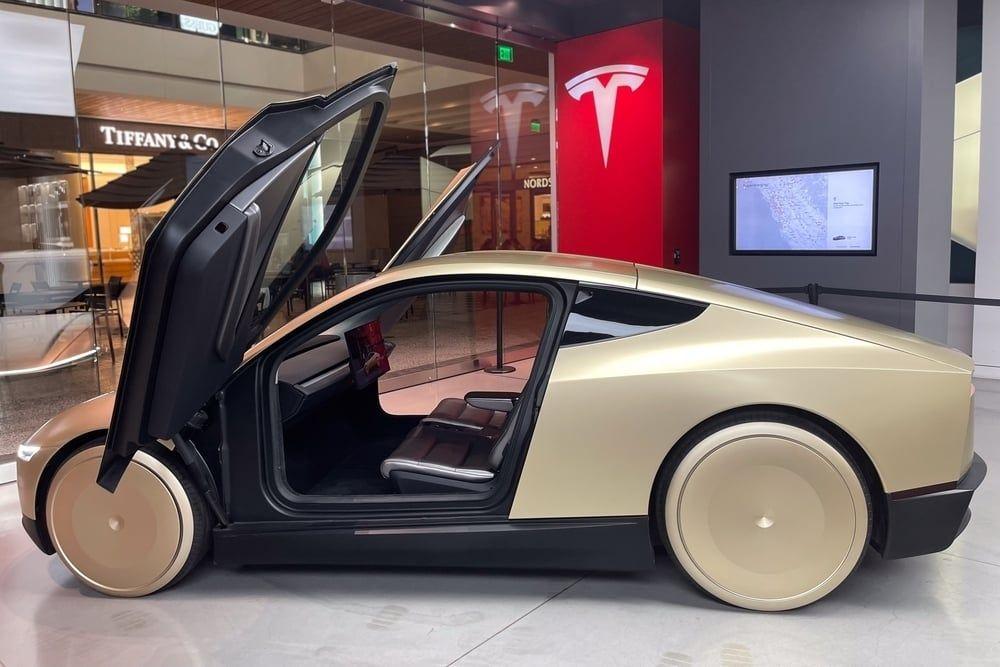
My home state of New Jersey might be putting its foot down and squashing Tesla's Cybercab robotaxis before they even get there. As spotted by The Verge, a bill that's currently under consideration in the state would prevent companies from operating fully autonomous vehicles unless they have camera-based technology and two additional forms of sensor tech, like lidar or radar. Elon Musk has been adamant over the years that Tesla's camera-based system is enough, but it legally won't be in Jersey if this bill becomes law. One of New Jersey's state lawmakers is also a physicist (the state doesn't prevent senators from keeping their day jobs), and he insists that he likes the idea of autonomous cars but is worried about safety. "This is not anti-Tesla," Democratic state Sen. Andrew Zwicker, the bill's primary sponsor, told The Verge. "I'm pro-New Jersey safety." After spending some time in a Waymo in Phoenix, Arizona, he's into the idea of robotaxis but recognizes the limitations of a camera-only system. "At this point, I don't think the evidence is sufficient that a single sensor with software can handle situations that humans can," Zwicker said. New Jersey is far from the only state debating how to regulate autonomous vehicles. However, its proposed hardware demands are unusual. Some might argue that the bill's language is vague, as it doesn't label any specific hardware the robotaxi must have, but I'd argue that's probably a good thing. As technologies advance, or new ones are developed, a rigid legal framework might slow progress down. And requiring redundancies could certainly keep people safer. As it stands, the part of the bill in question says that a fully autonomous vehicle must "be equipped with crash-avoidance systems, including a camera system and two distinct sensing modalities that are capable of detecting and tracking obstacles in the event of failure of the camera system." It isn't just tech, though. The bill also has testing requirements. Companies would need specific state authorization to operate autonomous vehicles in New Jersey, and that authorization wouldn't come until after at least 50,000 crash-free miles of supervised testing. The testing pilot program would last at least three years, too. Musk feels that his AI-assisted camera-based system is enough, going so far as to not add any additional sensors to the steering wheel- and pedal-free Cybercab. After all, we drive around with nothing but vision and our own (sometimes questionable) intelligence. However, Philip Koopman, an autonomous vehicle safety expert at Carnegie Mellon, disagrees. According to The Verge, Koopman says that "human brains are fundamentally more powerful than AI because we understand." And I couldn't agree more. Driving was created by humans, for humans. We fundamentally just get driving, have experience, understand how other humans behave or might want to do on the road, and have instincts far beyond what even an advanced AI can have. Plus, cameras can get covered in snow or mud or smushed insects, completely obscuring their view. Having backup sensors, even if the car's main source of info is camera-based, is far safer. Most companies developing and deploying autonomous vehicles, like Zoox, Waymo, and Nuro, agree and are going the multi-sensor route. Rivian and Lucid both decided to add lidar to their future vehicles to allow for higher levels of driving automation. Plus, you don't need to look too hard to find proof that self-driving vehicles with lots of sensors are superior today. Tesla argues that its cheaper, simpler sensing setup will give it a scaling advantage. Maybe that will be true someday, when its self-driving tech works better. But Waymo, whose cars are brimming with lidars, radars, cameras, and audio receivers, is way ahead of Tesla right now. The Alphabet-owned company is doing over 500,000 paid driverless trips per week across at least 10 cities, with more markets coming online regularly. It's still early days for Tesla's service, and growth has been far slower than Musk has promised. The autonomous vehicle industry has been pitching unified federal guidelines for years, but that hasn't materialized yet, and lots of self-driving regulation happens at the state and local level. If more places follow New Jersey's lead -- New York has similar legislation in the works -- that could be another bump in the road for Tesla's big self-driving dreams.
[6]
Tesla Robotaxis Could Be Blocked From New Jersey -- And Elon Musk's Own Strategy Is Why - Tesla (NASDAQ:TS
New Jersey Targets Non-Lidar Technology Tesla has expanded the states in which its robotaxis operate and looks to make autonomous vehicles a key part of its future growth. That plan could face a setback in New Jersey if a bill requiring autonomous vehicles to use cameras and other sensing technologies passes. The bill is expected to be voted on by New Jersey lawmakers later this year, as reported by The Verge. Under the rules of the proposed law, companies with autonomous vehicles operating in the state would have to use cameras along with other sensing technologies like lidar or radar. If passed, New Jersey could be the first state with such rules. New York also has potential legislation coming that would be similar in nature, according to the report. Tesla would be the most impacted by the new law in New Jersey, as Musk has been against lidar and radar for autonomous vehicles. Passing the bill would force Tesla to either change its process or skip New Jersey. "This is not anti-Tesla," New Jersey state senator Andrew Zwicker told The Verge. "I'm pro-New Jersey safety." Zwicker, who is the primary sponsor of the bill, also works at the Princeton Plasma Physics Laboratory. The state senator credits a ride in a Waymo robotaxi in Phoenix for convincing him that robotaxis could help transportation efforts. "I was amazed how quickly you get used to it." Zwicker is pro-autonomous vehicle, believing this could reduce traffic deaths and make options more accessible to consumers. The lawmaker's focus is on safety requirements for the technology, not on targeting any specific company. If passed, the bill would establish a three-year pilot program for fully autonomous vehicles to be tested and deployed in New Jersey. Companies would be required to use cameras and sensing technology and report certain crashes to regulators. The bill also requires 50,000 miles of supervised testing in the state before human safety drivers can be removed from vehicles. Elon Musk on Lidar For years, Musk has argued that cameras are able to power autonomous vehicles by utilizing AI technology. This combination, he argues, is greater than using lidar or radar and also lowers the costs to produce robotaxis. "Lidar and radar reduce safety due to sensor contention. If lidars/radars disagree with cameras, which one wins?" Musk said last year. "We turned off the radars in Teslas to increase safety. Cameras ftw." While Musk is anti-LIDAR, other autonomous vehicle companies like Waymo and Zoox have used LIDAR, radar, and cameras on their vehicles to advance the technology. The argument comes from all three methods working together, helping to provide strengths for overall autonomous vehicles. Tesla once promised to have hundreds of thousands of fully self-driving vehicles on the roads by the end of 2026. That figure is still out of reach, with the company operating unsupervised Robotaxis in a limited number of states and in small numbers in big cities. The ability of states to set their own rules on autonomous vehicles could limit Tesla's ability to expand as quickly as the company wants and as quickly as Musk once promised. Market News and Data brought to you by Benzinga APIs To add Benzinga News as your preferred source on Google, click here.
Share
Copy Link
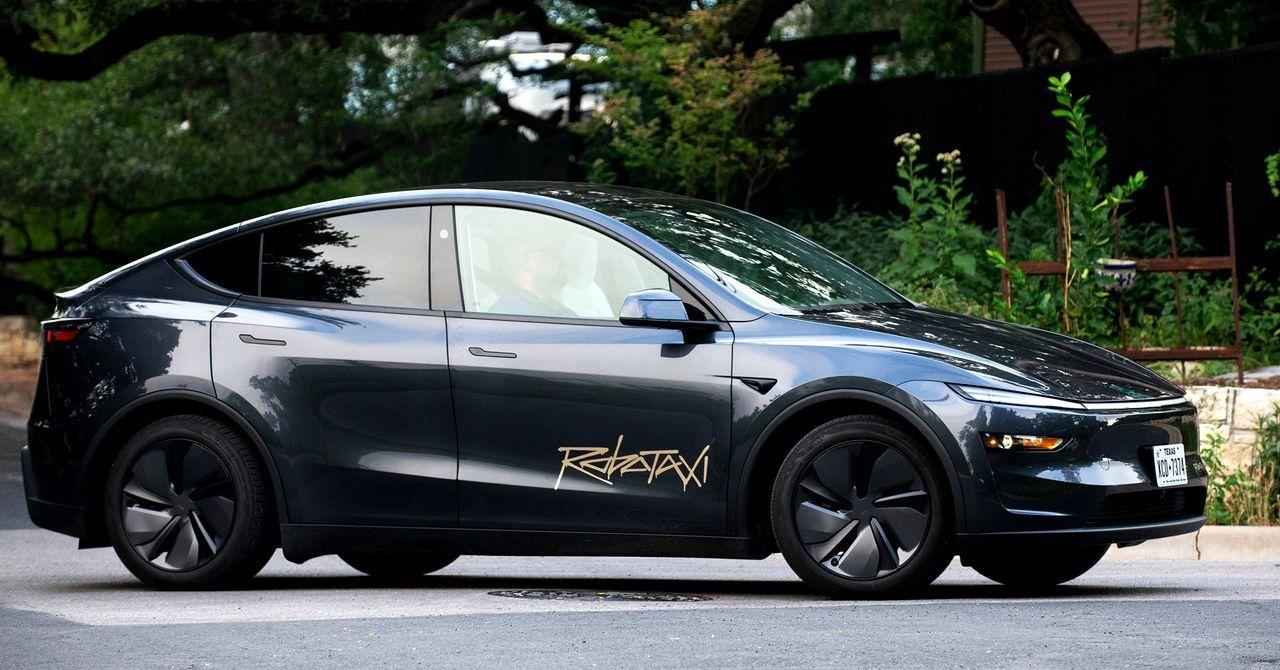
New Jersey lawmakers are set to vote on legislation requiring autonomous vehicles to use cameras plus two additional sensing technologies like lidar and radar. The measure would effectively block Tesla's camera-only robotaxi from operating in the state unless the company overhauls its hardware approach. A similar bill is pending in New York, potentially creating a regulatory domino effect.
New Jersey is poised to become the first state to codify a hardware mandate for autonomous vehicles, requiring companies to equip fully autonomous vehicles with cameras plus two additional sensing technologies. The New Jersey bill, sponsored by Democratic state Senator Andrew Zwicker, would establish a three-year pilot program governing the testing and deployment of self-driving cars in the nation's most densely populated state
1
. The legislation, formally known as Senate Bill 1677, was adopted by the Senate Transportation Committee on May 11 and is expected to come up for a vote later this year2
.The robotaxi law would require companies seeking authorization to operate in New Jersey to complete at least 50,000 miles of supervised testing without a major incident before removing human safety drivers. Companies must also carry at least $5 million in insurance, report certain crashes, and receive state authorization before launching commercial services . The bill prohibits operations in school zones, construction zones, and areas with high rates of pedestrian collisions
2
.
Source: The Verge
The sensor requirement represents the bill's most consequential provision and would effectively prevent Tesla's camera-only autonomous driving system from operating in New Jersey. Elon Musk has long insisted that AI-powered camera systems paired with increasingly capable artificial intelligence are sufficient for safe autonomous driving, arguing that humans navigate using vision alone
1
. Musk has even claimed that adding lidar and radar reduces safety due to what he calls "sensor contention," writing on X last year: "Lidar and radar reduce safety due to sensor contention. If lidars/radars disagree with cameras, which one wins? We turned off the radars in Teslas to increase safety. Cameras ftw"1
.Tesla currently operates a fleet of just 42 fully autonomous robotaxis on public roads in Texas, a figure dwarfed by Waymo's 577 authorized vehicles in the same state, plus several thousand more across ten US metropolitan areas
2
4
. Despite Musk promising hundreds of thousands of Tesla robotaxis by the end of this year, the service remains limited to Texas and Florida3
.
Source: Gizmodo
Nearly every major autonomous vehicle developer besides Tesla has adopted multiple sensor types for redundancy. Companies including Waymo, Zoox, Rivian, and Lucid combine cameras with lidar and radar, arguing that each sensing technology offers different strengths and weaknesses
1
5
. Cameras capture rich visual detail for recognizing colors, traffic signs, and pedestrians but struggle in adverse conditions like poor weather, darkness, or glare. Radar performs better in rain and fog and excels at measuring distance and relative speed. Lidar uses lasers to create detailed three-dimensional maps, making it particularly effective at determining the shape and distance of nearby objects1
.Philip Koopman, a Carnegie Mellon electrical and computer engineering professor and autonomous vehicle safety expert, stated that camera-only systems may eventually become capable enough for fully autonomous driving, but not today. "To run 24/7 across the majority of public roads in New Jersey today, it needs lidar," Koopman told The Verge. "It's pretty clear that today camera-only technology is not up to the challenge"
2
4
.Related Stories

Source: Benzinga
The absence of comprehensive federal guidelines has left state-level AV regulation as the primary governance mechanism for autonomous vehicles. New Jersey's hardware mandate represents an unusual approach, as most state battles over autonomous vehicles have centered on safety performance, oversight, and potential job losses rather than legislating how the vehicles should be built
1
. New York is considering a near-identical bill, raising the possibility of a domino effect that could spread sensor fusion requirements across multiple states2
3
.Andrew Zwicker, a physicist who works at the Princeton Plasma Physics Laboratory, emphasized that the measure is not targeting Tesla specifically. "This is not anti-Tesla," Zwicker told The Verge. "I'm pro-New Jersey safety"
1
3
. After riding in a Waymo robotaxi in Phoenix, Zwicker became convinced the technology could transform transportation but believes it should roll out cautiously. "At this point, I don't think the evidence is sufficient that a single sensor with software can handle situations that humans can," Zwicker said1
.Tesla has mounted an active campaign against the legislation, with company representatives lobbying lawmakers directly. The company has also emailed New Jersey customers urging them to contact the legislature and oppose the bill
1
4
. A post on Tesla's website states: "As written, the legislation imposes restrictions so severely that Tesla's autonomous vehicle technology couldn't legally operate in New Jersey. Rather than prioritizing real safety outcomes and performance, the bill specifically bans Tesla from the New Jersey market"3
.The bill also addresses marketing concerns around driver-assist systems like Full Self-Driving. Dealers and automakers would be required to provide buyers with written descriptions of what partial automated systems can and cannot do, and they cannot market such systems in ways that imply the car can drive itself. Violations would count as consumer fraud under state law
2
. This provision targets the gap between Tesla's Full Self-Driving branding and the reality that the system still requires constant human attention.The outcome of this pilot program could reshape the competitive landscape for autonomous vehicles. If New Jersey and New York establish sensor mandates, other states may follow, forcing Tesla to either add lidar and radar to its vehicles or accept exclusion from major markets. For now, computer vision alone faces an uphill regulatory battle in America's most densely populated state.
Summarized by
Navi
[1]
[2]
[3]
1
Technology

2
Business and Economy

3
Technology