Nokia Q2 profit beats expectations as AI data-centre demand doubles cloud sales to €446 million


6 Sources
[1]
Nokia Q2 profit beat on AI demand
STOCKHOLM, July 23 (Reuters) - Nokia (NOKIA.HE), opens new tab reported a bigger than expected rise in its quarterly comparable operating profit on Thursday, as the Finnish telecom gear maker got a boost from artificial intelligence and cloud customers. Comparable operating profit jumped 18% to
[2]
Nokia Q2 profit climbs 18% as AI data-centre demand doubles cloud sales
Comparable operating profit of €434mn beat analyst forecasts, but reported net profit fell to €5mn as restructuring charges bit. Nokia reported comparable operating profit of €434mn for the second quarter of 2026, up 18% on the same period last year and comfortably ahead of the €382mn that
[3]
Nokia says AI, cloud boosted sales in second quarter
Helsinki (AFP) - Finnish telecommunications equipment maker Nokia said that demand for its AI and cloud services drove sales higher in the second quarter, but restructuring charges ate into earnings. The second quarter "demonstrates our strategy is delivering results," chief executive Justin
[4]
Nokia says AI, cloud boosted sales in second quarter
Finnish telecommunications equipment maker Nokia said that demand for its AI and cloud services drove sales higher in the second quarter, but restructuring charges ate into earnings. "In the second quarter, our AI and cloud order intake was 2.8 billion euros while sales more than doubled
[5]
Global Market: Nokia Q2 profit beats estimates on strong AI, cloud demand; raises full-year outlook
Nokia reported stronger second-quarter earnings, surpassing analyst expectations significantly. Robust demand from artificial intelligence and cloud customers fueled this positive financial performance. The company's sales to AI and cloud clients doubled, securing substantial new orders. Despite
[6]

Nokia Q2 net sales rise 9% on AI and cloud demand By Investing.com
ESPOO, Finland - Nokia Corporation (HEL:NOKIA) reported second quarter net sales of €4.82 billion on Wednesday, representing a 9% increase year-over-year on a constant currency basis, according to a press release statement. The company's Network Infrastructure segment drove growth with net sales
Share
Copy Link
Nokia reported comparable operating profit of €434 million for Q2 2026, an 18% jump that beat analyst forecasts by over €50 million. The Finnish telecom equipment maker doubled its sales to AI and cloud customers, reaching €446 million, while booking €2.8 billion in new orders as hyperscalers race to build AI data centres.
Nokia Q2 Profit Beats Forecasts Driven by AI Demand
Nokia delivered a strong second quarter in 2026, with comparable operating profit climbing 18% to €434 million, comfortably surpassing the €382 million average estimate from analysts polled by LSEG
1
. The Finnish telecommunications equipment maker benefited from surging AI demand as major technology companies accelerated investments in data centre infrastructure. Net sales rose 8% to €4.82 billion, or 9% at constant currency, exceeding market expectations2
. The beat extended momentum from earlier in the year, when comparable operating profit jumped 54% in the first quarter.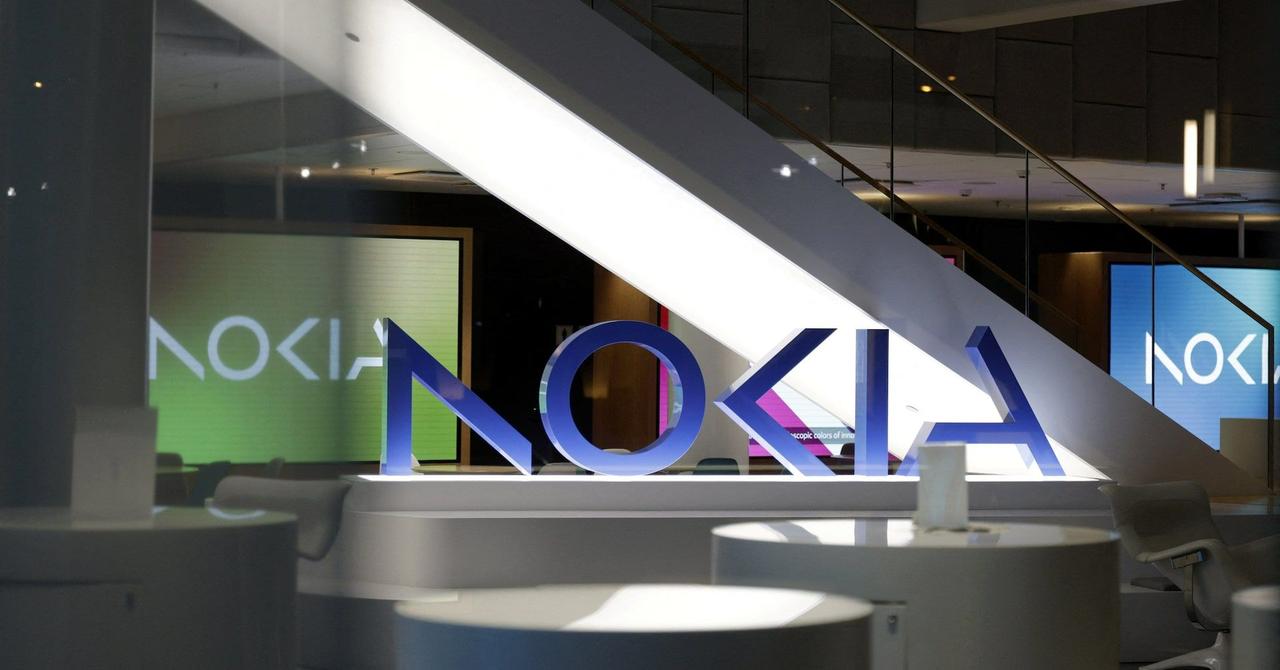
Source: Reuters
AI and Cloud Order Intake Reaches €2.8 Billion
Demand from AI and cloud customers proved to be the standout driver, with sales to this segment more than doubling year-on-year to reach €446 million
3
. Even more striking was the AI and cloud order intake of €2.8 billion during the quarter, signaling sustained momentum as customers move to secure scarce supply4
. CEO Justin Hotard noted that "demand remains strong, while supply continues to be the main industry constraint, prompting our customers to place longer-term orders." The substantial gap between orders booked and revenue recognized points to a lengthening backlog, with roughly half of these orders expected to convert to revenue over the next 12 months.Network Infrastructure Division Powers Growth
Nokia's Network Infrastructure division carried the quarter with sales up 12% to €2.04 billion
2
. Within this unit, Optical Networks grew 20% and IP Networks expanded 16%, both supplying the optical networking and routing equipment that hyperscalers are deploying to wire AI clusters together and link data centres across long distances. The company has been shifting focus to selling fibre-optic cables to big tech companies building AI data centres, a strategic pivot that CEO Hotard has prioritized since taking over from Intel's Data Center & AI Group in 20251
. This move positions Nokia to capitalize on what Hotard describes as the "AI supercycle," a sustained period of infrastructure investments driven by artificial intelligence workloads3
.Restructuring Charges Impact Reported Earnings
While comparable figures painted a positive picture, the reported bottom line told a different story. Nokia swung to an operating loss of €50 million and posted net profit of just €5 million, down sharply from €96 million a year earlier
2
. The group attributed this drop to restructuring charges projected to amount to €800 million for the full year4
. These charges include €350 million tied to integrating operations in China, €200 million for European restructuring, and €250 million under an earlier cost-cutting program. Despite the near-term hit, these moves are designed to streamline operations and improve long-term profitability as Nokia reorients toward AI infrastructure investments.Related Stories

Supply Constraints and Rising Memory Chip Prices
Nokia faces headwinds from supply constraints and escalating memory chip prices driven by AI companies cornering the market
1
. Rival Swedish telecoms equipment maker Ericsson warned last week about pressure from rising memory chip costs, sending its shares tumbling on investor worries about margin compression5
. Nokia's second-quarter results suggest it is absorbing the cost increases for now, though the company acknowledged that supply continues to be the main industry constraint. The tight component market has prompted customers to place longer-term orders to secure capacity, which explains the substantial order backlog relative to current shipments.Nokia Raises Full-Year Outlook
Reflecting confidence in sustained demand, Nokia raises full-year outlook for comparable operating profit to between €2.1 billion and €2.6 billion, up from €2.0 billion to €2.5 billion
5
. Hotard said the group was on track to finish "somewhat above the midpoint" of that range. However, the raised guidance leaves much of the year to play for, as Nokia earned roughly €715 million of comparable operating profit across the first half, meaning the top of its €2.6 billion target depends on the second half delivering close to €1.9 billion2
. This back-loaded projection leaves little room for slippage and will test whether the €2.8 billion order book converts into the second-half momentum management is promising. The company also strengthened its AI capabilities through a billion-dollar partnership with chipmaker Nvidia, positioning itself to serve the expanding data centre market5
.References
Summarized by

Navi
[1]
[3]
Related Stories
Nokia earnings beat estimates as artificial intelligence and cloud demand fuel data center pivot
23 Apr 2026•Business and Economy

Nokia CEO Says AI Infrastructure Would Build Twice as Fast if Supply Constraints Didn't Exist
06 Oct 2026•Business and Economy

Nokia Restructures Around AI Networks with $1 Billion Nvidia Partnership
20 Nov 2025•Business and Economy
Recent Highlights
1
Meta Unveils Muse Wonder Frontier AI Models, Claims Performance Matching OpenAI and Anthropic
Technology

2
IMF Report Warns AI Market Correction Could Spark Global Financial Crisis With $1.4T at Risk
Business and Economy

3
OpenAI Releases 722 AI-Generated Math Solutions, Triggering Existential Crisis in Mathematics
Technology

Recent Highlights
Today's Top Stories









Don’t drown in AI news. We cut through the noise - filtering, ranking and summarizing the most important AI news, breakthroughs and research daily. Follow topics that matter to you and stay ahead.


