NTT DATA and Hyster-Yale Deploy Physical AI Solution to Transform Manufacturing Quality Control


3 Sources
[1]
NTT DATA and Hyster-Yale Unveil AI-Powered Manufacturing Quality Solution
This approach leverages sensor data to enable machines and systems to perceive, understand and act in real-time within real-world operations. NTT DATA and Hyster-Yale Materials Handling, Inc. announced a breakthrough application of physical AI that embeds intelligence directly into manufacturing
[2]
NTT DATA and Hyster-Yale Materials Handling Announce Breakthrough Physical AI Solution in Manufacturing
NTT DATA and Hyster-Yale Materials Handling, Inc. (HYMH) today announced a breakthrough application of physical AI that embeds intelligence directly into manufacturing processes. This approach leverages sensor data to enable machines and systems to perceive, understand and act in real-time within
[3]
NTT DATA And Hyster-Yale Materials Handling Announce Breakthrough Physical AI Solution In Manufacturing
NTT DATA, a global leader in AI, digital business and technology services, and Hyster-Yale Materials Handling, Inc., the manufacturer of Hyster® and Yale® lift trucks, announced a breakthrough application of physical AI that embeds intelligence directly into manufacturing processes. This approach
Share
Copy Link
NTT DATA and Hyster-Yale Materials Handling have launched a physical AI solution that embeds intelligence directly into manufacturing processes. Developed with partner Archetype AI at Hyster-Yale's Berea, KY facility, the system uses vision sensors and edge computing to validate assembly processes in real-time, cutting deployment timelines from months to weeks while maintaining high production standards.
Physical AI Solution Brings Intelligence to the Factory Floor
NTT DATA and Hyster-Yale Materials Handling have introduced a physical AI solution that fundamentally changes how quality assurance operates in manufacturing workflows
1
2
. This AI-powered manufacturing quality solution embeds intelligence directly into production lines, leveraging sensor data to enable machines and systems to perceive, understand, and act in real-time within real-world operations. The deployment represents a first-of-its-kind use case in industrial settings, demonstrating how physical AI can be integrated into assembly processes to maintain production standards without disrupting existing workflows.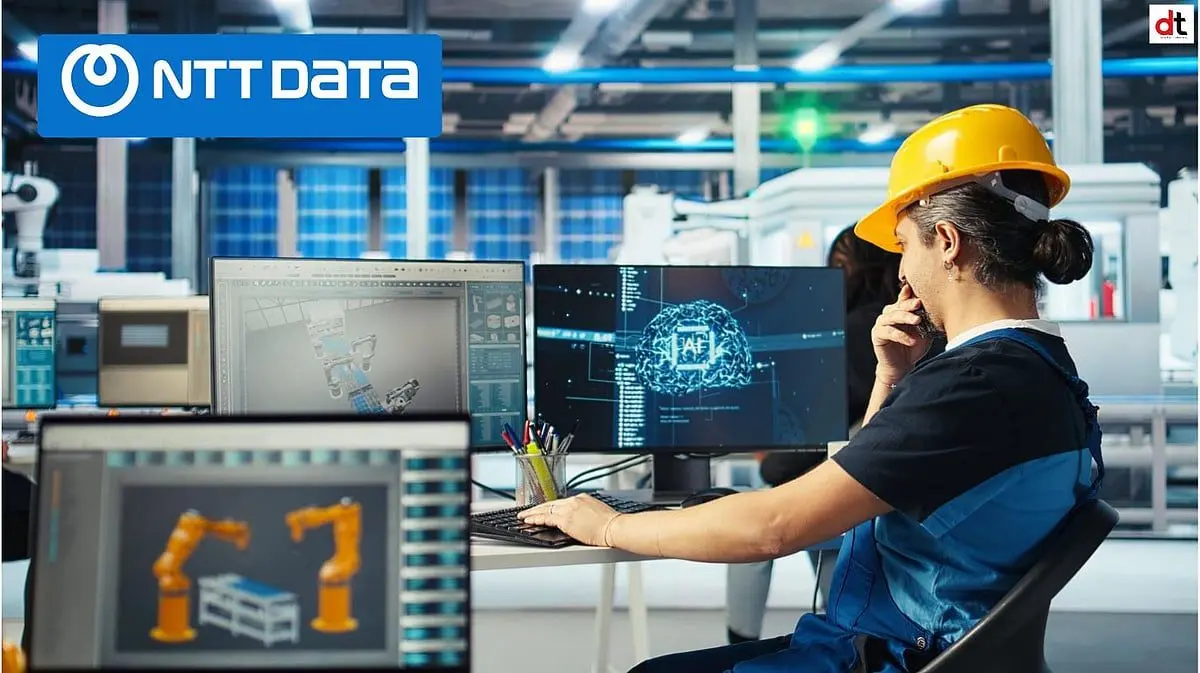
Source: DT
Real-Time Monitoring and Validation at Hyster-Yale's Berea Facility
NTT DATA designed and developed the solution at Hyster-Yale's manufacturing facility in Berea, KY, integrating vision sensors, edge AI that processes data on-site, and advanced analytics into critical assembly workflows
2
. Working with partner Archetype AI, the team adapted a physical AI model that analyzes assembly activity against expected production steps, validating that all parts are installed and assembly stages are completed. The system flags deviations before products move to the next stage, helping identify and address potential issues before they leave the factory floor. This real-time monitoring and validation approach ensures frontline workers receive immediate feedback, supporting them in maintaining consistently high standards.Edge Computing Delivers Faster Time-to-Value
The integration of edge computing allows the solution to run locally, with all processing happening on-site rather than in the cloud
3
. This architectural choice enables faster rollout and quicker time-to-value for manufacturers. Early results showed that physical AI cuts deployment timelines from months to weeks when compared with legacy techniques, accelerating adoption and iteration across manufacturing operations1
. "This deployment shows what physical AI looks like in real production environments, not as a concept, but with tangible impact on the factory floor," said Shahid Ahmed, Global Head of Edge Services at NTT DATA, Inc2
.Related Stories


Improved Efficiency and Scalable AI Integration
Barbara Binda, Director of Global Manufacturing Innovation at Hyster-Yale Materials Handling, noted that "our confidence in physical AI continues to grow, and we're starting to see the countless benefits that AI can bring to our global manufacturing operations"
1
. The collaboration demonstrates improved efficiency through scalable AI integration that can be adapted across multiple facilities. As manufacturers accelerate automation, demand is rising for physical AI that can operate safely in complex environments, driving efficiency, quality, and resilience3
. NTT DATA's capability to integrate AI across IT and operational technology environments positions the company to deliver this technology at scale, enabling intelligent, data-driven operations that support repeatable, high-quality production outcomes.References
Summarized by

Navi
[2]
Related Stories
Recent Highlights
1
Meta Unveils Muse Wonder Frontier AI Models, Claims Performance Matching OpenAI and Anthropic
Technology

2
IMF Report Warns AI Market Correction Could Spark Global Financial Crisis With $1.4T at Risk
Business and Economy

3
OpenAI Releases 722 AI-Generated Math Solutions, Triggering Existential Crisis in Mathematics
Technology

Recent Highlights
Today's Top Stories








Don’t drown in AI news. We cut through the noise - filtering, ranking and summarizing the most important AI news, breakthroughs and research daily. Follow topics that matter to you and stay ahead.


