Jensen Huang says AI job displacement fears miss the point: You'll lose to coworkers who use AI


6 Sources
[1]
'You have to separate the task from the purpose of the job': Nvidia CEO Jensen Huang reflects on early AI fears around job displacement, and why we shouldn't be worried
* Huang recalls when radiologists were worried about AI's "superhuman" powers * AI actually lets us reframe what's important in a role's purpose * Job tasks are at risk, but job roles aren't Speaking on stage at Adobe's flagship annual conference, Summit 2026, Nvidia CEO Jensen Huang addressed
[2]
Nvidia CEO Says AI Will Be a Permanent Micromanaging Boss Who Never Stops Nagging You
Can't-miss innovations from the bleeding edge of science and tech As fear over an AI-driven jobs apocalypse continues to simmer, some tech leaders remain adamant that the wide proliferation of AI will lead to more employment opportunities, not fewer. Consider a recent panel at Stanford
[3]
Nvidia CEO Jensen Huang says you won't lose your job to AI -- you'll lose it to your coworker who uses it | Fortune
The warnings about AI's impact on jobs echo from Silicon Valley to Wall Street to Washington, D.C. But Nvidia CEO Jensen Huang thinks you should worry less about the robots and more about your coworker, the one quietly "tokenmaxxing," or using AI to do in minutes what takes you hours. In a recent
[4]
Nvidia CEO Jensen Huang: 'Most people will lose their job to somebody who uses AI' -- not to AI itself
"The narratives of AI destroying jobs is not going to help America," Huang said. "First of all, it's just false." Huang offered the example that the most popular and successful software engineers at Nvidia -- the $5 trillion company where agentic AI has been integrated within the company -- are
[5]
Nvidia's Jensen Huang says AI assistants will act more like overbearing managers rather than job destroyers: 'They'll be micromanaging you' | Fortune
Tech leaders are split on how AI will shake up the world of work. While some CEOs are staunch believers that a white-collar jobs armageddon is imminent, others say it'll supercharge humans in their professional lives. Jensen Huang, the chief executive of $4.8 trillion giant Nvidia, believes AI
[6]

Nvidia CEO Jensen Huang Says AI Won't Replace You -- It Will Just Be a Really Annoying Micromanager
Jensen Huang has good news and bad news about AI. First, the good: It's not going to take your job. The bad news? It's going to look over your shoulder instead. The Nvidia CEO predicts that rather than replace you, AI assistants will act more like managers, according to Fortune. "Your AI agents are
Share
Copy Link
Nvidia CEO Jensen Huang challenges widespread fears about AI job displacement with a nuanced perspective. Speaking at Stanford and Adobe Summit 2026, he argues workers won't lose jobs to AI itself but to colleagues who master AI tools. Drawing on radiology's experience, Huang explains how AI replaces specific tasks while expanding overall demand for human expertise.
Jensen Huang Reframes the AI Job Displacement Debate
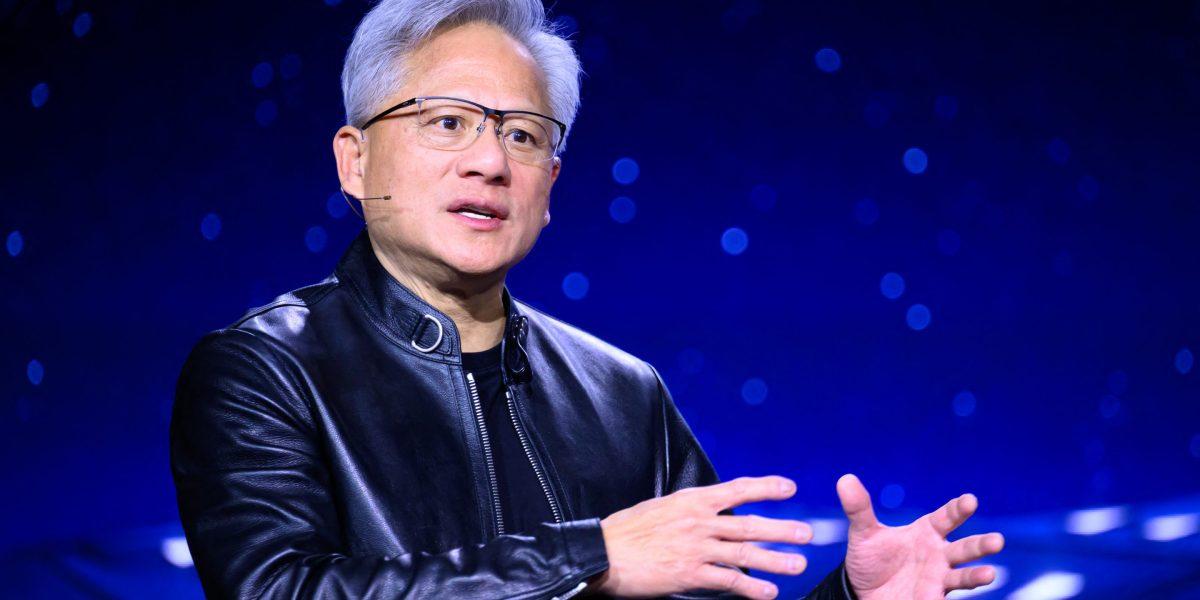
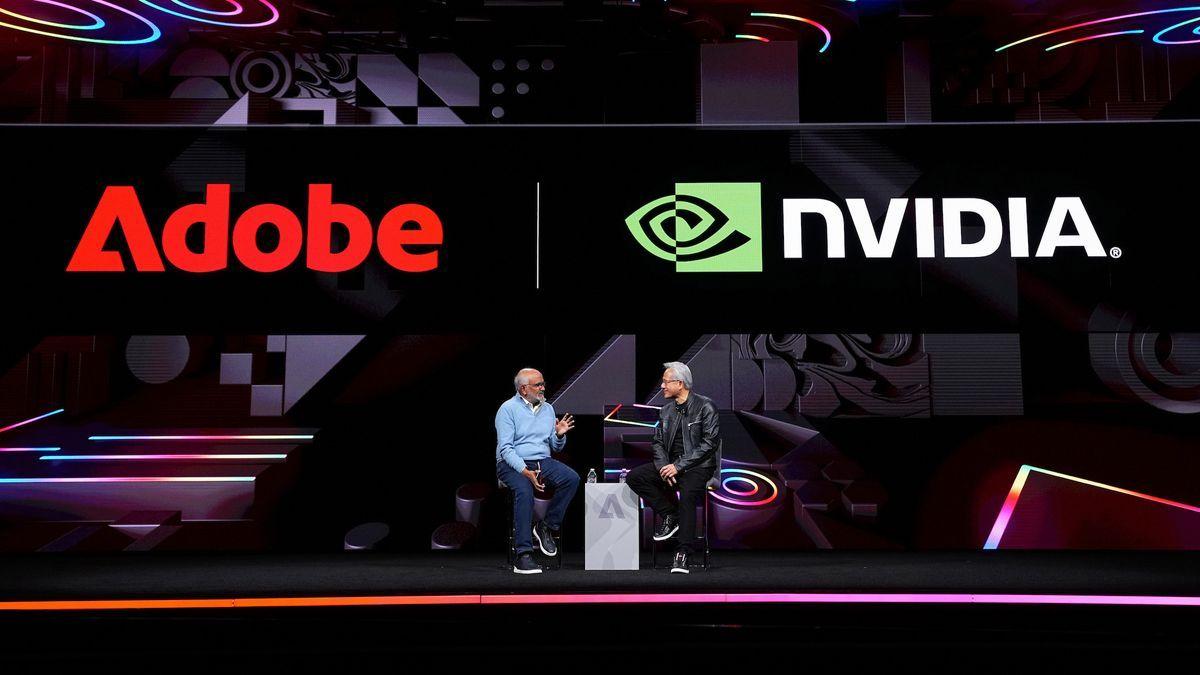
Nvidia CEO Jensen Huang is pushing back against the narrative that AI job displacement will devastate the workforce, offering a more nuanced take that's gaining attention across Silicon Valley. Speaking at Stanford University's graduate school of business and Adobe Summit 2026, Huang delivered a message that challenges both doomsday predictions and blind optimism: workers won't lose jobs to AI itself, but they might lose your job to somebody who uses AI
3
.
Source: Fortune
"It is unlikely most people will lose a job to AI," Huang explained during his Stanford appearance. "It is most likely that most people will lose their job to somebody who uses AI. And so, we have to make sure that everybody uses AI"
3
. This perspective stands in stark contrast to warnings from other tech leaders like Anthropic CEO Dario Amodei, who predicted AI would wipe out half of all entry-level white-collar workers3
.
Source: TechRadar
How AI Replaces Specific Tasks Without Eliminating Jobs
The leader of the $4.8 trillion GPU giant drew on a compelling example from healthcare to illustrate his point. More than a decade ago, radiologists worried their profession would vanish as AI systems became "superhuman" at analyzing medical scans
1
. Instead, the opposite happened. Today, AI is embedded throughout radiology workflows, yet there are actually more human radiologists than before AI adoption1
.The reason lies in a critical distinction Huang emphasizes: "Your job, the purpose of your job, and the tasks that you do in your job are related but not the same"
3
. While AI automated the task of studying scans, the purpose of working with clinicians and patients to diagnose and manage disease remains deeply human. Faster and cheaper diagnostics meant more scans were ordered, expanding overall demand and improving healthcare outcomes1
.AI Assistants as Micromanaging Bosses Boost Productivity
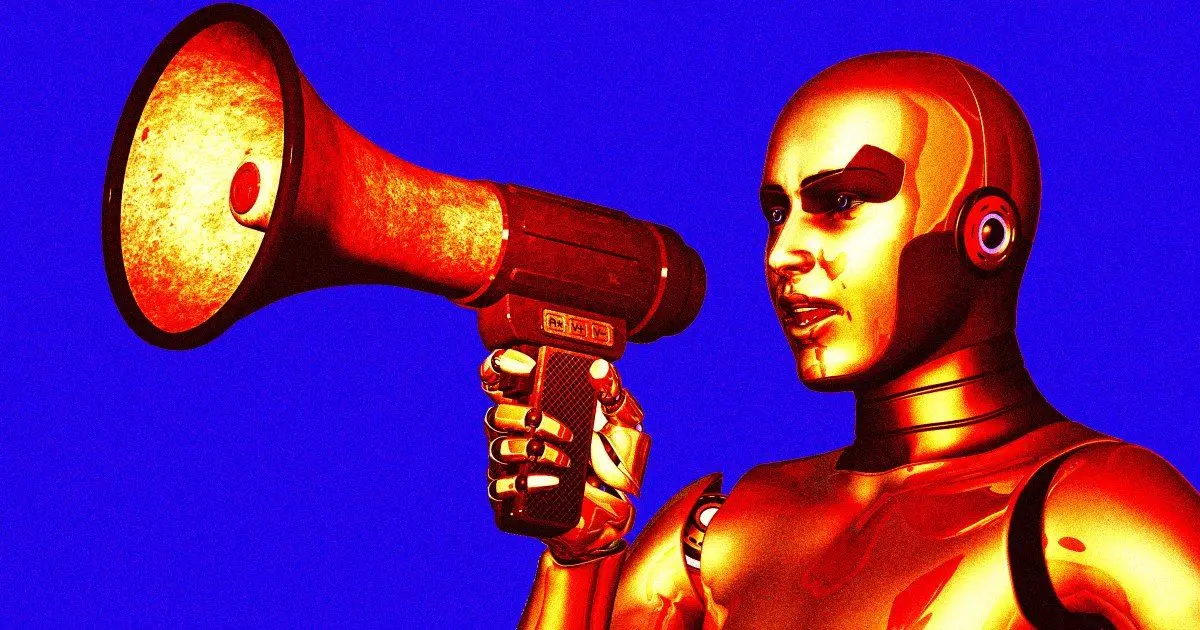
Huang painted an unusual picture of the future workforce during his Stanford panel, one where AI agents act less like job destroyers and more like overbearing managers. "Your [AI] agents are harassing you, micromanaging you, and you're busier than ever," he said. "And yet our company is able to do more"
2
. This vision suggests AI tools enhance productivity by constantly prompting workers to tackle more ambitious projects at greater scale5
.
Source: Futurism
At Nvidia itself, this dynamic is already playing out. "The software engineers who know how to work with AI are the most popular software engineers," Huang noted, adding that these engineers are actually busier than ever because AI tools save significant time on coding tasks
4
. The company is backing this vision with substantial investment: at the Nvidia GTC conference in March, Huang revealed the company offers AI tokens to engineers worth nearly half their salary to attract top talent3
.Related Stories

AI's Impact on the Future Workforce Creates Winners and Losers
The data suggests Huang's prediction about human-AI collaboration is already reshaping the labor market. According to a Writer report, workers using AI are three times as likely to have received promotions and pay raises compared to those dragging their feet on AI adoption. Meanwhile, 60% of executives said they're considering cutting employees who refuse to adopt AI
3
.Yet fears of job destruction persist. KPMG found that four in 10 workers fear AI could take their job, while 29% of workers are actively sabotaging their company's AI strategy, with about one-third citing fear of AI as their motivation
3
. These concerns aren't entirely unfounded: 44% of CFOs at U.S. companies plan AI-related job cuts in 2026, with about 502,000 roles expected to be eliminated by year's end, a nine-fold increase from the 55,000 AI-related layoffs in 20255
.Creating More Employment Opportunities Through Technological Transformation
Despite short-term disruption, Huang remains optimistic about creating more employment opportunities. "My belief is we're gonna create more jobs in the end," he said. "There'll be more people working at the end of this industrial revolution than at the beginning of it"
2
. The 63-year-old billionaire, who has led Nvidia for 34 years, points to his own experience: "The tools that I've used to do my job have changed continuously in the last 34 years, and sometimes quite dramatically"5
.Huang acknowledged that task automation will impact some roles more severely than others. Jobs comprising primarily repetitive, administrative tasks remain at risk, while roles where human judgment remains central and where demand for the job's purpose can grow will likely thrive
1
. Nvidia is now seeking "expert AI users" across all functions, from marketing to finance to engineering, signaling that upskilling in AI adoption will become essential for career advancement3
.References
Summarized by

Navi
[4]
Related Stories
Jensen Huang Warns AI Leaders Against Fearmongering as Nvidia Pushes Optimistic Vision
16 Mar 2026•Technology

Nvidia CEO Jensen Huang Weighs In on AI's Impact on Jobs and Innovation
14 Jul 2025•Technology
Nvidia CEO Jensen Huang Pushes for Maximum AI Automation While Promising Job Security
25 Nov 2025•Business and Economy

Recent Highlights
1
Microsoft and Nvidia Launch Surface Laptop Ultra: A $2,599 AI-Ready PC With RTX Spark Chip
Technology

2
Google Unveils Gemini 4 Argon AI Model, Restricts Access to Trusted Cyber Defenders
Technology
3
Trump Consulted Grok AI Before Ordering Venezuela Invasion and Capture of Nicolás Maduro
Policy and Regulation

Recent Highlights
Today's Top Stories






Don’t drown in AI news. We cut through the noise - filtering, ranking and summarizing the most important AI news, breakthroughs and research daily. Follow topics that matter to you and stay ahead.


