NVIDIA DGX Station for Windows Delivers 748GB Memory for Local AI Model Execution


2 Sources
[1]
NVIDIA DGX Station for Windows Brings 748GB Unified Memory to the Desktop
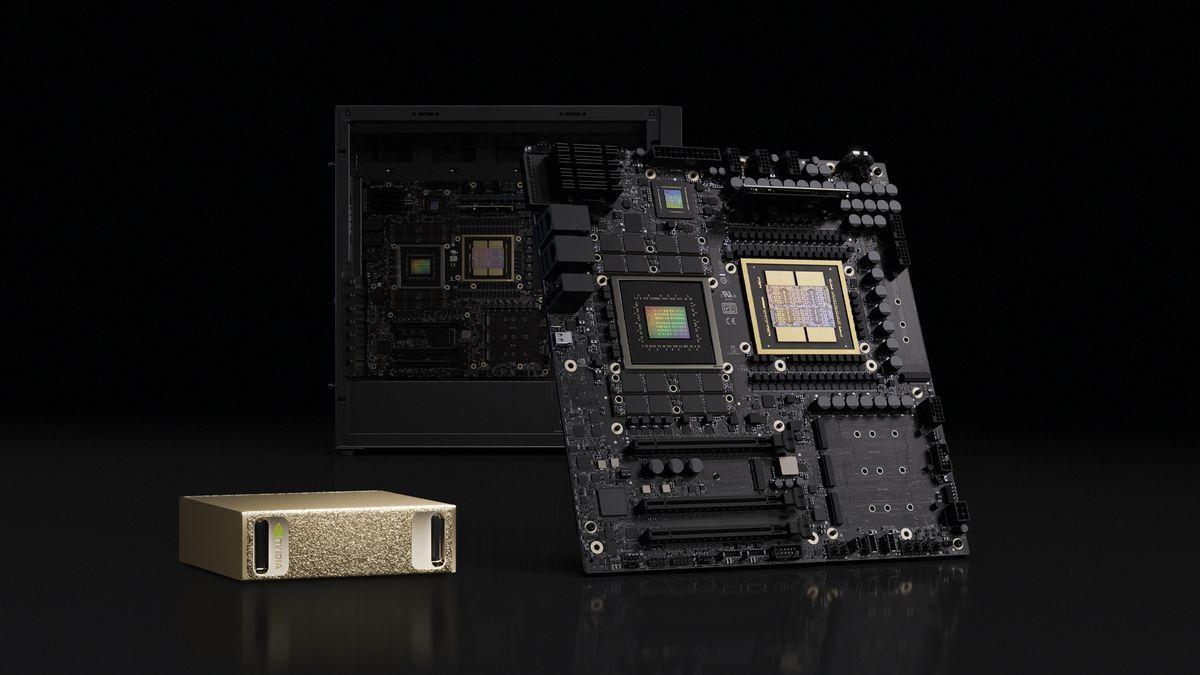
NVIDIA has announced the DGX Station for Windows, a desktop AI workstation built around the GB300 Grace Blackwell Ultra Desktop Superchip. The system is intended for developers, researchers and data-science teams that need to run large models locally rather than sending every workload to a cloud
[2]
NVIDIA's AI-Powerhouse "DGX Station" Breaks Out Of Linux, Cramming 748 GB Of Memory And 20 PFLOPs Into A Windows Workstation
NVIDIA's DGX Station will now have a Windows variant, bringing vast AI capabilities inside a kind workstation, powered by the GB300 chip. NVIDIA Blackwell Ultra-Powered DGX Station For Windows Delivers 20 PFLOPs of AI Compute, Driving Massive MoE Models & Agents Earlier this year, NVIDIA launched
Share
Copy Link
NVIDIA unveiled its DGX Station for Windows, a desktop AI workstation powered by the GB300 Grace Blackwell Ultra chip. The system features 748GB unified memory and 20 PFLOPS of AI performance, enabling developers to run trillion-parameter models locally. Set for Q4 2026 release, it bridges the gap between Linux-based AI development and Windows enterprise workflows.
NVIDIA has announced the DGX Station for Windows, marking a strategic expansion of its data-center-style AI capabilities into Windows-based enterprise environments. The desktop AI workstation, powered by the GB300 Grace Blackwell Ultra Desktop Superchip, is scheduled to launch in the fourth quarter of 2026
1
2
.Breaking the Linux-Windows Divide for Enterprise Developers
Until now, NVIDIA's DGX Station ran exclusively on Linux, forcing enterprise developers to maintain dual environments. The vast majority of Fortune 500 companies standardize on Windows, creating a costly gap where developers either migrated to Linux for AI compute or remained in Windows with limited hardware options for heavy-duty model development
2
. The DGX Station for Windows eliminates this friction, bringing professional AI workstation capabilities directly into existing Windows workflows without requiring separate Linux infrastructure.748GB Unified Memory Powers Trillion-Parameter Models
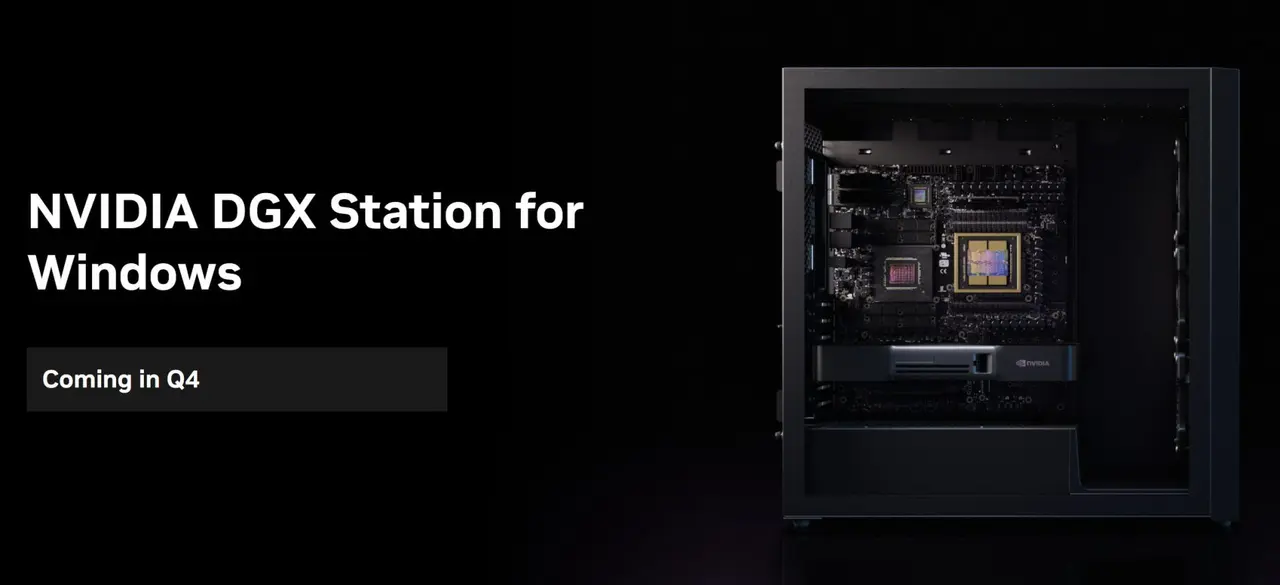
Source: Wccftech
The system's defining feature is its 748GB of coherent unified memory—far exceeding typical high-end GPU workstations with 96GB or 192GB graphics memory
1
. This massive memory pool allows models to remain in one address space rather than being fragmented between system memory and dedicated graphics memory. NVIDIA states the platform can handle models containing up to one trillion parameters locally, though actual performance depends on compression, quantization, and software conditions1
.Blackwell Ultra Architecture Delivers 20 PFLOPS AI Performance
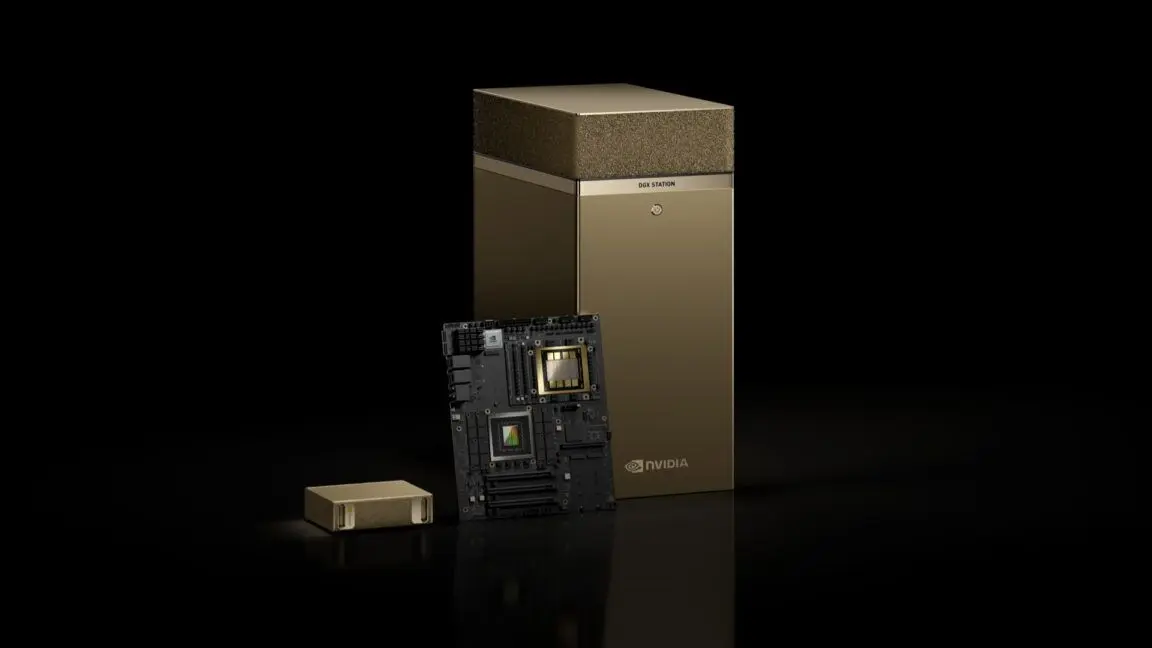
The NVIDIA DGX Station houses the GB300 Blackwell Ultra GPU with 160 streaming multiprocessors, totaling 20,480 CUDA cores and 640 Tensor cores. The GPU includes 252GB of HBM3e memory delivering 7.1 TB/s bandwidth—a substantial upgrade from the 192GB maximum on previous Blackwell GB200 solutions
2
. The system achieves up to 20 PFLOPS of FP4 AI performance, with Blackwell Ultra providing a 50% increase in dense low-precision compute output using NVIDIA's new NVFP4 standard2
.Paired with the GPU is a 72-core Grace processor based on the Neoverse V2 architecture, supported by 496GB of LPDDR5X system memory offering 396 GB/s bandwidth. Combined with the HBM3e, the total system memory reaches 784GB
2
.Coherent Interconnect Enables Data-Center-Style Memory Architecture
The 72-core Grace CPU and Blackwell Ultra GPU communicate through a 900 GB/s NVLink-C2C coherent interconnect. This high-bandwidth connection differs fundamentally from standard desktop configurations with discrete PCIe graphics cards, enabling improved memory sharing for AI workloads
1
2
. However, this specialized architecture means the platform is purpose-built for AI rather than general-purpose computing or gaming.Related Stories
Target Workloads: Inference, Fine-Tuning, and Simulation
The AI workstation targets workloads including inference, fine-tuning, synthetic-data generation, scientific simulation, and visualization. Developers can test models without repeatedly uploading sensitive data or waiting for remote GPU allocation. Organizations can use the machine to develop applications locally before scaling to larger data-center clusters
1
. The system operates at 1600W TDP and includes support for NVIDIA's RTX PRO Blackwell graphics cards, four M.2 Gen5 ports, and ConnectX-8 SuperNIC delivering 800 Gb/s networking speeds2
.Competing in the Local AI Workstation Market
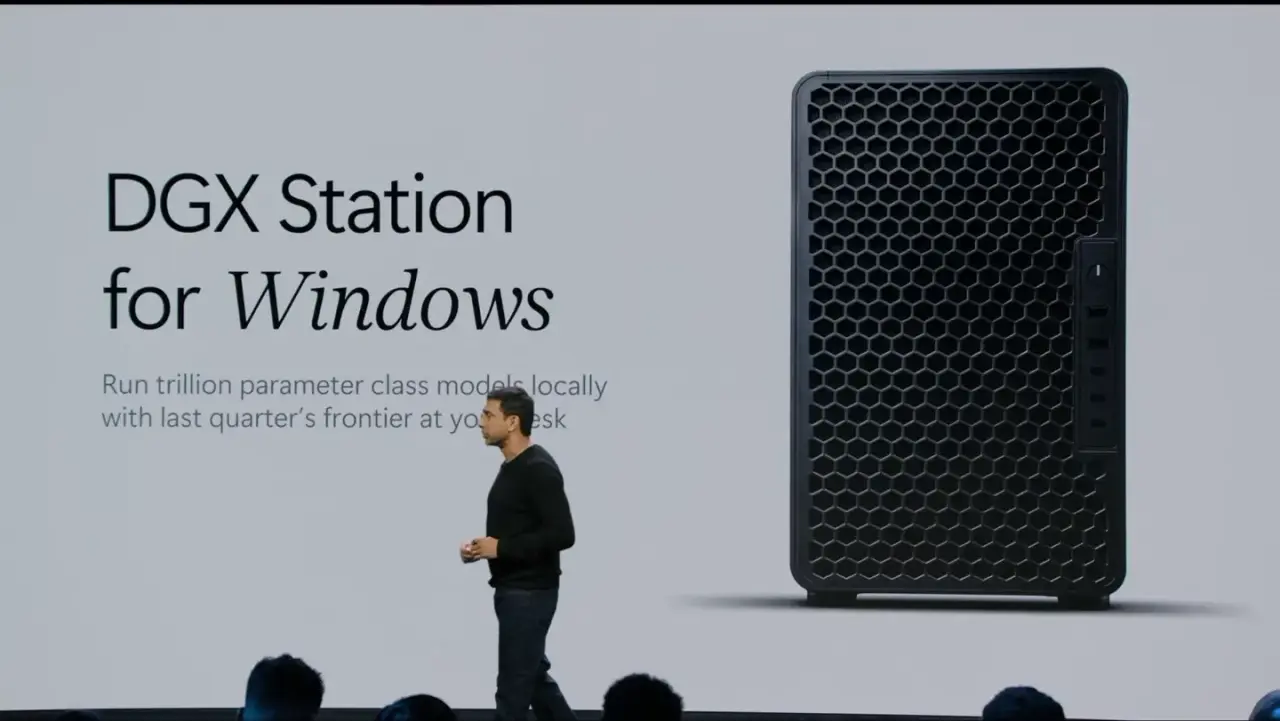
Source: Guru3D
The announcement comes one month after AMD unveiled its Threadripper Halo Station, combining Threadripper CPUs and Radeon PRO GPUs for a 2027 release. Both platforms are expected to retail around $100,000
2
. While AMD offers higher memory configurations and more CPU cores, NVIDIA's DGX Station counters with superior AI compute at 20 PFLOPS, 748GB unified memory, faster interconnect bandwidth, and mature CUDA and TensorRT ecosystems.Both companies recognize growing demand for local execution of large AI models as enterprises seek alternatives to cloud-dependent workflows. Watch for how Windows driver maturity and application support evolve as developers target the Grace Blackwell memory architecture. The shift toward desktop supercomputing signals that AI development is moving closer to where enterprise developers already work, reducing infrastructure complexity while maintaining data-center-grade capabilities.
References
Summarized by

Navi
Related Stories
Nvidia squeezes trillion-parameter AI supercomputer into desktop workstations for Windows
01 Jun 2026•Technology
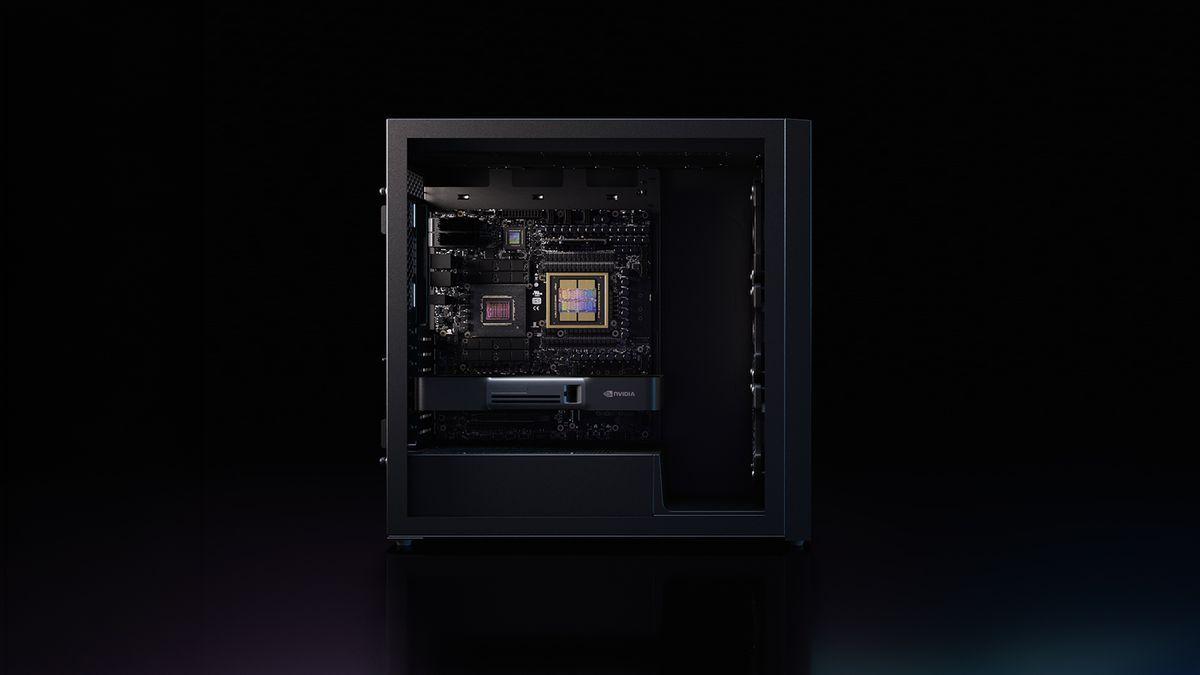
Nvidia's DGX Station brings trillion-parameter AI models to your desk with GB300 Superchip
17 Mar 2026•Technology
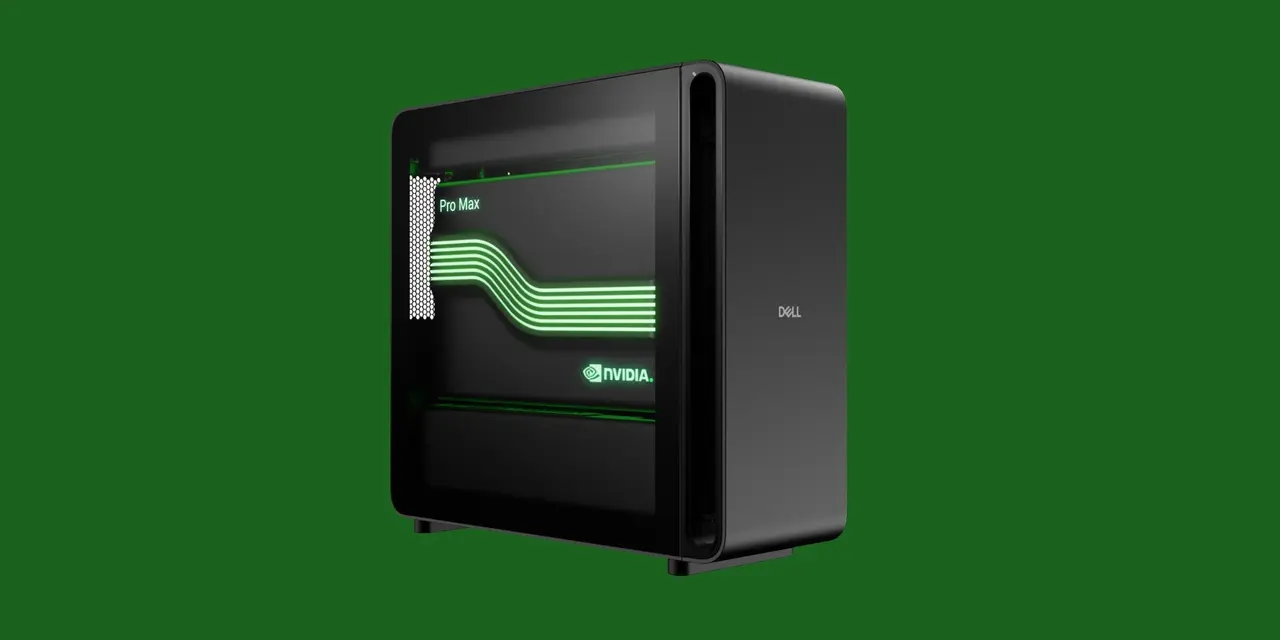
Dell Unveils Groundbreaking 20-PetaFLOPS Desktop Powered by Nvidia's GB300 Superchip
19 Mar 2025•Technology
Recent Highlights



Recent Highlights
Today's Top Stories






Don’t drown in AI news. We cut through the noise - filtering, ranking and summarizing the most important AI news, breakthroughs and research daily. Follow topics that matter to you and stay ahead.


