Nvidia Invests in Cloverleaf Infrastructure to Secure AI Data Center Pipeline


6 Sources
[1]
Nvidia partners with data center developer Cloverleaf
Nvidia is doing everything it can to keep fueling the AI buildout that has underpinned its own good fortunes. On Friday, it announced a partnership with Cloverleaf Infrastructure, a company that lays the groundwork for data centers. Cloverleaf was founded in 2024 and raised $300 million that year.
[2]
Cloverleaf deal is latest example of Nvidia using its war chest to patch cracks in the AI bubble
Nvidia has made its fortune on the AI boom, but the company has a problem. It faces a growing number of roadblocks which, if left unchecked, could pop the bubble. Thus, the AI arms dealer has been forced to play a game of Whac-a-Mole, shoring up the foundations of its empire by investing its
[3]
Nvidia invests in data center developer Cloverleaf Infrastructure
Aug 21 (Reuters) - Nvidia (NVDA.O), opens new tab has made a minority investment in privately held Cloverleaf Infrastructure to develop infrastructure to power AI data center projects across the U.S., the companies said on Friday. The investment will help Cloverleaf develop sites for the data
[4]
NVIDIA tech links power, cooling and computing for new data centers
NVIDIA is investing in Cloverleaf Infrastructure as the two companies work to speed up development of large computing facilities across the United States. The partnership focuses on one of the biggest challenges facing new data centers: securing suitable sites with enough power and infrastructure
[5]

Nvidia invests in data center developer Cloverleaf Infrastructure
The investment will help Cloverleaf develop sites for the data centers, while Nvidia will support infrastructure buildouts for AI computing. Nvidia has made a minority investment in privately held Cloverleaf Infrastructure to develop infrastructure to power AI data center projects across the
[6]

Nvidia invests in data center developer Cloverleaf Infrastructure
Nvidia has made a minority investment in privately held Cloverleaf Infrastructure to develop infrastructure to power AI data center projects across the U.S., the companies said on Friday. The investment will help Cloverleaf develop sites for the data centers, while Nvidia will support
Share
Copy Link
Nvidia has taken a minority investment in Cloverleaf Infrastructure, a data center developer founded in 2024. The partnership addresses critical infrastructure bottlenecks threatening AI expansion by securing power, cooling and computing resources for next-generation facilities across the United States.
Nvidia Secures AI Infrastructure Through Cloverleaf Investment
Nvidia announced Friday it has made a minority investment in Cloverleaf Infrastructure, a data center developer founded in 2024 that specializes in securing land and power for AI computing facilities
1
3
. While financial terms weren't disclosed, the Wall Street Journal reports Nvidia's investment will likely total several hundred million dollars5
. The deal represents Nvidia's latest effort to use its AI boom profits to eliminate infrastructure roadblocks that could constrain future GPU sales.Cloverleaf acts as a middleman between utility companies and AI data center projects, providing power sources and critical infrastructure for site development
1
. Since raising $300 million in 2024, the company has delivered multiple gigawatt-scale projects across North America4
5
. The partnership gives Nvidia greater control over the AI infrastructure ecosystem while providing Cloverleaf with capital to expand its pipeline of shovel-ready sites.Why Infrastructure Bottlenecks Threaten Nvidia's Growth
Nvidia faces a fundamental constraint: it can only sell as many GPUs as there are data centers capable of deploying them
2
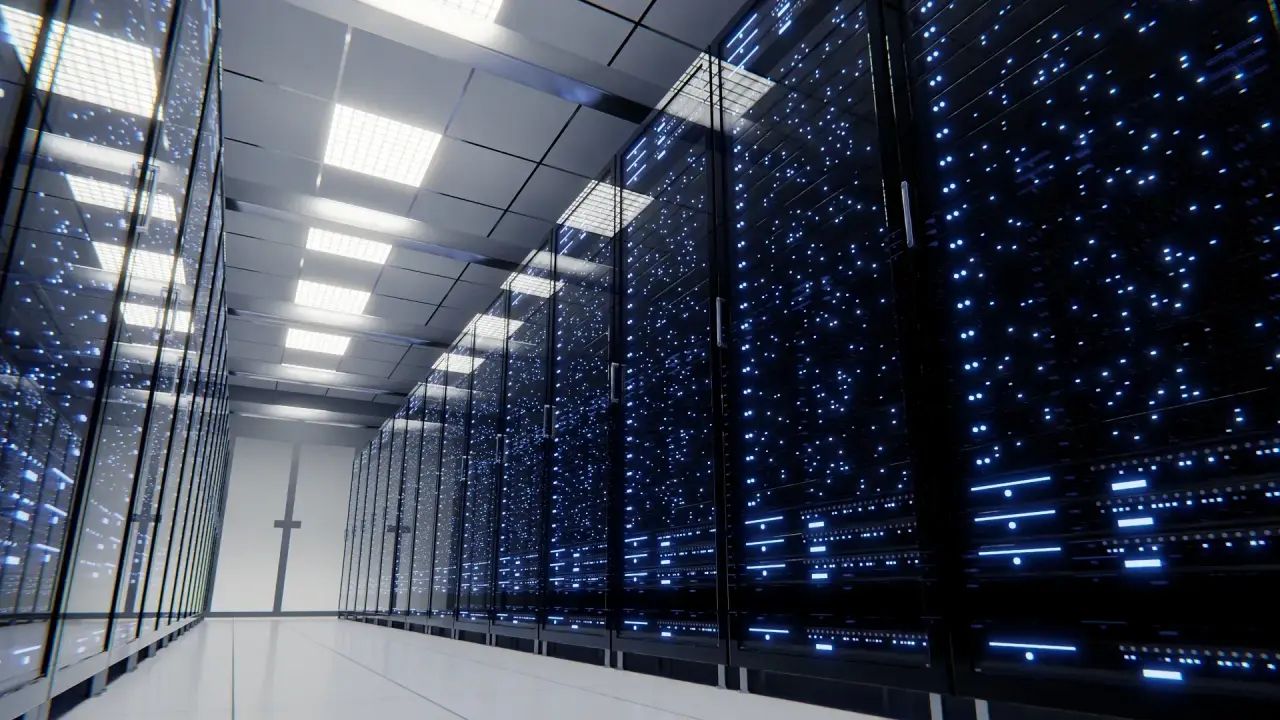
. The challenge has intensified as Nvidia's hardware requirements have evolved dramatically. Until 2024, most Nvidia systems were air-cooled and could be deployed in conventional facilities with minimal modifications2
.
Source: Interesting Engineering
The Blackwell generation marked a turning point. While air-cooled configurations remained available, deploying Nvidia's most powerful NVL72 systems required liquid cooling infrastructure that many existing facilities lacked
2
. Liquid-cooled racks are significantly more compute-dense, heavier, and power-hungry, requiring larger UPS backups, beefier PDUs, and coolant distribution units—roughly one CDU for every one to three megawatts of compute capacity2
.With the upcoming Rubin generation, air-cooled GPUs are essentially obsolete for HGX and NVL-style form factors that power most AI training and inference deployments. Nvidia is offering Rubin chips only in liquid-cooled varieties
2
. Nvidia's transition from roughly 250kW to 600kW racks starting next year further complicates facility requirements2
.DSX Platform Coordinates Power, Cooling and Computing
As part of the partnership, data center developer Cloverleaf will deploy Nvidia's DSX platform to optimize decisions around site selection, power, cooling and computing infrastructure
5
4
. Nvidia introduced DSX last fall and officially launched it this spring as a set of blueprints outlining exactly how much power, cooling infrastructure, and space are needed to support a given amount of compute2
.The DSX platform brings different parts of facility planning into a common design process, enabling developers to identify infrastructure constraints before construction begins
4
. For facilities requiring massive amounts of electricity and cooling, coordinating these requirements from the start can reduce costly changes later4
. The platform includes DSX Flex, which provides power-related capabilities to help optimize energy use and computing capacity once facilities become operational2
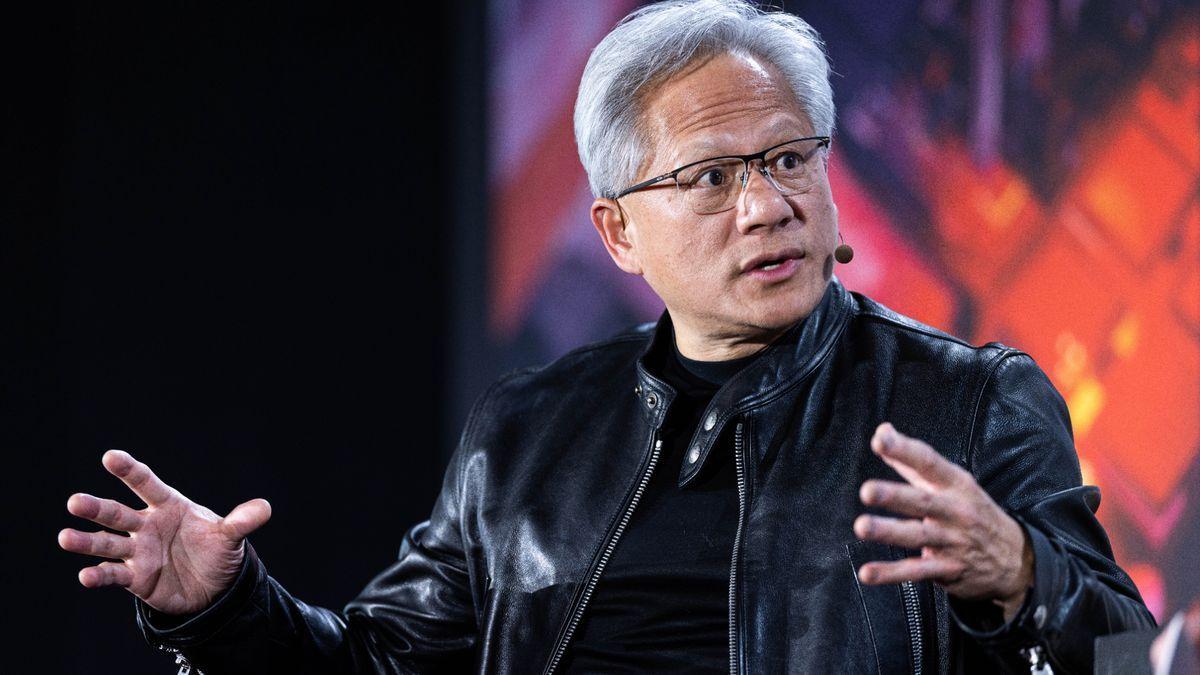
."AI factories are the infrastructure of the intelligence age, and land, power and shell are their foundation," said Nico Caprez, vice president of global AI infrastructure growth at Nvidia
4
. Cloverleaf's adoption of the DSX platform should enable builders to drop DSX-compliant AI data center facilities on Cloverleaf-supplied sites and serve customers without delay2
.Related Stories
Nvidia's Pattern of Strategic Infrastructure Investments
Source: The Register
The Cloverleaf deal follows Nvidia's established strategy of using its AI boom profits to shore up its supply chain and customer base. Earlier this week, Nvidia announced a $1.5 billion investment in SB Energy, an OpenAI-linked data center project based in Ohio
1
5
. Nvidia has also invested in model developers and neocloud partners including OpenAI, CoreWeave, and Nebius2
.This investment pattern reflects a circular AI infrastructure ecosystem where Nvidia prioritizes customers with data centers ready to fill
2
. Many of Nvidia's biggest customers don't actually own AI data center facilities but instead lease capacity from others. For example, Crusoe built OpenAI's Stargate facility in Abilene, Texas, with Oracle running operations2
.Power Grid Constraints Drive Behind-the-Meter Solutions
The proliferation of AI computing infrastructure has begun straining power grids, forcing many new AI data center projects to employ behind-the-meter power generation
2
. Nebius, for instance, has begun using Bloom Energy's natural gas fuel cells to power its facilities rather than relying entirely on existing grid infrastructure2
.Cloverleaf works with utilities, energy providers and investors to secure power and other infrastructure for AI data center projects
5
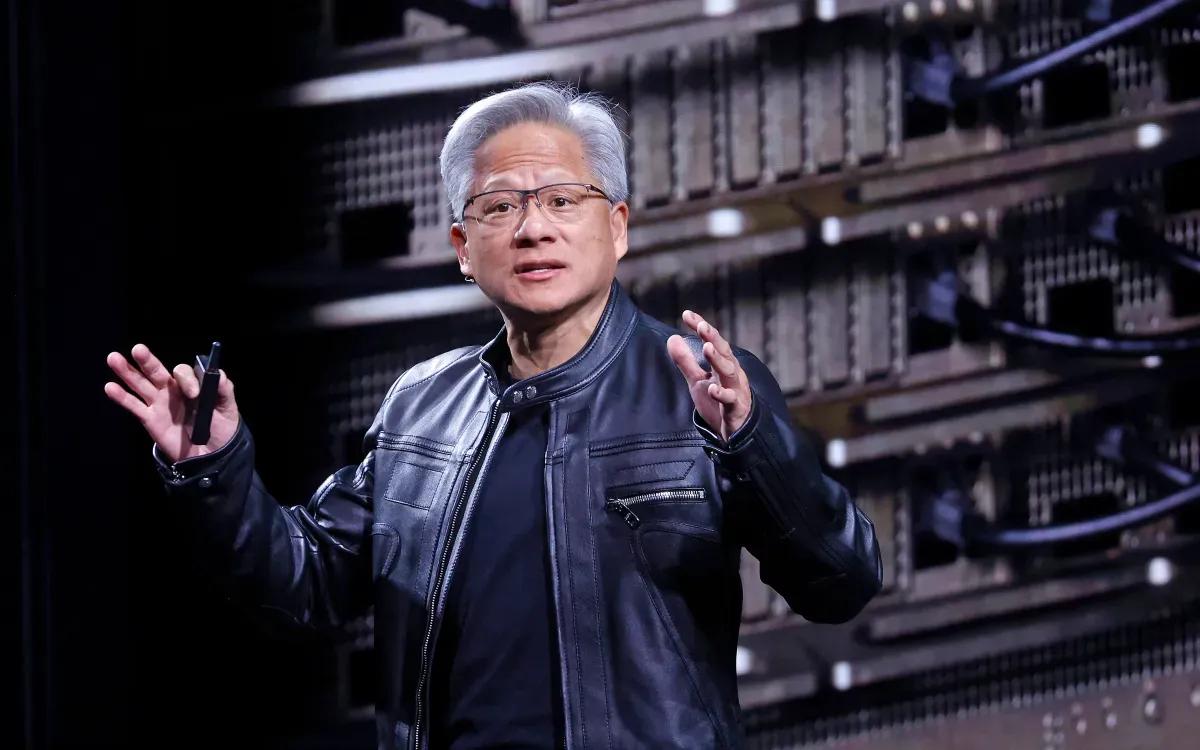
. David Berry, co-founder and CEO of Cloverleaf, stated: "AI is accelerating demand for digital infrastructure at an unprecedented scale and driving strong economic development opportunities for American communities. This partnership strengthens Cloverleaf's ability to identify and develop high-quality sites that provide the compute power for our country's growth and security"4
.
Source: TechCrunch
The need for powered, shovel-ready sites has become critical as AI computing infrastructure demand increases
4
. A site may have sufficient physical space for an AI data center but still lack grid capacity, cooling resources or other infrastructure needed to operate AI-optimized infrastructure4
. As computing systems become more power-intensive, choosing a site is no longer simply a real-estate decision—grid access, cooling, computing capacity and facility design increasingly must be planned as one integrated system4
.References
Summarized by

Navi
[1]
[2]
[4]
Related Stories
Nvidia invests $1.5B in SB Energy, backs OpenAI's Ohio data center with $105B guarantee
15 Aug 2026•Business and Economy
Nvidia Invests $160 Million in Applied Digital to Boost GPU Data Center Demand
06 Sept 2024

Nvidia partners with major energy companies to build flexible AI factories that respond to grid needs
23 Mar 2026•Technology

Recent Highlights



Recent Highlights
Today's Top Stories







Don’t drown in AI news. We cut through the noise - filtering, ranking and summarizing the most important AI news, breakthroughs and research daily. Follow topics that matter to you and stay ahead.


