Nvidia is paying its chip suppliers years in advance to keep up with AI demand


4 Sources
[1]
NVIDIA Expands Commitments With Supply Chain Partners to Support AI Infrastructure Buildout
Long-Term Supply Agreements Across Multiple Critical Inputs Position NVIDIA for Sustainable Growth * New agreements with Kinsus and Samsung Electro-Mechanics support additional substrate capacity and expanded production capabilities at existing factories. * NVIDIA's work with Amkor and SPIL
[2]
Nvidia: Nvidia expands manufacturing capacity with suppliers to meet AI demand
Nvidia said on Tuesday it was expanding manufacturing capacity with supply chain partners to support long-term growth in demand for its AI computing platforms. The US chipmaker said it was working with Amkor Technology, Foxconn, Kinsus Interconnect Technology , Samsung Electro-Mechanics,
[3]
NVIDIA Expands Supply Chain Partnerships to Scale AI Infrastructure Production
NVIDIA announced expanded commitments with supply chain partners to support sustainable long-term growth, aligning supply and manufacturing capacity with demand for its accelerated computing and AI infrastructure platforms. . Working with Amkor Technology, Foxconn, Kinsus Interconnect Technology,
[4]
NVIDIA Expands Commitments With Supply Chain Partners to Support AI Infrastructure Buildout
Long-Term Supply Agreements Across Multiple Critical Inputs Position NVIDIA for Sustainable Growth NVIDIA today announced expanded commitments with supply chain partners to support sustainable long-term growth, aligning supply and manufacturing capacity with demand for its accelerated computing
Share
Copy Link
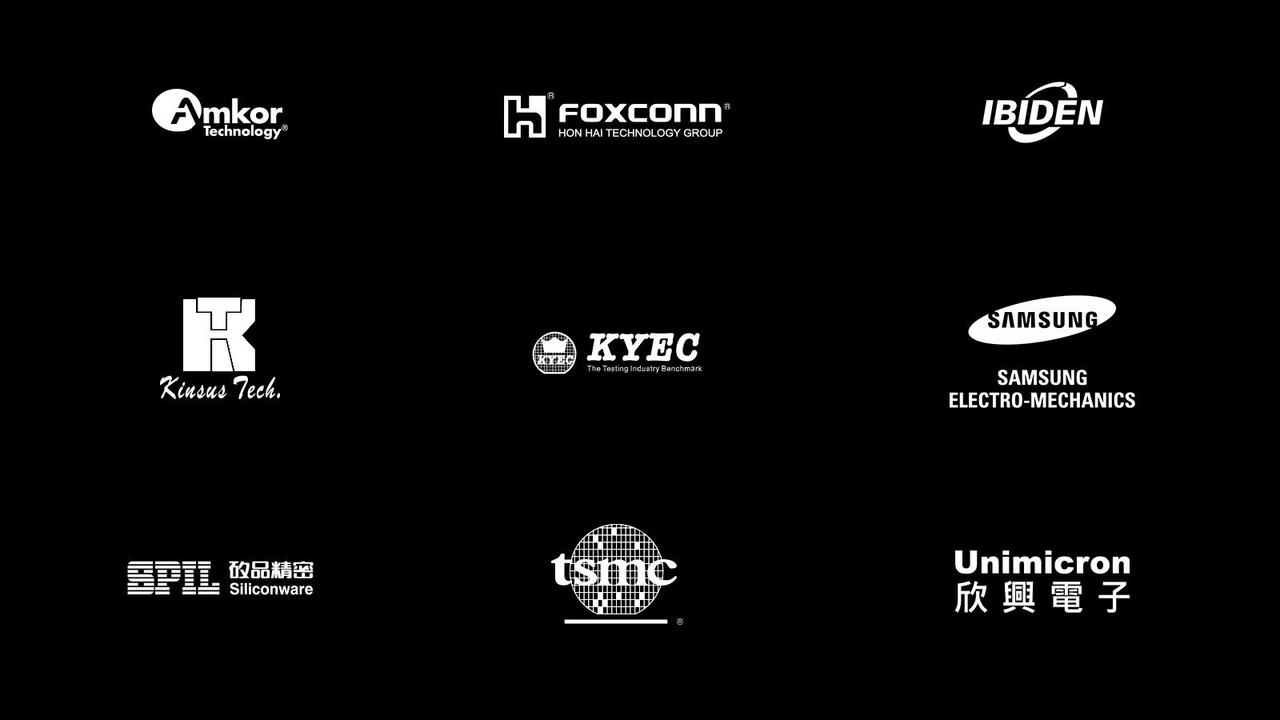
Nvidia has signed expanded supply-chain commitments with six partners, covering everything from the substrates that carry its chips to the packaging and assembly that turn them into systems. The partners are Amkor, Foxconn, Kinsus, Samsung Electro-Mechanics, SPIL and TSMC, and the announcements landed on 17 November 2026
1
2
4
3
.
Source: NVIDIA
Nvidia says the point is to match its supply and manufacturing capacity to demand for its AI platforms and to position the company for long-term growth
1
4
3
. The money pays suppliers now for capacity the company will not need until years from now, so a shortage of one component cannot throttle the whole production line.The substrate bet
The largest single commitment belongs to Kinsus, a Taiwanese maker of package substrates. Those are the layers that connect a chip to the circuit board around it, and they are a known bottleneck in AI chipmaking. Kinsus will expand the capacity it dedicates to Nvidia by more than 3.5 times at its Youth campus in Taoyuan. Production is expected to start in the second half of 2027, with the added capacity slated for the third quarter of 2028
1
2
. Kinsus separately said it has secured an investment of more than $1 billion from Nvidia, a figure the Nvidia release itself does not give2
.
Source: ET
"We believe AI will be one of the most important technology transitions of our lifetime," said Kinsus chief executive Scott Chen
1
4
3
. His company's partnership with Nvidia spans more than a decade1
4
3
.Packaging, assembly and the rest
SPIL, a Taiwan-based packaging company and a unit of ASE Technology, is expanding its advanced packaging work in Taiwan through a multiyear agreement backed by multibillion-dollar Nvidia funding
1
2
. Added capacity dedicated to Nvidia is expected by mid-20291
2
. Advanced packaging, the step that stacks chip pieces together for speed and efficiency, is a constraint the industry treats as central to scaling AI chip output. Reuters first reported the financing for the CoWoS packaging capacity, describing the amount only as billions of dollars2
. The packaging company's chief executive, C.W. Tsai, said the agreement strengthens its ability to support next-generation packaging for future AI systems1
4
3
.The other deals deepen existing relationships rather than adding new capacity on their own. Nvidia and Samsung Electro-Mechanics amended their substrate supply agreement to improve operations at existing factories in South Korea
1
2
. Foxconn is deepening collaboration on next-generation GPU and networking platforms using manufacturing across three continents1
2
. Amkor's packaging expansion in Arizona and South Korea sits under agreements announced in July and October 2026 that total nearly $3 billion1
4
3
.Related Stories
Why now
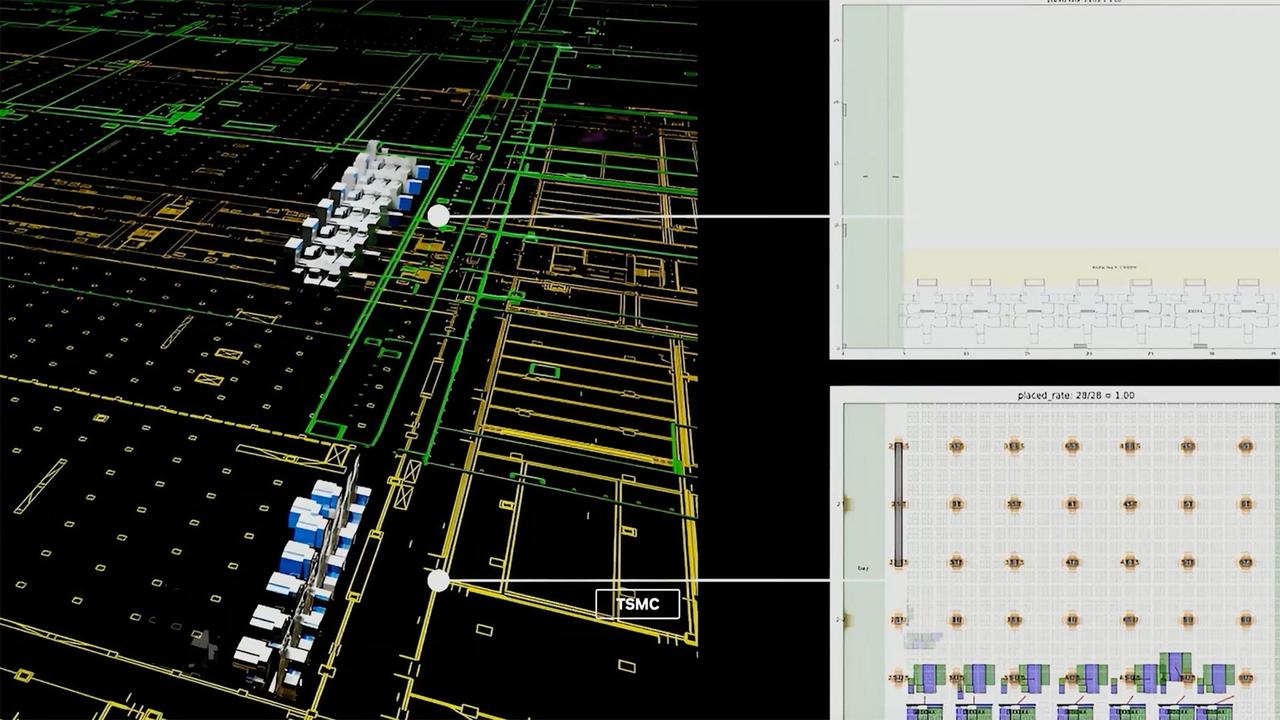
The demand the deals are meant to serve is already shipping. Volume shipments of the Vera Rubin NVL72 system and Vera processors for agentic AI began in the third quarter, according to Nvidia
1
2
. The chips are built on 5nm and 3nm processes at Taiwan Semiconductor Manufacturing Company and use CoWoS packaging1
2
.The new commitments also follow October 2026 announcements with six suppliers
1
4
3
. Nvidia said those deals included an aggregate 2.5 times increase in substrate capacity over three years and a doubling of testing capacity from 2026 to 20271
4
3
. Read together, they describe a company buying its manufacturing headroom in installments, years before the chips that need it exist."Our agreements with Nvidia support investments in Arizona and South Korea that will serve multiple generations of AI platforms," Amkor chief executive Kevin Engel said
1
.
Source: DT
References
Summarized by

Navi
[1]
Related Stories
Nvidia Commits Billions to Expand AI Infrastructure Supply Chain Through 2028
22 Oct 2026•Business and Economy
Nvidia puts over $1 billion into Kinsus to secure AI chip substrates
18 Nov 2026•Business and Economy

Nvidia CEO warns TSMC must double capacity as AI demand threatens to overwhelm chip supply
01 Feb 2026•Business and Economy

Recent Highlights


Recent Highlights
Today's Top Stories







Don’t drown in AI news. We cut through the noise - filtering, ranking and summarizing the most important AI news, breakthroughs and research daily. Follow topics that matter to you and stay ahead.


