8 Sources
[1]
NVIDIA Announces Jetson Orin Nano 2 Robotics Computer to Redefine Entry-Level Edge AI
* NVIDIA Jetson Orin Nano 2, a new robotics computer for entry-level edge AI, enables millions of developers worldwide to build robots, delivery and inspection drones, and vision AI systems for frontier physical AI applications. * Jetson Orin Nano 2 delivers 2x the inference performance of its predecessor in the same form factor and consumes 40% less power at the same performance. * More than 3 million developers have built on the NVIDIA robotics stack, with Cognex, Doosan Bobcat and Matic among the first to adopt and explore Jetson Orin Nano 2. * Ecosystem partners are building carrier boards, hardware systems and reference solutions to help customers accelerate time to market. NVIDIA today announced NVIDIA Jetson Orin Nano⢠2, a new robotics computer set to redefine entry-level edge AI -- putting frontier-class generative AI performance in the hands of millions of developers. As AI models grow smaller and more efficient, more edge devices can become autonomous systems that understand context, interpret language and images, and act in real time. To bring these capabilities into physical machines like robots, delivery and inspection drones, and vision AI systems, developers need compact, energy-efficient robotics computers built for edge AI. "Today's small and medium frontier models have reached the accuracy of last year's largest frontier models, unlocking real-time intelligence for edge devices," said Deepu Talla, vice president of robotics and edge AI at NVIDIA. "The Jetson Orin Nano 2 computer puts that breakthrough within reach of millions of developers, delivering the performance and energy efficiency needed for real-time reasoning at the edge." Cognex, Doosan Bobcat and Matic are among the first to adopt and explore Jetson Orin Nano 2. A Major Leap for Entry-Level Edge AI Featuring 78 trillion operations per second of AI compute, 8GB of memory and an 8-core Arm CPU, Jetson Orin Nano 2 delivers a significant leap in AI and video-processing performance in a cost-effective, power-efficient system. Jetson Orin Nano 2 achieves 2x the inference performance of Jetson Orin Nano Super through improved Tensor Cores and higher memory bandwidth, while maintaining the same compact form factor. In 15-watt mode, Jetson Orin Nano 2 consumes 40% less power to deliver the same performance as its predecessor. Powered by NVIDIA's open software stack, NVIDIA Jetson⢠agent skills and a rich AI ecosystem, Jetson Orin Nano 2 enables developers to run the latest large language models and vision language models optimized for memory-efficient edge inference -- including open models like NVIDIA Cosmos⢠and NVIDIA Nemotronā¢, Gemma 4 and Qwen 3 -- to rapidly build advanced AI applications. Partner Ecosystem and Millions of Robotics Developers Build on Jetson More than 3 million developers are building on NVIDIA's robotics stack, and with Jetson Orin Nano 2, partners like Cognex, Doosan Bobcat, Matic and Wing are bringing real-world edge AI applications to compact devices, including home robots, vision AI systems, delivery and inspection drones, carrier boards, hardware systems and reference solutions. Wing, a leading drone delivery company and subsidiary of Alphabet, is using Jetson Orin Nano Super and the NVIDIA software stack in its delivery drone fleet -- and plans to evaluate Jetson Orin Nano 2 to advance real-time AI perception and reasoning for faster, safer delivery from local businesses to residential yards. "Drone delivery depends on AI that can enable fast, reliable understanding of the real world," said Dinuka Abeywardena, head of perception at Wing. "Wing is exploring Jetson Orin Nano 2 to give us a path to more responsive, energy-efficient drones that can help make deliveries quicker and more dependable for customers." Matic Robots, an advanced consumer robotics company, is adopting Jetson Orin Nano 2 to enable more intuitive interactions with its home cleaning robots, enabling them with conversational AI, gesture detection, deeper context of the home with precision mapping and semantic understanding, and autonomous cleaning capabilities. "Home robots need to understand people, map spaces precisely, understand the layout of objects and spaces, and clean autonomously in dynamic and constantly changing environments," said Navneet Dalal, cofounder and CEO of Matic Robotics. "With Jetson Orin Nano 2, Matic can run state-of-the-art AI models at the edge in a compact home robotics platform built for real-time perception, interaction and navigation." AAEON, ADLINK, Advantech, Aetina, Antmicro, Aptiv, Auvidea, AVerMedia, Chuanglebo, Connect Tech, ForeCR, JWIPC, Neurealm, Plink, Realtimes, RidgeRun, RS, Seeed Studio, Tauro Tech, Twowin, TZTEK and YUAN are among other Jetson partners building carrier boards, hardware systems, customized AI software and reference solutions to help customers accelerate time to market. Availability The NVIDIA Jetson Orin Nano 2 module and developer kit are expected to be available in the first half of 2027.
[2]
Nvidia doubles compute for entry-level edge robotics with Jetson Orin Nano 2
Nvidia doubles compute for entry-level edge robotics with Jetson Orin Nano 2 Nvidia Corp. today announced the release of Jetson Orin Nano 2, a robotics computer "brain" for running artificial intelligence and frontier-level models at the edge. In the past months, foundational AI models have grown smaller and more efficient, adding numerous capabilities alongside language understanding, computer vision and audio processing. As more AI models compress in size, they can run on smaller, more efficient hardware. Nvidia said it's iterating on that hardware to run more efficiently at the edge to incorporate these smaller, faster, denser models. "Today's small and medium frontier models have reached the accuracy of last year's largest frontier models, unlocking real-time intelligence for edge devices," said Deepu Talla, vice president of robotics and edge AI. The Orin Nano 2 represents a leap in entry-level robotics hardware, doubling compute capacity over the previous generation. It features 78 trillion operations per second of AI compute, 8 gigabytes of memory and an eight-core central processing unit. This allows it to deliver strong performance in a small form factor while consuming 40% less power than its predecessor in 15-watt power mode. Deepu added that the significance of the form factor, efficiency and processing power increase puts it right in the trifecta needed to make the Orin Nano 2 fit for projects such as drones and other lightweight robotics. It can run vision systems in real time, offloading significant compute that would otherwise need to run over wireless to the cloud, allowing robots to react in the moment without waiting for information to be relayed back over radio. Partners including Cognex Corp., Doosan Bobcat Inc., Matic Robotics Inc. and Wing Aviation LLC are already working to build Nano Orin 2 into smart robotics. Wing in particular is exploring the Orin Nano as part of its aerial drone delivery fleet. The company said it plans to explore the "brain" and software stack to advance real-time AI perception for autonomous navigation, avoidance and other reasoning capabilities. It will provide faster, safer delivery from local businesses to local residences. "Drone delivery depends on AI that can enable fast, reliable understanding of the real world," said Dinuka Abeywardena, head of perception at Wing. "[Orin Nano 2 will] give us a path to more responsive, energy-efficient drones that can help make deliveries quicker and more dependable for customers." Nvidia said the new device will be generally available as a module and developer kit starting in the first half of 2027.
[3]
Jetson Orin Nano 2 is NVIDIA's latest palm-sized robotics computer
NVIDIA has announced the new Jetson Orin Nano 2 robotics computer built for entry-level edge AI. With 2X the performance of its predecessor and 40% less power in the same form factor, NVIDIA says the Jetson Orin Nano 2 is positioned to enable "millions of developers" worldwide to develop physical AI, build robots and drones, and power next-gen vision systems. In fact, with over three million developers already working on projects built with the NVIDIA robotics stack, companies like Cognex, Doosan Bobcat, and Matic are already among the first to adopt the new Jetson Orin Nano 2 robotics computer. It delivers 78 TOPS of AI compute, plus 8GB of memory and an 8-core Arm CPU. That 2X performance is partly due to improved Tensor Cores and higher memory bandwidth, and in 15W mode it can deliver the same performance as the original Jetson Orin Nano while using 40% less power. One application already on the table for Jetson Orin Nano 2 is making drone delivery to businesses and even residential areas faster and safer. Another application uses the new hardware and NVIDIA's robotics stack in home cleaning robots, unlocking advanced conversational AI, gesture detection, and deeper context of the home. The open NVIDIA robotics stack includes NVIDIA Jetson agent skills and ecosystem, with access to open models like NVIDIA Cosmos, NVIDIA Nemotron, Gemma 4, and Qwen 3, for rapid iteration and deployment. "Today's small and medium frontier models have reached the accuracy of last year's largest frontier models, unlocking real-time intelligence for edge devices," said Deepu Talla, vice president of robotics and edge AI at NVIDIA. "The Jetson Orin Nano 2 computer puts that breakthrough within reach of millions of developers, delivering the performance and energy efficiency needed for real-time reasoning at the edge." The NVIDIA Jetson Orin Nano 2 module and developer kit are on track for release in the first half of 2027.
[4]
NVIDIA Jetson Orin Nano 2 Boosts Robotics & Edge AI by 2x While Sipping 40% Less Power At The Same Performance
NVIDIA has launched its Jetson Orin Nano 2 for entry-level edge AI, delivering faster performance to robotics applications. NVIDIA's Tiniest Jetson Platform Sees A Big Upgrade With Orin Nano 2, Doubling The Performance For Edge AI & Robotics The Jetson family has been expanding with new updates. Last month, we reported on the latest Jetson Thor products that pack immense capabilities to expand the Physical AI spectrum to a mainstream audience. Now, NVIDIA has announced its entry-level Jetson update with the Orin Nano 2. The Jetson Orin Nano 2 is designed as a robotics computer that puts frontier-class generative AI performance in the hands of millions of developers. Starting right off the bat, the NVIDIA Jetson Orin Nano 2 retains the same architecture and an 8-core Arm CPU with 8 GB of memory. The main advantage comes with its new 40W TDP which can offer up to 78 TOPS of AI compute, a 2x increase in performance which accelerates both AI, and Video processing performance for a wide range of users in a cost-effective and still very power efficient system. The Inference performance for NVIDIA's Jetson Orin Nano 2 sees a 2x uplift thanks to improved Tensor Cores and higher memory bandwidth in the same form factor. Interestingly, at 15W, the Jetson Orin Nano 2 PC delivers the same level of performance as its predecessor while consuming 40% lower power. The Jetson Orin Nano 2, like its predecessor, will be backed by NVIDIA's Open Software Stack, the NVIDIA Jetson Agent Skills, and more AI toolsets, enabling developers to run the latest models with optimized performance and efficiency. Some of the models supported by the Orin Nano 2 include: NVIDIA Cosmos, NVIDIA Nemotron, Gemma 4, Qwen 3. As for availability, the NVIDIA Jetson Orin Nano 2 module and the developer kit will be available in the first half of 2027. Follow Wccftech on Google to get more of our news coverage in your feeds.
[5]
Nvidia unveils Jetson Orin Nano 2 robotics computer By Investing.com
SANTA CLARA, Calif. - Nvidia (NASDAQ:NVDA) announced today the Jetson Orin Nano 2, a robotics computer designed for entry-level edge AI applications, according to a press release statement. The device features 78 trillion operations per second of AI compute, 8GB of memory and an 8-core Arm CPU. The company states the system delivers twice the inference performance of its predecessor, Jetson Orin Nano Super, while consuming 40% less power at the same performance level in 15-watt mode. The computer maintains the same compact form factor as previous models and is designed for use in robots, delivery and inspection drones, and vision AI systems. More than 3 million developers have built on Nvidia's robotics stack, the company said. Cognex, Doosan Bobcat and Matic are among the companies exploring the new system. Wing, a drone delivery company and Alphabet subsidiary, plans to evaluate the device for its delivery drone fleet. The company currently uses Jetson Orin Nano Super in its operations. "Drone delivery depends on AI that can enable fast, reliable understanding of the real world," said Dinuka Abeywardena, head of perception at Wing. "Wing is exploring Jetson Orin Nano 2 to give us a path to more responsive, energy-efficient drones." Matic Robotics is adopting the system for its home cleaning robots to enable conversational AI, gesture detection and autonomous cleaning capabilities. "With Jetson Orin Nano 2, Matic can run state-of-the-art AI models at the edge in a compact home robotics platform," said Navneet Dalal, cofounder and CEO of Matic Robotics. The system supports large language models and vision language models optimized for edge inference, including Nvidia Cosmos, Nvidia Nemotron, Gemma 4 and Qwen 3. The Jetson Orin Nano 2 module and developer kit are expected to be available in the first half of 2027. This article was generated with the support of AI and reviewed by an editor. For more information see our T&C.
[6]
NVIDIA Announces Jetson Orin Nano 2 Robotics Computer to Redefine Entry-Level Edge AI
NVIDIA announced NVIDIA Jetson Orin Nano 2, a new robotics computer set to redefine entry-level edge AI. Jetson Orin Nano 2 enables millions of developers worldwide to build robots, delivery and inspection drones, and vision AI systems for frontier physical AI applications. Jetson Orin Nano 2 delivers 2x the inference performance of its predecessor in the same form factor and consumes 40% less power at the same performance. More than 3 million developers have built on the NVIDIA robotics stack, with Cognex, Doosan Bobcat and Matic among the first to adopt and explore Jetson Orin Nano 2. Ecosystem partners are building carrier boards, hardware systems and reference solutions to help customers accelerate time to market. Featuring 78 trillion operations per second of AI compute, 8GB of memory and an 8-core Arm CPU, Jetson Orin Nano 2 delivers a significant leap in AI and video-processing performance in a cost-effective, power-efficient system. Jetson Orin Nano 2 achieves 2x the inference performance of Jetson Orin Nano Super through improved Tensor Cores and higher memory bandwidth, while maintaining the same compact form factor. In 15-watt mode, Jetson Orin Nano 2 consumes 40% less power to deliver the same performance as its predecessor. Powered by NVIDIA?s open software stack, NVIDIA Jetson agent skills and a rich AI ecosystem, Jetson Orin Nano 2 enables developers to run the latest large language models and vision language models optimized for memory-efficient edge inference ? including open models like NVIDIA Cosmos and NVIDIA Nemotron, Gemma 4 and Qwen 3 ? to rapidly build advanced AI applications. More than 3 million developers are building on NVIDIA?s robotics stack, and with Jetson Orin Nano 2, partners like Cognex, Doosan Bobcat, Matic and Wing are bringing real-world edge AI applications to compact devices, including home robots, vision AI systems, delivery and inspection drones, carrier boards, hardware systems and reference solutions. Wing is using Jetson Orin Nano Super and the NVIDIA software stack in its delivery drone fleet ? and plans to evaluate Jetson Orin Nano 2 to advance real-time AI perception and reasoning for faster, safer delivery from local businesses to residential yards. Matic Robots is adopting Jetson Orin Nano 2 to enable more intuitive interactions with its home cleaning robots, enabling them with conversational AI, gesture detection, deeper context of the home with precision mapping and semantic understanding, and autonomous cleaning capabilities. AAEON, ADLINK, Advantech, Aetina, Antmicro, Aptiv, Auvidea, AVerMedia, Chuanglebo, Connect Tech, ForeCR, JWIPC, Neurealm, Plink, Realtimes, RidgeRun, RS, Seeed Studio, Tauro Tech, Twowin, TZTEK and YUAN are among other Jetson partners building carrier boards, hardware systems, customized AI software and reference solutions to help customers accelerate time to market. The NVIDIA Jetson Orin Nano 2 module and developer kit are expected to be available in the first half of 2027.
[7]
Aptiv PLC Supports NVIDIA Corporation Jetson Orin Nano 2 with Production-Ready Physical AI Solutions
Aptiv PLC announced that it is supporting NVIDIA Jetson Orin Nano 2, to help customers accelerate the deployment of production-ready physical AI and intelligent edge systems. The announcement builds on prior collaboration to support commercially deployable edge AI platforms based on NVIDIA Jetson, including Jetson Thor. Aptiv delivers the sensing, software, lifecycle support and systems integration expertise needed to help delivery and inspection drones, robotics, and other autonomous systems operate reliably in real-world environments. The NVIDIA Jetson Orin Nano 2 redefines entry-level edge AI with 2x the inference performance of Jetson Orin Nano in the same compact size and consumes 40% less power at the same performance. Featuring 78 TOPS, 8GB of memory, and an 8-core Arm CPU, it powers a new class of smart delivery and inspection drones, robots, and vision AI systems with a significant leap in AI performance and energy efficiency. Aptiv will build on the Jetson ecosystem with technologies and services including: Aptiv PULSE?, which integrates surround-view camera and ultrashort-range radar to enable reliable 360-degree sensing while helping reduce blind spots, cost and system complexity; Aptiv Gen 8 radar, designed to deliver advanced range, resolution, object detection and 4D perception in challenging operating conditions; Robotics compute solutions running on the NVIDIA Jetson Orin Nano 2, Orin NX, and AGX Orin; Wind River software and lifecycle support to help customers address long-term maintenance, security monitoring, compliance readiness and production deployment needs. Physical AI solutions must operate in increasingly dynamic environments. To do so they require multimodal perception running on embedded, AI-ready compute for context-aware decision-making. And, as these AI-powered systems increasingly interact with the physical world, predictable real-time performance ? as well as the ability to continuously learn and improve fleets of distributed devices ? is resulting in the need for more capable software platforms and tools. Building on decades of innovation, Aptiv?s differentiated portfolio enables these devices and systems to sense, think, act, and be continuously optimized to support the next wave of intelligent applications. At the same time, Aptiv?s global manufacturing scale and resilient, in-region for-region supply chain allows customers to accelerate time to market.
[8]
NVIDIA's two new AI chips reveal the next AI battlefront
NVIDIA is building for both AI factories and robots, intelligent drones Ever since ChatGPT came out and captivated the whole world roughly three years ago, AI's biggest flex has been all about scale. Bigger models needed bigger clusters of datacentres for all their bigger and better training runs. NVIDIA, obviously, benefited from all of this, and they have the stock price to prove it! However, NVIDIA's latest announcements suggest the next phase of AI growth could be headed in a different direction. It seems the question is no longer about just how large an AI model can become, what's going to matter more is how quickly, cheaply and locally AI's benefits can be delivered on-device at the same scale NVIDIA has helped architect in the cloud. At one end of the AI spectrum sits Groq 3 LPX, which is now finally in full production for NVIDIA's Vera Rubin platform. According to NVIDIA, the Groq 3 LPX chip can churn out 3,400 output tokens per second running the 31-billion-parameter Gemma 4 model with a 100,000-token context window. And while it does all of that, the new NVIDIA chip also delivers four times faster responsiveness than the next best chip alternative. So there's Groq 3 LPX on one end of the stick, geared towards more agentic AI workflows in the datacentre, but at the same time on the other end NVIDIA also revealed the updated Jetson Orin Nano 2. It's a compact 78-TOPS robotics computer with 8GB dedicated memory, and NVIDIA claims it's twice as fast in overall inference performance compared to the previous generation, while also being more power efficient overall - the figure they're sharing is Jetson Orin Nano 2 consumes 40% less power at equivalent performance than the previous generation. So yeah, these are different products, but with them NVIDIA is placing the same overall bet, if you read on. Inference is the new AI arms race Training created the generative-AI boom, it's what allowed everything from ChatGPT to Gemini to become capable of being able to do intelligent tasks. Those tasks are where inference comes into the picture, where all the AI models get to work to answer a question, generate code or start an agentic AI workflow. And inference is the new AI battleground. Inference speed optimization matters for agentic AI, and NVIDIA knows it better than anyone else. Unlike a chatbot that only responds to one question at a time, an AI agent is always doing more than one thing - it may inspect files, call additional tools, generate code, test its accuracy and repeat the loop hundreds of times or even more. NVIDIA's Groq 3 LPX chip is built specifically to cater to agentic AI, where token-generation latency matters more than anything else. According to an IDC report, worldwide AI-infrastructure spending reached $318 billion in 2025, more than double 2024's $153 billion, and more will be spent through 2026 - $487 billion to be exact. However, only about 11% companies are implementing agentic AI use cases, according to a Delloite report in 2026. Faster inference is one of the key requirements for that adoption number to increase through 2026-2027, where demos can transition into dependable products. Frontier-class AI is shrinking for more edge applications While Groq 3 LPX is still aimed inside datacentres and AI factories, Jetson Orin Nano 2 will be important for consumer and end user AI use cases. NVIDIA's positioning the Jetson Orin Nano 2 class of chips for drones, home robots and vision systems. In a briefing call, NVIDIA said there's interest from partners exploring delivery drones and domestic cleaning robots that can talk to humans. Stanford's AI Index found that the SLMs clearing 60 percent capability of LLMs fell from 540 billion parameters in 2022 to 3.8 billion parameters in 2024, which is a whopping 142x reduction. When model sizes fall, so do their cost, suggests Stanford, where the cost of a GPT-3.5-level inference reduced by 280x between late 2022 and late 2024 period. What this means is simply that not only model sizes are shrinking, that size reduction is allowing them to be deployed on-device without a lot of dependence on the cloud. The overall global edge-computing spend is expected to reach $450 billion by 2029, according to IDC. This will directly mean AI infusion in more and more consumer-end devices - not just smartphones and laptops, but appliances, robots, cars. That's the opportunity Jetson Orin Nano 2 is attacking. AI is heading toward a two-speed architecture Looking at both the NVIDIA announcements, it feels like the bigger takeaway is more architectural in nature. Leading tech companies will still need enormous AI factories for bigger, more complex models, and critical infrastructure tasks. But at the same time, smaller, leaner models will start occupying more space inside physical devices that end users actually touch and feel. And it's pretty clear that NVIDIA wants a seat at both these tables, where Vera Rubin plus Groq 3 LPX remains first choice for anyone desiring hyperscale inference, while Jetson takes the shape of embodied edge AI. Of course, the two ends of the table will be tied together by NVIDIA's own burgeoning software ecosystem. Jetson Orin Nano 2 is expected in the first half of 2027, and NVIDIA has not announced pricing in the release. For consumers, this is where "AI everywhere" starts to feel like it's strategically overhauling modern tech infrastructure. AI chatbots was only the first interface, the next wave is all about whether agents respond instantly, robots and drones map and exist in their surroundings more reliably, and devices can draw AI inference without constantly pinging servers in a faraway datacentre.
Share
Copy Link
NVIDIA announced the Jetson Orin Nano 2 robotics computer, delivering 78 TOPS of AI compute with 2x inference performance and 40% lower power consumption than its predecessor. Companies like Wing, Matic, and Cognex are already exploring the platform for delivery drones, home robots, and vision AI systems, with availability set for first half of 2027.
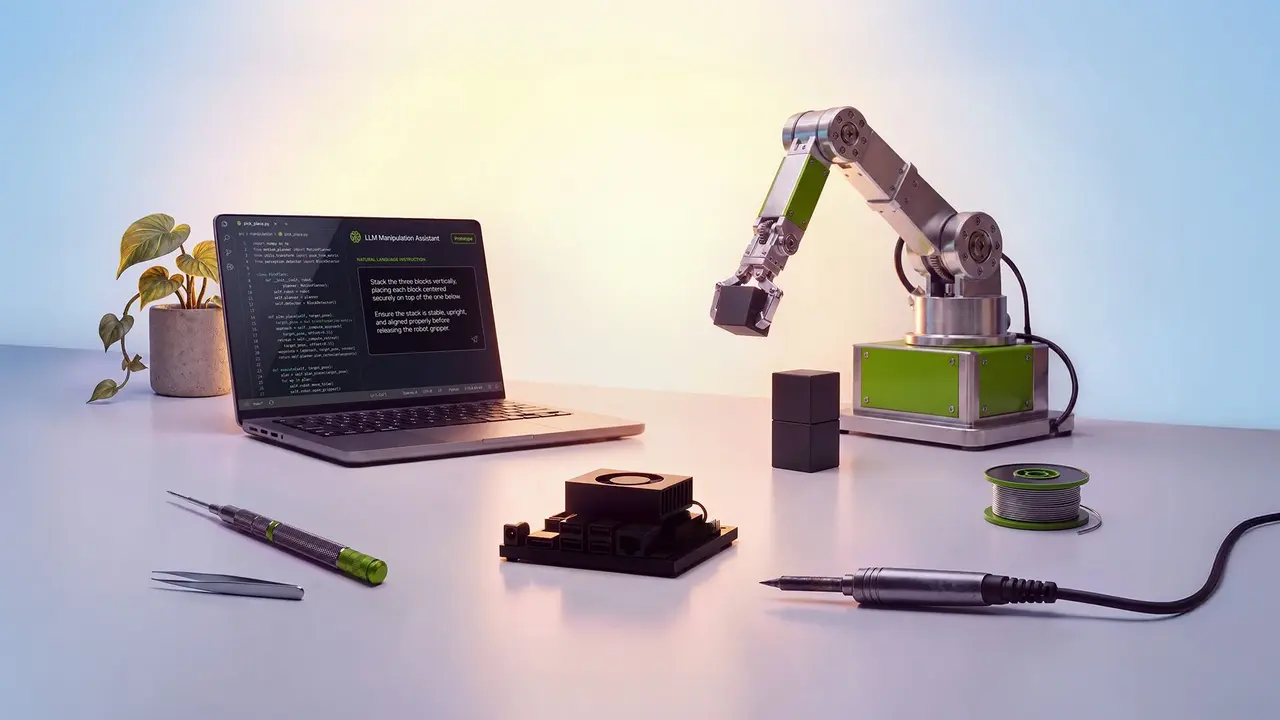
NVIDIA announced the Jetson Orin Nano 2, a robotics computer designed to bring frontier-class generative AI performance to entry-level edge AI applications
1
. The platform delivers 78 TOPS of AI compute, 8GB memory, and an 8-core Arm CPU, representing a significant leap for developers building robots, delivery drones, inspection drones, and vision AI systems2
. With over 3 million developers already building on the NVIDIA robotics ecosystem, companies including Cognex, Doosan Bobcat, Matic, and Wing are among the first to adopt and explore the new platform3
.The Jetson Orin Nano 2 achieves 2x the AI inference performance of its predecessor, the Jetson Orin Nano Super, while maintaining the same compact form factor
4
. This performance boost comes from improved Tensor Cores and higher memory bandwidth, enabling faster real-time AI processing at the edge1
. In 15-watt mode, the robotics computer delivers the same performance as its predecessor while consuming 40% less power, addressing critical power consumption requirements for autonomous systems2
. Deepu Talla, vice president of robotics and edge AI at NVIDIA, emphasized that small and medium frontier models have reached the accuracy of last year's largest frontier models, unlocking real-time intelligence for edge devices5
.Wing, a drone delivery company and Alphabet subsidiary, plans to evaluate the Jetson Orin Nano 2 to advance real-time AI perception and reasoning for its delivery drone fleet
1
. Dinuka Abeywardena, head of perception at Wing, stated that the platform will provide a path to more responsive, energy-efficient delivery drones for faster, more dependable customer service5
. Matic Robotics is adopting the platform to enable conversational AI, gesture detection, precision mapping with semantic understanding, and autonomous navigation for its home cleaning robots3
. Navneet Dalal, cofounder and CEO of Matic Robotics, explained that the Jetson Orin Nano 2 allows the company to run state-of-the-art AI models at the edge for real-time perception, interaction, and navigation in dynamic home environments1
.Related Stories
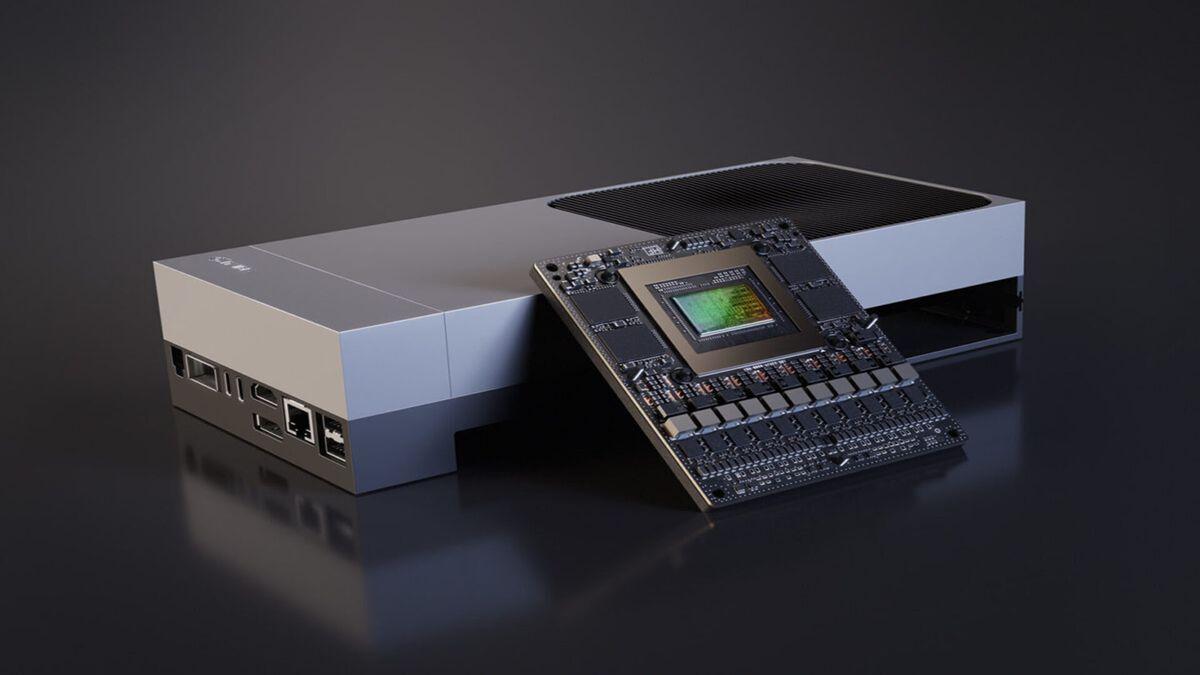
The Jetson Orin Nano 2 is powered by NVIDIA's open software stack, including NVIDIA Jetson agent skills and a rich AI ecosystem
4
. The platform enables developers to run large language models and vision language models optimized for memory-efficient edge inference, including open models like NVIDIA Cosmos, NVIDIA Nemotron, Gemma 4, and Qwen 31
. This software foundation allows robots to react in the moment without waiting for information to be relayed back over wireless connections to the cloud, enabling autonomous systems to understand context, interpret language and images, and act in real time2
.A robust ecosystem of partners is building carrier boards, hardware systems, and reference solutions around the Jetson Orin Nano 2
3
. Companies including AAEON, ADLINK, Advantech, Aetina, Antmicro, Aptiv, Auvidea, AVerMedia, Chuanglebo, Connect Tech, ForeCR, JWIPC, Neurealm, Plink, Realtimes, RidgeRun, RS, Seeed Studio, Tauro Tech, Twowin, TZTEK, and YUAN are developing solutions to help customers accelerate deployment1
. The NVIDIA Jetson Orin Nano 2 module and developer kit are expected to be available in the first half of 20275
.Summarized by
Navi
[5]
18 Dec 2024ā¢Technology

18 Dec 2024ā¢Technology

16 Jul 2026ā¢Technology

1
Technology

2
Policy and Regulation

3
Technology