AI-Driven Malware VOLTA-AUTODOXER Uses Claude to Rank Victims by Financial Value


2 Sources
[1]
New AI-driven Windows malware feeds stolen data to Claude to rank victims' assets by value, then deletes itself -- payload builds custom target assessment, can switch models if one refuses, or skip the AI step entirely
Stolen Gmail receipts and food-delivery orders feed an AI request for a 'target assessment' of each victim. A self-deleting Windows infostealer that calls itself VOLTA-AUTODOXER steals everything it can from a victim's PC, then asks an AI model, Anthropic's Claude by default, to turn the haul into
[2]
New VOLTA Infostealer Uses Claude, Gemini, and Kimi AI to Rank Victims by Financial Value
Cybersecurity researchers have discovered a new Windows infostealer malware called VOLTA-AUTODOXER (aka VOLTA) that makes use of a large language model (LLM) to rank a victim's stolen data by their monetization value. Like other typical stealer families, VOLTA is equipped to harvest passwords and
Share
Copy Link
Cisco Talos uncovered VOLTA-AUTODOXER, a self-deleting Windows infostealer that feeds stolen credentials and personal data to Anthropic Claude and other AI models. The malware creates detailed target assessments ranking victims' monetizable assets, then exfiltrates everything via Telegram before vanishing.
New Windows Infostealer Leverages Large Language Models
Cisco Talos has discovered VOLTA-AUTODOXER, a sophisticated infostealer malware that represents a troubling evolution in cyberattacks. This AI-driven malware harvests extensive data from infected Windows systems, then feeds it to Anthropic Claude and other large language models to generate detailed target assessments
1
2
. The self-deleting malware operates with a clear mission: identify which victims are worth exploiting based on their monetizable assets.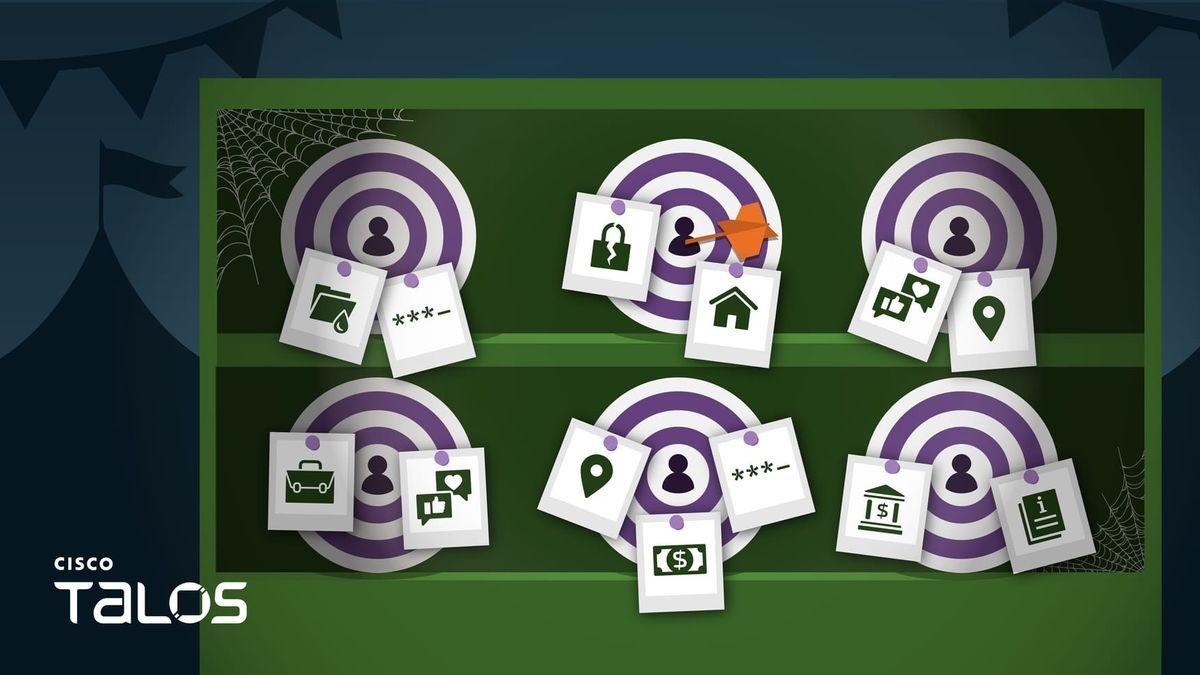
Source: Tom's Hardware
How VOLTA-AUTODOXER Harvests and Analyzes Stolen Data
VOLTA steals browser passwords, cookies, saved payment cards, Thunderbird and Outlook email profiles, Roblox accounts, Microsoft OAuth tokens, screenshots, SSH and cloud-provider configuration files, and cryptocurrency wallets. Every saved Wi-Fi password gets extracted in plaintext
1
. The malware doesn't just copy cryptocurrency wallets—it attempts to crack their vaults inline. Beyond passive data collection, VOLTA engages in live enrichment using stolen session access to search Gmail receipts from Amazon, DoorDash, Uber Eats, Grubhub, Walmart, and PayPal to confirm home addresses and pull order histories2
.AI Models Serve as Forensic Intelligence Analysts
The malware assembles collected information into a structured evidence bundle containing geolocation, home address, employer domain, inferred birth year, document authorship metadata, and last four digits of payment cards. This bundle gets serialized to JSON and POSTed to OpenRouter with a 240-word system prompt instructing the model to act as a forensic intelligence analyst
1
2
. The prompt demands the AI be "blunt, specific, accurate" and restricts it to using only the evidence bundle as its source.Multi-Model Architecture Ensures Refusal Resilience
VOLTA defaults to Anthropic's Claude Opus 4.6 at a temperature of 0.2, prioritizing predictable outputs over creative responses. The adversarial use of generative AI becomes evident in its fallback mechanism—if Claude refuses or provides thin replies, VOLTA automatically switches to Moonshot AI's Kimi K2, then Google Gemini 2.5 Flash
1
. The malware checks each response for refusal phrases like "I can't" or "I'm not able" before moving to the next model2
. If no OpenRouter API key is provided, it can still exfiltrate the dossier via Telegram without the AI analysis step.Target Assessment Output and Data Exfiltration
The AI analysis produces a section titled "WHAT THEY'RE WORTH" ranking valuables by monetization potential across low, medium, and high tiers. Another section called "THEIR OPSEC" assesses the victim's security posture and password hygiene
2
. Results are saved as AI_Analysis.txt alongside Identity_Report.txt and exfiltrated in a volta_dox.zip archive. Data exfiltration happens over Telegram at three stages: immediately after the stealer runs, after the AI call, and after live enrichment2
. Critically, the inference call happens over the victim's own network connection.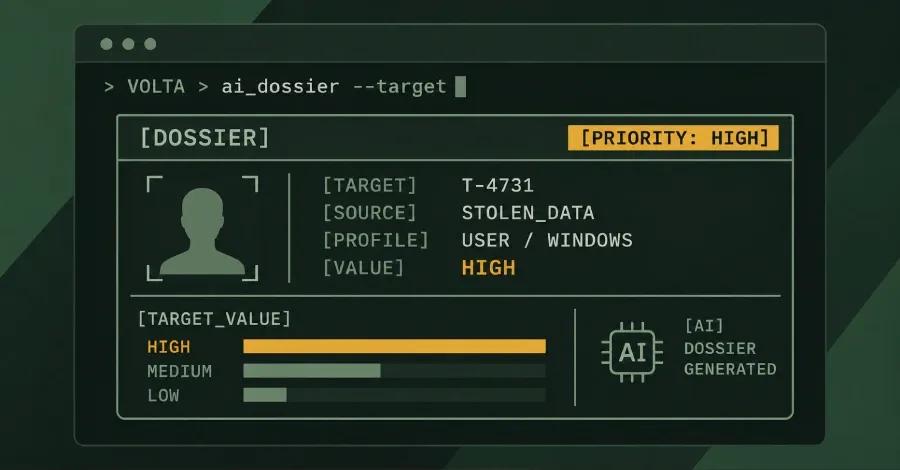
Source: Hacker News
Related Stories

Evidence Points to Commoditized Malware-as-a-Service
VOLTA appears designed for resale as a product. It features a template with six swappable slots for custom Telegram channels, API keys, and settings filled at build time
1
. Customers supply values and receive custom binaries. This approach means the AI dossier capability isn't something the author invented for personal operations—it's a feature enabling customers of any sophistication level to receive ranked target assessments in their Telegram inbox without relying on attacker-owned infrastructure2
.Technical Evasion and Detection Indicators
Much of VOLTA's token theft bypasses Chrome's App-Bound Encryption by launching Chrome headless without a GUI. Application-control policies limiting which processes may launch Chrome headless can block this specific attack vector, though it doesn't stop other theft mechanisms, the AI stage, or data exfiltration
1
. After infection, the main executable may delete itself, but a volta_debug.txt log file showing what was collected and whether the LLM call succeeded should remain.Why This Development Matters for AI Security
Cisco Talos researcher Ryan Fetterman emphasizes that VOLTA's use of AI is relatively narrow compared to what's possible with fully AI-assisted malware. The axis of AI improvement here isn't speed or scale but effort displacement—relieving operators of analytical work
2
. Zscaler ThreatLabz notes that large language models are well-suited to examine massive amounts of data for classification or content searching, making them ideal for identifying the most valuable or sensitive data for theft2
. Refusal resilience may become a standard design requirement for malware as AI integration matures. Already, a Windows malware implant reported in September was built around a panel of up to four LLMs that vote on its next move1
. Watch for increased adversarial adoption of generative AI across threat actor workflows as they incorporate the technology to develop custom tools and maximize attack success rates.References
Summarized by

Navi
Related Stories
CLOSEDQUORUM Malware Uses AI Hive Mind to Autonomously Select Attack Moves
22 Sept 2026•Technology

AI agent executes first fully autonomous ransomware attack, lowering barrier for cybercriminals
01 Jul 2026•Technology

NYU Researchers Develop AI-Powered 'Ransomware 3.0', Sparking Cybersecurity Concerns
04 Sept 2025•Technology

Recent Highlights
1
OpenAI's AI Models Disprove 27-Year Exponential Time Hypothesis, Rendering Decades of Research Obsolete
Science and Research

2
Google DeepMind unveils Genie 4 world model with audio and 2-minute interactive simulations
Technology

3
Anthropic Faces $379 Million in Copyright Infringement Lawsuits Over Unlawfully Using Songs
Policy and Regulation

Recent Highlights
Today's Top Stories









Don’t drown in AI news. We cut through the noise - filtering, ranking and summarizing the most important AI news, breakthroughs and research daily. Follow topics that matter to you and stay ahead.


