Wearable Devices and AI Predict Hypertensive Crises Up To 3 Days Before They Occur


2 Sources
[1]
Wearable devices and AI provide early warning signs of hypertensive crises
American Heart AssociationNov 2 2026Reviewed Using artificial intelligence (AI) to analyze patterns in measures from a portable cuff-based blood pressure monitor and health data from a wrist-worn device may help identify when adults with stage 2 high blood pressure (blood pressure ≥140/90 mm Hg)
[2]
The wearable on your wrist can predict blood pressure crisis events days in advance
A hypertensive crisis can lead to acute organ damage, and the abrupt spikes in blood pressure are also linked to stroke, kidney damage, fluid backup in the lungs, and heart attack. Research says wearable devices can provide a warning 3 days in advance. This story is part of Tech for Change: an
Share
Copy Link
New research from the American Heart Association reveals that AI analysis of data from wearable devices and portable blood pressure monitors can identify early warning signs of hypertensive crises up to 72 hours in advance. The study shows timely medical intervention reduced dangerous blood pressure episodes by 61% and emergency department visits by 45%.
AI-Powered Wearable Devices Detect Early Warning Signs of Hypertensive Crises
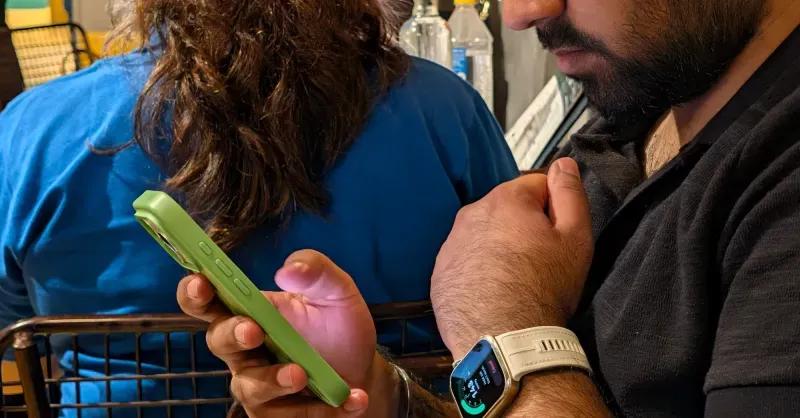
Researchers have demonstrated that AI combined with wearable devices can predict dangerously high blood pressure episodes up to 3 days before they occur. The preliminary research, presented at the American Heart Association's Scientific Sessions 2026, analyzed data from over 4,000 participants with stage 2 high blood pressure using portable blood pressure monitors and wrist-worn fitness trackers
1
. The AI system examined blood pressure patterns throughout day and night, along with cardiovascular signals including heart rate and heart rate variability, to identify individuals at increased risk of hypertensive crises—episodes where blood pressure exceeds 180/120 mm Hg with acute end-organ damage2
.
Source: Digital Trends
Continuous Monitoring Reveals Critical Blood Pressure Patterns
The 12-month study tracked participants using a portable cuff-based blood pressure monitor that collected repeated measurements during daily activities and sleep, paired with a wrist-worn device monitoring heart activity. Lead researcher Dr. Waleed Razzaq Chaudhry from the University of Maryland Capital Region Medical Center explained that continuous tracking captures blood pressure changes that single readings miss
1
. Out of more than 4,000 participants, 312 individuals experienced 418 hypertensive crises, representing about 7% of all participants. The AI tool successfully distinguished patients with higher versus lower risk up to 72 hours in advance. Among participants who received a positive alert, about 32% experienced a hypertensive crisis, while 97.4% of patients without an alert remained crisis-free1
.Non-Dipping Blood Pressure and Morning Surges Signal Elevated Risk
The research identified specific patterns that dramatically increase the odds of a hypertensive crisis. Participants whose blood pressure did not decrease during sleep—a phenomenon called non-dipping blood pressure—had nearly 5 times the odds of an upcoming hypertensive crisis
1
2
. Additionally, participants who experienced a rise in blood pressure of more than 35 mm Hg after waking compared to their nighttime levels had nearly 4 times the odds of a hypertensive crisis1
. These findings highlight how continuous monitoring captures fluctuations that traditional point-in-time measurements would miss entirely.Related Stories

Early Medical Intervention Dramatically Reduces Crisis Events
When the AI system detected elevated risk, it prompted physicians to contact patients, review symptoms, and adjust medications if needed. The impact of this early medical intervention proved substantial. Among patients whose physicians received an alert and adjusted medications within 24 hours, hypertensive crises were about 61% lower and emergency department visits were about 45% lower compared to people who did not receive timely alert-triggered intervention
1
2
. This demonstrates that predicting a blood pressure crisis days in advance creates a critical window for healthcare providers to intervene before the situation becomes a medical emergency.
Source: News-Medical
Why This Development Matters for Hypertension Management
Hypertensive crises represent a major healthcare challenge. These episodes can lead to stroke, heart attack, kidney damage, aortic dissection, or pulmonary edema, making them a leading cause of heart-related emergency department visits
1
2
. According to the American Heart Association and American College of Cardiology joint 2025 High Blood Pressure Guideline, nearly half of U.S. adults have high blood pressure, and it is the number one modifiable risk factor for reducing heart attack, stroke, and heart failure risk1
. Dr. Maria Delgado-Lelievre, a Hypertension Specialist at the University of Miami Leonard M. Miller School of Medicine, noted that hypertension management has relied on single-point measurements for decades, yet many patients have no warning symptoms before serious complications develop1
. Tools providing insight into blood pressure patterns between office visits may support more personalized healthcare approaches. Watch for further validation studies and potential integration of these AI-powered monitoring systems into standard hypertension management protocols.References
Summarized by

Navi
Related Stories
New smartwatch tracks blood pressure continuously without a cuff using physics and AI
03 Jun 2026•Health
AI-Powered Video Analysis Shows Promise for Non-Invasive Blood Pressure and Diabetes Screening
26 Nov 2024•Health

AI Voice Agents Revolutionize Blood Pressure Management for Older Adults
08 Sept 2025•Health
Recent Highlights
1
OpenAI's AI Models Disprove 27-Year Exponential Time Hypothesis, Rendering Decades of Research Obsolete
Science and Research
2
Google DeepMind unveils Genie 4 world model with audio and 2-minute interactive simulations
Technology

3
Apple Releases iOS 27.2 With Siri AI Memory, 5 New Languages & 160+ Security Fixes
Technology

Recent Highlights
Today's Top Stories




Don’t drown in AI news. We cut through the noise - filtering, ranking and summarizing the most important AI news, breakthroughs and research daily. Follow topics that matter to you and stay ahead.


