Nvidia launches Cosmos 3 Edge model and expands its physical AI push in Japan


2 Sources
[1]
Nvidia launches Cosmos 3 Edge model and expands its physical AI push in Japan
Nvidia Corp. has unveiled Cosmos 3 Edge, a compact world model built to run vision reasoning and robot control directly on edge devices, alongside a wave of partnerships that pushes its physical artificial intelligence platform deeper into Japan's robotics and manufacturing base. The model carries
[2]
NVIDIA Introduces Cosmos 3 Edge For On-Device Vision Reasoning And Robot Policy Deployment
NVIDIA introduced Cosmos 3 Edge for on-device vision reasoning and robot policy deployment on NVIDIA Jetson Thor platforms, and NVIDIA Metropolis libraries built on NVIDIA Cosmos for agentic vision AI development. NVIDIA also announced Cosmos 3 Edge, a new addition to the NVIDIA Cosmos 3 open world
Share
Copy Link
Nvidia unveiled Cosmos 3 Edge, a compact world model designed for on-device vision reasoning and robot control on edge devices. The 4-billion-parameter model runs on Nvidia Jetson platforms and can be adapted to specific robots in about a day. The announcement includes major partnerships with over 20 Japanese companies and a $2.4 billion government-backed AI infrastructure project targeting 30% of the global AI robotics market by 2040.
Nvidia Unveils Cosmos 3 Edge for On-Device Vision Reasoning
Nvidia has introduced Cosmos 3 Edge, a compact world model specifically built to handle on-device vision reasoning and robot policy deployment directly on edge devices
1
. The model carries 4 billion parameters and is built on Nvidia Nemotron, designed to help robots and vision AI agents understand their surroundings, reason in real time, and generate robot actions on edge computers2
. Developers can adapt Cosmos 3 Edge for specific robots, vehicles, sensors and environments in about a day using the open Nvidia Cosmos framework2
.Deployment Across Nvidia Jetson and Edge Platforms
Cosmos 3 Edge runs on Nvidia Jetson platforms, including the newly announced T2000 and T3000 modules, as well as RTX GPUs and DGX systems
1
. The model is lightweight enough to run on edge GPUs and quickly post-train specialized world action models, making it suitable for embodied systems that need to see, reason and predict robot actions locally2
. The release extends Cosmos, Nvidia's world foundation model platform for physical AI, which the company uses to generate and score training data for robots and autonomous machines1
.New Metropolis Libraries Accelerate Video Intelligence Development
Nvidia also rolled out new Metropolis libraries that enable developers to build and operate Cosmos-based video intelligence systems at least six times faster, using coding agents for training and deployment
1
. These libraries and skills help developers use coding agents to build, train and operate video intelligence systems with Cosmos more efficiently2
.Japan Emerges as Physical AI Hub with Major Partnerships
Source: SiliconANGLE
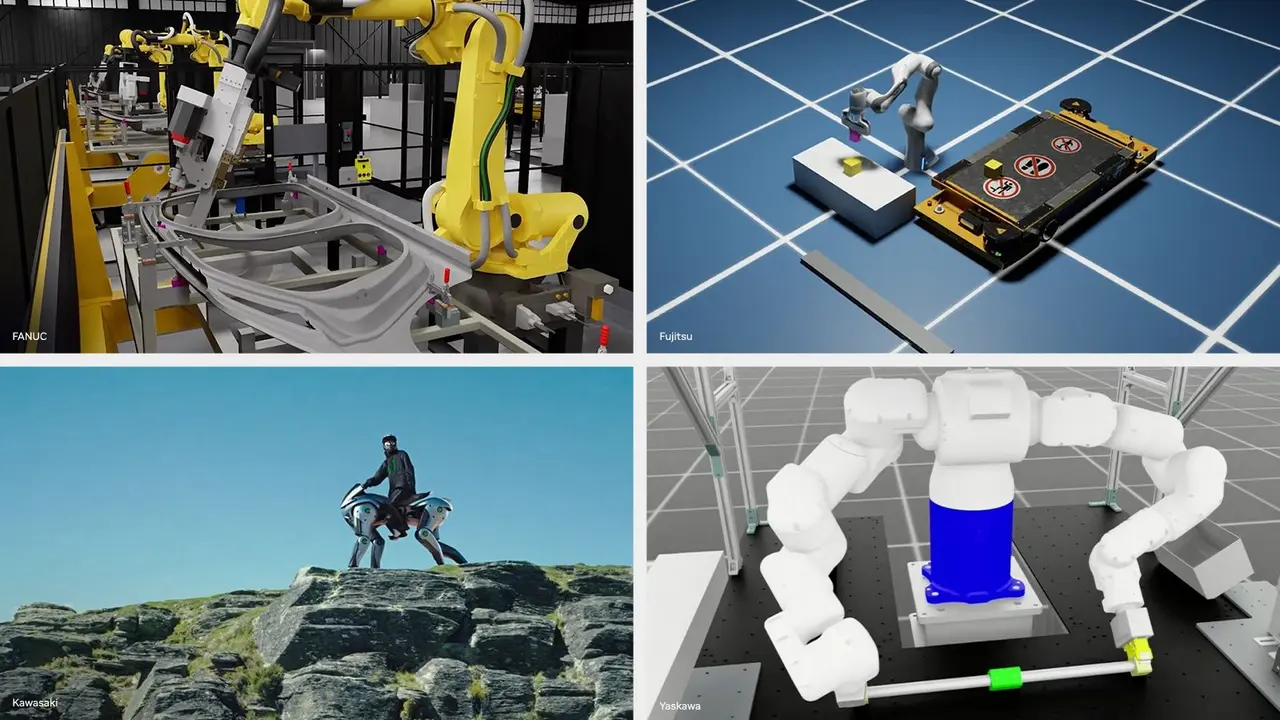
Most of the announcement was aimed at Japan, where more than 20 companies said they intend to join the Nvidia Cosmos Coalition
1
. The list includes industrial robotics leaders such as FANUC Corp., Yaskawa Electric Corp. and Kawasaki Heavy Industries Ltd., alongside technology giants Fujitsu Ltd., Hitachi Ltd., NEC Corp., SoftBank Corp., Sony Group Corp., Honda R&D Co. Ltd. and Toyota-backed Preferred Networks Inc.1
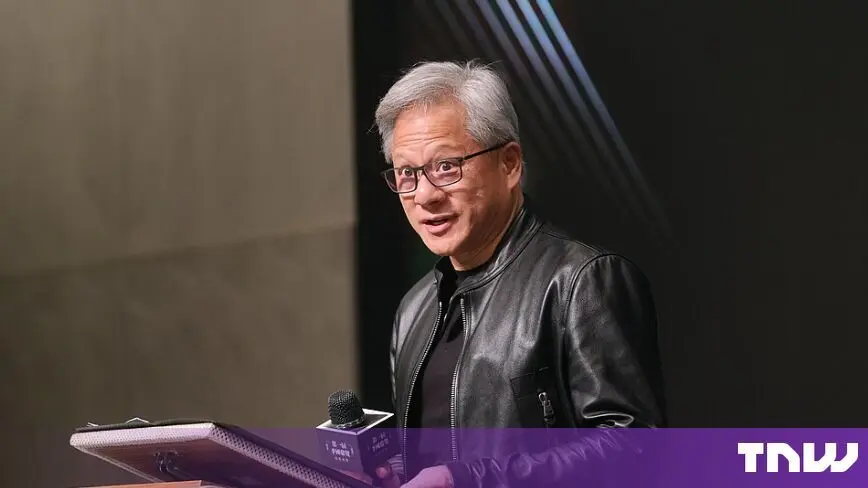
. Jensen Huang, Nvidia founder and Chief Executive, framed the opportunity during his visit to Japan this week, stating that "the next frontier of AI is in the physical world and this is a once-in-a-generation opportunity for Japan"1
.Related Stories

Japan's $2.4 Billion AI Infrastructure Investment
Nvidia and the Japanese government unveiled what they described as the world's first national AI infrastructure . Noetra Corp. will build an AI factory powered by 27,500 Nvidia Rubin GPUs and 13,750 Vera CPUs, drawing 140 megawatts, with backing from Japan's Ministry of Economy, Trade and Industry . The government is putting about $2.4 billion toward the effort, according to CNBC . The project, called FRONTia, will develop open multimodal foundation models for robotics, digital twins and intelligent manufacturing .
Targeting 30% of Global AI Robotics Market by 2040
Japan is aiming to capture more than 30% of the global AI robotics market by 2040, an opportunity Nvidia and its partners value at $133 billion . Huang framed the buildout as a chance for Japan to reclaim its manufacturing edge, saying the country that invented modern manufacturing is now building the AI factories for the next industrial revolution . The push builds on Nvidia's growing sovereign AI business, in which governments fund domestic computing capacity rather than rely on foreign cloud providers, and underscores how central physical AI has become to the company's growth beyond the data center .
References
Summarized by

Navi
Related Stories
NVIDIA Cosmos 3 Brings Multimodal AI to Robots, Autonomous Vehicles and Industrial Systems
01 Jun 2026•Technology

Nvidia Unveils Cosmos: A Groundbreaking AI Platform for Physical World Interaction
07 Jan 2025•Technology

NVIDIA Unveils Cosmos Reason and Advanced AI Models for Robotics and Physical AI Applications
12 Aug 2025•Technology

Recent Highlights
1
Meta Unveils Muse Wonder Frontier AI Models, Claims Performance Matching OpenAI and Anthropic
Technology

2
IMF Report Warns AI Market Correction Could Spark Global Financial Crisis With $1.4T at Risk
Business and Economy

3
OpenAI Releases 722 AI-Generated Math Solutions, Triggering Existential Crisis in Mathematics
Technology

Recent Highlights
Today's Top Stories








Don’t drown in AI news. We cut through the noise - filtering, ranking and summarizing the most important AI news, breakthroughs and research daily. Follow topics that matter to you and stay ahead.


