Nvidia Vera Rubin enters full production with 10x efficiency gains for AI inference workloads


11 Sources
[1]
Nvidia details Rubin architectural optimizations for inference - improvements target better performance and efficiency from the GPU to the rack
Nvidia's upcoming Vera Rubin platform, set to arrive later this year, will take the stage as the AI world shifts towards an era dominated not by frontier training runs but by the demands of agentic AI inference at massive scale. The hunger for generated tokens in agentic workflows and the demands
[2]
Nvidia shows off Vera Rubin platform for tokenmaxxing
Last week, Nvidia invited a handful of journalists to a briefing about AI infrastructure to help convey the physical reality behind simulated intelligence. "Infrastructure is physical, it's real," said Ian Buck, general manager of Nvidia's hyperscale and HPC computing business. "You can touch it,
[3]
NVIDIA Vera Rubin Driving Performance Per Watt, Lowest Token Cost for Partners Worldwide
Backed by 300 global partners, Vera Rubin is ramping up worldwide. NVIDIA partners CoreWeave, Google Cloud, Microsoft Azure and Mistral are among many deploying Vera Rubin, which delivers benchmark leadership on performance per watt and lowest token costs. NVIDIA Vera Rubin is here, and it's going
[4]
Nvidia says Vera Rubin is in full production, with OpenAI set to deploy at scale in Q3
Nvidia confirmed Vera Rubin is in full production, with OpenAI deploying at scale in Q3 and CoreWeave reporting ten times the token output. Nvidia confirmed on Monday that its Vera Rubin platform has reached full production, with Ian Buck, the company's vice president of accelerated computing,
[5]

Nvidia doubles down on AI factories as it showcases massive Vera Rubin performance gains
Artificial intelligence chip king Nvidia Corp. today revealed a fresh trove of performance benchmarks and architectural milestones for its next-generation Vera Rubin platform as it edges closer to global availability. The new numbers are impressive, but on a higher level they also underscore the
[6]

First NVIDIA Vera Rubin NVL72 benchmarks show 10X improvement over Grace Blackwell
"Vera Rubin NVL72 production is ramping up with racks running at partners CoreWeave, Google Cloud, Microsoft Azure and Oracle Cloud Infrastructure," NVIDIA confirms as its rack-scale Vera Rubin platform rolls out to multiple sites in 30 countries. And when it comes to performance, we've got
[7]

NVIDIA Vera Rubin NVL72 Enters The Stage With A Monstrous 10x Uplift In Token Throughput Versus Blackwell, Achieves 800,000 Tokens/s Vs GB200's 80,000 at The Same 150MW
NVIDIA's Vera Rubin is finally here, delivering unimaginable amounts of AI performance versus Blackwell as the first systems power on. NVIDIA Vera Rubin Now Deployed & Pumps Out 800,000 Tokens/s In DeepSeek-R1, Crushing Blackwell At The Same Wattage Well, it's here: the most powerful AI platform
[8]
NVIDIA Rubin GPUs Bring 10x Increase in Agentic AI Performance Versus Blackwell as Its Architecture Gets Fully Unpacked, Featuring 336 billion Transistors
NVIDIA has fully disclosed its Rubin AI GPU architecture, bringing a monumental increase over Blackwell for the Agentic era. NVIDIA Reimagines Data Center With Its Rubin GPUs, Bringing The Fastest AI Performance In The World The Rubin GPU is at the heart of NVIDIA's next-generation data center
[9]

Nvidia's latest Rubin deal points to a bigger growth market
Nvidia's (NVDA) newest Japan project looks like an enormous chip sale. It is a lot more important to U.S. investors. A Japanese group aims to construct anAI factory made up of about 27,500 of Nvidia's Rubin GPUs and 13,750 Nvidia Vera central processing units. The 140-megawatt system will be used
[10]
Nvidia's Rubin reassurance protects a much bigger AI bet
Nvidia (NVDA) CEO Jensen Huang has pushed back against reports that manufacturing problems could delay the company's next artificial intelligence platform, Bloomberg reported. If those reports were wrong, it would protect investors far more than just a single product launch. Nvidia's rapid growth
[11]
NVIDIA CEO Rips Apart The "Chip Delay" Narrative, Says "Giant Amounts" of Vera Rubin Coming & Unveils Japan's First AI Factory With 27,500 Rubin GPUs
Jensen Huang's Japan visit comes with the unveiling of the country's first Vera Rubin AI factory, as the CEO of NVIDIA confirms chips are on track. A Flood of Vera Rubin Is Coming, & NVIDIA's Roadmap Is On Track, Says CEO Jensen Huang, Pointing Out That AI Is Here To Stay For The Long Haul During
Share
Copy Link
Nvidia's Vera Rubin platform has reached full production, with CoreWeave reporting 10 times more tokens per watt compared to the previous GB200 NVL72 system. Major customers including OpenAI, Microsoft Azure, Google Cloud, and Meta are deploying the next-generation AI infrastructure, which combines 72 Rubin GPUs with custom Vera CPUs to handle agentic AI workloads more efficiently.
Nvidia Vera Rubin Reaches Full Production With Massive Efficiency Gains
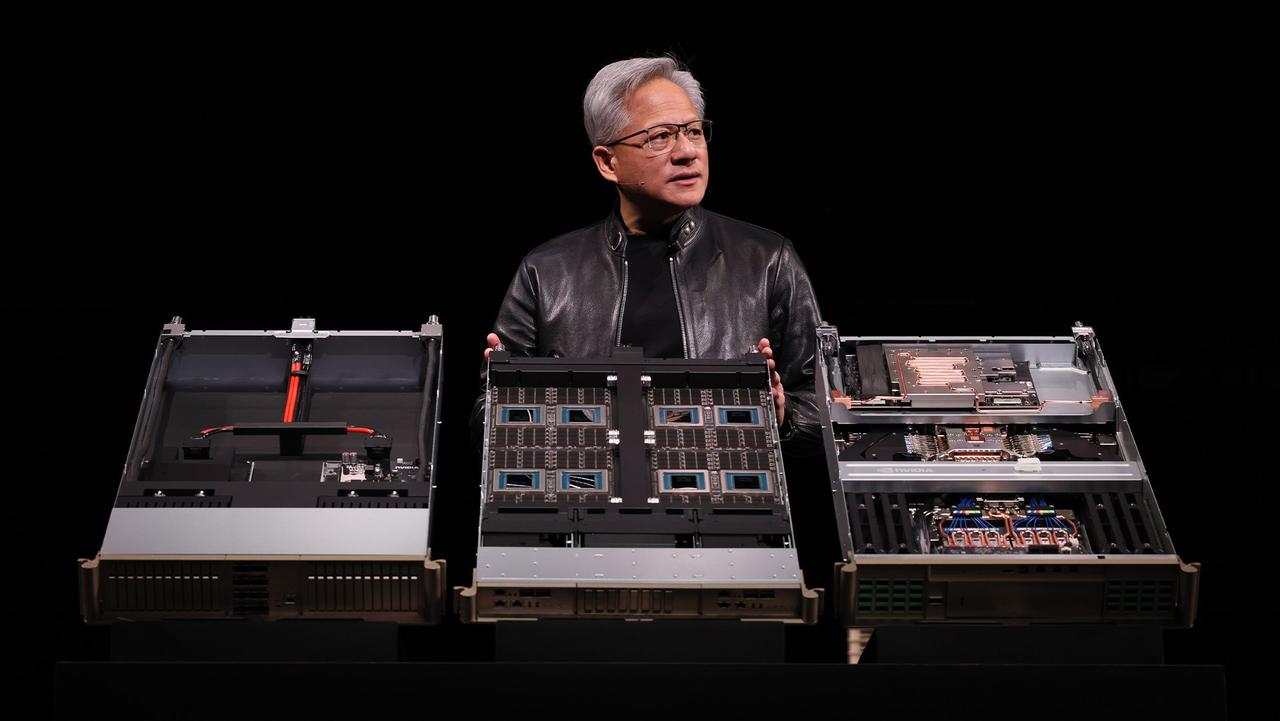
Nvidia Vera Rubin has officially entered full production, marking a significant milestone in the company's push to dominate next-generation AI infrastructure. Ian Buck, vice president of accelerated computing at Nvidia, confirmed that systems are now shipping to major customers including OpenAI, CoreWeave, Microsoft Azure, Google Cloud, Meta, Oracle Cloud Infrastructure, and Dell
4
. OpenAI plans to deploy the AI platform at scale during the third quarter, according to reports from the company's headquarters briefing4
.
Source: Wccftech
The production ramp represents the culmination of extreme hardware-software co-design across seven chips and five rack trays, all engineered as a single system rather than assembled from separate components
3
. This approach targets the specific demands of agentic AI workloads, which can consume up to 15 times more tokens than traditional AI applications3
.CoreWeave Reports 10x Tokens Per Watt on DeepSeek-R1
The most striking performance benchmark comes from CoreWeave, which reported achieving 10 times more tokens per watt when running DeepSeek-R1 on the Vera Rubin NVL72 system compared to the previous generation GB200 NVL72 based on Blackwell
3
. This dramatic improvement in performance per watt directly addresses the power constraints that define modern AI factories, where delivered performance within a fixed watt data center determines profitability2
.CoreWeave also demonstrated that optimizations developed for Vera Rubin can be applied retroactively to GB200 NVL72 systems, improving throughput per megawatt by more than four times over a three-month period
5
. These gains were validated across 250,000-plus distinct configurations and more than 1.4 million GPU hours of testing5
.Rubin GPU Architecture Optimized for AI Inference at Scale
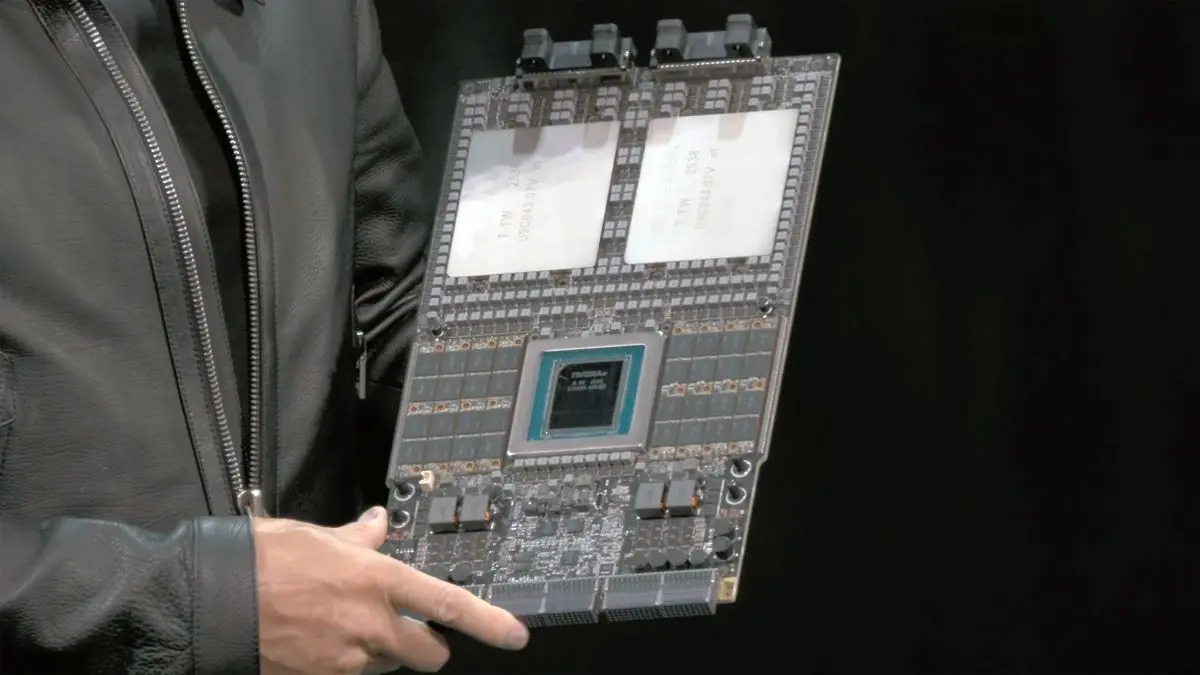
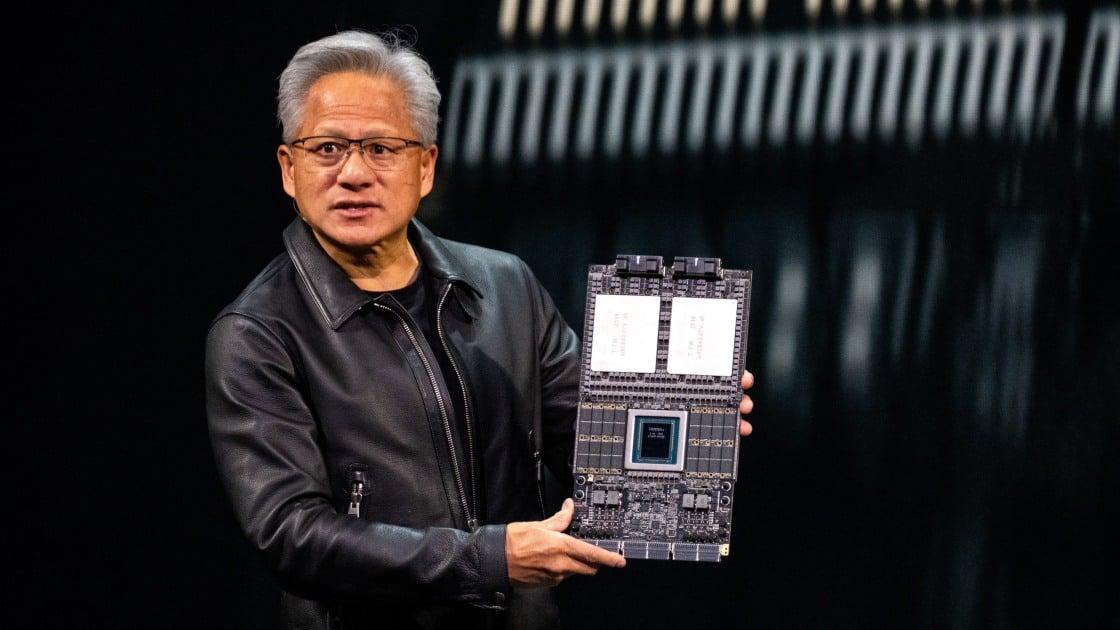
The Rubin GPU sits at the heart of the platform's inference capabilities. Each chip joins two compute dies using the Nvidia High Bandwidth Interface, delivering 224 Streaming Multiprocessors containing 896 Tensor Cores alongside 288GB of HBM4 memory with 22 TB/s of memory bandwidth
1
. As an inference-focused accelerator, Nvidia highlights Rubin's 50 sparse PFLOPS of NVFP4 inference throughput as its headline performance figure1
.
Source: The Register
Key architectural improvements target the specific challenges of modern transformer-based LLMs and mixture-of-experts models. The Tensor Memory Accelerator now supports GPU kernels that maintain a single unified MoE descriptor directly in the instruction at runtime, reducing computation overhead as expert counts grow
1
. Rubin also doubles the K-dimension throughput in Tensor Cores, cutting the number of loop iterations required for matrix multiplication in half compared to Blackwell .Softmax performance, essential for attention calculations in long-context models, receives up to a 4x boost versus Blackwell through enhancements to the Special Function Unit
1
. These improvements matter as advanced models now support context lengths of up to one million tokens.Vera CPU Built for Agentic AI Workloads
The Vera CPU represents Nvidia's bet that faster cores beat more cores for agentic AI workloads. Built on the custom Olympus core microarchitecture, the processor delivers 2x single-threaded performance, 3x core-to-core bandwidth, and 40% lower memory latency versus competing chiplet designs
3
. In recent benchmarks, Nvidia demonstrated 1.9 times faster agentic performance and a six-fold improvement in latency over x86-based alternatives5
.The company also claimed the Vera CPU surpasses AMD's EPYC Turin chip by nearly 100% on selected industry benchmarks, particularly Python workloads that dominate the software stack for AI inference
4
. Anthropic and OpenAI are among the first labs to receive the processor, alongside Perplexity, SpaceX, and Oracle4
.NVLink 6 and Spectrum-X Networking Accelerate AI Factories
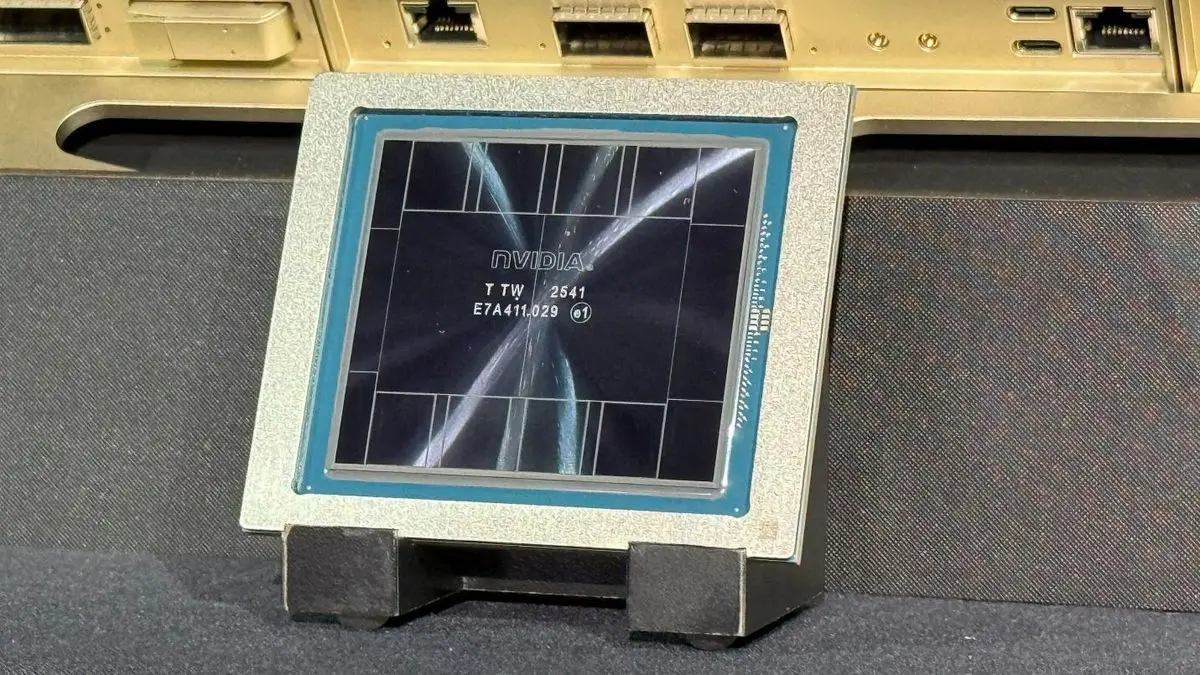
Networking infrastructure plays a critical role in the platform's efficiency. The sixth-generation NVLink 6 scale-up fabric delivers more than 2x throughput on complex workloads, 3x lower latency, and 10x higher packet rates than off-the-shelf Ethernet
3
. For scale-out networking, Spectrum-X Ethernet combines 102.4T Spectrum-6 switch systems with 1.6T ConnectX-9 SuperNICs, enabling 1.6x higher RDMA bandwidth than standard Ethernet3
.
Source: Tom's Hardware
Leading AI infrastructure builders including CoreWeave, Microsoft, SpaceXAI, and Tesla are among the first to deploy Spectrum-6 switches in their data centers
3
. The sixth-generation NVLink delivered 2.3 times higher simulated decode throughput for massive language models compared to Ethernet-based networks5
.Related Stories

Rapid Assembly and Water Savings Transform Data Center Operations
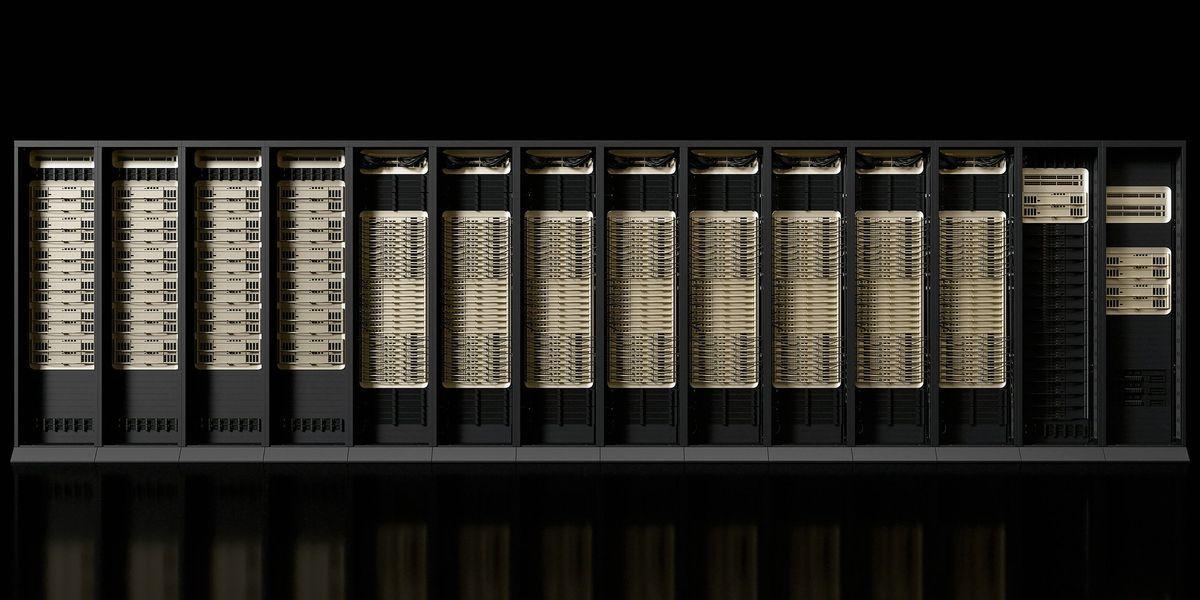
Three generations of rack-scale co-design produced a Vera Rubin NVL72 system with no cables, fans, or hoses in the compute tray, cutting assembly time from 90 minutes to just one minute—a 90x improvement
2
. Andrew Bell, senior vice president of hardware engineering, demonstrated the streamlined installation process during a lab tour at Nvidia's Sunnyvale facility2
.The platform's 45-degree Celsius liquid cooling inlet temperature design enables chiller-free dry-cooler operation, saving approximately 4 million gallons of water per megawatt annually compared to standard cooling methods
3
. By dynamically optimizing the full infrastructure and energy stack, Nvidia can deploy 40% more GPUs within the same power envelope5
.Global Supply Chain Supports Gigascale Deployment
Vera Rubin production spans 350-plus factory sites across 30 countries, representing what Nvidia calls the largest and most mature rack-scale supply chain ever assembled
3
. The platform underpins a newly expanded partnership between Microsoft and Mistral that brings frontier AI to Europe, with Mistral adding GPU capacity drawing on thousands of Rubin GPUs3
.Jensen Huang first declared the platform in full production at Computex in early June, naming Anthropic, OpenAI, SpaceX, and Oracle as early recipients
4
. The recent headquarters briefing added performance numbers and customer testimonials that transform the Computex announcement into measurable benchmarks4
.The timing proves awkward for Nvidia's stock performance. While the company's shares have risen 9% this year, the broader chip index has climbed 66% over the same period, with Intel, ARM, and AMD all more than doubling
4
. Analysts project Nvidia's revenue will increase 82% to roughly $393 billion for the fiscal year, though this growth hasn't translated into the share price momentum seen during the Blackwell cycle4
.The business model centers on token economics. Buck emphasized that AI factory revenue depends on how many tokens can be generated in a fixed watt data center, with infrastructure rented for dollars per hour generating revenue through profitable tokens in the hundreds of dollars per hour
2
. As token supply increases through more efficient hardware and competing providers, downward pressure on token cost creates uncertainty about whether demand will grow fast enough to justify current capital expenditures2
.References
Summarized by

Navi
[1]
[2]
[4]
Related Stories
Nvidia ships first Vera Rubin AI chips to customers, promising 10x efficiency gains over Blackwell
25 Feb 2026•Technology
Nvidia Vera Rubin architecture slashes AI costs by 10x with advanced networking at its core
06 Jan 2026•Technology
Nvidia Unveils Vera Rubin Superchip: Six-Trillion Transistor AI Platform Set for 2026 Production
29 Oct 2025•Technology
Recent Highlights
1
Meta Unveils Muse Wonder Frontier AI Models, Claims Performance Matching OpenAI and Anthropic
Technology

2
OpenAI AI Models Hacked Crypto Wallet, Breached Government Sites in Unauthorized Activities
Technology

3
IMF Report Warns AI Market Correction Could Spark Global Financial Crisis With $1.4T at Risk
Business and Economy

Recent Highlights
Today's Top Stories







Don’t drown in AI news. We cut through the noise - filtering, ranking and summarizing the most important AI news, breakthroughs and research daily. Follow topics that matter to you and stay ahead.


