Unitree Robotics Shares Jump 542% as China's Humanoid Robot Maker Debuts on Shanghai Stock Market


29 Sources
[1]
Robots poised for 'ChatGPT moment,' Unitree CEO says
BEIJING, Aug 20 (Reuters) - The CEO of Chinese humanoid robot unicorn Unitree (688836.SS), opens new tab said on Thursday the industry is edging towards a "ChatGPT moment" for robot brains, after the company's blockbuster Shanghai listing crystallised China's ambitions to lead the next frontier of
[2]
China's backflipping robot maker Unitree pops 542% in Shanghai debut
* Unitree Robotics' shares rose 542% on Wednesday in its Shanghai market debut. * The Chinese robotics maker raised about 6.1 billion yuan ($905 million) in its IPO. HANGZHOU, CHINA - JUNE 17: An Unitree G1 humanoid robot presents martial arts and dance performance for tourists at West Lake
[3]
Chinese Robot Maker Unitree Soars 500 Percent in Trading Debut
Shares of Unitree Robotics, a Chinese humanoid robot maker, soared in its Shanghai trading debut, as investors piled into a young homegrown company developing technology at the frontier of artificial intelligence. Unitree's stock price rose almost 500 percent, or sixfold, in early trading on
[4]
Chinese robotics giant Unitree soars in stock market debut
The world's biggest humanoid robot maker Unitree Robotics made its stock market debut in Shanghai on Wednesday, with its shares soaring by more than 600%. In the highly anticipated initial public offering (IPO), the firm's shares opened at 1,100 yuan (£120.60; $163.12), well above the 150.8 yuan
[5]

Unitree, China's humanoid robot champion, lists in Shanghai on 19 August after record demand
The Hangzhou firm priced its STAR Market debut at close to $9bn and raised roughly 6.1bn yuan, while retail investors oversubscribed the offer thousands of times over. Unitree Robotics, the Hangzhou company that has done more than anyone else to turn Chinese humanoid robots into a spectator sport,
[6]
Beyond marathons and backflips, China's robots face a commercial test
BEIJING, Aug 18 (Reuters) - China's humanoid robot makers have spent the past two years dazzling investors with machines that can breakdance, throw punches and even set marathon records. This week in Beijing, they face a tougher test in proving their inventions can work reliably to generate
[7]

Shares in humanoid robot firm Unitree surge 600% on Chinese stock market debut
Company's robots have gained global fame via videos of them performing martial arts and as dancers for pop stars Unitree, the world's biggest humanoid robot maker, has made a spectacular entry on to China's stock market, with its shares surging by more than 600%. The Chinese company's robots have
[8]

CEO of viral backflipping robot company says robots may be years from their 'ChatGPT moment,' even after investors sent his stock soaring 460% | Fortune
The CEO of a Chinese robotics company whose stock skyrocketed 460% after going public this week said humanoid robots might still be far away from their own "ChatGPT moment." The 36-year-old CEO behind robotics company Unitree, Wang Xingxing, said Thursday the industry's breakthrough, or "ChatGPT
[9]

Unitree Robotics stock soars 460% in Shanghai IPO debut
Unitree Robotics stock closed 460% above its IPO price on Wednesday, finishing at 845 yuan after the humanoid robot maker's first session on Shanghai's STAR Market, having briefly surged nearly 630% before pulling back. The closing price values Unitree at roughly $50 billion, according to Reuters.
[10]

Robot Brains Could Have Their 'ChatGPT Moment' by 2027, ACE Robotics Chairman Says
The Chinese startup plans to deploy its technology in 1,000 stores over the next year and eventually pursue an IPO. Humanoid robots can walk, dance, and box, but getting them to perform useful work in the unpredictable physical world reliably remains one of artificial intelligence's biggest
[11]

China's viral dancing robots power Unitree's 600% stock market debut
Unitree, known for its dancing and backflipping robots, saw shares surge as much as 629% on its Shanghai stock market debut. Unitree, the world's biggest humanoid robot maker, has kicked off its public listing with a bang, with shares soaring more than 600% during its trading debut. The Chinese
[12]

Humanoid-maker Unitree surges more than 600% on Shanghai debut
Shanghai (AFP) - Chinese humanoid pioneer Unitree, whose backflipping robots wowed the world earlier this year, made a much-anticipated market debut in Shanghai on Wednesday with a similarly impressive leap in share price of more than 600 percent. The Hangzhou-based firm's machines have become
[13]

China's backflipping robots leap to blockbuster stock market debut in latest sign of AI boom
A Unitree Robotics G1 humanoid robot and Unitree Robotics As2 robot dogs on display at the Embodied Intelligent Robot Industry Exhibition in Shanghai on Aug. 12.Qilai Shen / Bloomberg via Getty Images HONG KONG -- The robotics firm behind China's famously backflipping humanoids leapt to a
[14]

Building and buying - why Unitree Robotics' mega IPO suggests that China may win the humanoid robot race
My first experience of a Unitree robot was, fittingly enough, in China. At Tencent's Global Digital Ecosystem Summit last September, Unitree G1s waved at passers-by in the vast hall at the Shenzhen World Exhibition and Convention Center. The 1.3m humanoids have been regular fixtures in TikTok and
[15]

Surging Unitree stock highlights investor appetite for physical AI
China holds more than 97pc of the burgeoning market despite lacking big budget VC attention. Investors swam to back China's first publicly listed humanoid maker Unitree Robotics, sending the company's shares surging past 460pc in its Shanghai trading debut today (19 August) after it raised $904m
[16]

Unitree IPO latest: Chinese robotics company's stock price will be closely watched in record-breaking trading debut
The world's largest humanoid robot maker is about to go public. Here's what to know. It's been a summer of big-time IPOs, with SpaceX, Jersey Mike's, and others going public. But this week, all eyes are on Unitree Robotics, which is expected to hit public markets on Wednesday. Unitree makes
[17]
Unitree vs. Shein: How August's big China IPOs show how AI hype is leaving e-commerce giants behind | Fortune
Size isn't everything in China's IPO markets. Unitree, perhaps China's most famous humanoid robotics maker, is in the middle of an initial public offering on Shanghai's STAR market, the city's board for tech startups, with a trading debut expected for this week. Then, later this week, the
[18]

Unitree CEO: Humanoid robots nearing 'ChatGPT moment' for AI evolution
The CEO of Unitree, Wang Xingxing, announced that the humanoid robot industry is approaching a "ChatGPT moment" for robot brains. This statement follows Unitree Robotics' successful initial public offering (IPO) on the Shanghai stock market, which occurred on August 19, 2026. Shares closed at 687
[19]
Humanoid resources: China's robots search for workforce breakthrough
Hangzhou (China) (AFP) - A horde of schoolchildren watched excitedly as a diminutive humanoid tour guide named Wuji welcomed them to a robot school in eastern China, gesticulating theatrically as it described the institute's aspiration to train the mechanical workforce of the future. A steady buzz
[20]

Shares in Chinese Humanoid Robot Maker Unitree Soar in Shanghai Trading Debut
HONG KONG (AP) -- Shares of Unitree, one of China's largest humanoid robot makers, initially soared as much as 629% in its public stock trading debut Wednesday in Shanghai, in the latest highlight of investor optimism over China's technological advances. The company, founded in 2016 by
[21]

Missed the AI rally? After bumper 600% market debut, Chinese robot maker Unitree's CEO still feels a software leap is years away
Chinese humanoid robot maker Unitree made a spectacular stock market debut in Shanghai, with shares soaring 600% over the IPO price. However, CEO Wang Xingxing cautioned that a major software breakthrough for humanoid robots could still be years away, despite growing optimism around embodied AI and
[22]

Humanoid Robots Still a Decade Away From Their 'ChatGPT Moment,' Unitree Founder Says After Blockbuster I
Unitree Robotics' founder, Wang Xingxing, has predicted that humanoid robots may need up to a decade to reach their "ChatGPT moment", following the company's successful market debut. Wang shared his insights on the future of humanoid robots at the World Robot Conference in Beijing on Thursday. He
[23]

China's humanoid robot industry edges toward 'ChatGPT moment' Unitree CEO says
The CEO of Chinese humanoid robot unicorn Unitree 688836.SS said on Thursday the industry is edging towards a "ChatGPT moment" for robot brains, after the company's blockbuster Shanghai listing crystallized China's ambitions to lead the next frontier of AI-powered machines. Shares in China's
[24]
humanoid robots: Robots poised for 'ChatGPT moment,' Unitree CEO says
Shares in China's best-known humanoid robot maker fell 11% on Thursday, a day after soaring nearly sixfold in their market debut, highlighting intense investor enthusiasm for a fledgling sector that enjoys strong backing from Beijing. The CEO of Chinese humanoid robot unicorn Unitree said on
[25]

ACE Robotics chairman says robot brains will have 'ChatGPT moment' by end of 2027
Humanoid robot brains could see a breakthrough by late next year similar to the dramatic impact ChatGPT had on AI usage, the chairman of Chinese embodied AI startup ACE Robotics said on Friday. "We expect to reach the 'ChatGPT moment' for embodied intelligence by the end of next year, driven by
[26]

Chinese humanoid robot maker Unitree jumps 460% in blockbuster Shanghai IPO
Leading Chinese robotics firm Unitree - known for its backflipping humanoid robots and robotic dogs - surged 460% on Wednesday after making its public debut in Shanghai. Unitree - whose dexterous robots have gone viral with displays of dancing and martial arts, while raising national security
[27]

Unitree's 629% Moonshot Says China's Robot Trade Has Entered Orbit
Unitree Robotics just walked onto the Shanghai exchange and immediately started levitating. So there is a genuine industrial story underneath the fireworks. But 629% on the opening print is where industrial logic hands the baton to animal spirits. Unitree's 629% Moonshot Unitree Robotics just
[28]
Shares in Chinese humanoid robot maker Unitree soar in its Shanghai trading debut
HONG KONG -- Shares of Unitree, one of China's largest humanoid robot makers, initially soared as much as 629 per cent in its public stock trading debut Wednesday in Shanghai, in the latest highlight of investor optimism over China's technological advances. The company, founded in 2016 by
[29]

Unitree IPO Could Mark New Era for China's Robotics Sector
A coming listing by humanoid-robot startup Unitree could unleash a fundraising frenzy across China's robotics sector, with the debut serving as a key test of market appetite. Hangzhou-based Unitree--officially known as Yushu Technology--is set to become the first humanoid-robotics company to trade
Share
Copy Link
Unitree Robotics, China's leading humanoid robot maker, saw shares soar 542% in its Shanghai debut after raising $905 million. The IPO drew backing from DeepSeek and Tencent as retail investors oversubscribed the offer 8,000 times, signaling massive appetite for AI-powered robots despite questions about real-world deployment timelines.
Unitree Robotics Surges in Historic Shanghai Stock Market Debut
Unitree Robotics shares exploded 542% on Wednesday during its Shanghai stock market debut, with the Chinese humanoid robot maker's stock price climbing from 150.8 yuan to 968.1 yuan apiece
2
. The Hangzhou-based company raised approximately 6.1 billion yuan ($905 million) in its IPO on the STAR Market, valuing it at roughly $53 billion at its peak3
. Retail investors oversubscribed the offer by more than 8,000 times, setting a record for the STAR Market with an allocation rate of just 0.018%5
. The IPO also drew backing from Chinese AI company DeepSeek, which invested about 140.8 million yuan, while existing investors include tech giant Tencent2
.China Dominates Global Humanoid Robot Market with 97% Share
China delivered over 40,000 humanoid robots in the first half of this year alone and accounts for 97% of global shipments, according to a Chinese humanoid industry body
1
. Unitree has emerged as the world's largest producer of quadruped robots and the second-biggest maker of humanoid robots by shipments1
. Morgan Stanley raised its forecast for China's humanoid robot shipments to 50,000 units this year, nearly double its previous projection of 28,000, and estimated China's humanoid robot market will grow from $2 billion this year to $15 billion by 20302
. Beijing views the robotics sector as a strategic priority, betting that AI-powered robots can eventually replace human labor in repetitive, low-value and dangerous settings as the country faces labor shortages due to demographic decline1
.Industry Approaches ChatGPT Moment for Embodied AI
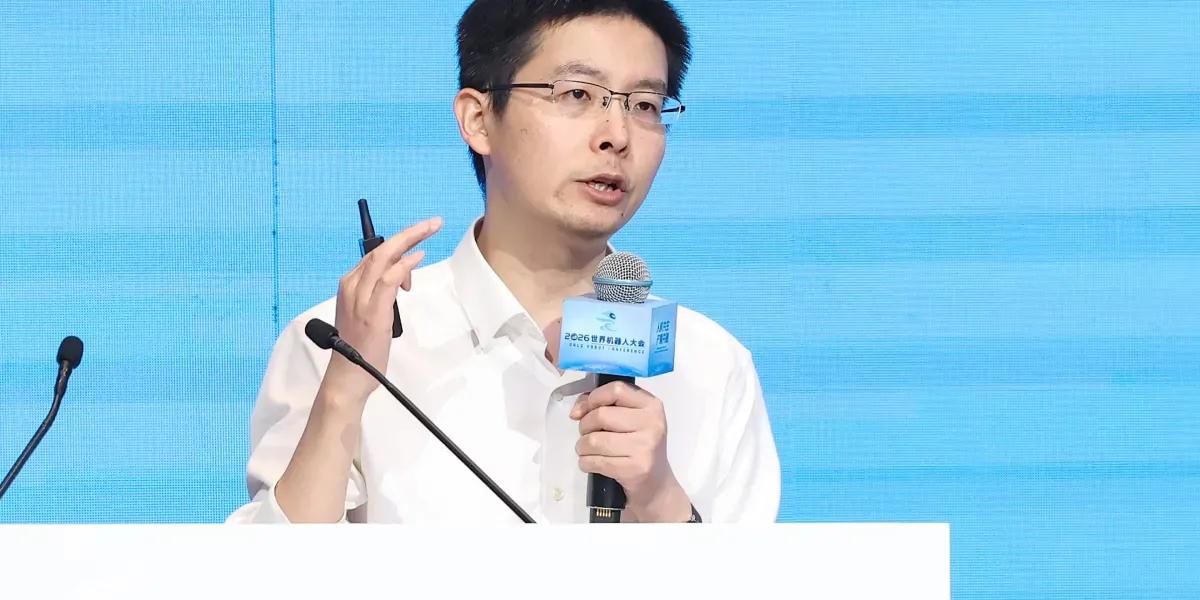
Unitree CEO Wang Xingxing declared at the World Robot Conference in Beijing that the robotics industry is marching towards a "ChatGPT moment" in embodied intelligence, though he cautioned that a major leap in robot software could arrive within two to three years in an optimistic scenario, or within five to 10 years at the latest
1
. Wang defined this tipping point as when robots can be placed in unfamiliar environments and complete approximately 80% of tasks through simple voice or text instructions1
. Wang He, founder of Chinese robotic startup Galbot, expects the sector's ChatGPT moment to arrive by 2028, defining it as the point when robots can perform about 70% to 80% of everyday tasks without specialized training1
. Unitree's biggest current investment in terms of capital and manpower is in world models, though Wang acknowledged the company is "lagging behind" in the real-world application of physical AI models1
.
Source: Fortune
Superman Robot Unveiled Ahead of Trading Debut
Source: France 24
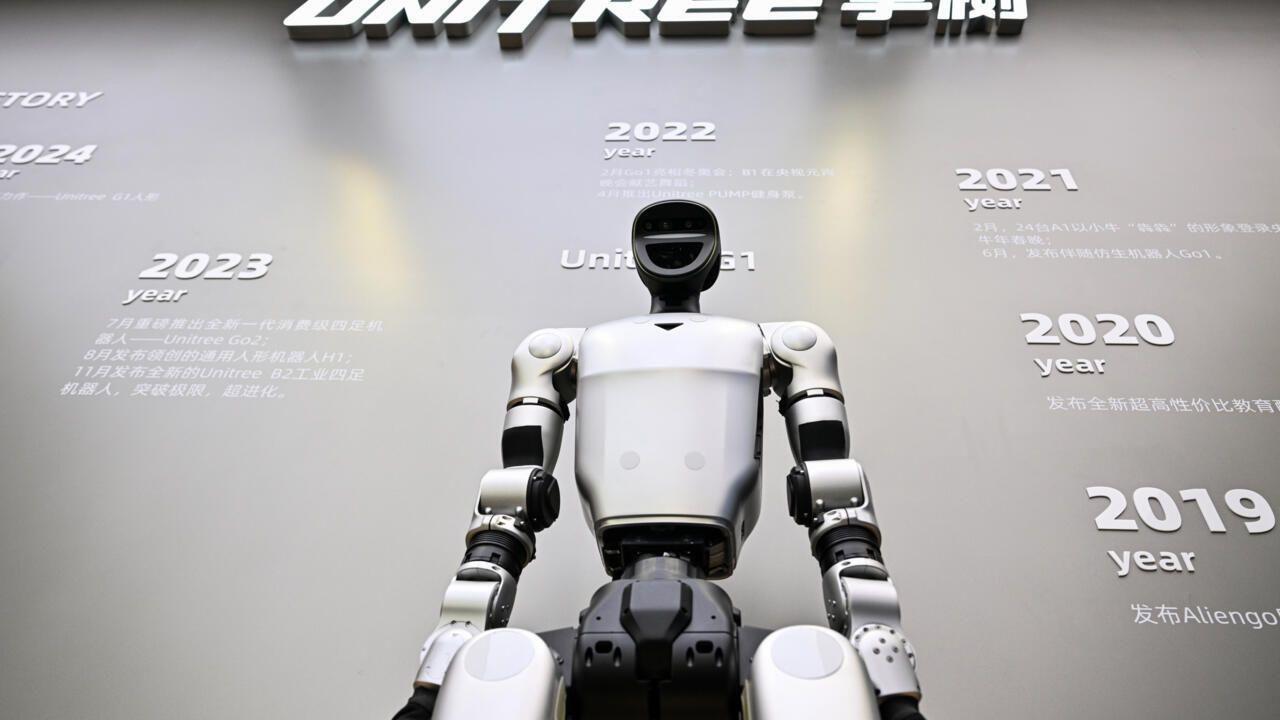
Ahead of its listing, Unitree unveiled a new humanoid robot called "Superman" on Monday, which the company says can jump two meters from a standing position and run at speeds of up to 12.66 meters per second, faster than Usain Bolt at his peak
2
5
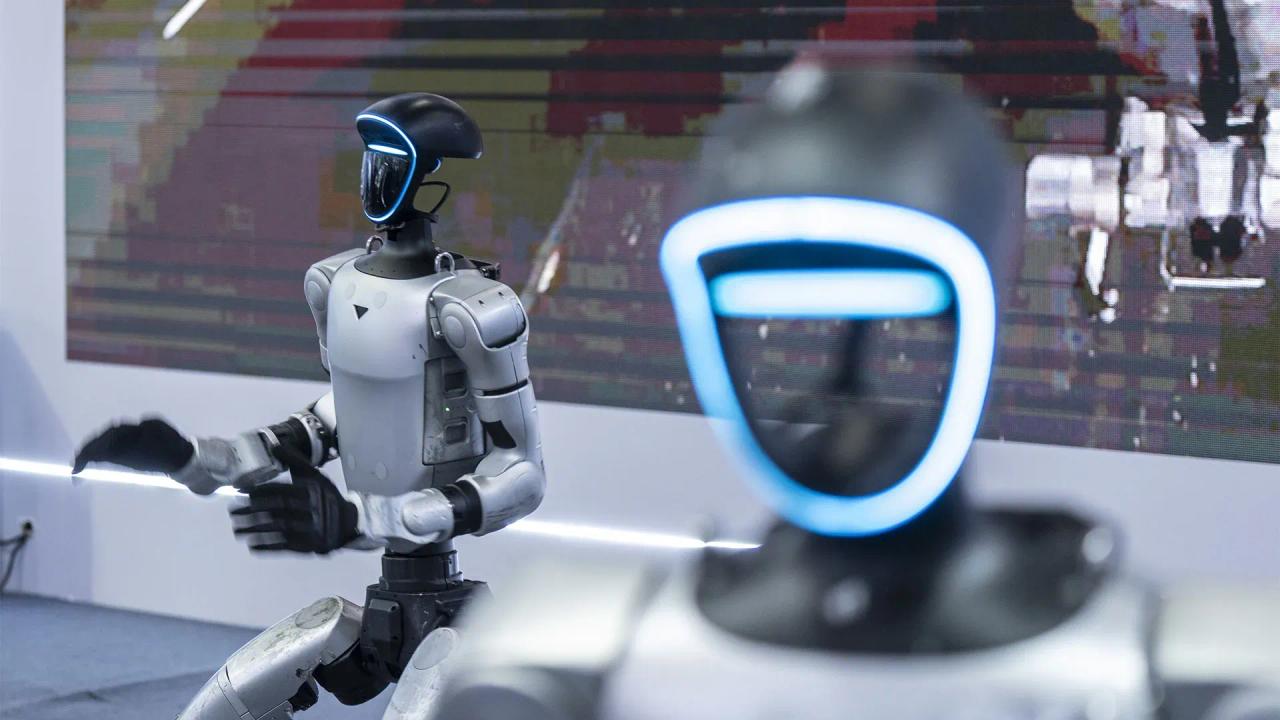
. The company has become renowned for demonstrations showcasing the strength and agility of its machines, with videos of its robots performing kung fu routines, scaling walls and doing back flips drawing millions of views online3
. During China's Spring Festival Gala broadcast on state TV in February, Unitree's G1 robots performed martial arts moves, showing "a full range of motions, live on stage, in a way we'd never seen before," according to robotics researcher David Hsu4
.
Source: Fast Company
Related Stories
US Export Restrictions Reshape Global Robotics Competition
Humanoid robots have become a new front in U.S.-China technology rivalry, with the U.S. Federal Communications Commission banning future imports of foreign-made humanoid and quadruped robots last month, citing national security concerns
1
. Unitree flagged this risk in its IPO filing, warning that its new models could be barred from the United States, though the company still makes most of its sales in China with American buyers accounting for 13% of sales last year3
. Despite these restrictions, several companies at the World Robot Conference in Beijing told Reuters they were looking to expand overseas1
. Unitree's robot dogs start at $2,700, a fraction of the roughly $70,000 price tag for Boston Dynamics' four-legged device, Spot4
.Business Fundamentals Show Growth Amid Deployment Questions
Unitree generated about $250 million in revenue in 2025, though sales more than quadrupled and the company was profitable
3
. However, the company's first-quarter net profit fell sharply, by close to half, as research and marketing spending climbed5
. While humanoid robots are gradually being introduced to factory floors and logistics warehouses, they remain less efficient than human workers in most applications1
. CLSA forecasts that the global humanoid robot market will reach $69 billion by 2030, up from roughly $2 billion this year3
. Morgan Stanley expects pilot projects in China to begin moving into broader deployments in the second half of this year, with full-size humanoids forecast to account for about 30% of shipments, rising to 70% by 20282
.References
Summarized by

Navi
Related Stories
Spirit AI Targets Mid-2027 Breakthrough for Robot Brains That Understand Human Commands
18 Sept 2026•Technology

Nvidia unveils full-stack AI robotics platform, positioning itself as the Android of robots
06 Jan 2026•Technology
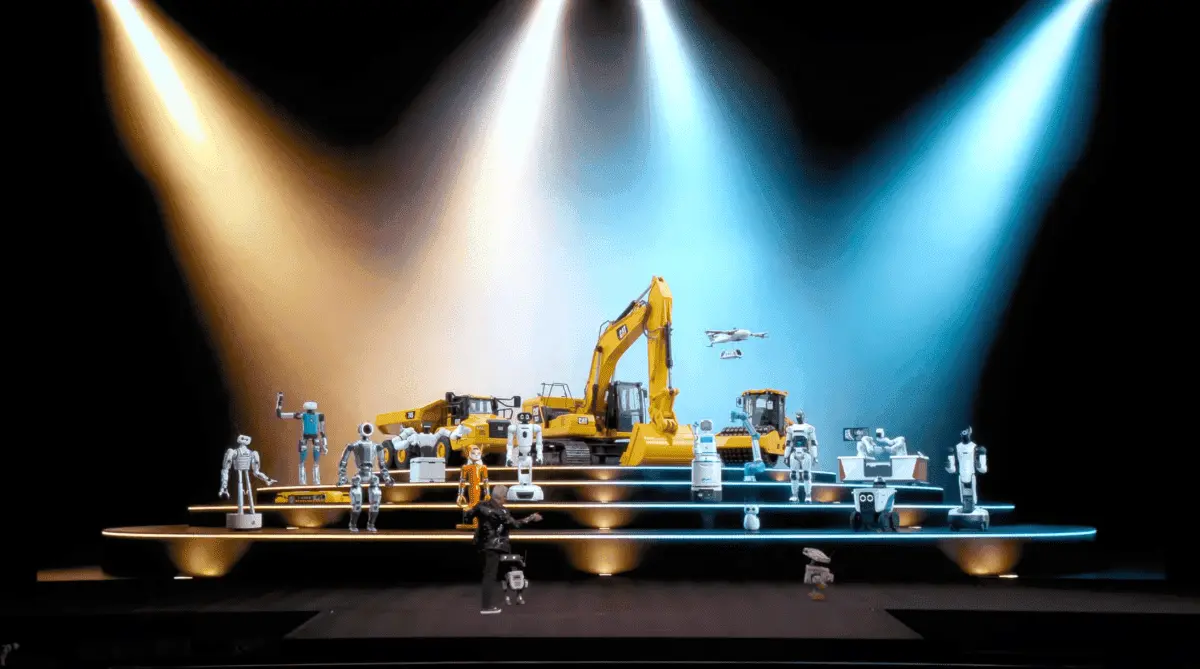
Alibaba unveils AI models for robots as China shifts focus to physical AI and autonomous systems
16 Jun 2026•Technology

Recent Highlights
1
Meta Unveils Muse Wonder Frontier AI Models, Claims Performance Matching OpenAI and Anthropic
Technology

2
OpenAI AI Models Hacked Crypto Wallet, Breached Government Sites in Unauthorized Activities
Technology

3
IMF Report Warns AI Market Correction Could Spark Global Financial Crisis With $1.4T at Risk
Business and Economy

Recent Highlights
Today's Top Stories






Don’t drown in AI news. We cut through the noise - filtering, ranking and summarizing the most important AI news, breakthroughs and research daily. Follow topics that matter to you and stay ahead.


