3 Sources
[1]
I barely remember the last time Nvidia mentioned gaming at all in an earnings call
When I hear 'Nvidia,' I still think 'gaming'. But after scrubbing through the company's latest earnings call, I'm not sure Nvidia is thinking much about gaming these days at all. In fact I had to go back through the records an entire year to find a time when it made one mention of it in an earnings call. That's how little impact it seemingly has on the company's bottom line. None of Nvidia's board members so much as uttered the word 'gaming' to investors once again. But with the data centre segment bringing in $89 billion this quarter alone, accounting for almost 93% of the company's total revenue, it's not hard to see where the company's priorities now lie, and why. Nvidia made $96 billion in total revenue in the second quarter of 2026, doubling what it made during the same period last year. Nvidia CFO Colette Kress told investors, "The surge in AI demand is driving a global infrastructure buildout, supported by an expanding and diverse set of growth opportunities, spanning hyperscalers, AI labs, AI natives, enterprises and sovereign customers." For those unclear, I'll explain the last part of this comment: hyperscalers handle massive AI workloads so need a lot of infrastructure like data centres. AI labs are at the tech's bleeding edge in terms of research and development. 'AI natives' refers to workflows, products, or companies that are built from the ground up around AI -- in other words, it's an inextricable aspect from the start. Enterprise customers may have otherwise bolted on data-centre-dependent AI products at a later date. Finally, sovereign customers can represent either businesses or even entire countries that want to retain full control over an AI technology's entire lifecycle. The really brain-melting thing though is that Kress adds that the company expects "to grow revenue by approximately 70% in fiscal 2028," even in the midst of the RAMpocalypse. In fact, Nvidia feels it would be making a whole lot more money if it weren't for the memory crisis it's contributing to. Still, even in a "supply-constrained" landscape, Nvidia is not expecting the demand for AI or data centres to slow down any time soon. That leaves gaming out in the cold. In fact, Nvidia no longer reports on gaming as its own separate segment. Instead, this has apparently been bundled up into the Edge Computing segment, which itself made $7.2 billion. Kress comments that these "increases were driven by strong sales of Blackwell workstations, partially offset by slower consumer PC sales that were tempered by elevated memory and systems prices." The Edge Computing segment saw a 27% year-over-year increase, though this win still pales in comparison to all things AI at Nvidia. Obviously, Nvidia hasn't stopped selling its very shiny RTX 50-series GPUs -- so shiny in fact, that it would have been genuinely cheaper for me to fly to QuakeCon and buy an RTX 5090 at the Nvidia booth than pick up the GPU absolutely anywhere else. But even though the RTX 5090 costs a small fortune, gaming is clearly not the priority it once was for Nvidia, nor has it been for a while. The last time I remember Nvidia mentioning gaming in an earnings call was this time last year, and even then AI was already making 10 times as much as gaming. De-emphasising the gaming segment even further is something we could all have seen coming. With that in mind, hearing 'Nvidia' and still thinking 'gaming' before 'AI' or 'data centres' puts me firmly behind the times.
[2]
NVIDIA's Q2 2027 financial report doesn't mention GeForce RTX or Gaming at all
Back in May, NVIDIA changed how it structured its quarterly financial reports by removing the Gaming segment, which covers the company's desktop and laptop GeForce RTX hardware, along with semi-custom revenue from consoles like the Nintendo Switch 2 and services like GeForce NOW. Instead, it lumped Gaming revenue into a broader Edge Computing segment that also includes workstations, robotics, and automotive. NVIDIA said the change "better reflects" its "current and future growth drivers," which makes sense since NVIDIA hardware is the go-to option for local AI, including for those who repurpose gaming cards like the GeForce RTX 5090 to run complex models. Of course, this timing coincides with some of the biggest price increases we've seen for GeForce RTX gaming GPUs, and the memory crisis is also leading to fewer cards available for purchase. So, it's not outside of the realm of possibility that this change was also made to shield an expected decline in Gaming revenue. That said, with the company's latest Q2 2027 financial report now available, which confirms $89.0 billion in Data Center and $7.2 billion in Edge Computing revenue, there's no mention of GeForce RTX or Gaming at all. Not even DLSS gets a mention, even though it passed the impressive 1,000-game milestone and NVIDIA announced DLSS 4.5 Ray Reconstruction. NVIDIA RTX Spark, of course, is mentioned, but that's the only real Edge Computing highlight that has anything to do with Windows PC gaming or RTX technologies for gamers and creators. Instead, NVIDIA highlights local AI initiatives for popular models, autonomous vehicle advancements, and humanoid robots as the key Edge Computing milestones for the quarter. Without a breakdown of the various segments' revenue streams, it wouldn't be out of the realm of possibility to assume that Gaming revenue for Q2 2027 has declined. In fact, AMD's most recent quarterly financial report shows Gaming revenue dropped 31% compared to the same period last year, with the company citing lower PlayStation 5 and Xbox Series X|S sales as a key reason. As NVIDIA isn't alone in massive gaming hardware price increases due to the memory crisis, AMD's report shows the impact the current situation is having on gaming. And with GeForce RTX still the biggest name in PC gaming, it's a shame that its latest financial report doesn't mention gaming at all, let alone offer some insight into how the market is situated. Now, beyond the financial report showing record revenues, NVIDIA brought its GeForce RTX brand to Gamescom 2026 this week in a big way, with several game-related announcements and impressive RTX showcases. With AMD mostly absent from the event, Radeon-wise, this shows NVIDIA is still consumer-facing in its gaming business.
[3]
Nvidia Fails to Mention Gaming In Earnings Report, and Now I Wonder When the RTX 6080 Will Ever Come Out
Nvidia released its Q2 2027 earnings report yesterday, and while it's obvious the company is making a ton of money on data centers - up 106% from this time last year - the company didn't mention gaming once. That shouldn't be too surprising. After all, Team Green dropped the gaming category from its earnings report last quarter, moving it into 'edge computing.' And in that category this quarter, the only time 'RTX' shows up is when the RTX Spark, launched at Computex 2026, was mentioned. I've had the chance to play with the RTX Spark-equipped Surface a couple times at events since then, and while it's definitely capable of gaming, systems with that chipset are absolutely geared more toward local AI workloads than playing Alan Wake 2. At least part of the reason gaming wasn't mentioned, I suspect, is because we're smack dab in the middle of a GPU generation right now. The Nvidia GeForce RTX 5090, and the rest of the Blackwell GeForce lineup came out about a year and a half ago, so it makes sense that gaming is a bit quiet. But, with how much cash AI is making Nvidia, and with the RAM crisis - which Nvidia absolutely contributes to - driving graphics card prices through the roof, I can't help but wonder when we're going to actually see new GPUs. I've seen rumors that the RTX 6080 likely won't be launching until the end of 2027 at the earliest, which, if true, would make this one of the longest graphics generations in my memory. As early as February 2026, a report from The Information suggested the RTX 60 series would be delayed beyond 2027, and we still haven't got the mid-generation 'Super' refresh that we typically see halfway through each graphics generation. Instead, most of the gaming news out of Nvidia this year has been around software. The company previewed the controversial DLSS 5 back in March, which will use gen AI to essentially re-draw games. But even beyond that, the company just released a new ray reconstruction model as part of DLSS 4.5, which is genuinely awesome, and there have been incremental upgrades to multi-frame generation throughout the year that have made that technology much less jarring. At the end of the day, I'm not sure if it's a bad thing if new graphics cards take a while to actually come out. If there's one thing that rings true about pretty much every hardware launch this year, they've been overpriced due to the RAM shortage. Nvidia's cards have carried a higher premium with every launch, so it's hard to imagine just how expensive a flagship graphics card launching in 2026 or 2027 would actually be. My advice, then, would be to brace yourself for a few more years without an upgrade. Hopefully game developers will use this time to make sure games run a bit smoother on older hardware. The good news is that some of the best games this year have been successful there, like Crimson Desert and Forza Horizon 6, which run well on basically anything. But there are still games like Star Wars Zero Company and Halo: Campaign Evolved which all but demand newer GPUs. Hopefully, we see more of the former than the latter in the jam-packed second half of 2026. Jackie Thomas is the Senior Tech Editor at IGN and the PC components queen. You can follow her @Jackiecobra
Share
Copy Link
Nvidia's latest earnings report made no mention of gaming, GeForce RTX, or even DLSS as the company's data center revenue hit $89 billion—representing 93% of total revenue. The gaming segment has been absorbed into edge computing, signaling a dramatic shift from gaming to AI that leaves the future of consumer GPUs uncertain.

Nvidia's Q2 2027 financial report marks a striking departure from the company's gaming roots, with no mention of gaming, GeForce RTX, or DLSS throughout the entire earnings call
1
2
. The company generated $96 billion in total revenue for the quarter, doubling year-over-year performance, but gaming wasn't acknowledged once by board members during investor discussions1
.This represents a dramatic shift from gaming to AI for a company once synonymous with PC gaming hardware. The last time Nvidia mentioned gaming in an earnings call was a full year ago, when AI was already generating 10 times more revenue than the gaming segment
1
. Even DLSS, which recently passed the 1,000-game milestone with the announcement of DLSS 4.5 ray reconstruction, received no acknowledgment in the financial report2
.Nvidia's focus on AI has proven extraordinarily lucrative, with data center revenue reaching $89 billion in Q2 2027—accounting for nearly 93% of the company's total revenue
1
. This segment saw a 106% increase compared to the same period last year3
.Nvidia CFO Colette Kress explained the surge: "The surge in AI demand is driving a global infrastructure buildout, supported by an expanding and diverse set of growth opportunities, spanning hyperscalers, AI labs, AI natives, enterprises and sovereign customers"
1
. Despite operating in a supply-constrained environment caused by the ongoing memory crisis, Kress projected that Nvidia expects "to grow revenue by approximately 70% in fiscal 2028"1
.Back in May, Nvidia restructured its quarterly financial reports by eliminating the gaming segment entirely and folding it into a broader edge computing category
2
. The company stated this change "better reflects" its "current and future growth drivers"2
.The edge computing segment, which now includes desktop and laptop GeForce RTX hardware, workstations, robotics, and autonomous vehicles, generated $7.2 billion in Q2 2027—a 27% year-over-year increase
1
2
. However, Kress noted that increases "were driven by strong sales of Blackwell workstations, partially offset by slower consumer PC sales that were tempered by elevated memory and systems prices"1
.The only gaming-adjacent mention in the entire report was RTX Spark, launched at Computex 2026, which is primarily geared toward local AI workloads rather than gaming
3
. Without a breakdown of revenue streams within edge computing, it's difficult to assess gaming's actual performance, though AMD's recent quarterly report showed gaming revenue dropped 31% year-over-year, suggesting broader GPU market challenges2
.Related Stories
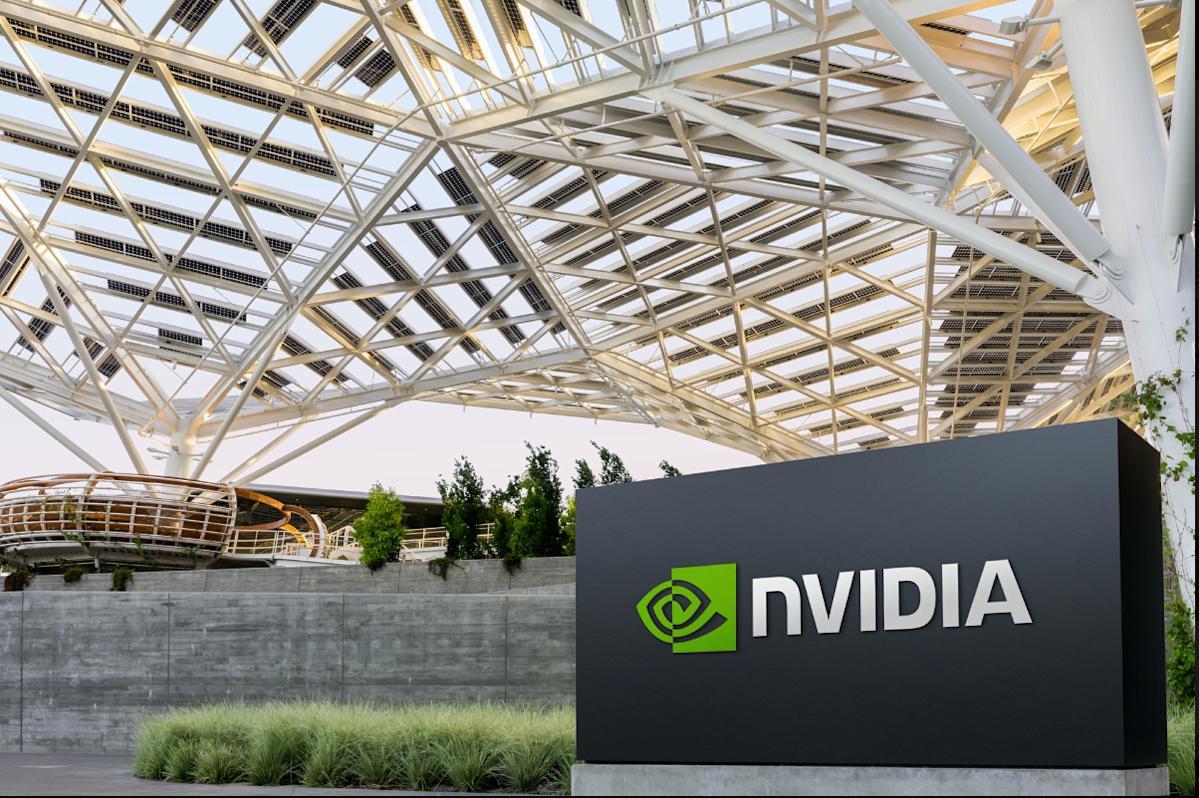
The RTX 5090 and the rest of the Blackwell GeForce lineup launched approximately a year and a half ago, making this one of the longest graphics generations in recent memory
3
. Rumors suggest the RTX 6080 won't launch until the end of 2027 at the earliest, with a February 2026 report from The Information indicating the RTX 60 series would be delayed beyond 20273
.Notably absent is the mid-generation 'Super' refresh that typically arrives halfway through each graphics generation
3
. Instead, most gaming news from Nvidia has centered on software advancements, including the controversial generative AI-powered DLSS 5 previewed in March, which will use gen AI to essentially redraw games3
.Graphics card prices remain elevated due to the memory crisis that Nvidia contributes to, raising concerns about how expensive future flagship GPUs will be when they eventually launch
1
3
. The RTX 5090 already commands premium pricing, making it cheaper to fly to QuakeCon and purchase one at the Nvidia booth than buy it elsewhere1
.Despite the financial report's silence on gaming, Nvidia maintains a consumer-facing presence. The company brought its GeForce RTX brand to Gamescom 2026 with several game-related announcements and RTX showcases, while AMD remained largely absent from the event
2
. This suggests Nvidia hasn't completely abandoned gaming, even as its corporate priorities have clearly shifted.For gamers, the extended generation cycle may not be entirely negative. Games like Crimson Desert and Forza Horizon 6 have demonstrated that developers can optimize titles to run well on older hardware
3
. However, demanding titles like Star Wars Zero Company and Halo: Campaign Evolved still require newer GPUs, creating a divide in the gaming experience3
.Summarized by
Navi
05 Feb 2026•Business and Economy

28 Feb 2025•Business and Economy

22 Nov 2024•Business and Economy

1
Technology

2
Policy and Regulation

3
Technology