Nvidia's $3 billion Meta bet deepens AI bubble concerns as chip giant becomes industry's central banker


3 Sources
[1]
Nvidia's web of AI bets: smart strategy or bubble risk?
New York (AFP) - Nvidia's $3 billion investment in Meta's share sale, announced Tuesday, is the latest addition to a portfolio of stakes, loans and guarantees that has made the chip giant what some analysts describe as the central bank of the artificial intelligence boom. The galaxy of deals has
[2]
The dangerous financial web behind the surging AI bubble
Much has been said about the shaky financing of the current AI wave: the pool of money is huge, the bets are risky, and U.S. economic growth hinges on the market's continued expansion. This past month has brought these issues into stark relief, with CoreWeave's stock plummeting amid its mounting
[3]
Nvidia investment: Nvidia's web of AI bets: smart strategy or bubble risk?
Nvidia's $3 billion investment in Meta's share sale, announced Tuesday, is the latest addition to a portfolio of stakes, loans and guarantees that has made the chip giant what some analysts describe as the central bank of the artificial intelligence boom. The galaxy of deals has helped keep demand
Share
Copy Link
Nvidia invested $3 billion in Meta's share sale, adding to its portfolio of AI stakes, loans and guarantees worth over $36 billion in cloud backstops. The chip giant's investments in OpenAI, CoreWeave and neocloud companies have raised concerns about circular financing and whether Nvidia is inflating an AI bubble through its unprecedented role as the industry's central banker.
Nvidia Expands AI Investment Portfolio with $3 Billion Meta Stake
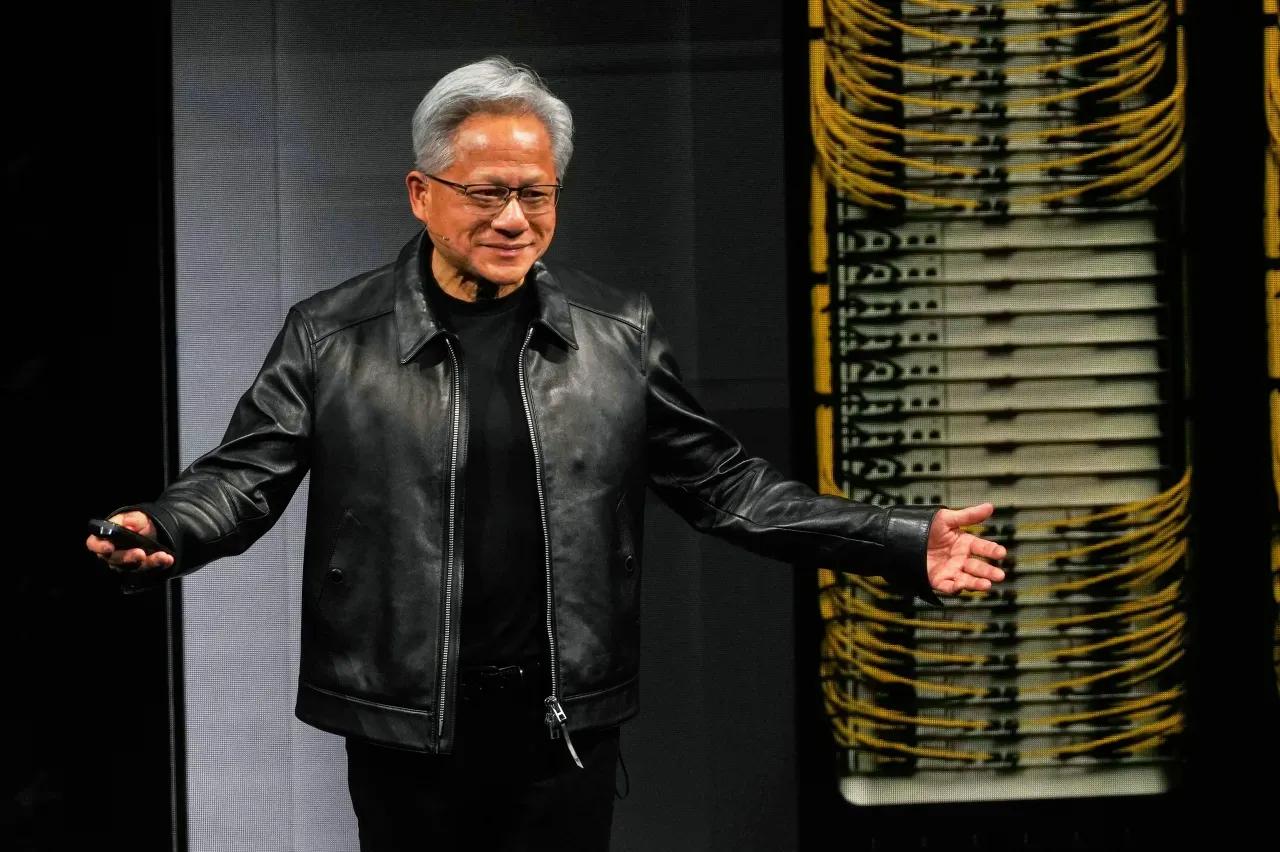
Nvidia announced a $3 billion investment in Meta's share sale this week, marking the latest addition to an extensive portfolio that has positioned the chip giant as what analysts describe as the central bank of the AI revolution
1
. The investment extends Nvidia's reach across the AI ecosystem, where it has taken stakes in leading developers including OpenAI, Anthropic, and Elon Musk's xAI, now part of SpaceX1
. Beyond equity investments, Nvidia has committed around $36 billion in cloud backstops and up to $105 billion in guarantees linked to an OpenAI data center1
. These deals have helped sustain demand for Nvidia's processors, which power data centers worldwide and serve as the foundation of AI infrastructure1
. The strategy has propelled Nvidia to become the world's most valuable company by market capitalization, with CEO Jensen Huang emerging as AI's kingmaker3
.
Source: The Hill
Neocloud Companies and Financial Backstops Raise Questions
Nvidia's web of AI bets extends to neocloud companies such as CoreWeave and Nebius, which rent computing power built on Nvidia chips
1
. In CoreWeave's case, Nvidia committed to purchase up to $6.3 billion of unused computing capacity if no other customer takes it, effectively acting as a customer of last resort1
. The company owns nearly 7 percent of CoreWeave and requires neocloud partners to purchase specific amounts of Nvidia hardware and upgrade at regular intervals2
. Nvidia's investments span globally, backing French AI developer Mistral and British self-driving startup Wayve in Europe, while partnering with South Korea's SK Group to build data centers in Asia3
. Michael Cusumano, a professor at MIT Sloan School of Management, noted that "they're essentially becoming a bank," channeling profits back into infrastructure investment tied to purchases of Nvidia equipment1
.Circular Financing Concerns Echo Dot-Com Era Patterns
Critics have drawn parallels between Nvidia's AI investment strategy and the dot-com era, when companies inflated growth by investing in startups that then purchased their products
1
. Paulo Carvão, a senior fellow at Harvard Kennedy School, stated that "there is nothing intrinsically wrong with Nvidia helping its clients," but warned that "the closer these relationships are, the harder it is for one to assess true sustainable demand"3
. Gil Luria, head of technology research at D.A. Davidson, distinguished between demand types, explaining that "if Nvidia gives CoreWeave money to turn around and buy Nvidia chips, that's not as good as Microsoft buying Nvidia chips because they have a customer in OpenAI that has a customer in an enterprise technology that's willing to pay for it"1
. The company's monopoly over GPU chip design, holding nearly 90 percent of the market with 70-75 percent gross margins, has enabled this financial positioning2
. Nvidia's proprietary CUDA software language creates vendor lock-in, making it nearly impossible for customers to switch to rival chips without significant performance drops2
.Related Stories

Market Concentration and Systemic Economic Risks Emerge
The primary concern centers on market concentration, with two direct customers accounting for 22 percent and 14 percent of Nvidia's revenue in its 2026 fiscal year
1
. Carvão warned that the web of overlapping investments increases contagion risk if weaker companies like CoreWeave encounter trouble, noting that "if AI demand disappoints, spending cuts could hit chipmakers, data-center builders and their financiers at once"1
. These concerns intensified in October when shares of Nvidia-linked neocloud companies, including CoreWeave, Nebius and IREN, fell at least 30 percent amid worries about tighter credit for AI projects1
. By operating as an unregulated banker, Nvidia shapes the U.S. economy outside regulatory bounds intended to prevent risky bets from collapsing the financial system2
. The company announced commitments of $18 billion in equity investments for the remainder of the fiscal year, with private company holdings nearly doubling from 2025 to 20262
.Future Outlook: Growth Projections and AI Bubble Debate
Huang has defended Nvidia's approach, arguing that frontier AI labs represent the first generation of startups requiring tens of billions of dollars to launch, not just millions, with Nvidia's investments giving companies more time to succeed
1
. Luria described the strategy as "unprecedented, but it appears to be working," while Cusumano suggested running its own data centers would put Nvidia in competition with major customers and trigger antitrust complaints1
. Carvão estimated that demand would continue growing for another 12 to 18 months before leveling off, while Cusumano projected high demand for Nvidia chips would persist for three to five years1
. Watch for signs of weakening demand among neocloud companies, regulatory scrutiny of Nvidia's financial arrangements, and whether the AI bubble concerns materialize into broader market corrections affecting chipmakers and data-center builders simultaneously.References
Summarized by

Navi
Related Stories
AI Investment Bubble Concerns Intensify as Industry Leaders Warn of 'Irrationality' Despite Nvidia's Strong Earnings
18 Nov 2025•Business and Economy

Nvidia's $250 billion OpenAI backstop ignites debate over circular AI financing risks
27 Jul 2026•Business and Economy
Nvidia Faces Growing Skepticism from Prominent Short Sellers Over AI Boom Sustainability
20 Nov 2025•Business and Economy

Recent Highlights
1
OpenAI's AI Models Disprove 27-Year Exponential Time Hypothesis, Rendering Decades of Research Obsolete
Science and Research

2
Google DeepMind unveils Genie 4 world model with audio and 2-minute interactive simulations
Technology

3
Microsoft AI Diagnostic Tool Beats Doctors With 83% Accuracy on Complex Medical Cases
Health

Recent Highlights
Today's Top Stories









Don’t drown in AI news. We cut through the noise - filtering, ranking and summarizing the most important AI news, breakthroughs and research daily. Follow topics that matter to you and stay ahead.


