4 Sources
[1]
OpenAI revenue chief Dresser says enterprise AI adoption is 'at a tipping point'
"Think about the complex workflows, about how you actually build a product service, a product market, a product, and this structure of this company is going to allow us to do that at speed and scale," Dresser told CNBC's "Squawk on the Street." OpenAI announced the new business unit on Monday, which included the acquisition of applied AI consulting firm Tomoro. The OpenAI Development Company is a partnership with 19 investment and consultancy firms, including Bain, Goldman Sachs and SoftBank, and is majority-owned and controlled by OpenAI. The Tomoro acquisition will bring about 150 engineers specializing in deploying frontier AI models into OpenAI's umbrella to work with clients. These forward-deployed engineers will help businesses with AI adoption. "Forward-deployed engineers can sit with an organization, sit with their users, understand the workflow, and then help them take that capability from their back-office applications, connecting it to the model, and then really building intelligence in terms of each of the workflow," Dresser told CNBC. Dresser's comments come as the race for enterprise customers heats up, with OpenAI rival Anthropic the leader and Google also a player in the space with Gemini. Last week, Anthropic said it was partnering with Goldman Sachs as well as Blackstone to launch a $1.5 billion firm aimed at tackling faster AI adoption across hundreds of companies.
[2]
OpenAI launches professional services business with $4B investment - SiliconANGLE
OpenAI launches professional services business with $4B investment OpenAI Group PBC today unveiled a new business unit, The OpenAI Deployment Company, that will help companies adopt its artificial intelligence models. The subsidiary is launching with $4 billion in funding from the ChatGPT developer and more than a dozen other backers. The biggest external investor is asset manager TPG. SoftBank Group Corp., Bain Capital, and Brookfield also participated in the round. Axios reported today that OpenAI is keeping a majority stake. According to the publication, the AI provider pledged to deliver a minimum return of 17.5% to The OpenAI Deployment Company's external backers. The investment terms reportedly also include a profit cap. The funding round, which reportedly values The OpenAI Deployment Company at $14 billion, included contributions from several technology consulting firms. The group includes Bain & Co., Capgemini SE, and McKinsey & Co. The OpenAI Deployment Company will help large enterprises deploy its parent company's AI models in production. It plans to go about the task by sending forward deployed engineers, or FDEs, to client organizations' offices. An FDE is a software developer who works at one of a client organization's corporate hubs alongside its in-house engineers. OpenAI says that its FDEs help customers deploy its models through a multistep process. First, they review potential ways that a company can apply AI and identify the use cases with the biggest possible return. From there, they implement a "small number of priority workflows". Those priority workflows are presumably proof-of-concept deployments designed to demonstrate the business impact of OpenAI's suggestions. After wrapping up the initial prototyping phase of a project, the OpenAI Deployment Company moves on to building production-grade AI software for the client. It can also complete certain related tasks. A company could, for example, ask The OpenAI Deployment Company to integrate a newly built AI system with its existing applications. According to OpenAI, its FDEs can "redesign organizational infrastructure" when necessary. The OpenAI Deployment Company plans to use its $4 billion funding round to expand its business operations. It will make acquisitions to speed up the effort. The OpenAI unit disclosed its first such transaction today in conjunction with its launch announcement. The subsidiary has acquired Tomoro AI Ltd., a London-based technology services firm that helps companies build AI software. Its client roster includes Virgin Atlantic Airways Ltd and Tesco plc, the UK's largest retailer. OpenAI is gaining about 150 FDEs and other technical professionals through the deal. According to the company, the new hires will help clients integrate its AI models with their applications, data repositories and cybersecurity controls. OpenAI didn't disclose the deal's financial terms. The company's move into technology consulting, a multibillion-dollar market, may help boost investor interest in its upcoming public offering. The launch of the OpenAI Deployment Company comes a few months after OpenAI launched an advertising business and an e-commerce offering. OpenAI's entry into the professional services market may prompt Anthropic to follow suit. Smaller enterprise AI providers may do the same. In such a scenario, OpenAI's partnerships with TPG and the other institutional investors that backed its new subsidiary's funding round could prove to be a valuable differentiator. In April, the Financial Times reported that OpenAI was planning to help The OpenAI Deployment Company's investors deploy AI across their portfolio businesses. The ChatGPT developer stated today that its "investment and consulting partners sponsor more than 2,000 businesses around the world." In addition to representing a potentially significant revenue source, those companies could help OpenAI refine its professional services offering by providing early customer feedback.
[3]
OpenAI Debuts $4B AI Services Company As Rival Anthropic Builds Its Own
'AI is becoming capable of doing increasingly meaningful work inside organizations,' says Denise Dresser, chief revenue officer of OpenAI. OpenAI has revealed its own artificial intelligence services company backed by a $4 billion-plus initial investment, following on the heels of a similar announcement by AI rival Anthropic as both vendors invest in channel partner programs. Building the foundation for the services company-named the OpenAI Deployment Co.-is the pending acquisition of London-based applied AI consulting and engineering firm Tomoro, OpenAI said in a statement Monday. More acquisitions are planned. Financial terms for the Tomoro acquisition were not disclosed. Investors in the new company include Capgemini-No. 4 on CRN's 2025 Solution Provider 500-and fellow consulting and system integration giants Bain & Co. and McKinsey & Co. "AI is becoming capable of doing increasingly meaningful work inside organizations," Denise Dresser, chief revenue officer of San Francisco-based OpenAI, said in a statement Monday. "The challenge now is helping companies integrate these systems into the infrastructure and workflows that power their businesses. DeployCo is designed to help organizations bridge that gap and turn AI capability into real operational impact." [RELATED: Anthropic Forms AI Services Company Amid Claude Partner Network Push] CRN has reached out to OpenAI, Bain, Capgemini and for comment. OpenAI and Anthropic have been making efforts to grow their partner ecosystems this year. OpenAI hired Colleen Kapase, who has overseen aggressive channel charges at Google Cloud and Snowflake, for a top channel post. And Anthropic recently revealed its Claude Partner Network with an initial $100 million investment and a new certification program. At the same time as these AI juggernauts invest in the channel, a rivalry is emerging between traditional solution providers and born-in-AI solution provider upstarts. Traditional solution providers have told CRN in recent interviews that they bring better and more secure AI outcomes to customers through a better understanding of business processes and workflows built over years-sometimes decades. Russell Goodenough, senior vice president and AI lead for the U.K. and Australia for Montreal-based CGI-No. 13 on CRN's 2025 Solution Provider 500 and a partner of both Anthropic and OpenAI-told CRN in an interview that unlike these born-in-AI solution providers, CGI brings the trust and security large enterprises and back-office operations lean on for AI at scale-not to mention avoiding vendor lock-in and expensive, inefficient migrations based on the customer's existing IT estate. CGI wants to beat upstart born-in-AI solution providers to the punch in some of workplace AI's biggest use cases, like leveraging AI for a modernized version of complex enterprise resource planning systems, for example. "We want to be the first organization that's attempting to do that sort of work, to replace an ERP," Goodenough said. 'We want to be the first organizations to prove that it can be done in a trustworthy, dependable way, not just practiced at a hackathon." Plus, the demand for workplace AI is so great that traditional solution providers and upstarts can carve their own spaces in the market, Goodenough said. Born-in-AI solution provider upstarts have positioned themselves as capable of moving faster than traditional services providers and possessing an employee base that is better versed in the emerging technology. Smaller born-in-AI solution providers-not just ones with vendors like Anthropic and OpenAI at the helm-have also attracted investor attention this year. For example, Treeline recently won over storied venture capital firm Andreessen Horowitz with its AI-powered services strategy and closed a $25 million Series A round of funding led by a16z. "We are building something very unique very quickly," Treeline CEO Peter Doyle told CRN in an interview after the Series A announcement. The new OpenAI services company aims to help customers build and deploy AI systems in the workplace. DeployCo will work to embed forward-deployed engineers (FDEs) specialized in frontier AI deployment into organizations to apply AI to complex problems in demanding environments, the vendor said Monday. OpenAI pledged that DeployCo will work alongside its Frontier Alliance partner ecosystem and the broader consulting industry for AI adoption and change management. These engineers will work with customer business leaders, operators and frontline teams to identify where AI will have the biggest outcomes. They will also redesign organizational infrastructure and redesign critical workflows to create durable systems. Who's Backing OpenAI's DeployCo: TPG, Brookfield, Goldman Sachs DeployCo comprises OpenAI and 19 investment firms, consultancies and system integrators, according to OpenAI. TPG is an investment firm leading the partnership. Advent, Brookfield and the investment wing of Bain are co-lead founding partners. B Capital, BBVA, Emergence Capital, Goanna, Goldman Sachs, SoftBank Corp., Warburg Pincus and WCAS are founding partners in DeployCo. Goldman Sachs, notably, is also backing Anthropic's services firm. Brookfield disclosed Monday that it is investing $500 million into DeployCo. Anuj Ranjan, CEO of Brookfield's private equity business, said in a statement Monday that the firm has already seen productivity gains from AI applications across its portfolio and is investing in DeployCo to further scale AI adoption. "Artificial intelligence will be a defining driver of productivity across the backbone of the global economy," Ranjan said. The private equity sponsors of DeployCo can leverage their portfolio companies for early AI transformation use cases, according to OpenAI. "AI-driven enterprise transformation represents one of the most compelling growth opportunities in technology today, driven by rapid progress in LLMs and increasing organizational demand for tools that integrate AI into core systems and workflows," TPG CEO Jon Winkelried said in a statement Monday. "DeployCo is addressing this need at scale, and we're proud to partner with OpenAI to help unlock AI's full value." DeployCo is a standalone business unit with OpenAI as majority owner and controller. DeployCo operates as an extension of OpenAI to keep customers closely connected to its research, product and in-house deployment teams, according to the vendor. DeployCo engineers will have a roadmap for future OpenAI capabilities through models, tools and deployment patterns. The $4 billion initial investment will go toward scaling operations and acquiring more companies beyond Tomoro. The Tomoro consulting firm OpenAI plans to acquire will bring about 150 FDEs and deployment specialists into DeployCo. Tomoro counts among its customers Tesco, Virgin Atlantic and Supercell. OpenAI plans to close the acquisition "in the coming months." In Tomoro's own announcement Monday on the acquisition, the solution provider said that joining OpenAI increases its ambition to help organizations move from OpenAI access to production-ready AI deployments. "As part of Deployment Company, we'll be able to do this with a much bigger canvas," according to the announcement. Tomoro Director Ash Garner co-founded Tomoro in 2023 after about five years with Accenture and Mudano, according to his LinkedIn account. Accenture acquired Mudano in 2020. Garner departed Accenture with the title of generative AI lead for the banking industry in Europe. DeployCo engagements with clients will start with AI diagnostics to find the biggest possible outcomes, a small number of priority workflows, then a phase for designing, building, testing and deploying production systems. Those systems will connect OpenAI models to customer data, tools, controls and business processes, according to the vendor. In OpenAI's announcement of DeployCo, the vendor revealed that more than 1 million businesses have adopted OpenAI's products and application programming interface (APIs). DeployCo's investment and consulting partners sponsor more than 2,000 businesses around the world, according to OpenAI. Consulting and integrator partners add "many thousands more" to the count. Earlier this month, Anthropic revealed that it plans to form an AI services company of its own while still investing in solution providers. The San Francisco-based Claude maker is forming this AI services company to work with midsize customers across industries to introduce the AI tool into operations. Anthropic is forming the new company with financial giants Blackstone, Hellman & Friedman and Goldman Sachs, with a consortium of alternative asset managers backing the company. Multiple news outlets have reported that the new company has a total financial commitment of about $1.5 billion. Anthropic, Blackstone and Hellman & Friedman will invest around $300 million each. Goldman Sachs will invest about $150 million.
[4]
OpenAI launches Deployment Company to scale enterprise AI adoption
OpenAI has announced the OpenAI Deployment Company, a new business focused on helping organizations build, integrate, and deploy AI systems across critical operations and workflows. The company is designed to help enterprises move beyond AI experimentation by embedding specialized engineers, called Forward Deployed Engineers (FDEs), directly inside organizations. These teams will work with business leaders, operators, technology teams, and frontline staff to identify high-impact AI opportunities, redesign workflows and operational infrastructure, and deploy AI-powered systems for daily use. As part of the launch, OpenAI has also agreed to acquire Tomoro, an applied AI consulting and engineering firm focused on enterprise AI deployment. The acquisition is expected to bring around 150 experienced Forward Deployed Engineers and deployment specialists into the OpenAI Deployment Company from day one. OpenAI says more than one million businesses already use its products and APIs, but the next stage of enterprise AI adoption will depend on how effectively organizations deploy AI into real-world workflows, operational systems, and large-scale business processes. The OpenAI Deployment Company will operate as a standalone business unit while remaining closely connected to OpenAI's research, product, and in-house deployment teams. According to OpenAI, this structure will help customers build systems aligned with future frontier AI capabilities, deployment tools, and model improvements. OpenAI says the FDE teams will help organizations rethink critical operations, processes, and workflows from the ground up, with a focus on building AI systems that can reason, act, and deliver measurable results in production environments. According to OpenAI, these systems are designed to improve over time as newer models, deployment tools, and AI capabilities become available, allowing organizations to build long-term operational systems around future AI advancements. The acquisition of Tomoro is intended to strengthen OpenAI's deployment capabilities from launch. Tomoro has experience building and operating AI systems in enterprise environments where reliability, governance, workflow integration, and measurable business impact are important. The company has previously worked with organizations including: OpenAI says Tomoro's engineering teams will help enterprises move faster from AI use-case selection to full production deployment by connecting OpenAI models with customer data, operational tools, governance systems, and core business processes. The acquisition remains subject to customary closing conditions and regulatory approvals, and is expected to close in the coming months. The OpenAI Deployment Company launches with more than $4 billion in initial investment and is majority-owned and controlled by OpenAI. According to the company, the funding will be used to: The deployment initiative is backed by 19 global investment firms, consultancies, and systems integrators. The partnership is led by TPG, with co-lead founding partners including: Additional founding partners include: Consulting and systems integration partners include: OpenAI says the company will also work alongside its Frontier Alliance partners and broader industry ecosystem to support AI deployment and change management globally. According to OpenAI, the deployment company's investment and consulting partners collectively support more than 2,000 businesses worldwide and work with thousands of additional organizations across industries. The company says this combination of frontier AI expertise, consulting support, and operational transformation experience is intended to help enterprises redesign workflows, deploy AI systems more effectively, and scale long-term operational change. Speaking on the announcement, Denise Dresser, Chief Revenue Officer at OpenAI, said:
Share
Copy Link
OpenAI unveiled the OpenAI Deployment Company, a new AI services unit backed by over $4 billion in initial investment from TPG, SoftBank, and major consulting firms. The standalone unit acquires AI consulting firm Tomoro to embed forward deployed engineers into enterprises, helping organizations integrate AI models into workflows and scale AI adoption across critical operations.
OpenAI has unveiled the OpenAI Deployment Company, a new professional services business designed to help enterprises integrate AI models into workflows and accelerate production deployments. The standalone unit launches with more than $4 billion in initial investment, with asset manager TPG leading the round alongside SoftBank Group Corp., Bain Capital, and Brookfield
2
. The funding round reportedly values the AI services company at $14 billion, with OpenAI retaining majority ownership and control .
Source: FoneArena
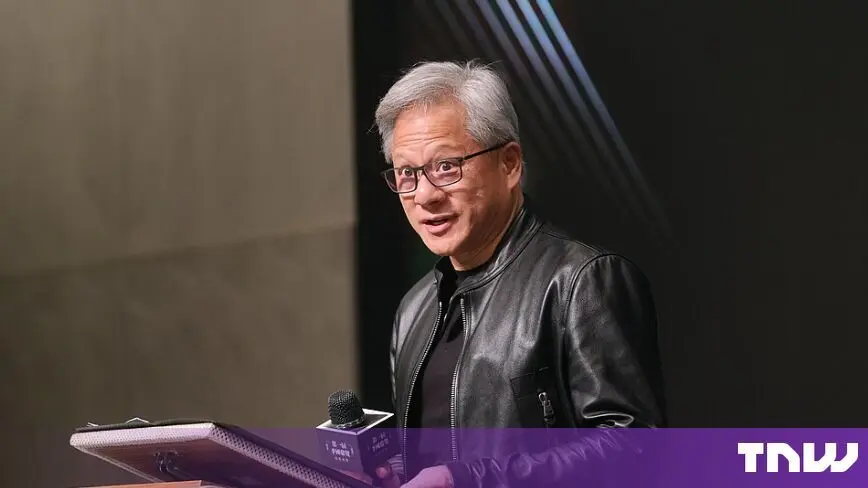
The new venture represents OpenAI's strategic push into the multibillion-dollar technology consulting market, directly competing with Anthropic and Google in the race for enterprise customers. Denise Dresser, chief revenue officer at OpenAI, told CNBC that enterprise AI adoption is "at a tipping point," emphasizing that the challenge now centers on helping companies integrate these systems into the infrastructure and workflows that power their businesses
1
.Central to the OpenAI Deployment Company's launch strategy is the acquisition of Tomoro, a London-based AI consulting firm specializing in enterprise AI deployment . The deal brings approximately 150 forward deployed engineers and technical professionals into OpenAI's operations from day one
2
. Tomoro's client roster includes Virgin Atlantic Airways Ltd and Tesco plc, the UK's largest retailer, demonstrating proven experience in building AI systems where reliability, governance, and measurable business impact matter most2
.These forward deployed engineers will embed directly inside client organizations, working alongside in-house teams at corporate hubs to identify high-impact AI opportunities and redesign workflows
2
. Dresser explained that these specialists "can sit with an organization, sit with their users, understand the workflow, and then help them take that capability from their back-office applications, connecting it to the model, and then really building intelligence in terms of each of the workflow"1
.The OpenAI Deployment Company comprises OpenAI and 19 investment firms, consultancies, and system integrators . Consulting and systems integration partners include Bain & Co., Capgemini, and McKinsey & Co., bringing deep expertise in organizational transformation
2
. Additional backers include Goldman Sachs, which is also partnering with Anthropic on a separate $1.5 billion AI adoption initiative1
.According to OpenAI, these investment and consulting partners sponsor more than 2,000 businesses worldwide, representing both a significant revenue source and an opportunity to refine the professional services offering through early customer feedback
2
. The investment terms reportedly include a minimum return pledge of 17.5% to external backers and a profit cap2
.The OpenAI Deployment Company follows a structured approach to scale enterprise AI adoption. Forward deployed engineers first review potential AI applications and identify use cases with the biggest possible return
2
. They then implement a small number of priority workflows—proof-of-concept deployments designed to demonstrate business impact before moving to production-grade AI software2
.
Source: SiliconANGLE
Beyond building new systems, the team can integrate newly developed AI applications with existing enterprise software, data repositories, and cybersecurity controls
2
. When necessary, engineers can redesign organizational infrastructure to support long-term AI operations2
. This comprehensive approach addresses the gap between AI capability and operational impact that many enterprises face.Related Stories
The launch follows closely on the heels of Anthropic's announcement that it was partnering with Goldman Sachs and Blackstone to launch a $1.5 billion firm aimed at tackling faster AI adoption across hundreds of companies
1
. Anthropic has been positioning itself as the leader in the enterprise AI space, while Google also competes with its Gemini offering1
.
Source: CRN
Traditional solution providers have expressed confidence in their ability to compete with these born-in-AI upstarts. Russell Goodenough, senior vice president and AI lead at CGI—a partner of both Anthropic and OpenAI—told CRN that established firms bring better understanding of business processes and workflows built over years, along with the trust and security large enterprises require for AI at scale . However, born-in-AI solution providers position themselves as capable of moving faster and possessing employees better versed in emerging technology .
The move into professional services may boost investor interest in OpenAI's upcoming public offering
2
. The launch comes months after OpenAI introduced an advertising business and an e-commerce offering, signaling broader diversification beyond its core AI model development2
.Dresser emphasized that the structure of the company will enable OpenAI to handle "complex workflows, about how you actually build a product service, a product market, a product, and this structure of this company is going to allow us to do that at speed and scale"
1
. While OpenAI says more than one million businesses already use its products and APIs, the next stage depends on how effectively organizations deploy AI into real-world workflows and large-scale business processes4
.The acquisition of Tomoro is expected to close in the coming months, subject to customary closing conditions and regulatory approvals
4
. OpenAI plans to use the funding to expand operations and pursue additional acquisitions to accelerate growth in workplace AI solutions2
.Summarized by
Navi
04 May 2026•Business and Economy

04 May 2026•Business and Economy

13 Apr 2026•Business and Economy

1
Technology

2
Policy and Regulation

3
Policy and Regulation