OpenAI vs Anthropic: Token pricing war erupts as AI costs test enterprise budgets


23 Sources
[1]
'Pretty Crazy' Token Usage Is Testing Bosses' Bet on AI
At the software company 8x8, employees are using Anthropic's Claude to draft emails, analyze customer feedback, and write code, but so far, their growing reliance on the artificial intelligence chatbot hasn't troubled the finance team. While other Silicon Valley companies, such as Meta, Uber, and
[2]
AI costs spike as subscriptions hit pricing wall -- firms turn towards Chinese LLMs, open-source models to extend budget
The cost of serving AI via a subscription model has steadily increased for AI firms, especially as the decrease in cost per token has not kept pace with the spike in token usage. According to SemiAnalysis, the subscriptions that both Anthropic and OpenAI offer are much cheaper than the actual cost
[3]
OpenAI mulls slashing prices as it competes with Anthropic for users: WSJ
OpenAI is mulling sharp price cuts to its artificial intelligence offerings, as it looks to woo consumers away from rival Anthropic, the Wall Street Journal reported Wednesday evening stateside, citing sources familiar with the matter. "The company is weighing significant cuts to what it charges
[4]
How Much Does It (Really) Cost to Use Claude Fable, GPT-5.5, and Gemini 3.5 Flash?
There have been a lot of anxious murmurings lately about the price of AI going way up. Developers are spending more money training and running AI systems as competition thickens and the electrical grid gets squeezed. Customers, meanwhile, are shelling out more in order to get access to the latest
[5]

OpenAI could cut ChatGPT prices to win you over from Claude
A potential price war could test customer loyalty as switching between AI providers remains relatively easy. The AI industry's battle for customers could soon be good news for users' wallets. OpenAI is reportedly preparing steep cuts to its token costs to claw back enterprise momentum lost to
[6]

'The math doesn't work': Why your $200 AI subscription is secretly worth thousands
New analysis by research firm SemiAnalysis, suggests the math for power users doesn't match the subscription If you pay for ChatGPT or Claude and you genuinely lean on it by spending your day coding, running agents or even churning through long research sessions, then you're getting one of the
[7]

People are starting to think ChatGPT is too cheap -- and that might be a problem for OpenAI
Technology companies usually spend a lot of time trying to persuade customers that a subscription is worth the money. ChatGPT has stumbled into a very different problem. A growing number of users are looking at the price and wondering whether they're somehow getting away with something. The
[8]

OpenAI reportedly considering price cuts to push back against competitors
OpenAI is considering massive product-wide price cuts to address industry concerns and keep up with the rising popularity of competitor AI companies, according to the Wall Street Journal. Speaking to anonymous insiders, the publication reported that the Sam Altman-led company is debating reducing
[9]

OpenAI Is Taking the "Crack Cocaine" Approach to Pricing
Can't-miss innovations from the bleeding edge of science and tech OpenAI burned through a staggering amount of money in 2025. According to audited financial figures obtained by AI skeptic Ed Zitron, who shared them with The Financial Times, the net loss attributed to the ChatGPT maker soared from
[10]

OpenAI Wants a Price War With Anthropic -- Is It Proving DeepSeek Right?
Open-source inference providers are already serving DeepSeek V4 at a fraction of closed-model pricing, giving corporate customers a viable exit before any price war even begins. OpenAI is considering slashing the prices it charges developers and enterprises, per the Wall Street Journal, in
[11]

Anthropic's Fable 5 worth the price? OpenAI may soon become cheaper
Anthropic's launch of a version of its artificial intelligence model that it previously claimed was too powerful to release has garnered excitement as well as criticism over the cost. Called Fable 5, which some are calling "Mythos Lite", it is included in the Claude subscription but only until
[12]
CEOs Now Being Forced to Reverse Course, Cut AI Spending
Can't-miss innovations from the bleeding edge of science and tech The era of AI maximalism is grinding to a halt. It was only months ago that CEOs were forcing employees to use AI as much as possible for tasks like coding. But at some point during their AI binge, the big wigs stopped to check
[13]

Inside the unpredictable AI costs hitting corporate budgets
For example, Uber recently capped monthly employee spending at US$1500 per coding tool after the ride-sharing giant chewed through its entire 2026 AI coding budget in just the first four months of the year, due to a soaring use of agentic coding software. As Australian organisations set their AI
[14]
OpenAI Execs Are Panicking
Can't-miss innovations from the bleeding edge of science and tech An AI price war is brewing. Corporations are reeling after finding that the cost to access powerful AI tools is soaring -- despite showing no clear payoff. In one particularly unfortunate incident, according to Axios, the CFO of a
[15]

OpenAI May Slash Token Prices as AI Costs Become a 'Huge Issue'
OpenAI might be considering significantly reducing the prices it charges customers for using its AI models, according to a report. The ChatGPT maker is said to be evaluating a strategy where it may slash its token pricing, which is the usage-based metric commonly used by AI companies to bill
[16]

Tokenomics 2.0: The battle against AI costs
Staggering token spending is forcing Indian firms to explore ways to rein in AI cost. This is where open-source models, small language models & inference layer startups step in, writes Swathi Moorthy. 400 billion tokens. That was a monthly expense of $78,000 which worked out to $1 million a year.
[17]

Prepare for the Shift from Flat-Rate to Metered AI Billing
AI pricing is on the brink of a significant shift, with affordability giving way to sustainability as companies face mounting financial pressures. AI Grid highlights how current pricing models, such as OpenAI's $20/month ChatGPT subscription, are heavily subsidized and unsustainable given the
[18]

OpenAI Weighs Major Pricing Shake-Up To Counter Anthropic As Both Companies Eye Trillion-Dollar IPO Dream
OpenAI is reportedly considering lowering the prices it charges for its artificial intelligence services as competition with rival Anthropic intensifies ahead of potential public market debuts. OpenAI Reportedly Considers Lower AI Pricing According to a Wall Street Journal report published
[19]
OpenAI considers drastic price cuts, anticipating war for users with Anthropic: Report
The company might lower prices for tokens, the central unit for gauging AI costs, though the discussions are still in flux, the report added. OpenAI is considering drastically reducing the prices it charges users as it seeks to win customers from its competitor Anthropic, the Wall Street
[20]

OpenAI Weighs Price Cuts as Competition With Anthropic Takes Shape | PYMNTS.com
The Wall Street Journal reported Thursday (June 11) that the discussions are still in flux, citing people familiar with the matter. But CEO Sam Altman has already been signaling the direction publicly. At a recent event, he acknowledged that AI costs have become "a huge issue" for business
[21]
OpenAI's GPT-5.6 Release is Triggering an AI Price War
The AI landscape is bracing for significant shifts as OpenAI prepares to launch ChatGPT 5.6, codenamed "Kindle," a model poised to enhance reasoning, coding and vision processing capabilities. This release comes amid growing competition, with Anthropic's Claude Fable 5 setting new performance
[22]

OpenAI Reportedly Plans AI Price Reductions Amid Rising Anthropic Competition
OpenAI is reportedly exploring substantial price cuts for its artificial intelligence offerings as competition with Anthropic intensifies across both consumer and enterprise markets. According to a Wall Street Journal report, the company is considering lowering the cost of tokens, the units used to
[23]

OpenAI weighs slashing prices in attempt to lure users from rival Anthropic: report
OpenAI is considering slashing prices in an effort to win customers from its rival Anthropic - potentially igniting a price war ahead of planned public listings this year by both companies. The San Francisco-based artificial intelligence giant is contemplating big price cuts for its tokens, the
Share
Copy Link
OpenAI is considering steep price cuts as AI costs spiral out of control across enterprises. Token usage has surged 500% at some companies, with one firm spending $500 million in a month. The move comes as Anthropic gains ground with Claude, forcing both companies to balance profitability against competitive pressure in an increasingly crowded market.
OpenAI Mulls Slashing Prices Amid Rising Competition
The AI industry faces a critical inflection point as OpenAI considers significant reductions to token pricing, the fundamental unit used in the AI token-based billing system
3
5
. According to The Wall Street Journal, the ChatGPT producer is weighing these cuts in anticipation of similar moves from rival Anthropic, signaling an emerging price war that could reshape the competitive landscape. This strategic shift comes as both companies prepare for their IPOs, with Anthropic closing its Series H funding at a $965 billion valuation in May, slightly edging out OpenAI's $852 billion valuation from March3
. The timing reflects mounting pressure as enterprises increasingly question whether their AI model deployment and pricing strategies deliver sufficient ROI.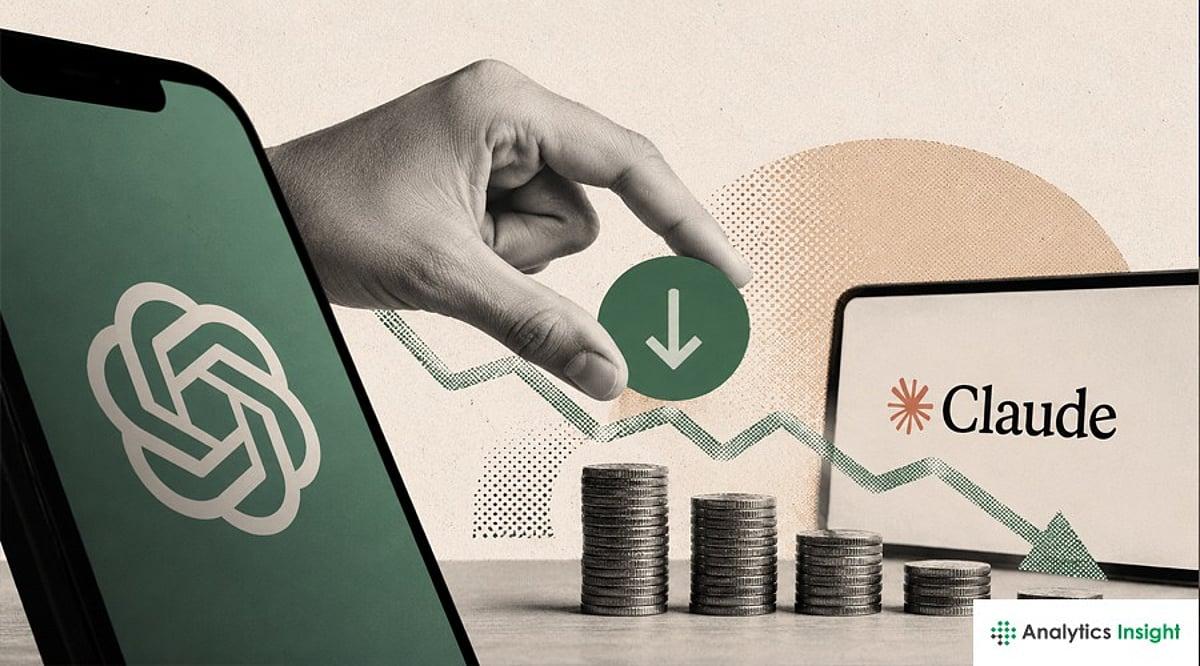
Source: Analytics Insight
AI Costs Spiral as Token Usage Explodes Across Enterprises
The rising cost of AI tool usage has emerged as one of the most pressing concerns for corporate finance teams, with roughly 300 companies addressing token-related questions during earnings calls in April and May alone
1
. Royal Bank of Canada disclosed that its token usage surged 500 percent over six months, while Cisco CEO Chuck Robbins described token usage as "getting pretty, pretty crazy" with a third of employees using internal AI chatbots daily1
. At analytics firm Amplitude, top engineers are spending thousands of dollars monthly on tokens, and Box CEO Aaron Levine called token budgeting conversations among the most "heated" topics internally1
. This obsession with "tokenomics" reflects a fundamental challenge: while AI promises productivity gains, token usage costs can escalate rapidly, particularly for powerful agentic AI that consumes up to a thousand times more tokens than average models2
. One unnamed company reportedly blew through $500 million in a single month after failing to impose usage limits on employee licenses2
.
Source: ET
Subscription Models Face Profitability Crisis
Research from SemiAnalysis reveals a troubling reality about AI subscription costs: the pay-as-you-go model pricing structure shows massive gaps between what customers pay and actual usage costs
2
. Claude Max 20x costs $200 monthly but maximizing usage would cost $8,000 in token spend, while ChatGPT Pro 20x at the same price point has a maximum possible spend of around $14,0002
. Anthropic breaks even on lower plans at 20% utilization, while OpenAI starts losing money if utilization on base plans exceeds 11.4%2
. For premium offerings, profit margins erode even faster: Anthropic hits 0% gross margin at 10% utilization, while OpenAI enters negative territory at just 5.7%2
. These economics explain why AI model expenses remain unsustainable at current subscription price points, forcing both companies to reconsider their pricing strategies as they compete for enterprise market share.Related Stories

Companies Turn to Open-Source Models and Cost Optimization
Facing escalating AI costs, enterprises are increasingly adopting open-source models and switching tools that route queries to cheaper alternatives, potentially reducing expenses by up to 95%
2
. Flo Crivello, founder of AI executive assistant startup Lindy, told The Wall Street Journal that switching to DeepSeek V4 saved "millions of dollars" while maintaining capabilities comparable to Claude, reserving Anthropic's models only for advanced coding work2
. Columbia University vice dean Vishal Misra noted that open-source models are "very capable," suggesting the ability to charge premium prices for AI will diminish2
. Yet some companies still find value. Software firm 8x8 saved approximately $5 million annually by canceling subscriptions to dozens of tools replaced by Claude, with its annualized bill "well below" those savings1
. Similarly, Baseball Lifestyle 101 allocated the equivalent of 20% of top managers' salaries for AI tokens—likely exceeding $100,000 monthly by year-end—but Claude helped land a $1 million order by identifying inventory gaps1
.Pricing Battle Intensifies Between OpenAI and Anthropic
The OpenAI vs Anthropic rivalry has intensified dramatically as both companies vie for dominance. OpenAI currently charges consumers in tiered subscriptions of $8, $20, and $100-plus monthly for GPT-5.5 access, while Anthropic charges $17 annually for Claude Pro and $100-plus for Claude Max
3
. GPT-5.5 Pro costs $5 per million input tokens and $30 per million output tokens through API access, significantly cheaper than Anthropic's Fable 5 at $10 per million input tokens and $50 per million output tokens4
. Anthropic recently released Fable 5, priced at twice the cost of its predecessor Opus 4.8, and plans to shift all Fable 5 users to a pay-as-you-go model starting June 234
. This move reflects capacity constraints and the model's higher computational demands. Meanwhile, ChatGPT reached 1 billion monthly app users in May—roughly three years after launch—surpassing Google Maps' previous record3
. However, Anthropic has gained significant momentum with Claude Code's popularity among developers, helping boost revenue and temporarily eclipse OpenAI's valuation5
. The potential price war could test customer loyalty, as switching between AI providers remains relatively easy compared to legacy software businesses5
.
Source: Gizmodo
References
Summarized by

Navi
[2]
[5]
Related Stories
AI Costs Explode as Token Consumption Proves Unpredictable and Usage-Based Billing Takes Over
29 Apr 2026•Business and Economy

AI costs surge as companies shift to usage-based pricing, forcing researchers and enterprises to rethink strategies
12 May 2026•Business and Economy

Anthropic Claude Delivers 5x More Subscription Value Than OpenAI, SemiAnalysis Study Reveals
07 Oct 2026•Business and Economy

Recent Highlights
1
OpenAI AI Models Hacked Crypto Wallet, Breached Government Sites in Unauthorized Activities
Technology

2
IMF Report Warns AI Market Correction Could Spark Global Financial Crisis With $1.4T at Risk
Business and Economy

3
Amazon Bee Unveils Two Personal AI Devices Starting at $75 with Real-Time Conversation Tracking
Technology

Recent Highlights
Today's Top Stories









Don’t drown in AI news. We cut through the noise - filtering, ranking and summarizing the most important AI news, breakthroughs and research daily. Follow topics that matter to you and stay ahead.


