OpenAI's first hardware is a $230 light-up keyboard designed to control Codex agents


20 Sources
[1]
OpenAI's first branded hardware is... a light-up keyboard?
As rumors continue to swirl about OpenAI's work on a personalized smart speaker and other hardware, the company is today rolling out its first branded device. The $230 Codex Micro is a specialized, RGB-lit mini-keyboard designed to let users monitor and quickly interact with multiple Codex agents
[2]
Amid hardware legal battle, OpenAI releases a $230 keyboard for Codex
OpenAI is officially entering the hardware market with the launch of a $230 light-up keyboard designed to pair with its AI coding assistant, Codex. The Codex Micro, co-designed with specialty keyboard designer Work Louder, is being advertised as a fancy new way for ChatGPT users to manage their
[3]
OpenAI's First Hardware Release Turns Out to Be Keypad for Codex
Expertise I have more than 35 years' experience in journalism in the heart of Silicon Valley. OpenAI has made its debut into the world of consumer devices, but it isn't in the form of a personalized smart speaker. The AI company on Wednesday took the wraps off the Codex Micro, a $230 miniature
[4]
OpenAI finally launches hardware... for Codex
OpenAI is finally releasing some hardware. No, it isn't the mysterious AI-powered device the company is developing with former Apple designer Jony Ive, a project already tangled up in a messy lawsuit. Instead, it's a product designed to be used with its coding platform, Codex. The device, a
[5]

OpenAI Is Selling a $230 Keyboard Designed for Its Codex Agent
It's not a Her-like portable smart speaker (yet), but OpenAI is selling a $230 keyboard, dubbed Codex Micro, that's designed for its Codex coding agent. The device, which OpenAI teased last month, is not a conventional keyboard, as it contains only 12 keys, along with a joystick and a knob. It's
[6]

OpenAI's first hardware device is an RGB macropod -- 'Codex Micro' features 13 low-profile keys and a joystick for controlling AI coding agents
OpenAI has just entered the hardware market with its very first product -- a glorified macropad called the "Codex Micro." As the name suggests, it's meant to be used with the company's agentic coding platform, Codex, offering tactile response for an otherwise software-only experience. It's made by
[7]

OpenAI's first hardware product is a $230 mini keypad for AI coding
Serving tech enthusiasts for over 25 years. TechSpot means tech analysis and advice you can trust. In a nutshell: OpenAI has announced its first consumer hardware product, and it's not the smart speaker or phone that some were expecting. The Codex Micro is a mechanical keyboard designed for use
[8]

OpenAI Just Launched Its First Hardware Product -- and It's a Tiny Keyboard for Bossing Around AI Agents
OpenAI has officially rolled out its first piece of hardware, and it's not the one you're thinking of. The company behind ChatGPT announced on Wednesday a $230 mini keyboard designed specifically to work with its AI coding agent, Codesx. The device is a collaboration with Work Louder, a maker of
[9]

OpenAI debuts first hardware, a keyboard built for smart coding agents
OpenAI has entered the hardware market with a device aimed squarely at software developers. Rather than debuting its long-rumored AI gadget, the company has introduced Codex Micro, a compact keyboard that puts AI coding controls at users' fingertips. Built in partnership with mechanical keyboard
[10]

What is the Codex Micro? OpenAI's first hardware gadget explained
OpenAI has officially launched its first piece of hardware, and it's called the Codex Micro. It might sound like a retro computer in a Dan Brown book, but the Codex Micro is actually a very compact keyboard for coders. How does that work? In this article we're going to dive into exactly what the
[11]

OpenAI limited collab is a physical keypad for AI
Why it matters: The future of work could involve managing fleets of agents, not just chatting with one assistant. The big picture: Codex Micro is a collaboration with Work Louder, a boutique hardware company known for customizable mechanical keyboards and shortcut controllers for developers and
[12]

OpenAI's first physical device is here: A $230 micro keyboard
OpenAI's long-anticipated entry into consumer hardware has arrived, but it's not the Jony Ive collab everyone has been waiting for. The company has launched Codex Micro, a $230 mechanical keypad developed with peripheral maker Work Louder, sold through OpenAI's "Supply Co." storefront as part of a
[13]

OpenAI made a tiny $230 keyboard that lets you turn up an AI's brainpower
The Codex Micro puts reasoning settings, agent status lights, and programmable AI shortcuts directly on your desk OpenAI has made a $230 mini keyboard that lets Codex users adjust how hard its AI thinks with a physical dial. The Codex Micro also provides dedicated buttons for launching workflows
[14]

OpenAI debuts $230 Codex Micro keyboard for AI coding assistants
OpenAI has launched the Codex Micro, a $230 light-up keyboard designed to work with its AI coding assistant, Codex. The device is co-designed with specialty keyboard designer Work Louder and aims to help ChatGPT users effectively manage their AI coding agents. The Codex Micro features light-up
[15]

OpenAI Codex Micro Launched as a Keyboard Built for AI Coding Workflows
OpenAI has launched the Codex Micro in global markets. The new keyboard, developed in association with keyboard maker Work Louder, is designed to work with the company's AI coding assistant Codex. It can be used to switch between agents and start new chats instantly. The Codex Micro includes a
[16]

OpenAI's Codex Micro Keyboard launches at $230: A quiet debut for the AI coding companion
OpenAI has introduced the Codex Micro, a specialized mechanical keypad for developers. This compact device features programmable keys and a rotary dial for AI interaction. It aims to enhance productivity for users of OpenAI's Codex coding platform. The limited-edition hardware is designed to offer
[17]

OpenAI's First Hardware Is a Keyboard, Not a Companion | PYMNTS.com
However, it was reported Tuesday (July 14) that the screenless consumer companion developed with former Apple designer and io Co-Founder Jony Ive is still under development and will not ship before 2027. The next day, OpenAI released its actual first hardware product. It's not a consumer device.
[18]

OpenAI Launches a Codex Keyboard Amidst Pending Lawsuit with Apple
While OpenAI launched this product, reports of another screen less speaker also emerged in some media publications OpenAI has officially entered the hardware market. But, it is nothing like what Apple's lawsuit suggests by way of a handheld device. The ChatGPT-maker announced the launch of a $230
[19]

OpenAI Launches Codex Micro: Check How this Programmable Macropad Works
OpenAI has launched its first branded hardware product, the , a programmable mechanical macropad in partnership with Work Louder. Unlike earlier speculation around a Jony Ive-designed AI device, the launch is focused on developers using Codex, the AI coding and productivity assistant from
[20]

OpenAI enters hardware market with Codex Micro: What is it and how much it costs
HIGHLIGHTS OpenAI has introduced its first hardware product. The new device is called the Codex Micro. OpenAI has priced the Codex Micro at $230. OpenAI has introduced its first hardware product, but it is not the AI device that the company is developing with former Apple designer Jony Ive.
Share
Copy Link
OpenAI officially enters the hardware market with the Codex Micro, a $230 specialized keyboard developed with Work Louder. The device features RGB-lit keys that monitor up to six Codex agent threads, displaying real-time status through color-coded feedback. While this limited-run product marks OpenAI's hardware debut, the company faces an Apple lawsuit over alleged trade theft related to a separate smart speaker project with designer Jony Ive.
OpenAI Hardware Makes Unexpected Debut With Specialized Keyboard
OpenAI's first hardware isn't the anticipated smart speaker developed with designer Jony Ive. Instead, the company launched the Codex Micro, a $230 light-up keyboard designed specifically for managing AI coding agents
1
. The device represents a limited-run collaboration with specialty keyboard maker Work Louder, sold exclusively through OpenAI's Supply Co. store while supplies last2
. This marks OpenAI's official entry into consumer devices, though the company has not disclosed total production numbers for this initial release4
.
Source: Digit
The Work Louder collaboration builds on the keyboard maker's existing Creator Micro line, which already serves creative professionals with customizable square keyboards
1
. Marketing images reveal the Codex Micro closely resembles Work Louder's Creator Micro 2, featuring an identical array of 13 mechanical switches alongside a joystick and dial4
. Pre-orders are shipping with an estimated delivery date of July 243
.How RGB-Lit Keys Transform Codex Agent Interaction
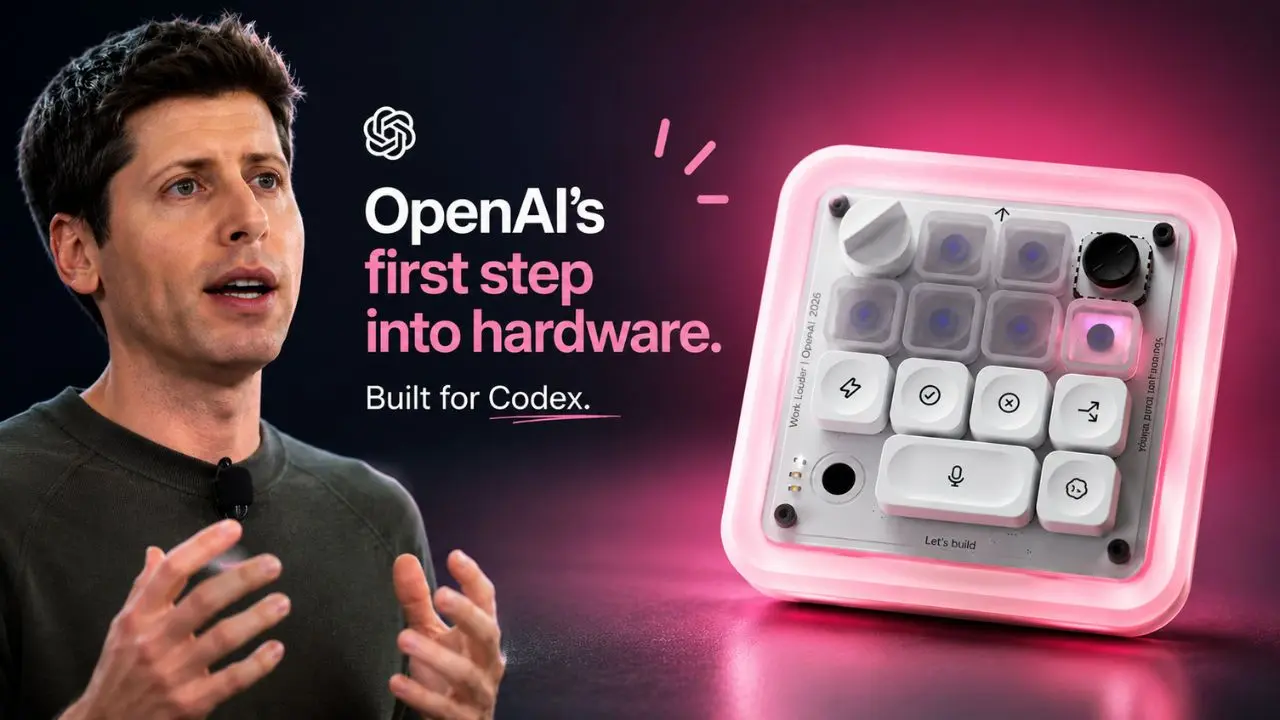
The Codex Micro differentiates itself through six frosted keys in the top two rows that provide color-coded live feedback on up to six Codex threads simultaneously
1
. These RGB-lit keys cycle through distinct colors to communicate agent status: white indicates an idle thread, blue signals the Codex agent is processing, and green confirms task completion1
. When human intervention becomes necessary, the keys flash amber to request feedback or decisions, while red alerts users to errors requiring immediate attention1
.
Source: Interesting Engineering
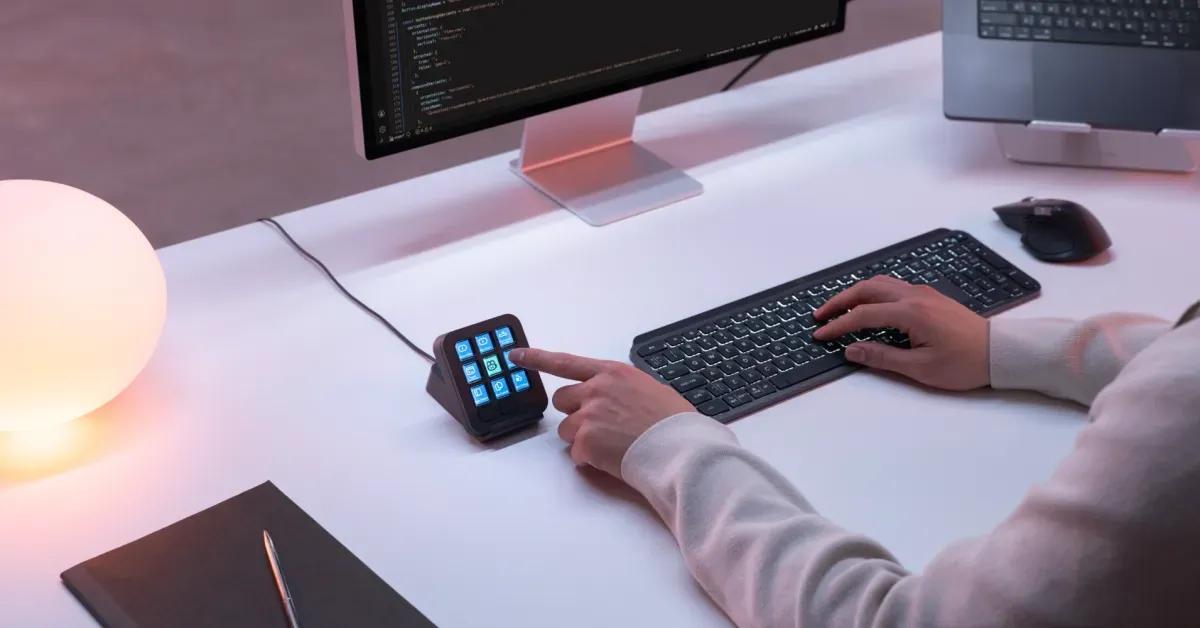
This AI agent interaction system proves particularly valuable for users managing multiple autonomous coding tasks. A quick tap on any lit-up button instantly brings the applicable Codex window on-screen, eliminating the need to manually search through active threads
1
. The device serves as a "command center for agentic work," according to OpenAI, offering an alternative to managing agents through phone or desktop applications2
.Customizable Controls Target Codex Power Users
Beyond the status-monitoring keys, the Codex Micro includes six command keys mapped by default to frequent Codex agent tasks like accepting and rejecting code changes, branching threads, and activating push-to-talk for audio prompts
1
. Users can remap these functions through the ChatGPT desktop app and physically swap them using 32 included keycaps featuring Codex icons5
. While the first "layer" of customized functions remains reserved for the AI coding platform, users can program and cycle through five additional function sets for general computing shortcuts1
.
Source: CNET
The joystick and dial add another dimension to AI controller functionality. Work Louder cofounder Mike Di Genova explained the joystick can launch common workflows, while the dial adjusts the "reasoning level"—essentially determining how much computing power and time an agent dedicates to a given task
2
. This reasoning level control lets users balance between speed and quality depending on task complexity5
. The device connects via Bluetooth or USB-C and works with both Mac and Windows systems3
.Related Stories
Hardware Ambitions Extend Beyond AI-Integrated Devices
While the Codex Micro represents OpenAI's first branded hardware, it's primarily a modified version of existing third-party technology rather than ground-up innovation
1
. The device does feature prominent OpenAI branding on both packaging and the face of the unit, along with a "You can just build things" tagline referencing the company's Super Bowl advertisement1
. Industry observers view this limited-run product as a "flashy bauble" designed to signal the company's entrance into the hardware market rather than a mass-market offering2
.The more consequential hardware development involves a portable, screenless smart speaker that integrates with ChatGPT and reportedly includes "mechanical elements that can move on their own," according to Bloomberg
2
. This project traces back to 2023, when OpenAI began collaborating with former Apple design chief Jony Ive1
. In May of last year, OpenAI acquired Ive's design firm LoveFrom, with the partnership focused on creating a handheld device that accepts audio and visual input from the user's environment1
.Apple Lawsuit Casts Shadow Over Hardware Plans
OpenAI's hardware ambitions now face legal complications. Last week, Apple filed a lawsuit alleging trade theft by a former Apple employee who joined OpenAI, claiming the company's senior leadership pursued a deliberate strategy to extract confidential information related to hardware manufacturing
2
. The Apple lawsuit specifically alleges OpenAI used stolen trade secrets in developing its own hardware device2
. OpenAI has denied any wrongdoing2
.This legal battle arrives as the smart speaker project reportedly encounters technical and design hurdles. The Financial Times reported in October that these challenges could delay the device's planned 2026 launch
1
. The connection between former Apple engineers working on the new device and the ongoing lawsuit hasn't gone unnoticed, particularly as the product remains in development and subject to change2
. For developers and enterprises invested in the Codex ecosystem, the $230 keyboard offers immediate utility for managing AI coding agents, though its desktop-focused design limits mobile monitoring capabilities compared to ChatGPT's mobile app1
. The device's limited availability suggests OpenAI is testing market appetite before committing to larger-scale hardware production.References
Summarized by

Navi
[1]
[4]
Related Stories
OpenAI's first hardware device sold out in 12 hours, now reselling for up to $1,850 on eBay
25 Jul 2026•Technology

OpenAI's first hardware is a macro pad for Codex, launching July 15—not the Jony Ive device
30 Jun 2026•Technology

OpenAI Unveils $300-$400 AI Smart Speaker Designed by Jony Ive, Set for 2027 Launch
07 Aug 2026•Technology

Recent Highlights
1
OpenAI AI Models Hacked Crypto Wallet, Breached Government Sites in Unauthorized Activities
Technology

2
IMF Report Warns AI Market Correction Could Spark Global Financial Crisis With $1.4T at Risk
Business and Economy

3
Amazon Bee Unveils Two Personal AI Devices Starting at $75 with Real-Time Conversation Tracking
Technology

Recent Highlights
Today's Top Stories










Don’t drown in AI news. We cut through the noise - filtering, ranking and summarizing the most important AI news, breakthroughs and research daily. Follow topics that matter to you and stay ahead.


