2 Sources
[1]
I tried out OpenAI's new AI keypad -- which will be fun for some coders and slightly mystifying to everyone else
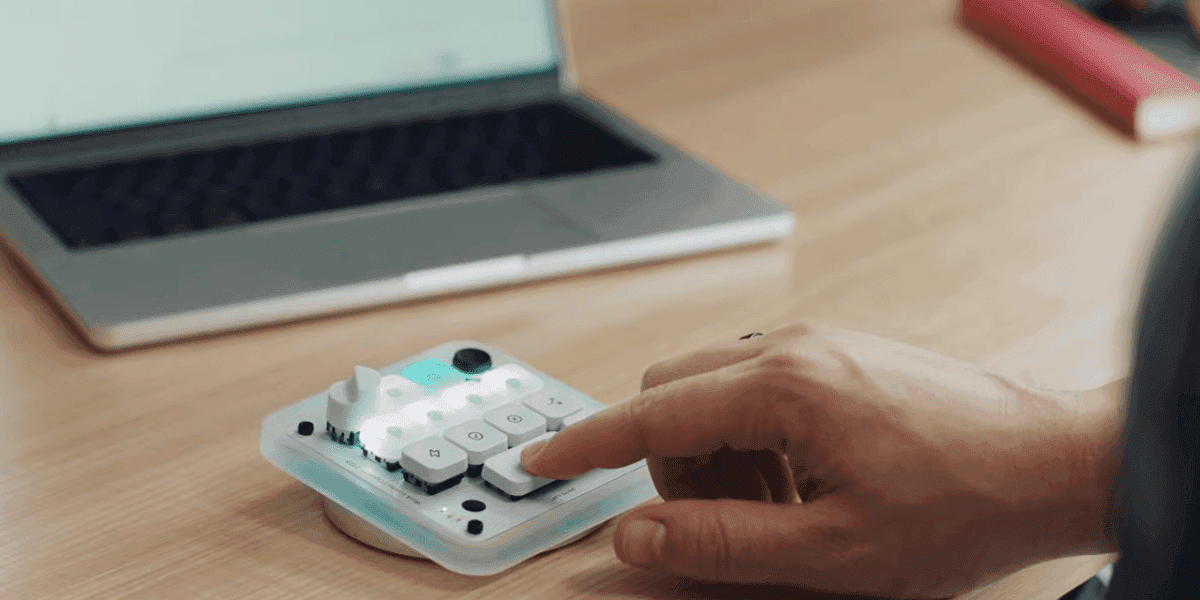
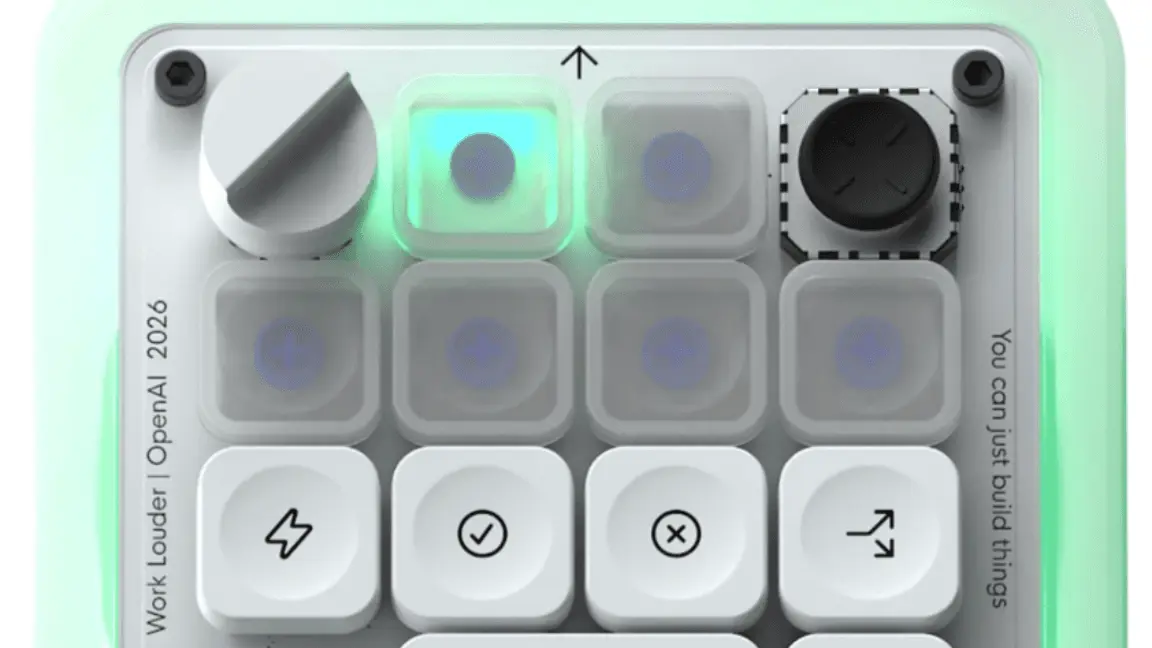
OpenAI launched its first piece of hardware last week -- a fancy little keypad built to pair with ChatGPT. Micro, which was developed in collaboration with specialty keyboard designer Work Louder, is essentially an artisanal workplace novelty that tech-savvy users will love and that may leave everyone else a little puzzled. OpenAI's entrance into the hardware market hasn't arrived without drama. Several weeks ago, Apple sued the AI lab and accused it of trade theft -- kicking off what's certain to be a long-simmering legal battle. Meanwhile, news of another smart home product in development at OpenAI has also raised eyebrows, as the supposed device -- which is being built to pair with ChatGPT -- was reportedly developed by former Apple engineers. Until the legal battle works itself out and OpenAI's broader hardware ambitions materialize, the most the startup has to offer is Micro -- a funky little keypad clearly engineered to delight the tech industry's code monkeys. OpenAI sent TechCrunch a Micro test unit. The first big thing you notice when initially handling the keypad is that it's a sturdy little device -- enough so that if the AI accessory thing doesn't end up working out, it could easily double as a paperweight. The other thing you might notice (and I am not the only one to point this out), is that the packaging -- an immaculate white box with a sleek, clean aesthetic -- is pretty Apple-coded. Make of that what you will. The keypad's layout involves six frosted "agent" keys at the top of the pad, which can be customized to carry out specific tasks within ChatGPT or its agentic coding tool Codex. Below them are six command keys, which can be used to control those programs. You can pair your Micro with your computer either through a Bluetooth connection or a USB cable. Perhaps the most convenient thing Micro offers is a button for voice dictation -- meaning you simply tell the app what you want done and it will get busy working on your behalf. Just hold down the dictation button and start talking. When you're done, tap the "send" button next to it to submit your request. You can customize your Micro keypad within ChatGPT itself, where a Micro tab allows you to adjust everything from the brightness of the light from the keys to the specific commands and projects you want tied to those keys. Coders -- the device's actual target audience -- haven't exactly embraced it. Reviews by Redditors have largely negative, with one Reddit user calling it "a prank and not a real product," and others saying serious coders won't touch it. A review by the smaller independent outlet Aftermath was even harsher, calling the $230 price tag hard to justify next to cheaper DIY and off-the-shelf alternatives. (The title of that review: "OpenAI's expensive macropad feels engineered to piss me off specifically.") It's definitely the case that new users may need some time to figure out how Micro works and what to do with it. Once I figured out how to program the keypad to my liking, I found it was actually pretty fun. You can assign various ChatGPT sessions to specific keys, which then allows you to easily toggle back and forth between all of your various projects. When you combine that with the dictation button, it makes the whole experience considerably more efficient and enjoyable. But there's still a learning curve. Micro's buttons are color-coded. White means an agent is idle, blue means its thinking, green means a task is complete, and red means there's been an error. You'll need to memorize that, along with memorizing which specific projects are coded to each key. The big question is whether the Micro keypad is functionally easier to use than just continuing to work on your laptop. In short: Why would I spend a week learning how to program and operate this thing when I already know how to use my computer's mouse and keyboard? Ultimately, your experience with the Micro will depend heavily on how much you use ChatGPT. Since I don't use AI much day to day, I'm probably not the target audience for it. That said, if you're a ChatGPT power user, have $230 to spare, and like vintage-looking hardware with clicky buttons, Micro probably isn't the worst purchase you could make -- it might even brighten your day a little.
[2]
OpenAI launches Codex Micro hardware for AI coding
OpenAI's Codex Micro keyboard has just 13 mechanical switches OpenAI OpenAI, the AI lab that brought us ChatGPT, which simultaneously evoked awe, fear, and fascination when it first launched in 2023, has released its first-ever hardware product, a $230 mini-keyboard that's designed to enhance the workflow of users of Codex, the company's specialized AI coding agent. Called the Codex Micro, the device was created in collaboration with specialist keyboard maker Work Louder and is sold through OpenAI's Supply Co. store. OpenAI describes it as a "command center for agentic work," although "keyboard" is slightly generous, as with only 13 mechanical switches, the device is really a programmable macro pad designed to sit beside a normal keyboard. OpenAI built the device specifically for Codex users who increasingly find themselves supervising several AI agents and coding tasks at once. The pad features 13 mechanical keys, including six translucent Agent Keys that can each be linked to a different Codex conversation. Pressing one of the agent keys immediately opens the corresponding chat. Each key uses live RGB lighting to show whether its assigned agent is idle, working, waiting for input, finished, or has encountered an error. This allows users to check the progress of several tasks at a glance instead of repeatedly opening different chats to see whether Codex has completed them. The other six Command Keys come labeled and preconfigured for frequently used actions such as starting a new chat, approving or rejecting a request, activating push-to-talk, and sending a prompt. Users can remap them to other Codex functions and replace the keycaps with matching icons from the additional set included with the device. Hitting the push-to-talk button activates and uses the microphone connected to the user's computer, as the Codex Micro doesn't come with a microphone. The device also features a small joystick, likely the 13th key, that can trigger reusable Codex Skills and common workflows such as debugging an error, reviewing a pull request, or refactoring code. Perhaps the Codex Micro's most interesting feature is a rotary dial that lets the user adjust the agent's reasoning level depending on the difficulty of the task. Together, the controls turn what would normally involve several clicks and chat switches into single physical actions, making it easier to keep multiple agents moving without constantly interrupting the main coding workflow. The hardware connects through Bluetooth or USB-C and supports Mac and Windows. The body combines CNC-machined polycarbonate and aluminum with PBT and polycarbonate keycaps. Buyers can choose clicky or silent mechanical switches. The Codex Micro is not really new hardware. Peel off the branding, and it's Work Louder's existing Creator Micro 2 with the same 13 mechanical switches, rotary encoder, planar joystick, and touch sensor, simply remapped for OpenAI. For a long time, OpenAI had teased a mysterious, screen-free device that it was developing with former Apple design chief Jony Ive, with many expecting that to be the company's first hardware product. However, that plan seems to have hit a snag, as days before the Codex Micro appeared, Apple sued OpenAI, accusing it of stealing trade secrets to build its hardware and of poaching ex-Apple staff for confidential product details. Regardless, Codex Micro may actually be a befitting first hardware product, as Codex has grown into one of OpenAI's biggest bets. The company announced in June that Codex had surpassed 5 million weekly active users, growing 6x since February. The hardware sold out in less than 24 hours after launch.
Share
Copy Link
OpenAI released its first hardware product, the Codex Micro—a $230 programmable macro pad built with Work Louder to help coders manage multiple AI agents. Despite mixed reviews and a steep learning curve, the device sold out within 24 hours. The launch comes amid a legal dispute with Apple over alleged trade secret theft.
OpenAI has released its first hardware product, the Codex Micro, marking a significant expansion beyond software for the AI lab behind ChatGPT
1
2
. The $230 AI keypad was developed in collaboration with specialty keyboard designer Work Louder and is designed specifically for users of Codex, OpenAI's specialized AI coding agent2
. Described as a "command center for agentic work," the device functions as a programmable macro pad that sits beside a standard keyboard, featuring just 13 mechanical switches2
. Despite mixed reviews from the coding community, the device sold out in less than 24 hours after launch, demonstrating strong initial demand2
.
Source: TechCrunch
The Codex Micro combines CNC-machined polycarbonate and aluminum construction with six frosted Agent Keys at the top that can be customized to carry out specific tasks within ChatGPT or its agentic coding tool Codex
1
. Each Agent Key can be linked to a different Codex conversation, allowing users to toggle between multiple projects with a single press2
. The keys use live RGB lighting to indicate whether an assigned agent is idle, working, waiting for input, finished, or has encountered an error—displaying white when idle, blue when thinking, green when complete, and red when there's an error1
.Below the Agent Keys are six Command Keys that come preconfigured for frequently used actions such as starting a new chat, approving or rejecting requests, and activating push-to-talk for voice dictation
1
2
. Users can remap these keys to other Codex functions and replace keycaps with matching icons from an additional set included with the device2
. The device also features a small joystick that can trigger reusable Codex Skills and common workflows such as debugging an error, reviewing a pull request, or refactoring code2
. Perhaps most notably, a rotary dial lets users adjust the agent's reasoning level depending on task difficulty2
.Users can pair their Codex Micro with computers through either Bluetooth or USB-C connection, and the device supports both Mac and Windows operating systems
1
2
. Buyers can choose between clicky or silent mechanical switches depending on their preference2
. The device comes in packaging that TechCrunch described as "an immaculate white box with a sleek, clean aesthetic" that appears "pretty Apple-coded"1
. Customization of the keypad happens within ChatGPT itself, where a dedicated Micro tab allows users to adjust everything from key brightness to specific commands and projects tied to each key1
.Related Stories
The Codex Micro has received mixed reviews from its target audience of coders. Reviews by Redditors have been largely negative, with one user calling it "a prank and not a real product," while others suggested serious coders won't adopt it
1
. Independent outlet Aftermath published a harsh review calling the $230 price tag hard to justify next to cheaper DIY and off-the-shelf alternatives1
. TechCrunch's hands-on review noted that new users may need time to figure out how the device works, with a definite learning curve involved in memorizing color codes and which projects are assigned to each key1
. However, once programmed, the reviewer found it "actually pretty fun," particularly when combining project-specific keys with the dictation button to streamline workflows1
.OpenAI's entrance into hardware hasn't arrived without drama. Several weeks ago, Apple sued the AI lab and accused it of trade theft, kicking off what's certain to be a long legal dispute
1
. Days before the Codex Micro appeared, Apple accused OpenAI of stealing trade secrets to build its hardware and of poaching ex-Apple staff for confidential product details2
. News of another smart home product in development at OpenAI has also raised eyebrows, as the supposed device was reportedly developed by former Apple engineers1
. For a long time, OpenAI had teased a mysterious, screen-free device it was developing with former Apple design chief Jony Ive, with many expecting that to be the company's first hardware product2
.The Codex Micro may actually be a fitting first hardware product, as Codex has grown into one of OpenAI's biggest bets. The company announced in June that Codex had surpassed 5 million weekly active users, growing 6x since February
2
. OpenAI built the device specifically for Codex users who increasingly find themselves supervising several AI agents and coding tasks at once2
. The device isn't entirely new hardware—peel off the branding, and it's Work Louder's existing Creator Micro 2 with the same 13 mechanical switches, rotary encoder, planar joystick, and touch sensor, simply remapped for OpenAI2
. Whether users will find the device worth the investment likely depends on how heavily they rely on ChatGPT and Codex in their daily workflow1
.Summarized by
Navi
[1]
[2]
16 Jul 2026•Technology

30 Jun 2026•Technology

05 Jun 2025•Technology

1
Technology

2
Technology

3
Science and Research