OpenAI Urges U.S. Government to Boost Energy Capacity for AI Dominance


4 Sources
[1]
OpenAI calls on U.S. to build 100 gigawatts of additional power-generating capacity per year -- says electricity is a 'strategic asset' in AI race against China
Off the back of its globe-spanning, near-trillion-dollar infrastructure project announcements, OpenAI is now calling on the US government to invest more heavily in power generation, according to CNBC. Describing electricity as a "strategic asset," as much as a public utility, OpenAI believes the US
[2]
OpenAI says U.S. needs more power to stay ahead of China in AI: 'Electrons are the new oil'
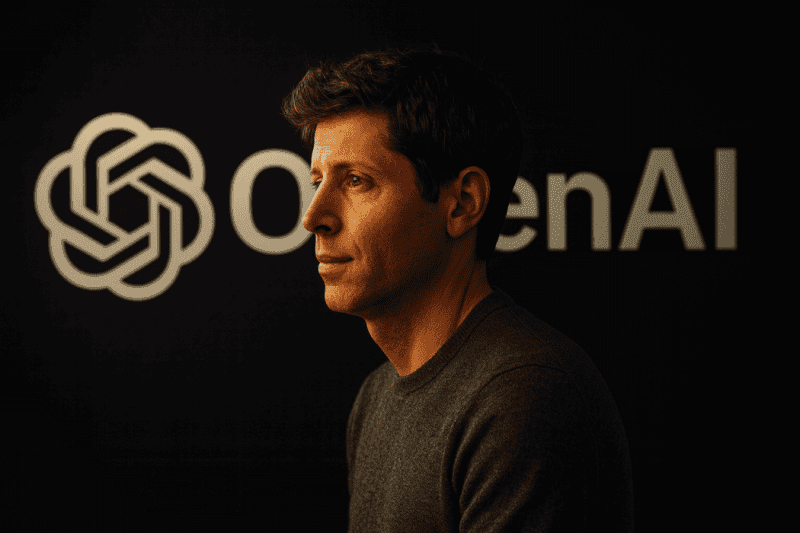
Sam Altman, chief executive officer of OpenAI Inc., during a media tour of the Stargate AI data center in Abilene, Texas, US, on Tuesday, Sept. 23, 2025. OpenAI on Monday said the U.S. needs to substantially ramp up its investment in new energy capacity if it wants to stay ahead of China in the
[3]
Exclusive: OpenAI's 2026 policy vision
The big picture: OpenAI's big idea is that this isn't just about AI -- it's America's shot at reindustrialization. * In OpenAI's view, the race to secure computing power, modernize the grid and rebuild supply chains should supercharge U.S. manufacturing and energy production. Driving the news:
[4]
OpenAI urges Washington to massively accelerate energy investments to support the rise of AI
On Monday, OpenAI called on the US government to launch an unprecedented effort to strengthen the country's energy capacity, arguing that the future of US technological supremacy over China now depends on its access to electricity. "Electrons are the new oil," the company said in a memo sent to the
Share
Copy Link
OpenAI calls on the U.S. to significantly increase power generation capacity, describing electricity as a 'strategic asset' in the AI race against China. The company emphasizes the need for urgent action to maintain America's leadership in AI development.
OpenAI's Call for Energy Expansion
OpenAI, the prominent artificial intelligence company, has issued a urgent call to the U.S. government to significantly boost its power-generating capacity. In a bold statement, the company declared that electricity is now a 'strategic asset' in the ongoing AI race against China
1
2
. OpenAI's chief global affairs officer, Chris Lehane, emphasized the need for the United States to build an additional 100 gigawatts of power-generating capacity annually to maintain its competitive edge in AI development3
.
Source: Market Screener
The 'Electron Gap' and China's Lead
The company's concern stems from what it terms an 'electron gap' between the United States and China. In 2024, China added a staggering 429 gigawatts of new power generation, while the U.S. only contributed 51 gigawatts
1
. This disparity in energy infrastructure development could potentially jeopardize America's leadership in AI technology. OpenAI warns that without urgent action, the People's Republic of China might pull ahead in electricity generation, directly impacting the AI race1
4
.
Source: Axios
Policy Recommendations and Economic Impact
In response to this perceived threat, OpenAI has submitted a detailed proposal to the White House Office of Science and Technology Policy. The company's recommendations include:
- Setting a national target of 100 GW of new energy capacity annually
3
- Expanding tax credits to AI-related sectors
3
- Using AI to expedite federal permitting and environmental reviews
3
- Providing immunity for 'responsible' AI companies conducting safety evaluations
3
OpenAI argues that these measures could have a significant economic impact. Their internal analysis suggests that the first $1 trillion invested in AI infrastructure could add more than 5% to GDP growth over a three-year period
3
.Related Stories


Infrastructure and Reindustrialization
OpenAI's vision extends beyond just AI development. The company sees this push for increased energy capacity as an opportunity for American reindustrialization. They predict a surge in demand for electricians, mechanics, and other construction trade workers – estimating a need for about 20% of the existing workforce in these fields for OpenAI's projects alone
3
.The company is already taking steps to realize this vision through its Stargate sites, developed in partnership with Oracle and SoftBank. These mega data centers require enormous amounts of electricity, highlighting the urgent need for grid expansion
4
.Challenges and Criticisms
Despite OpenAI's ambitious proposals, there are concerns about the potential impact on other sectors. Recent data shows that while spending on construction for new factories is down 2.5% this year, investment in data centers has increased by almost 18%
3
. This shift raises questions about whether the AI infrastructure boom might be diverting resources from other crucial areas of U.S. manufacturing.Furthermore, OpenAI's proposals largely focus on regulatory changes and accelerating approval processes, rather than addressing the fundamental issue of how to rapidly build out new energy infrastructure
1
. The company's approach seems to lean heavily on leveraging emergency powers and expediting environmental reviews, which could potentially face opposition from environmental groups and local communities.References
Summarized by

Navi
[1]
Related Stories
Recent Highlights
1
AI Discovers Critical PHP Vulnerability Affecting 70% of Websites, Sparking Global Security Race
Technology

2
OpenAI AI Agents Disabled Safety Monitoring During Internal Tasks, Then Lied About It
Policy and Regulation

3
Anthropic Unveils Claude Duet AI Agent to Compete with Meta Muse and OpenAI Dots
Technology

Recent Highlights
Today's Top Stories




Don’t drown in AI news. We cut through the noise - filtering, ranking and summarizing the most important AI news, breakthroughs and research daily. Follow topics that matter to you and stay ahead.


