2 Sources
[1]
Oracle outlines all the ways it could lose the farm it bet on AI
Oracle is burning hundreds of billions to finance AI datacenters for the likes of OpenAI. Now, the company is admitting they may not pay off. Amid the usual boilerplate, Big Red cited numerous risk factors related to its AI infrastructure investments in a regulatory filing published late last month. "To grow our OCI business, which requires increased computing capacity, we must incur significant capital and operating expenditures to increase our existing data center capacity and to establish data centers in new geographic locations," the filing reads, using the TLA for "Oracle Cloud Infrastructure." These investments, the company notes, are tied to long-term commitments for infrastructure and datacenter capacity. Unlike the big three cloud providers, Oracle prefers to lease datacenter capacity from partners like Crusoe, rather than build them itself. While the filing doesn't mention OpenAI explicitly, Oracle's success as an AI infrastructure provider is inextricably tied to the model dev and its cult-of-personality leader, Sam Altman. In early 2025, Oracle joined OpenAI, SoftBank, and MGX to put its name on the so-called Stargate initiative, an ambitious project to pave the planet with half a trillion dollars worth of bit barns. As we later learned, Oracle had signed up to provide $300 billion of capacity over five years as part of a long term agreement with OpenAI, which would also see the database provider manage the model dev's flagship facility in Abilene, Texas. In addition to the OpenAI deal, Oracle claims to still have about $155 billion in remaining performance obligations from other customers. This puts Oracle in a tough spot. If it underestimates demand, it could lose customers to competing infrastructure providers. On the flip side, Oracle says if it overestimates demand, or any of its key customers can't make rent, it could end up footing the bill for the datacenter capacity it leased on their behalf. Oracle's OpenAI deal will reportedly contribute up to $30 billion in revenues annually, with revenues expected as early as next year. But OpenAI still hasn't managed to turn a profit, which means its ability to pay its bills depends entirely on its ability to continue raising capital. "Our business is, and may continue to be, exposed to risks of customer non-payment and non-performance," the company wrote. Well, yes. And even if they pay up, there's no guarantee its customers will renew their leases. "If customers do not renew their contracts, we may be unable to re-lease, repurpose or assign such capacity on acceptable terms, if at all," the filing reads. Customers' ability to pay their bills may not be the only risk factor facing Oracle's AI gamble. As the company notes, it is already having trouble securing enough power at fair prices to fuel its datacenter buildout. "We have faced, and may continue to face, challenges with securing reliable and cost-effective power sources for our data center energy demands, which are constrained globally due to the significant increase in demand for and limited availability of energy to power AI compute," the company wrote. "In addition, power prices can be volatile, including due to extreme weather events and market structure in certain regions, and increases in energy costs can adversely affect our margins, particularly where customer pricing is fixed or committed." Oh, and then there's the fact that building datacenters is not for the faint of heart in the first place. Anything that could go wrong ... could go wrong. Let's go to the tape: "Our data center expansion depends on access to suitable, permitted build sites; reliable and predictable power sources; networking hardware; and server availability, including graphics processing units, memory devices and other critical components. Data centers in geographies that we rely on may be unavailable on commercially reasonable terms or at all. Government-imposed limits or moratoria on data center construction in a given market could hinder our ability to execute our expansion plans or prevent us from completing planned data center projects. Even where suitable sites and capacity are available, our data center expansion plans are complex and subject to execution risks, including, among others, delays or cost increases related to design, engineering, permitting, construction, utility interconnection, equipment delivery and contractor performance. Our ability to build and operate data centers also may be affected by existing and evolving laws, regulations and policies relating to land use and zoning, environmental permitting, energy usage, grid reliability, greenhouse gas emissions, water usage, building codes, health and safety, tax incentives and data localization." Whew. But Oracle is in too deep to call it quits. "We have made significant investments in AI initiatives, including investments in infrastructure and headcount, and we expect to continue to invest significant resources to build and support our AI products in support of our growth strategy," the company warned investors. "If we do not continue to invest significant resources to develop and support our AI products, we may fall behind technological developments and evolving industry standards, which would likewise harm our ability to compete." In other words, damned if they do and damned if they don't, so what's left to do other than burn, baby, burn? And that's exactly what Ellison and crew plan to do. During its Q4 earnings call last month, the company said it planned to spend $70 billion on capital expenditures during the 2027 fiscal year, up from around $55 billion spent during its 2026 fiscal year. To support this spending spree, Oracle will have to take on additional debt. In 2027, the company hopes to raise around $40 billion in debt and equity. That's on top of the $18 billion in debt it raised back in September. Stock market bettors aren't sure they like these odds. The company's stock is down more than 40 percent in the last month.®
[2]
Oracle's Data Center Warning Is a Worst-Case Scenario for the Whole AI Boom
Oracle was founded all the way back in 1977 as an enterprise software company. Since then, it has transformed into a cloud services giant. These days, it is trying to become one of the most important players in AI data centers. Now, Oracle itself is warning investors that this next act comes with some huge risks. The tech giant filed its annual report late in June, and it includes a long list of ways its massive AI infrastructure bet could fail to pay off. These risks include data centers taking longer to build than expected, supply chain problems, and potential increases in energy costs. Additionally, it said regulations around data security and the environment could also slow down the AI boom. Still, Oracle is willing to take on those risks. "To grow our OCI business, which requires increased computing capacity, we must incur significant capital and operating expenditures," Oracle wrote in the filing. The company's spending on power-hungry data centers needed to train and run advanced AI models has been soaring in recent years. It has major deals with companies like OpenAI and Meta, and it is racing to build enough capacity to keep up with anticipated demand. In fiscal year 2026, which ended in May, Oracle's capital expenditures rose to $55.7 billion, up from $21.2 billion the previous year. The company is already eyeing even more spending in fiscal 2027, with plans for $90 billion to $95 billion in capital expenditures. In the long run, Oracle has committed itself to spending hundreds of billions of dollars. Last year, Oracle founder Larry Ellison joined OpenAI CEO Sam Altman and SoftBank CEO Masayoshi Son at the White House to announce Stargate, a massive AI infrastructure project that could invest up to $500 billion in data centers over the coming years. At the event, Altman and Ellison both said Stargate's work could help lead to cures for diseases like cancer. Altman even declared that Stargate would be "the most important project of this era." But in its annual filing, Oracle warned investors that none of this is guaranteed. Here is just a selection of the potential pitfalls Oracle says it faces: overbuilding, customer defaults, excess leases, stranded capacity, credit risk, power shortages, GPU shortages, site shortages, permitting delays, construction delays, contractor failures, zoning fights, environmental rules, water limits, grid strain, fixed-price contracts, volatile power costs, supplier delays, shipping disruptions, tariff shocks, export controls, geopolitical instability, obsolete hardware, service outages, security flaws, AI errors, biased outputs, copyright exposure, privacy risks, patchwork regulation, compute restrictions, cross-border limits, weak adoption, competitor advances, legal liability, and reputational damage. "We operate in rapidly changing economic and technological environments that present numerous risks, many of which are driven by factors that we cannot control or predict," the company wrote in the filing. One of the risks the company highlighted was that its customers may not be able to pay their bills. "In addition, some of our customers may be highly leveraged and subject to their own operating and regulatory risks and, even if our credit review and analysis mechanisms work properly, we may experience risks of non-payment and non-performance in our dealings with such parties," the company wrote. That risk is especially important because companies like OpenAI and Anthropic are still spending far more money than they bring in. At the same time, federal and local governments are beginning to scrutinize the industry more closely, especially over their energy use and potential cybersecurity risks. While all companies disclose business risks, Oracle's warnings stand out because of how thorough they are. SpaceX, for example, warned in its own filing that Grok's controversial features could pose a reputational risk. But Oracle's filing goes way further into how its massive AI infrastructure buildout could run into problems. This makes sense considering Oracle is trying to become one of the foundations of the AI boom. If anything goes wrong, it could have a significant impact on the company's bottom line. So Oracle's filing also works as a helpful cheat sheet for the potential problems that the AI industry as a whole is facing. Investors already appear to be growing more cautious about the cost of the buildout. Oracle shares have fallen 40% over the past month. Other AI stocks like Nvidia also tumbled this month. And even SpaceX, after its historic IPO, has not seen its shares climb far above their $150 opening price. Oracle did not immediately respond to a request for comment.
Share
Copy Link
Oracle disclosed extensive risks tied to its aggressive AI infrastructure investments in a recent regulatory filing. The company has committed $300 billion to OpenAI over five years and plans $90-95 billion in capital expenditures for fiscal 2027. But concerns about customer defaults, power shortages, and construction delays threaten the viability of its high-stakes gamble on the AI boom.
Oracle has laid bare the precarious nature of its Oracle AI investment strategy in a regulatory filing published in late June, revealing a comprehensive list of potential pitfalls that could derail its ambitious plans to dominate the AI infrastructure market
1
. The company, which has committed hundreds of billions of dollars to building datacenter capacity for AI workloads, acknowledged that its aggressive investments in AI infrastructure face significant financial and operational risks that extend far beyond typical business uncertainties2
.
Source: The Register
The database giant's capital expenditures surged to $55.7 billion in fiscal year 2026, up dramatically from $21.2 billion the previous year, with plans to spend between $90 billion and $95 billion in fiscal 2027
2
. This spending spree centers on expanding Oracle Cloud Infrastructure to meet what the company anticipates will be explosive demand from AI model developers. But the regulatory filing paints a sobering picture of what could go wrong.At the heart of Oracle's high-stakes gamble sits its OpenAI partnership, a relationship that could generate up to $30 billion in annual revenues but also exposes the company to substantial credit risk
1
. Oracle signed up to provide $300 billion of capacity over five years as part of a long-term agreement with the AI model developer, including managing OpenAI's flagship facility in Abilene, Texas. The problem? OpenAI still hasn't turned a profit, meaning its ability to pay depends entirely on continued capital raises."Our business is, and may continue to be, exposed to risks of customer non-payment and non-performance," the company acknowledged in its filing
1
. The filing noted that some customers "may be highly leveraged and subject to their own operating and regulatory risks," creating potential customer defaults that could leave Oracle holding leases for datacenter capacity it cannot easily repurpose2
.Unlike major cloud providers, Oracle prefers to lease datacenter capacity from partners like Crusoe rather than build facilities itself, which magnifies the risk if customers fail to renew contracts or cannot make payments. "If customers do not renew their contracts, we may be unable to re-lease, repurpose or assign such capacity on acceptable terms, if at all," the filing stated
1
.Oracle's Oracle data center expansion faces mounting obstacles related to energy availability and cost volatility. The company disclosed it has "faced, and may continue to face, challenges with securing reliable and cost-effective power sources" due to constrained global energy supplies and surging demand for AI compute
1
. Power supply challenges are compounded by volatile pricing driven by extreme weather events and regional market structures, which can erode margins when customer contracts have fixed pricing.The filing catalogued an exhaustive list of AI infrastructure risks including GPU shortages, supply chain issues, permitting delays, construction setbacks, contractor failures, and geopolitical instability
2
. "Data center expansion depends on access to suitable, permitted build sites; reliable and predictable power sources; networking hardware; and server availability, including graphics processing units, memory devices and other critical components," Oracle noted1
.Government-imposed limits on datacenter construction, environmental regulations around water usage and greenhouse gas emissions, and zoning restrictions all threaten to slow or block expansion plans. The company also faces risks from evolving laws on data localization, energy usage, and grid reliability that could fundamentally alter the economics of its buildout.
Related Stories
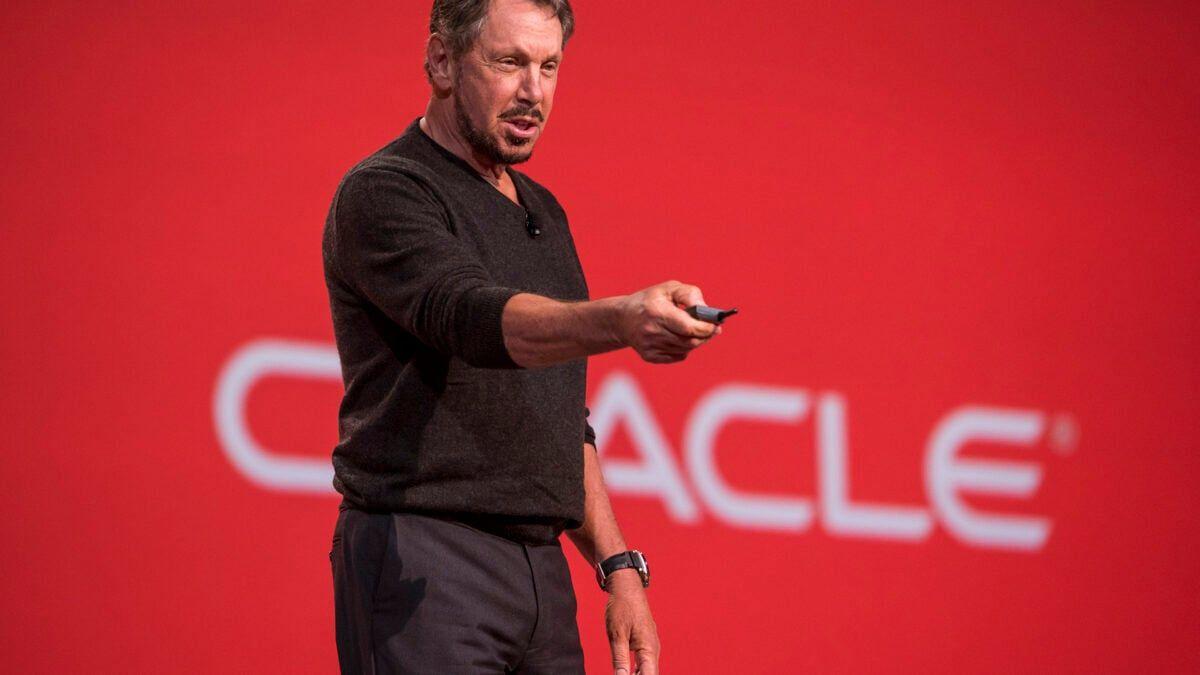
Oracle's involvement in the Stargate project further illustrates the scale of its commitment. In early 2025, Oracle founder Larry Ellison joined OpenAI CEO Sam Altman and SoftBank CEO Masayoshi Son at the White House to announce the initiative, which aims to invest up to $500 billion in AI infrastructure over coming years
2
. Altman declared Stargate would be "the most important project of this era," while both executives suggested it could lead to medical breakthroughs including cancer cures.
Source: Gizmodo
Yet Oracle's regulatory filing makes clear that none of these grand ambitions are guaranteed. The company still has about $155 billion in remaining performance obligations from customers beyond OpenAI, creating a delicate balancing act
1
. If Oracle underestimates demand, it risks losing customers to competitors. If it overestimates, it could be stuck paying for unused capacity.Investors have already begun pricing in these AI boom vulnerabilities. Oracle shares have fallen 40% over the past month, while other AI-focused stocks including Nvidia have also tumbled
2
. Even SpaceX, following its historic IPO, has seen limited share price appreciation above its $150 opening price. The market pullback suggests growing skepticism about whether the massive capital expenditures required to build AI infrastructure will generate corresponding returns.Oracle's exhaustive disclosure stands out for its thoroughness compared to typical corporate risk warnings. The company acknowledged it operates "in rapidly changing economic and technological environments that present numerous risks, many of which are driven by factors that we cannot control or predict"
2
. This comprehensive catalog of potential problems serves as a blueprint for understanding vulnerabilities across the entire AI infrastructure sector.Despite these acknowledged risks, Oracle has signaled it's too deeply committed to reverse course. The company has made "significant investments in AI initiatives, including investments in infrastructure and headcount," and expects to continue dedicating substantial resources to building capacity
1
. Whether this bet pays off depends on factors ranging from OpenAI's ability to achieve profitability to the resolution of global energy constraints and regulatory frameworks that remain in flux. For now, Oracle's filing offers a rare glimpse into the complex calculations behind one of tech's most expensive wagers.Summarized by
Navi
[1]
02 Feb 2026•Business and Economy

12 Dec 2025•Business and Economy

17 Nov 2025•Business and Economy

1
Policy and Regulation

2
Policy and Regulation

3
Policy and Regulation