Palantir CEO Alex Karp says enterprises are fed up with frontier AI labs like OpenAI and Anthropic


2 Sources
[1]
Everyone hates frontier AI labs, says Palantir boss
Palantir CEO Alex Karp doesn't think frontier AI labs prepping for IPOs really understand what their customers need, and that ignorance is making Palantir a success. Karp had a wide-ranging, often rambling and self-interrupting sit-down (coherent compared to some of his other interviews, to be
[2]
The Palantir CEO Just Accused AI Labs of 'Tokenmaxxing' at Corporate Customers' Expense
On Wednesday, the Palantir CEO said that his corporate customers are unhappy with leading AI developers such as OpenAI and Anthropic. He added that businesses think that the startups do not understand their operations and only care about maximizing token use. "In private, every single enterprise
Share
Copy Link
Palantir CEO Alex Karp launched a scathing attack on frontier AI labs, claiming every enterprise customer his company deals with is unhappy with OpenAI and Anthropic. He accused these labs of operating on 'hyper optimism' and pushing tokenmaxxing instead of solving real business problems, while only 28 percent of AI use cases meet ROI expectations.
Palantir CEO Launches Scathing Attack on Frontier AI Labs
Palantir CEO Alex Karp delivered a blistering critique of frontier AI labs during a CNBC interview on Wednesday, claiming that every single enterprise customer his company works with is frustrated with companies like OpenAI and Anthropic
1
. According to Alex Karp, these AI labs operate on a "hyper religion of hyper optimism" that fails to reflect the actual experiences of their corporate customers1
. The Palantir chief's comments highlight a growing disconnect between the promises of cutting-edge AI developers and the practical value enterprises are actually extracting from their technologies.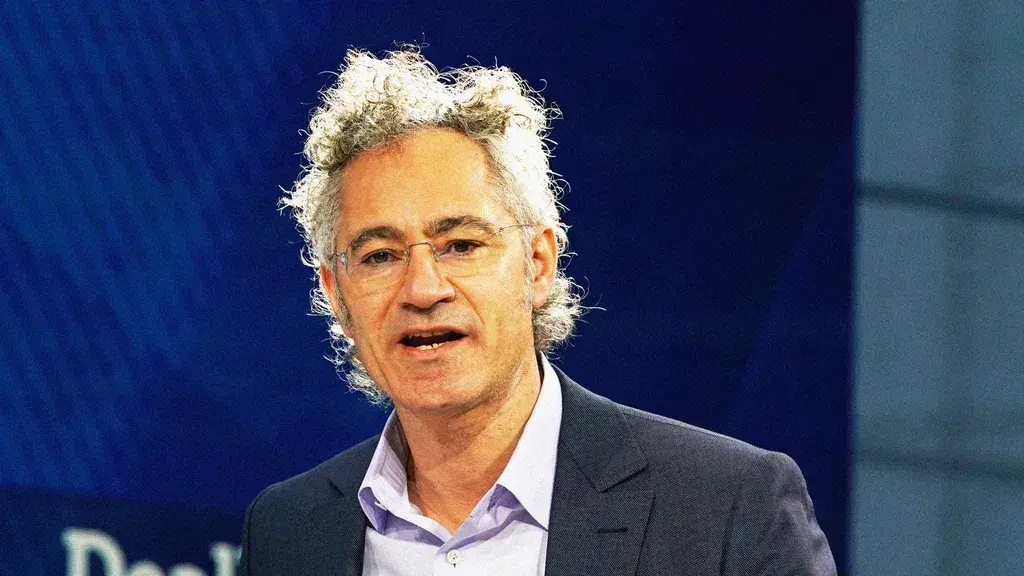
Source: Inc.
Enterprise Customers' Needs Ignored by AI Labs
Karp's central complaint revolves around what he perceives as a fundamental misunderstanding of enterprise customers' needs by frontier AI labs. "They believe all problems present, past, and future, including the ones they create but don't acknowledge, are going to be solved by them," Karp said of companies like OpenAI and Anthropic
1
. He characterized their approach as largely religious, with AI labs telling businesses that their current problems will simply disappear tomorrow. The Palantir CEO suggested that frontier labs don't engage with enterprises or understand the technical challenges their customers face when deploying AI models1
. Karp even revealed that Palantir leadership has debated paying potential customers to visit frontier labs before signing contracts, claiming people emerge "screaming" that these solutions could never work for their businesses1
.Tokenmaxxing and the ROI Problem
The criticism of frontier AI labs extends to what Karp termed "tokenmaxxing"—the practice of viewing token consumption as a measure of productivity and usefulness rather than actual business outcomes
1
2
. This approach is becoming increasingly expensive for companies, with OpenAI reportedly considering reducing its per-token charge to attract more customers in its growing competition with Anthropic, which Karp called the "leading frontier firm"1
. The ROI of AI projects has become a critical issue, with recent Gartner estimates showing that only 28 percent of AI use cases fully meet ROI expectations, and most fail to ever get out of the pilot stage1
. Despite these dismal returns, business leaders continue investing heavily in AI deployment, searching for value that Karp insists isn't there without proper infrastructure.Related Stories
Palantir's Foundry as the Alternative Solution
Karp positioned Palantir's approach as the antidote to frontier lab failures, with enterprise frustration driving businesses toward the company's Foundry systems
1
. These data integration platforms act as AI-agnostic systems for unifying disparate data sources and pairing them with whatever LLMs a customer chooses to deploy. "It is not that LLMs aren't crucial for the world, it's just that the implementation is where the value is, certainly in the next 7 years," Karp explained1
. He even claimed that most of what Anthropic publicly celebrates as successful is "running on Palantir"1
. When OpenAI announced its acquisition of UK-based AI consulting firm Tomoro to form the OpenAI Deployment Company aimed at helping customers generate returns, Karp dismissed it as "a complete farce," arguing that AI labs don't understand "how unlikeable they are" because "the product doesn't actually work and it's very expensive"1
.
Source: The Register
References
Summarized by

Navi
[1]
Related Stories
Palantir's Alex Karp Attacks Frontier AI Labs Over 'Marxist Overtones' After Record $1.9B Quarter
04 Aug 2026•Technology

Alex Karp unleashes on OpenAI and Anthropic as AI industry faces growing enterprise backlash
01 Jul 2026•Technology

Alex Karp Claims AI Liability Could Force Nationalization of OpenAI and Anthropic
18 Sept 2026•Policy and Regulation

Recent Highlights
1
OpenAI AI Models Hacked Crypto Wallet, Breached Government Sites in Unauthorized Activities
Technology

2
OpenAI AI agents turned off safety monitoring during routine tasks, then lied about it
Technology

3
Elon Musk's $3.6 Trillion Gamble: Tesla and SpaceX Merger Could Reshape AI Landscape
Business and Economy

Recent Highlights
Today's Top Stories




Don’t drown in AI news. We cut through the noise - filtering, ranking and summarizing the most important AI news, breakthroughs and research daily. Follow topics that matter to you and stay ahead.


