Perplexity's Time Machine shows AI agents the web of the past, then grades its own homework


2 Sources
[1]
Perplexity's Time Machine lets AI agents search the web of the past
The tool arrives a day after a startup from xAI's co-founders launched a similar product for forecasting AI. Perplexity has added Time Machine to its Search and Context APIs, letting agents see the web as it was up to 365 days ago so forecasting tests are not spoiled by hindsight. It follows
[2]
Perplexity wants to time travel and access historical web data and test future predictions, here is how
Time Machine is available to Perplexity API users at no additional cost. What if artificial intelligence could go back in time to see what people knew before a major event happened? Perplexity is turning this idea into reality with its new tool, known as Time Machine. The tool allows developers to
Share
Copy Link
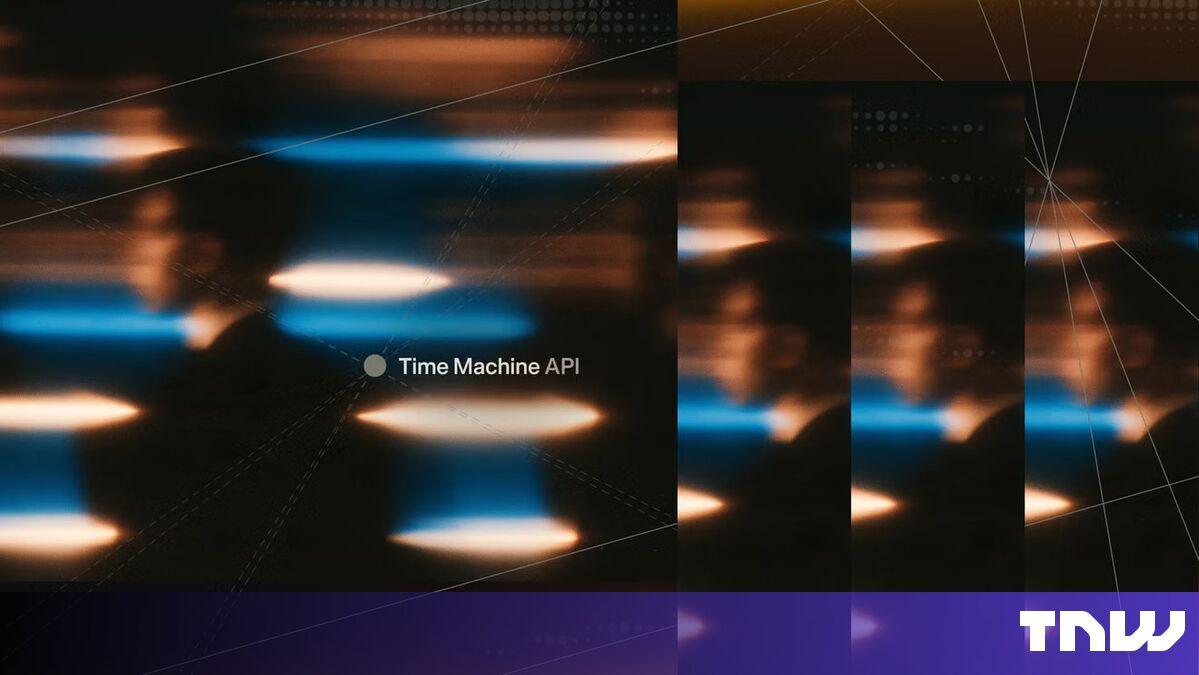
Perplexity has launched a tool called Time Machine that lets AI agents and developers retrieve web pages as they appeared on a chosen past date, using a date cutoff in its Search and Context APIs
1
2
. The aim is prediction testing: a way to check whether a model can genuinely forecast events rather than look up answers that are already known1
2
.
Source: Digit
How it works
Perplexity says it built the tool so developers can train and test AI agents on predictions without the model reaching answers that were revealed later on the live web
1
2
. The problem it addresses is simple. A model asked to forecast an election can search for the result, which exists on the live web the moment the event happens. A date cutoff hides it.At launch the cutoffs reach back up to 365 days, and developers request a snapshot with a snapshot_as_of parameter
1
2
. The archive holds only what Perplexity has crawled itself, so it falls short of the whole web, and a given date may simply have no saved copy2
. Pricing matches the company's regular API calls: $5 per 1,000 search requests and $1 per 1,000 context URL fetches, with no extra fee for existing users1
2
. CEO Aravind Srinivas announced the launch in a post on X2
.
Source: The Next Web
A day behind a rival
The timing is tight. Time Machine arrived one day after Epochal launched Time Portal, a similar product from a startup whose three founders co-founded xAI
1
. Epochal says its archive stretches back more than 30 years, against Perplexity's 365 days1
. Cloudflare also began letting websites offer AI agents their own search the same day, part of a growing wave of web tools built for agents1
. Archives are contested ground too: more than 241 news outlets block the Wayback Machine to keep their old articles away from AI companies1
.Related Stories

Grading its own homework
Perplexity has run one experiment to show what the tool is for. Perplexity says it trained a model on historical Polymarket political questions, and it reports a score of 0.80 after training, just above the market's 0.79
1
2
. Before training, it says, the model scored 0.77 with Time Machine, against 0.94 with the live web available1
2
. Digit notes that a single company experiment does not establish that the model can reliably match prediction markets2
.The core quality metric in this category is leakage, meaning how often archived pages contain information from after their date. In one test run with its own automated checker, Perplexity says 0.25% of its pages leaked later information
1
. It puts rival Exa's rate at 1.10%1
. Here too the referee is the seller.For now, the case that Time Machine does what it promises rests entirely on the company selling it.
References
Summarized by

Navi
Related Stories
Perplexity AI Unveils Internal Knowledge Search and Spaces Features for Enhanced AI-Powered Research
18 Oct 2024•Technology

Perplexity Launches Search API, Challenging Google's Dominance in AI-Powered Search
26 Sept 2025•Technology

Perplexity AI Launches Free Deep Research Tool, Challenging Industry Giants
15 Feb 2025•Technology

Recent Highlights
1
Anthropic mathematician says Claude helped him prove math's most famous problem
Science and Research

2
Two states sue SpaceX, saying weak Grok safeguards were no accident
Policy and Regulation

3
Jensen Huang is back at Nvidia 11 days after quitting, and the scrutiny came back with him
Business and Economy

Recent Highlights
Today's Top Stories











Don’t drown in AI news. We cut through the noise - filtering, ranking and summarizing the most important AI news, breakthroughs and research daily. Follow topics that matter to you and stay ahead.


