3 Sources
[1]
Voi founders' new AI startup Pit has become the latest rising star out of Stockholm | TechCrunch
Swedish startup Pit may have gained notice for some rage-bait social media posts, but it has also become another Stockholm AI startup to watch. Pit is led by the cofounders of European scooter giant Voi including Voi CEO Fredrik Hjelm. He is joined by former iZettle and Klarna engineers. And it is now backed by a16z, which is leading the startup's $16 million seed round. Stockholm, also home to Lovable, is one of the places where a16z has been actively looking for the next European unicorn. Pit is going after enterprise AI with products intended to learn from the clients how their businesses run then create custom software to automate processes, Pit CEO Adam Jafer told TechCrunch. Jafer left Voi last summer after a seven-year tenure during which the company scaled into a team of nearly 1,000 employees operating into 13 countries. From his engineering viewpoint, Jafer saw how AI has matured enough for enterprise use. Initially, he saw a chance to replace low-hanging SaaS tools with in-house apps, but he soon envisioned an opportunity beyond Voi. "The aha moment for the bigger opportunity was when the models were no longer just chatbots that generate text, but became more agentic and could do things," he told TechCrunch. Unlike competitors offering AI agent-building or vibe-coding products, Pit positions itself as an "AI product team as a service." Pit is entering a crowded market and hopes to differentiate itself by relying on two pillars: Pit Studio, which lets enterprise employees guide it through processes that could be handled by AI-generated software; and Pit Cloud, which, the startup promises, provides that software in a way that meets enterprise requirements on governance, certifications and auditability. In mid-January, the startup started testing its plan with pilot customers in telecom, healthcare, logistics and other sectors, focusing solely on automating internal processes. "Nothing customer facing, no conversational AI, just pure back-office, service and support functions that we turn into automations so that you can give back time to people to focus on your core business," Jafer said. The startup is now preparing to scale up commercially, but it won't be hands-off. Following the trend of AI companies hiring forward-deployed engineers (FDEs) to embed themselves to drive enterprise adoption, Pit is also hiring solution engineers. The goal, Jafer said, is to meet the expectations of the large customers it is targeting. "They're looking to buy outcomes. They want processes to go faster. They want to see productivity unlock and time unlock," he said. Jafer said Pit is not pitching itself as a way to reduce human labor and cut jobs. "The theme is more around moving people upstream to do more valuable things for the business, rather than repetitive back-office work." Success metrics also go beyond saving time and money. "Some of it is just quality of work improvement, reducing human errors and so on." Yet Pit's own needs on this became a subject of controversy a few months ago when Jafer posted on LinkedIn declaring "Yes, our team currently has no junior engineers. At Pit, agents now do most of what junior engineers used to do." While the post is still visible, he no longer stands by that. "It may have started like that, but you need a good mix as you scale," he said with a smile. Hjelm anticipated the all-male team might raise eyebrows, too. In a post on X, he wrote that Pit was "founded by tech bros, from Voi and Klarna," but immediately added, "We have tech girls on the team as well, fyi." That clarification wasn't immediately apparent from Pit's LinkedIn profile, although TechCrunch has spoken with one woman working at Pit on the communications side. What the picture does reflect, though, is a sense of getting the band back together. Voi's four cofounders have remained friends over the years, and three of them are now part of this new journey: Hjelm, Jafer and Filip Lindvall, now a founding engineer at Pit. One of the startup's engineers, Andreas Hjelm, is none other than Voi CEO Fredrik Hjelm's brother. While Fredrik Hjelm is named as a co-founder of Pit, too, he is still Voi's CEO, so his role will likely be less hands-on for the time being. Since going profitable in 2024, Voi has been considered a potential IPO candidate, and closed 2025 with strong results. But his involvement as a well-connected entrepreneur could still open doors -- and already has, with a16z. In a tweet, Hjelm explained how a16z partners Alex Rampell and Gabriel Vasquez ended up leading Pit's round. He became acquainted with Ben Horowitz, Gabriel Vasquez and Jen Kha "a few years ago when they came to Stockholm to understand what they could do for European tech. We stayed in touch. When it came to picking partners for Pit, we didn't need the money to get going, but we wanted the strongest backers we could find. So we picked them, and they picked us." Jafer also corroborated that Pit didn't spend much time with other firms to raise its round, which was also backed by Pit's founders themselves, as well as Lakestar, executives from American tech companies, and wealthy families from the Nordics. This transatlantic cap table confirms that there is growing interest for AI out of Stockholm, which has consolidated itself as one of the most active startup hubs in Europe. Pit could also benefit from its European DNA when it comes to sales. "We're going after industrials, and there's plenty of that in Europe," Jafer said. He also reported that clients appreciate Pit's agnostic approach. Since it can use different AI and cloud vendors depending on clients' preferences, it could benefit from the current tailwinds for sovereign tech, especially in critical sectors. "EU models running on EU compute is top of mind for almost every CIO we're meeting," Jafer said.
[2]
Pit launches with $16M to build custom AI-native software
The Voi co-founder, Adam Jafer, is the chief executive. Lakestar joined a16z on the round, with strategic angels from OpenAI, Anthropic, Google, Deel, and Revolut. Early customers, including Voi, Tre, Stena Recycling, and Kry, are reporting deployment timelines of days to weeks. Pit, a Stockholm-based AI-native software platform for enterprise operations, has launched publicly with $16m in funding led by Andreessen Horowitz. Lakestar joined the round, alongside the company's founders and angel investors, including executives from OpenAI, Anthropic, Google, Deel, and Revolut, plus the Stena and Lundin families. Adam Jafer, a co-founder of the Swedish electric-scooter company Voi, is Pit's chief executive and co-founder. The pitch is described as "AI product team as a service". Pit takes a business need, learns how a particular company's operations actually work, and builds production-grade custom software to run them. That positioning is distinct, the company says, from low-code tools or AI copilots, which produce prototypes or assistive features rather than systems that actually run operations end-to-end. The problem the company is addressing is one most enterprises know well. Pit notes that despite over $1 trillion in digital-transformation spending in recent years, much of corporate operations still run on spreadsheets, inboxes, and rigid SaaS tools that were never designed for how individual companies actually work. The company argues that the cost of forcing operations to fit existing software has, until AI, been the price of doing business, and that AI changes the maths by making custom software cheap enough to build for each workflow. "For 20 years, enterprises have rented software that forces them to operate around it. With AI, that ends," Jafer said in the launch announcement. "For the first time, every company can run on systems they actually designed themselves." The platform has two main components. Pit Studio is the build layer, where the company says its AI learns how a customer works and assembles the system that will run those workflows. Pit Cloud is the underlying governed infrastructure, with tenant isolation, ISO 27001 certification, SSO, role-based access control, and full audit observability built in. Together, the company says, the two components produce real software running real operations, not prototypes. Pit is already in production at a number of European enterprises. The launch announcement names Voi, Tre, Stena Recycling, and Kry as named customers across logistics, telecom, e-commerce, and healthcare. Systems, the company says, are typically going live within days or weeks of engagement. Three early results figures appear in the announcement. The company reports an 85 per cent reduction in campaign execution time at one customer, more than 10,000 hours saved annually per deployment as a typical figure, and 99 per cent invoice-acceptance rates achieved through automation. At one of Europe's largest industrial companies, the company says, Pit replaced legacy contract and invoice validation with an AI-powered system that processes in real time and has saved over 10,000 hours annually with zero validation errors. Alex Rampell, the Andreessen Horowitz general partner who led the firm's investment, framed the bet on Pit's approach in the launch announcement. "Every AI company is selling speed," he said. "Pit is selling speed that holds up for years, secure, governed, and built to last. It's a new category." Pit was built by founders, CTO, and AI leads who came out of Voi, Klarna, and iZettle, where they spent years replacing manual workflows with custom AI-powered systems at scale. The company says the same approach has now been productised into a platform aimed at enterprise-grade security, governance, and reliability.
[3]
AI product team startup Pit raises $16M from a16z and others to automate enterprise workflows - SiliconANGLE
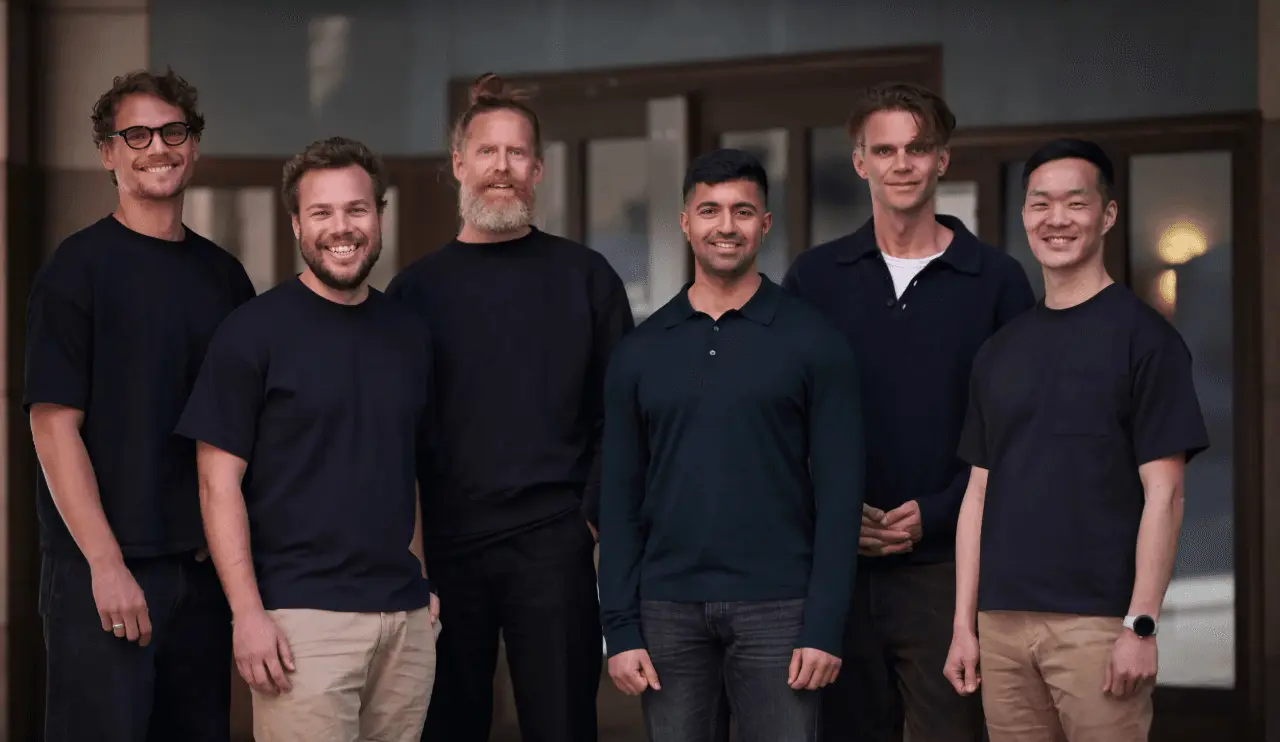
AI product team startup Pit raises $16M from a16z and others to automate enterprise workflows Legendary venture capital firm Andreessen Horowitz is backing the artificial intelligence-native "product team-as-a-service" startup Pit in its first major funding round. It served as the lead investor in the $16 million round, announced today. It also saw participation from Lakestar and senior executives from AI giants OpenAI Group PBC and Anthropic PBC, as well as Google LLC, Revolut Group Holdings Ltd. and Deel Inc. Pit, which is officially known as Pitdotcom Sweden AB, has developed a platform that aims to replace the jumbled mass of spreadsheets, email inboxes and software-as-a-service tools that most enterprises run on today. Its AI product team-as-a-service platform makes it possible for teams to build and deploy customized, production-grade software to power their internal business operations. Co-founder and Chief Executive Adam Jafer (pictured, third from right) told SiliconANGLE that the spreadsheets and SaaS software commonly used by enterprises today was never designed for the way they actually get work done. Because companies are forced to use a patchwork of tools, most enterprise workloads are incredibly fragmented, requiring lots of manual work and switching of tabs to get things done. Pit aims to replace this patchwork with an AI-native software layer that's able to learn an organization's workflows so its teams can work faster and more efficiently. Users simply describe a business need - such as an operations, financial or customer workflow - then explain what the existing process looks like, and the platform will translate that into a customized software application that can be deployed instantly. "For 20 years, enterprises have rented software that forces them to operate around it," Jafer said. "With AI, that ends. For the first time, every company can run on systems they actually designed themselves." Pit's platform has two core components. Pit Studio is the main development portal, which is designed to learn how companies work and build the systems that run those operations. Then there's Pit Cloud, which provides the governed infrastructure with tenant isolation and full audit observability to ensure its software is compliant. The company's big claim is that, unlike traditional AI copilots and low-code tools that create fragile prototypes and experiments that cannot easily scale, it's able to create real software that runs real business operations. It says its platform has already been deployed in industries such as telecommunications, e-commerce, healthcare and logistics, and says early adopters have seen real results. For instance, it claims, the average deployment has resulted in 10,000 hours saved annually that would otherwise be spent on doing manual work, 99% automated invoice acceptance rates and an 85% reduction in marketing campaign execution. Those numbers also reveal the versatility of Pit's platform, which the company claims can build almost any kind of enterprise software. That includes things such as contract processing systems, campaign management tools, cross-system data reconciliation and approval workflows. Each system is custom-built for the company's specific needs, and integrates with their existing tools so it can pull data directly from them and eliminate the need to constantly move between different applications. "Every AI company is selling speed," said Andreessen Horowitz General Partner Alex Rampall. "Pit is selling speed that holds up for years, that's secure, governed and built to last. It's a new category."
Share
Copy Link
Stockholm-based Pit, founded by Voi's leadership team, has raised $16 million led by Andreessen Horowitz to build custom AI software for enterprise operations. The AI startup promises to replace fragmented SaaS tools with production-grade systems that learn company workflows and deploy in days, already saving early customers over 10,000 hours annually.
Pit, a Stockholm-based AI startup founded by the leadership team behind European scooter giant Voi, has emerged from stealth with $16 million in funding led by Andreessen Horowitz. The company positions itself as an "AI product team as a service," aiming to transform how enterprises handle internal operations by building custom AI software tailored to individual business needs
1
.CEO Adam Jafer, who spent seven years scaling Voi into a team of nearly 1,000 employees across 13 countries, leads the venture alongside former Voi CEO Fredrik Hjelm and engineers from iZettle and Klarna. Lakestar joined a16z on the round, with strategic angels from OpenAI, Anthropic, Google, Deel, and Revolut participating
2
. Stockholm, also home to other rising AI companies like Lovable, has become a key hunting ground for a16z seeking the next European unicorn.
Source: SiliconANGLE
Pit addresses a persistent challenge facing enterprises: despite over $1 trillion in digital-transformation spending, most corporate operations still run on spreadsheets, email inboxes, and rigid SaaS tools never designed for how individual companies actually work
2
. The AI startup argues that forcing operations to fit existing software has been an unavoidable cost—until now."For 20 years, enterprises have rented software that forces them to operate around it," Jafer explained. "With AI, that ends. For the first time, every company can run on systems they actually designed themselves"
3
. Unlike competitors offering AI agent-building or low-code products that produce prototypes, Pit creates production-grade software designed to run operations end-to-end1
.The company's differentiation relies on two core components. Pit Studio serves as the build layer where AI learns how customers work and assembles systems to run those workflows. Users guide the platform through processes that could be handled by AI-generated software, describing business needs and existing procedures
1
.Pit Cloud provides the governed infrastructure underneath, offering tenant isolation, ISO 27001 certification, SSO, role-based access control, and full audit observability
2
. This focus on governance and auditability targets enterprise requirements that often block AI adoption, ensuring compliance while maintaining speed.Related Stories
Since mid-January, Pit has been testing with pilot customers across telecommunications, healthcare, logistics, and other sectors, focusing exclusively on automating internal processes. "Nothing customer facing, no conversational AI, just pure back-office, service and support functions that we turn into automations so that you can give back time to people to focus on your core business," Jafer told TechCrunch
1
.Named customers including Voi, Tre, Stena Recycling, and Kry are reporting deployment timelines of days to weeks
2
. Early results include an 85% reduction in campaign execution time at one customer, more than 10,000 hours saved annually per deployment, and 99% invoice-acceptance rates achieved through automation2
. At one of Europe's largest industrial companies, Pit replaced legacy contract and invoice validation with an AI-powered system processing in real time with zero validation errors2
.As Pit prepares to scale commercially, it's hiring solution engineers to embed with customers—following the trend of AI companies deploying forward-deployed engineers to drive enterprise adoption. The goal is meeting expectations of large customers "looking to buy outcomes," Jafer explained. "They want processes to go faster. They want to see productivity unlock and time unlock"
1
.Jafer emphasized that Pit isn't pitching workforce reduction. "The theme is more around moving people upstream to do more valuable things for the business, rather than repetitive back-office work." Success metrics extend beyond cost savings to quality improvements and reducing human errors
1
.Andreessen Horowitz General Partner Alex Rampell, who led the firm's investment, framed the opportunity distinctly: "Every AI company is selling speed. Pit is selling speed that holds up for years, secure, governed, and built to last. It's a new category"
2
. For enterprises watching the AI landscape, Pit represents a shift from assistive tools to systems capable of running core operations—a transition that could redefine how companies approach enterprise workflows and internal automation in the coming years.Summarized by
Navi
[1]
[2]
22 Oct 2024•Technology

04 May 2026•Business and Economy

16 Mar 2026•Business and Economy

1
Science and Research

2
Technology

3
Technology