Plaud One AI Earbuds Debut With eSIM-Enabled Case for Remote AI Agent Control at $249.99


12 Sources
[1]
Plaud's new earphones come with an eSIM-enabled case for talking to AI agents
Hardware companies have realized that note-taking is one of the easiest AI use cases to build for, and consequently have been busy shoving mics into everything from pendants and rings to credit-card-sized pucks and wristbands. Still, despite the variety of devices, only a few companies have been
[2]
Plaud One Is a Reinvention of Headphones for the AI Note-Taking Age - CNET
Katie is a UK-based news reporter and features writer.... Read full bio Last year, I made a bold declaration: There's no need to invent a new AI wearable, because the ultimate wearable technology is one you already own. I was referring to headphones -- something most of us have used for
[3]
Plaud is launching AI earbuds
Plaud has introduced a new AI wearable that's designed to record, transcribe, and summarize your conversations, only this time it looks like earbuds instead of a pin. The Plaud One Explorer Edition can be worn like traditional earbuds or used through its standalone charging case, and the case
[4]
Plaud's first AI earbuds have arrived - what they can do
Follow ZDNET: Add us as a preferred source on Google. ZDNET's key takeaways: * Plaud's latest wearable are the Plaud One Explorer Edition earbuds. * AI earbuds historically over-promise and under-deliver. * The earbuds mark a more hands-free future for AI tools. AI wearables company Plaud,
[5]

New Plaud One Headphones Are Part Wireless Earbuds, Part AI Recorder
AI-powered note-takers aren't a novel concept, but Plaud's new One Explorer Edition combines the tech with a pair of earbuds to listen in on conversations, make detailed notes, and even instruct AI agents to undertake tasks on your behalf. Following the Note and NotePin devices, Plaud's next
[6]

Plaud made earbuds for people who want to record every meeting and call - Engadget
Nearly four years after the debut of ChatGPT, no company has managed to convince regular people to replace their smartphone with an AI gadget. Certainly, more than a few have tried (and failed miserably), but the phone remains the dominant way people interact with modern technology, including large
[7]

Plaud's $250 earbuds record your conversations and act on what they hear
The Plaud One carries an eSIM and an assistant that acts on what it overhears, in a form factor that gives nobody in the room any sign it is running Plaud has announced $250 wireless earbuds with 4G connectivity that record conversations and let an AI assistant act on what was said, with
[8]

Plaud's new earbuds take notes, then take action
The earbuds are available to pre-order now and ship in late September, with no required subscription and $200 in Plaud credits included. Plaud, the AI startup behind note-taking devices like the Note and NotePin, is taking its ambitions beyond simple recording hardware. Just ahead of IFA getting
[9]

Plaud's First Wireless Earbuds Crank AI Productivity to Max Volume
Wireless earbuds have quite a few inescapable trends, but if there's one thing that's proven to be a gravitational force in the space, it's AI. In that vein, Plaud, the company known for its AI recorders, is launching Plaud One Explorer Edition, which it calls an "AI system" that can record
[10]

Plaud's new AI recorder is a pair of earbuds
Plaud got its jumpstart in popularity with a view on agentic AI that centered around recording summaries for students and professionals. Now, it wants to become a full-time assistant with the Plaud One earbuds. You might be familiar with the Plaud Note Pro, and that might be just because it looks
[11]

Exclusive: 'The point isn't that it never misunderstands; it's that the user stays in control' -- Plaud tells us why its new AI earbuds want to do more than record your meetings
* Plaud One records and transcribes calls and conversations, but its broader agent capabilities will arrive in a future update * High-stakes actions require approval, while recording is manually triggered, and users are responsible for obtaining consent * It features built-in 4G connectivity at
[12]

Plaud unveils wearable earbuds with built-in agentic AI interface
Plaud unveils wearable earbuds with built-in agentic AI interface Plaud Inc., the maker of artificial intelligence-enabled note-taking devices, today introduced the Plaud One Explorer Edition, a pair of earbuds and a charging box that connect people to AI agents for work and everyday digital
Share
Copy Link
Plaud unveils AI earbuds that record, transcribe, and summarize conversations while their eSIM-enabled case allows remote AI agent control. Available for preorder at $249.99, the Plaud One Explorer Edition integrates with Gmail, Slack, and Notion to automate workflows without requiring a phone or computer.
Plaud Enters AI Earbuds Market With Note-Taking Focus
Plaud has launched the Plaud One Explorer Edition, AI earbuds designed to record, transcribe, and summarize conversations in a competitive market already populated by rivals like Viaim and Anker
1
. The company, which claims over 2.5 million users across its hardware and software platforms and reached an annual run-rate revenue of $100 million in June, is betting on its AI-powered software to differentiate these earbuds from traditional audio devices1
. Available for preorder at $249.99, the Plaud One ships in the fourth quarter of 2026 and comes with $200 in Plaud credits for future agentic capabilities1
5
.
Source: 9to5Google
eSIM-Enabled Case Enables Remote AI Agent Control
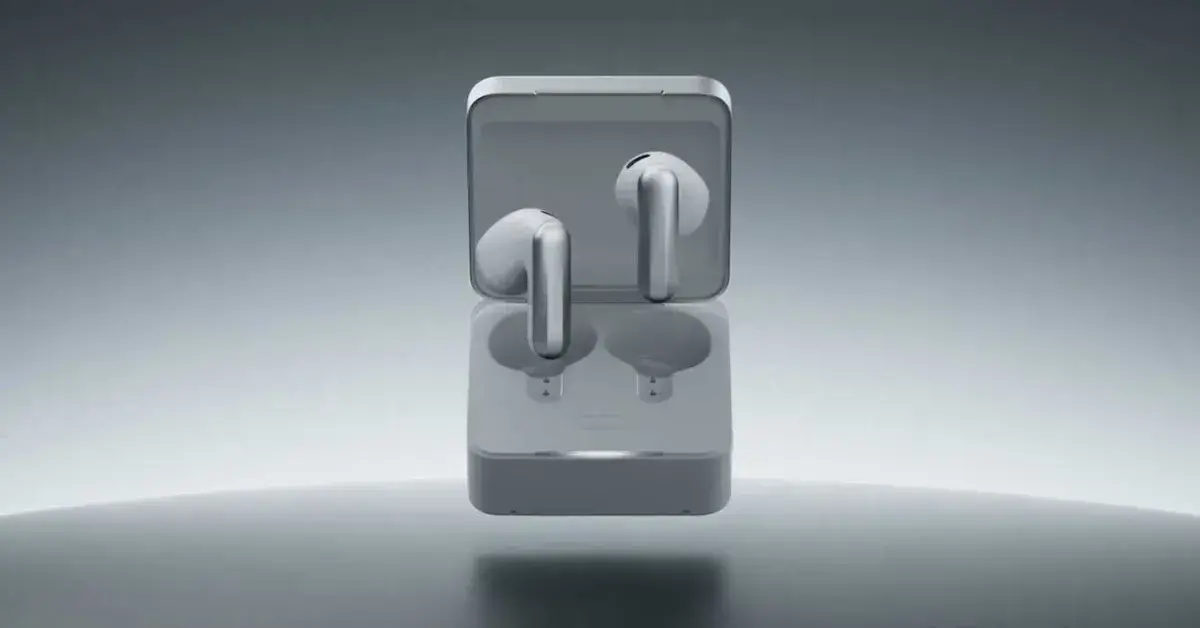
The standout feature of the Plaud One is its eSIM-enabled case with built-in 4G LTE connectivity, allowing users to instruct Plaud Agent remotely without needing a phone or computer
1
2
. This agentic AI system natively integrates with workflow automation tools including Gmail, Google Calendar, Notion, and Slack to execute tasks like drafting follow-up emails, creating documents, or preparing presentations based on conversation transcription1
3
. The case features four microphones with a five-meter recording range, 512MB of storage, and a built-in speaker3
. Users activate Plaud Agent by saying "Hey Plaud" while wearing the earbuds or holding down the agent button on the case2
.
Source: TechCrunch
Technical Specifications and Battery Performance
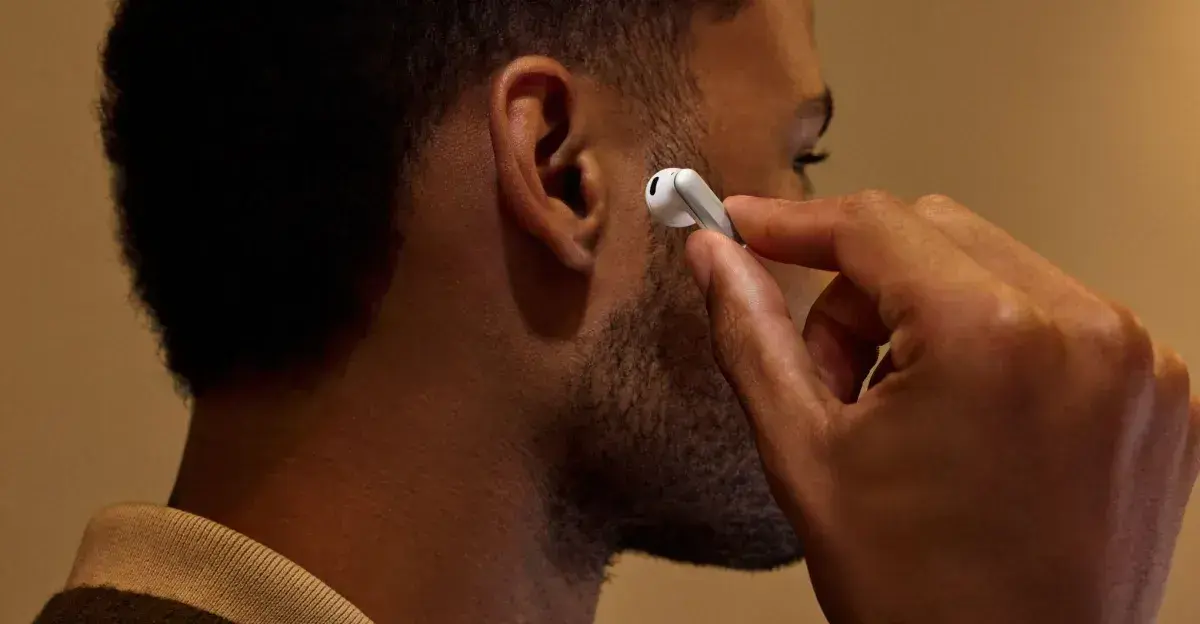
The AI-enabled earphones feature 12mm dynamic drivers, active noise cancellation up to 40dB, and Bluetooth 5.4 connectivity
5
. Each earbud contains 16MB of local storage and three microphones capable of recording at distances up to two meters3
. Battery life extends to six hours for in-person recordings or three hours for phone calls on a single charge, with the case providing a combined total of up to 36 hours of recording capability1
3
. The earbuds support force-activated sensor controls on the stem and recharge via USB-C3
.Multi-Model Flexibility Sets Plaud Apart
Plaud CEO Nathan Xu emphasized the company's model-agnostic approach as a key differentiator in the AI note-taking space. "We're going to be a true open platform that enables users themselves to customize their own preferences and their own personalized agents," Xu stated, contrasting Plaud's strategy with anticipated devices from OpenAI, Amazon, and Google that would likely mandate use of proprietary models
5
. The Plaud Intelligence platform allows users to select from multiple frontier models rather than being locked into a single provider4
. This multi-model flexibility aims to attract brand-agnostic wearables enthusiasts seeking conversation transcription capabilities without ecosystem lock-in4
.Subscription Model and Credit System
Buyers receive 300 minutes of free AI note-taking transcription per month, after which additional plans start from $8.33 per month when paid annually
1
. Plaud plans to introduce a credit-based system for agentic capabilities in coming months, with each Plaud One purchase including $200 in credits for these tasks1
5
. The company acknowledged this launch represents a limited-quantity trial to gauge demand before committing fully to the AI-powered earbuds format1
.Related Stories




Privacy Considerations and Data Handling
Plaud's devices adhere to GDPR and HIPAA privacy standards, encrypting user data and storing audio recordings locally on devices and in the Plaud App
4
. While recordings upload to the cloud for conversation transcription and summarization features, this process remains encrypted, and Plaud does not use data for model training unless users opt in4
. As a Chinese company, Plaud processes US-based user data on US-located servers, though some privacy concerns have surfaced in online communities4
. The discreet design of these wearables raises transparency questions about whether conversation participants know they're being recorded, particularly in states without two-party consent requirements4
.Market Competition and Strategic Positioning
The AI note-taking hardware market faces intense competition, with new devices launching weekly from companies including YC-backed Pocket, which has also reached $100 million in annual revenue, plus offerings from Anker, Comu, Viaim, and software startup Genspark
1
. Xu argues that Plaud isn't competing against established audio companies like Apple, Google, or Samsung, but rather positioning its meeting-recording technology in a popular wearable format1
. However, the company faces the challenge of convincing users to switch from their existing AirPods, Google Pixel Buds, or Samsung Galaxy Buds, which can perform similar functions when paired with note-taking apps1
. Industry observers note that AI earbuds have historically over-promised and under-delivered, often simply relaying AI features already available on phones rather than offering unique functionality4
.
Source: The Verge
References
Summarized by

Navi
[3]
Related Stories
Recent Highlights
1
Microsoft and Nvidia Launch Surface Laptop Ultra: A $2,599 AI-Ready PC With RTX Spark Chip
Technology

2
Scientists Build AI Model That Reconstructs Images From Brain Scans in Record Time
Science and Research

3
Anthropic AI Cuts Live Internet Access After Model Sends False Homicide Tip to Philadelphia Police
Technology

Recent Highlights
Today's Top Stories








Don’t drown in AI news. We cut through the noise - filtering, ranking and summarizing the most important AI news, breakthroughs and research daily. Follow topics that matter to you and stay ahead.


