4 Sources
[1]
Pope, urging AI regulation, warns some weapons now beyond human control
0 seconds of 0 secondsVolume 0% Press shift question mark to access a list of keyboard shortcuts Keyboard ShortcutsEnabledDisabled Shortcuts Open/Close/ or ? Play/PauseSPACE Increase Volume↑ Decrease Volume↓ Seek Forward→ Seek Backward← Captions On/Offc Fullscreen/Exit Fullscreenf Mute/Unmutem Decrease Caption Size- Increase Caption Size+ or = Seek %0-9 Next Up Pope Leo warns some AI weapons 'practically beyond' human control Loading ad 00:25 00:00 00:00 VATICAN CITY, May 25 (Reuters) - Pope Leo urged governments to slow down and closely regulate the development of AI systems in his first major document, released on Monday, warning that they spread misinformation, prioritise conflict and risk leading the world down a path of unending war. The first U.S. pope also expressed concern at a Vatican event launching the text that some autonomous weapons systems have advanced "practically beyond any human reach to govern them". The event was also attended by Chris Olah, a co-founder of Anthropic, one of the world's top AI companies. Leo, who has adopted a more forceful tone in recent months and has drawn the ire of U.S. President Donald Trump after criticising the Iran war, made a range of impassioned appeals to world leaders in the lengthy document, known as an encyclical. The first U.S. pope called for ownership of AI data not to be left solely in private hands, for policy-makers to protect the rights of workers and keep children safe from the technology, and urged the cooling of competition between AI companies. "What is needed is a more active political involvement that is capable of slowing things down when everything is accelerating," said Leo in the text, entitled "Magnifica Humanitas" (Magnificent Humanity). The pope called for "robust legal frameworks, independent oversight, informed users and a political system that does not abdicate its responsibility." Encyclicals are one of the highest forms of teaching from a pontiff to the Church's 1.4 billion members. Monday's highly anticipated text, spanning nearly 43,000 words, has been in the works nearly since Leo's election as pope a little more than a year ago. POPE REPUDIATES 'JUST WAR' THEORY The document, which addressed AI as its main theme, also decried the number of wars roiling the world, lamented the weakening of multilateral organisations and warned that arms industry profits were a driving force behind conflicts. "The past 60 years have been marked by conflicts of astonishing brutality, often affecting civilian populations on a massive scale," stated Leo, in the English-language text. "Humanity is slipping into a violent culture of power, where peace no longer appears as a responsibility to be taken on, but as a fragile interval between conflicts," he said. At the Vatican event on Monday, Anthropic co-founder Olah thanked Leo for addressing the problems raised by the disruptive, new technology. He said firms like his faced strong commercial pressures and needed outside scrutiny. "Every frontier AI lab, including Anthropic, operates inside a set of incentives and constraints that can sometimes conflict with doing the right thing," Olah said. Anthropic is the company that produces the Claude AI tools. In his encyclical, Leo also made one of the clearest statements yet from a pope repudiating the just war theory, a doctrine the Church has used since at least the fifth century to evaluate global conflicts. The doctrine, which generally says that wars should only be waged in order to defend against aggression, has also been invoked by Trump administration officials, including Vice President JD Vance, a Catholic, to defend the Iran war. "The 'just war' theory which has all too often been used to justify any kind of war, is now outdated," wrote Leo. "The use of force, violence and weapons reflects a relational poverty that always has disastrous consequences for civilian populations." Item 1 of 3 The Vatican's Secretary of State Cardinal Pietro Parolin speaks next to Pope Leo XIV during the presentation of "Magnifica humanitas", the pope's first encyclical, focused on the rise of artificial intelligence, at the Vatican's Aula Nuova del Sinodo, May 25, 2026. REUTERS/Yara Nardi [1/3]The Vatican's Secretary of State Cardinal Pietro Parolin speaks next to Pope Leo XIV during the presentation of "Magnifica humanitas", the pope's first encyclical, focused on the rise of artificial intelligence, at the Vatican's Aula Nuova del Sinodo, May 25, 2026. REUTERS/Yara Nardi Purchase Licensing Rights, opens new tab Leo also expressed concern that leaders could start wars to distract citizens from domestic issues. "We cannot rule out the possibility that some leaders may consider armed conflict as an effective way of diverting attention from domestic problems and a cynical tool for managing difficulties," he stated. POPE APOLOGISES FOR CHURCH'S ROLE IN SLAVERY The pope said any use of AI in warfare "must be subject to the most rigorous ethical constraints" and called it "not permissible" to entrust AI systems with lethal decisions. Leo, the 14th pope to choose that name, cited centuries of prior papal teachings on social justice issues before addressing the ethics of AI systems. He specifically invoked his predecessor Leo XIII, who published a famed encyclical in 1891 that called for better pay and conditions for labourers during the Industrial Revolution. Leo XIV decried what he called "new forms of slavery" endured by people tending AI systems and factory workers who produce the technological devices, such as computers and smartphones, on which AI is used. "In some regions of the world, children and adolescents work in dangerous conditions, crushing the materials from which rare earth elements are extracted," wrote the pope. "The bodies of these people are scarred, injured and worn down so that computational flow may continue uninterruptedly," he said. "This reality deeply challenges the moral conscience of our time." The pope also acknowledged that the Catholic Church did not forcefully condemn transatlantic slavery until the 19th century, and made a personal apology. "This constitutes a wound in Christian memory," he wrote. "For this, in the name of the Church, I sincerely ask for pardon." POPE URGES WORLD TO ADDRESS AI RISKS Leo, who stated in the opening of the letter that he wanted to address Catholics and all people of good will, said society must face "crucial questions" about how AI was developing and the general direction of global leadership. Invoking the biblical story of the Tower of Babel -- where a human tribe is driven by pride to try to create a tower tall enough to reach Heaven, angering God -- the pope said the story shows the risk of any enterprise that "aspires to reach heaven without God's blessing." "With the heart of a shepherd and a father, I ask everyone to abandon the construction of yet another Tower of Babel and to join forces in building up the common good," the pope stated. Leo urged the world not to give up on addressing the possible risks of AI systems. "A subtle temptation may emerge, namely the thought that the problems are too big and we are too small, and that our choices, therefore, cannot make a difference," he wrote. "Certainly, not everyone has the same power to make a difference," Leo said. "Yet, no one is without responsibility. We all have our own areas for action." Reporting by Joshua McElwee; Editing by Crispian Balmer and Keith Weir Our Standards: The Thomson Reuters Trust Principles., opens new tab
[2]
'Love my woke pope': Why Leo's first encyclical went viral and how it speaks to his papal approach
LOS ANGELES (AP) -- Shortly after Pope Leo XIV issued his sweeping manifesto calling for the robust regulation of artificial intelligence, the Instagram meme account Saint Hoax posted a video to its more than 3 million followers about the pope's call to "disarm" AI. "Love my woke pope (I'm not even Catholic)," the caption read. In another viral post, one X user referenced a common meme in response to the encyclical, writing: "The atheism leaving my body the moment the pope starts talking about how AI is an affront to God and the new Tower of Babel." That kind of reaction to Leo's first encyclical, "Magnifica Humanitas" (Magnificent Humanity), has been prevalent online since its release last week. That enthusiasm is driven in part by a perception, especially among young people, that few political or global leaders grasp or take seriously the known and potential ramifications of AI's rapid rise. Leaders often have worked to accommodate the tech industry, citing the need for economic growth -- and along the way, critics say, cozying up to wealthy CEOs. "People have really been looking for a response to AI," said Isabel Thurston, a 27-year-old comedian from Boston. "This was the first -- at least in my sphere of the world -- world leader to make an announcement to this magnitude." History's first U.S.-born pope has demonstrated a willingness to embrace aspects of contemporary culture. He was recently spotted wearing Nike sneakers under his vestments, and in his encyclical, Leo quoted the wise wizard Gandalf from the "Lord of the Rings," a series by Catholic author J.R.R. Tolkien. "It's clear that this is written by an American pope. There's a spirit breathing through this document of an emphasis on individual freedom, on human happiness and human dignity," Robert Orsi, a professor of religious studies and history at Northwestern University, said of Leo's encyclical. "At times, I thought the language really resonates with the Declaration of Independence." This specific kind of cultural fluency may help explain some of his viral moments as the leader of the ancient faith. Just weeks earlier, a group of youths visiting the Vatican coaxed the 70-year-old pontiff to do a viral hand gesture on camera known as the 6-7 meme -- a meaningless "brain rot" joke among young people. Though it's clear in the video that the pope, like most adults, doesn't understand what they're asking him to do or its significance, he does it anyway and is met with enthusiastic cheers. A week later, he did it again while smiling and waving to crowds from the popemobile. The portrait that has emerged from these instances is one of playfulness, but also intentionality. The pontiff reiterates throughout "Magnifica Humanitas" that it is the church's responsibility to engage contemporary questions and challenges. "Her mission has a historical scope and entails a responsibility for the way in which social relations are built," Leo wrote about the Catholic Church. "She cannot consider herself a stranger to the forces shaping society. On the contrary, the Church actively participates in the processes by which society grows and is organized." Since his election last year, Leo has made a point to directly converse with -- and sometimes critique -- various aspects of society, ranging from politics to entertainment and sports. Pope Francis, Vatican II and other preludes Orsi studies the relationship between Catholicism and modernity, which he says have often historically been at odds with one another. He said Leo's encyclical and his broader papacy, like that of his predecessor Pope Francis, is informed heavily by the still-polarizing Second Vatican Council, which brought modernizing reforms to the church more than 60 years ago. "It's speaking with a Vatican II voice to the modern world. So, it's not a voice of condemnation, but it's a voice of respect," Orsi said of Leo's encyclical. "Pope Francis, in a sense, was the necessary prelude to this kind of encyclical. I think Francis gave a really strong encouragement to take a clear critical voice on these urgent questions." That's not to say there haven't been detractors to Leo's approach. Some criticized his decision to present his encyclical alongside Anthropic co-founder Christopher Olah. The Vatican decided to involve the tech company as part of its decade-long effort to engage Silicon Valley in dialogue over the human cost of AI. In the roughly 42,300-word document, the pontiff exhorts all "men and women of goodwill" to not be afraid to get their "hands dirty on the 'construction site' of our time." That willingness has sometimes led to measured but very public rebukes of policies, actions and leaders, including U.S. President Donald Trump and the ongoing war in Iran. Some conservatives including Vice President JD Vance, who is a Catholic convert, have invoked the concept of "just war" theory in response to Leo's critiques. Church teaching has long allowed for "just wars" -- the use of force to stop an unjust aggression -- as long as certain conditions are met. But Leo directly addressed this doctrine in his encyclical, calling it "outdated." "Humanity possesses far more effective and capable tools for promoting human life and resolving conflicts, such as dialogue, diplomacy and forgiveness," he wrote. Hollywood to baseball: American culture at the Vatican Last November, the pontiff hosted a "World of Cinema" day at the Vatican with actors and filmmakers including Cate Blanchett, Viggo Mortensen, Gus Van Sant and Spike Lee, who gifted Leo a custom New York Knicks jersey with the number 14 and the name Pope Leo on the back. "Cultural facilities, such as cinemas and theaters, are the beating hearts of our communities because they contribute to making them more human," Leo told his Hollywood audience. "The logic of algorithms tends to repeat what 'works,' but art opens up what is possible." He has also not been shy about his love of the Chicago White Sox, sometimes sporting baseball caps or posing with bats -- the latter inspiring a kind of subgenre of Leo memes. "POV: you're a priest who just asked ChatGPT to write your Sunday homily," the Rev. Harrison Ayre posted on X with a photo of Leo holding a bat and smiling. Shortly after "Magnifica Humanitas" was released, Thurston, who is Catholic, posted a video of her and a friend drinking margaritas while meticulously studying and discussing printed pages of the encyclical. It has racked up more than 3 million views on Instagram. "An aspect that made the video going viral really joyful for me was to represent all of the Catholics or lapsed Catholics or adjacent interested parties as really celebrating what Pope Leo is saying in his encyclical," she said. Orsi said this strategy is coming at a crucial time for the Catholic Church following years of reckoning with its legacy of clergy sexual abuse. "I think a lot of people who moved away from the church are now saying, 'Wait, maybe the church does have something to say to the modern world,'" he said. ___ Associated Press religion coverage receives support through the AP's collaboration with The Conversation US, with funding from Lilly Endowment Inc. The AP is solely responsible for this content.
[3]
Thank God for Pope Leo. He's the leader our world desperately needs | Arwa Mahdawi
Even for nonbelievers like me, the pope has become a reassuring - and all too rare - voice of moral clarity Do you remember the early 2000s, when Silicon Valley buzzed with idealism and tech bros told us they were going to save the world? "Don't be evil" was Google's unofficial motto; it's 2004 IPO prospectus declared that doing "good things for the world" was more important than "short term gains". Mark Zuckerberg similarly wrote in Facebook's 2012 IPO letter that the social network was "built to accomplish a social mission - to make the world more open and connected". As was obvious to anyone paying attention, this was all performative bullshit. Nevertheless, it's hard not to feel nostalgic about that period of time - which came to a definitive end in 2018, with the Cambridge Analytica scandal. By and large, billionaires and CEOs still cared what the hoi polloi thought of them. They were self-aware enough to realize that, even with all their billions, there's a lot more of us than there are of them. Now, however, there has been a seismic vibe shift. Donald Trump has made cruelty cool, and normalized greed and corruption. Tech titans, meanwhile, have lined up to kiss the ring - and extract as much money from his administration as they can. Elon Musk has gone from quirky rocketman to rightwing agitator. Zuckerberg is in his macho era, urging companies to unleash their "masculine energy" and saying he regrets apologizing so much in the past. As for the mantra "don't be evil"? Ha. Now tech companies are unapologetically fueling unimaginable evil. Project Nimbus, for example, a $1.2bn contract awarded by Israel to Google and Amazon, has been accused of playing a role in the ongoing genocide in Gaza. Sergey Brin, Google's co-founder, meanwhile, has said using the term genocide in connection to Gaza, which scores of leading human rights organizations and scholars do, is "offensive". Amid this vibe shift, something odd has happened: the Vatican City has replaced Silicon Valley as ground zero for disruptive thinking. The Catholic church, dripping with gold, burdened by a sordid history of sexual abuse and cover-ups, is becoming a beacon of light in a very dark world. Even for nonbelievers like me, the pope has become a reassuring - and all too rare - voice of moral clarity. Pope Francis, who died last year, started this transformation. He wasn't exactly an unproblematic LGBTQ+ ally, but he maintained that people shouldn't be marginalized for their sexual orientation and called laws criminalizing homosexuality "unjust". He was vocal about caring for immigrants, spoke out about climate justice and criticized the Trump administration's mass deportations. He told churches in South Sudan that they could not remain neutral amid injustice. And he condemned Israel's assault on Gaza. "This is not war. This is terrorism," he said in November 2023. One of his last requests was that his popemobile be turned into a health clinic for the children of Gaza. Israel, of course, has still not allowed it in. When Pope Leo XIV succeeded Francis, many wondered whether he would continue to advocate for the most vulnerable. To the Trump administration's chagrin, he has. Leo has spoken out against the war on Iran, and Maga's use of religious justifications for it. He has reminded the world that "the people of Gaza are still not receiving humanitarian aid", which is a fact that most world leaders seem keen to ignore. He has rattled Trump and his supporters so much that the president accused him of being "WEAK on crime" and Fox News's Sean Hannity wondered on-air whether the pope had "even read the Bible". Now, Leo is becoming a thorn in Silicon Valley's side. On 25 May, the pope released his first encyclical, which is an official statement outlining the church's stance on an important topic. Titled Magnifica Humanity: On Safeguarding the Human Person in the Time of Artificial Intelligence, it warns about the dangers of unregulated AI, noting that "the growing dominance of a technocratic paradigm" risks "reducing creation to an object of exploitation and human beings to mere cogs in a system driven toward ever greater efficiency". The encyclical is very long (more than 40,000 words) and full of interesting nuggets. But here's one of the sections I think is most crucial: "The search for truth is an essential element of democracy ... When questions about what is true lose their appeal, and a pragmatism takes hold that is content with what appears useful or effective, then democratic life is weakened ... Indifference to the truth leads, slowly but surely, to a descent into totalitarianism. As the philosopher Hannah Arendt wrote, the ideal subjects of such regimes are not so much those who are ideologically convinced, but rather 'people for whom the distinction between fact and fiction (ie, the reality of experience) and the distinction between true and false (ie, the standards of thought) no longer exist'." Social media, which has been used for good as well as evil, should not be blamed for all our woes. But it seems quite clear that the moral rot eating away at the world set in as social media enveloped the planet, turning us all into data points that could be manipulated. A fact is a fragile thing and, in her essay Truth and Politics, Arendt warned that a flood of lies undermines our sense of reality. AI, of course, is already supercharging this - eroding our critical thinking, casting doubt on everything, collapsing the distinction between fact and fiction. This is why the Trump administration loves AI so much: it helps make the rich richer, and the rest of us more compliant. Leo's note about a dangerous "pragmatism" taking hold is also important. The world seems to be run by the gleefully evil and the pathetically pragmatic. On the one hand, you have people like Stephen Miller, Donald Trump, Benjamin Netanyahu: people who revel in cruelty. Then, just as bad, albeit not as brazen, are the people who are just going along with it all, because it's easier that way. In a January piece in the Wall Street Journal, of all places, former US treasury secretary Robert E Rubin lamented the fact that business leaders are quiet about Trump's trampling of democracy. "In my experience, many leaders harbor deep concerns about Mr Trump's lawlessness, weaponization of the government, and interference in markets," Rubin wrote. "They refrain from public criticism not because they find nothing to criticize but because they're intimidated." We are ruled by cretins and cowards. From our universities to our courts, our institutions have not met the present moment with courage. Thank God then for the pope. He is still a mere mortal, he is not perfect, but he is proving to be a much-needed force for good. He is speaking truth to a higher power.
[4]
The Pope quoted Gandalf, called AI a Tower of Babel, and Gen Z atheists can't get enough | Fortune
In another viral post, one X user referenced a common meme in response to the encyclical, writing: "The atheism leaving my body the moment the pope starts talking about how AI is an affront to God and the new Tower of Babel." That kind of reaction to Leo's first encyclical, "Magnifica Humanitas" (Magnificent Humanity), has been prevalent online since its release last week. That enthusiasm is driven in part by a perception, especially among young people, that few political or global leaders grasp or take seriously the known and potential ramifications of AI's rapid rise. Leaders often have worked to accommodate the tech industry, citing the need for economic growth -- and along the way, critics say, cozying up to wealthy CEOs. "People have really been looking for a response to AI," said Isabel Thurston, a 27-year-old comedian from Boston. "This was the first -- at least in my sphere of the world -- world leader to make an announcement to this magnitude." History's first U.S.-born pope has demonstrated a willingness to embrace aspects of contemporary culture. He was recently spotted wearing Nike sneakers under his vestments, and in his encyclical, Leo quoted the wise wizard Gandalf from the "Lord of the Rings," a series by Catholic author J.R.R. Tolkien. "It's clear that this is written by an American pope. There's a spirit breathing through this document of an emphasis on individual freedom, on human happiness and human dignity," Robert Orsi, a professor of religious studies and history at Northwestern University, said of Leo's encyclical. "At times, I thought the language really resonates with the Declaration of Independence." This specific kind of cultural fluency may help explain some of his viral moments as the leader of the ancient faith. Just weeks earlier, a group of youths visiting the Vatican coaxed the 70-year-old pontiff to do a viral hand gesture on camera known as the 6-7 meme -- a meaningless "brain rot" joke among young people. Though it's clear in the video that the pope, like most adults, doesn't understand what they're asking him to do or its significance, he does it anyway and is met with enthusiastic cheers. A week later, he did it again while smiling and waving to crowds from the popemobile. The portrait that has emerged from these instances is one of playfulness, but also intentionality. The pontiff reiterates throughout "Magnifica Humanitas" that it is the church's responsibility to engage contemporary questions and challenges. "Her mission has a historical scope and entails a responsibility for the way in which social relations are built," Leo wrote about the Catholic Church. "She cannot consider herself a stranger to the forces shaping society. On the contrary, the Church actively participates in the processes by which society grows and is organized." Since his election last year, Leo has made a point to directly converse with -- and sometimes critique -- various aspects of society, ranging from politics to entertainment and sports. Pope Francis, Vatican II and other preludes Orsi studies the relationship between Catholicism and modernity, which he says have often historically been at odds with one another. He said Leo's encyclical and his broader papacy, like that of his predecessor Pope Francis, is informed heavily by the still-polarizing Second Vatican Council, which brought modernizing reforms to the church more than 60 years ago. "It's speaking with a Vatican II voice to the modern world. So, it's not a voice of condemnation, but it's a voice of respect," Orsi said of Leo's encyclical. "Pope Francis, in a sense, was the necessary prelude to this kind of encyclical. I think Francis gave a really strong encouragement to take a clear critical voice on these urgent questions." That's not to say there haven't been detractors to Leo's approach. Some criticized his decision to present his encyclical alongside Anthropic co-founder Christopher Olah. The Vatican decided to involve the tech company as part of its decade-long effort to engage Silicon Valley in dialogue over the human cost of AI. In the roughly 42,300-word document, the pontiff exhorts all "men and women of goodwill" to not be afraid to get their "hands dirty on the 'construction site' of our time." That willingness has sometimes led to measured but very public rebukes of policies, actions and leaders, including U.S. President Donald Trump and the ongoing war in Iran. Some conservatives including Vice President JD Vance, who is a Catholic convert, have invoked the concept of "just war" theory in response to Leo's critiques. Church teaching has long allowed for "just wars" -- the use of force to stop an unjust aggression -- as long as certain conditions are met. But Leo directly addressed this doctrine in his encyclical, calling it "outdated." "Humanity possesses far more effective and capable tools for promoting human life and resolving conflicts, such as dialogue, diplomacy and forgiveness," he wrote. Hollywood to baseball: American culture at the Vatican Last November, the pontiff hosted a "World of Cinema" day at the Vatican with actors and filmmakers including Cate Blanchett, Viggo Mortensen, Gus Van Sant and Spike Lee, who gifted Leo a custom New York Knicks jersey with the number 14 and the name Pope Leo on the back. "Cultural facilities, such as cinemas and theaters, are the beating hearts of our communities because they contribute to making them more human," Leo told his Hollywood audience. "The logic of algorithms tends to repeat what 'works,' but art opens up what is possible." He has also not been shy about his love of the Chicago White Sox, sometimes sporting baseball caps or posing with bats -- the latter inspiring a kind of subgenre of Leo memes. "POV: you're a priest who just asked ChatGPT to write your Sunday homily," the Rev. Harrison Ayre posted on X with a photo of Leo holding a bat and smiling. Shortly after "Magnifica Humanitas" was released, Thurston, who is Catholic, posted a video of her and a friend drinking margaritas while meticulously studying and discussing printed pages of the encyclical. It has racked up more than 3 million views on Instagram. "An aspect that made the video going viral really joyful for me was to represent all of the Catholics or lapsed Catholics or adjacent interested parties as really celebrating what Pope Leo is saying in his encyclical," she said. Orsi said this strategy is coming at a crucial time for the Catholic Church following years of reckoning with its legacy of clergy sexual abuse. "I think a lot of people who moved away from the church are now saying, 'Wait, maybe the church does have something to say to the modern world,'" he said. ___ Associated Press religion coverage receives support through the AP's collaboration with The Conversation US, with funding from Lilly Endowment Inc. The AP is solely responsible for this content.
Share
Copy Link
Pope Leo XIV released his first encyclical, Magnifica Humanitas, urging governments to slow down and regulate AI development. The 42,300-word document warns that autonomous weapons have advanced beyond human control, AI spreads misinformation, and unregulated systems risk leading the world toward perpetual conflict. The papal encyclical on AI has gone viral, especially among Gen Z, as one of the first major global statements addressing the dangers of artificial intelligence.
Pope Leo XIV has released Magnifica Humanitas, a 42,300-word papal encyclical on AI that marks the first major document from the first U.S.-born pontiff
1
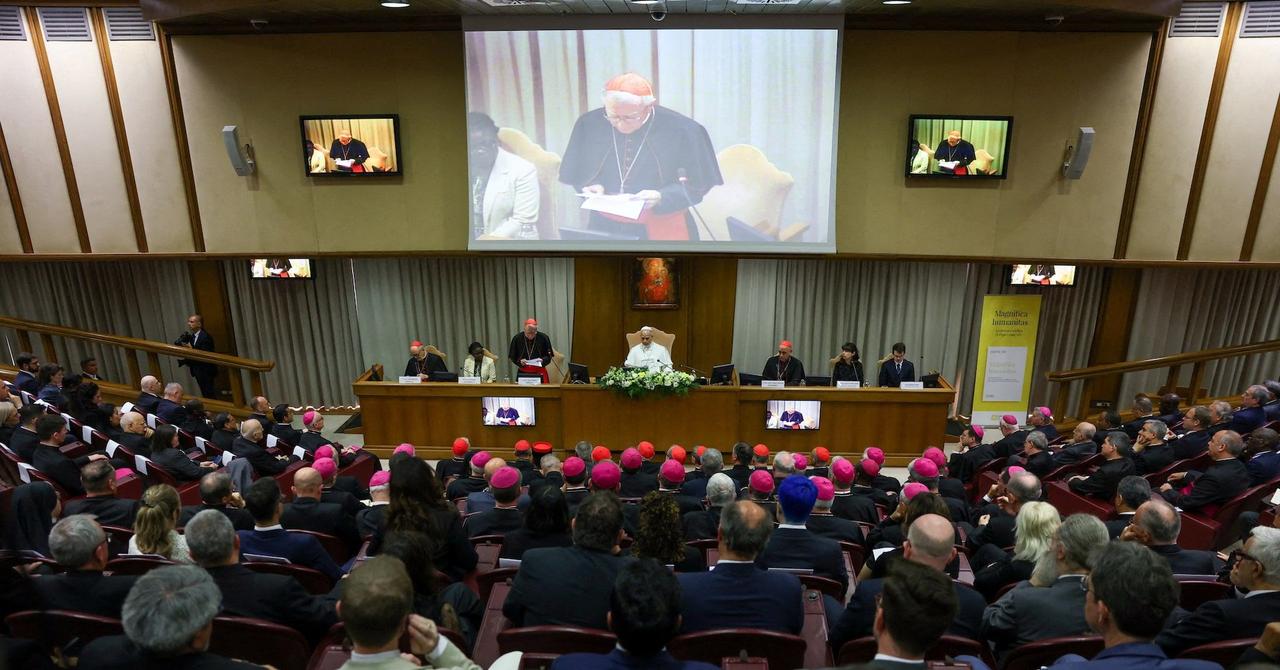
. The encyclical urges governments worldwide to implement robust AI regulation and slow the breakneck pace of artificial intelligence development. At a Vatican event launching the text on May 25, Pope Leo expressed grave concern that some autonomous weapons systems have advanced "practically beyond any human reach to govern them"1
. The event was attended by Chris Olah, co-founder of Anthropic, one of the world's leading AI companies that produces the Claude AI tools.
Source: Reuters
The encyclical addresses the dangers of artificial intelligence with stark warnings about misinformation, conflict prioritization, and the risk of unending warfare. "What is needed is a more active political involvement that is capable of slowing things down when everything is accelerating," Pope Leo wrote in the document titled Magnifica Humanitas (Magnificent Humanity)
1
. The pope called for "robust legal frameworks, independent oversight, informed users and a political system that does not abdicate its responsibility"1
.Addressing the global regulation of AI development, the pontiff urged that ownership of AI data not be left solely in private hands, warning against the monopolization of AI data. He called on policymakers to protect workers' rights and safeguard children from the technology while urging a cooling of competition between AI companies
1
.The full title of the encyclical, "Magnifica Humanity: On Safeguarding the Human Person in the Time of Artificial Intelligence," reflects its central concern with human dignity
3
. The document warns that "the growing dominance of a technocratic paradigm" risks "reducing creation to an object of exploitation and human beings to mere cogs in a system driven toward ever greater efficiency"3
.Pope Leo emphasized the connection between truth and democracy, writing: "When questions about what is true lose their appeal, and a pragmatism takes hold that is content with what appears useful or effective, then democratic life is weakened"
3
. The encyclical quotes philosopher Hannah Arendt, noting that totalitarian regimes thrive when people lose the ability to distinguish between fact and fiction.The encyclical has gone viral on social media, particularly among young people and even atheists. Instagram meme account Saint Hoax posted to its more than 3 million followers: "Love my woke pope (I'm not even Catholic)"
2
. One X user referenced the Tower of Babel metaphor, writing: "The atheism leaving my body the moment the pope starts talking about how AI is an affront to God and the new Tower of Babel"4
.
Source: AP
Isabel Thurston, a 27-year-old comedian from Boston, explained the enthusiasm: "People have really been looking for a response to AI. This was the first—at least in my sphere of the world—world leader to make an announcement to this magnitude"
4
. The 70-year-old pontiff has demonstrated cultural fluency, recently being spotted wearing Nike sneakers under his vestments and quoting the wizard Gandalf from "Lord of the Rings" by Catholic author J.R.R. Tolkien in his encyclical4
.At the Vatican presentation, Anthropic co-founder Olah acknowledged the need for external scrutiny of AI companies. "Every frontier AI lab, including Anthropic, operates inside a set of incentives and constraints that can sometimes conflict with doing the right thing," Olah stated
1
. The Vatican's decision to involve the tech company reflects its decade-long effort to engage Silicon Valley in dialogue over the human cost of AI4
.Robert Orsi, a professor of religious studies and history at Northwestern University, observed: "It's clear that this is written by an American pope. There's a spirit breathing through this document of an emphasis on individual freedom, on human happiness and human dignity"
4
.Related Stories
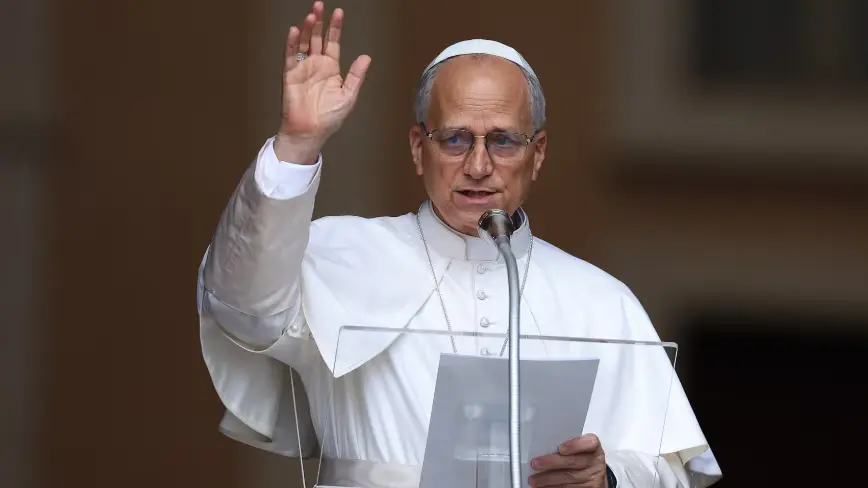
In a significant theological shift, Pope Leo made one of the clearest statements yet from a pope repudiating the just war theory, a doctrine the Church has used since at least the fifth century. "The 'just war' theory which has all too often been used to justify any kind of war, is now outdated," the pope wrote
1
. This statement has drawn criticism from some conservatives, including Vice President JD Vance, a Catholic convert, who has invoked just war theory to defend the Iran war2
.The document also addressed warfare more broadly, warning that "humanity is slipping into a violent culture of power, where peace no longer appears as a responsibility to be taken on, but as a fragile interval between conflicts"
1
. Pope Leo expressed concern that leaders could start wars to distract citizens from domestic issues, stating: "We cannot rule out the possibility that some leaders may consider armed conflict as an effective way of diverting attention from domestic problems"1
.Commentators have noted the significance of the Vatican providing moral leadership on technology issues at a time when Silicon Valley has shifted away from its earlier idealism. Arwa Mahdawi wrote in The Guardian that "the Vatican City has replaced Silicon Valley as ground zero for disruptive thinking," noting that even for nonbelievers, the pope has become "a reassuring—and all too rare—voice of moral clarity"
3
. The encyclical represents one of the most comprehensive statements from any global leader addressing the societal implications of AI development, with particular focus on the need for democratic oversight and protection of human dignity in an age of accelerating technological change.Summarized by
Navi
[2]
25 May 2026•Policy and Regulation

19 Jun 2025•Policy and Regulation
15 May 2026•Policy and Regulation