RAM prices surge 400% as AI demand creates memory crisis affecting even 25-year-old technology


2 Sources
[1]
Why your RAM options cost 4X more now than last year - even legacy tech prices aren't immune
Follow ZDNET: Add us as a preferred source on Google. ZDNET's key takeaways * RAM prices are soaring primarily due to demand for AI. * Helium shortages are also contributing to RAM shortages. * We're seeing a domino effect on older RAM as manufacturers try to bypass higher prices. How crazy high are RAM prices right now? So crazy that even moving to RAM technology that's two decades old won't help protect consumers from increased costs Rising RAM prices are pushing up the prices of all your favorite gadgets, such as Raspberry Pi boards (now a pair of 16GB Pi 5 boards will cost you the same as a MacBook Neo), and will likely push up prices for all things Apple in the very near future. Also: MacBook Neo vs. Surface: Why spiraling RAM prices are bruising Microsoft's PC business but not Apple's To try to work around these price increases, some hardware manufacturers decided to step back in time and use RAM based on older technologies, but now, with fresh demand, prices for older hardware have gone through the roof. Why is RAM so expensive? Bottom line: demand. Most industry experts blame AI data centers as the main culprit. G.Skill, a leading RAM manufacturer, issued a statement last year explicitly citing "unprecedented high demand from the AI industry" as the reason behind skyrocketing prices. AI data centers use two types of RAM -- High Bandwidth Memory (HBM) and LPDDR5X. A single server rack can consume 20TB of HBM3E and 17TB of LPDDR5X, and that's enough LPDDR5X for a thousand laptops. And that's just one server rack out of the thousands that you'll find in a single data center. Data suggests that AI data centers will mop up about 70% of all memory chips produced globally in 2026. And AI companies are willing to pay big bucks to get hold of this RAM, so RAM manufacturers have shifted to prioritizing high-margin DDR5 and HBM RAM server chips. The demand is so great that earlier this year, Micron shuttered its entire consumer-facing Crucial memory brand to focus on enterprise AI customers. Also: How much RAM does your PC need in 2026? My advice after using Windows and Mac for years But to be fair, it's not just AI that's the problem, though it is the biggest part. The 2026 war in Iran has also played its part. While oil supplies have been the primary focus of this conflict, it's also affected helium supplies. The gas you're probably most familiar with from those floaty foil birthday balloons also plays a vital role in the semiconductor chip industry. While the US is the biggest producer of helium, the second-largest producer is Qatar, a country across the Persian Gulf from Iran. Following repeated attacks, along with the closure of the Strait of Hormuz, Qatar has essentially been cut off, resulting in the disappearance of a third of the world's helium supply. How bad is the problem? Very bad. Around this time last year, I could buy a 32GB DDR5 RAM kit for about $100 to $120; now you're looking at around $400. While DDR5 is the latest and greatest, DDR4 was still in use for a lot of lower-priced systems, but as RAM makers shift production, prices here have increased dramatically. This time last year, I could pick up a 32GB DDR4 kit for about $60 to $70. Now that same kit is over $200. How is AI pushing up the prices of legacy RAM? But none of this can be affecting the price of 20-year-old RAM, right? Wrong. Also: Why my Raspberry Pi boards suddenly cost as much as a laptop now - and I'm not surprised As device manufacturers seek sanely priced RAM, they've been looking at legacy RAM in the form of DDR3 (released in 2007) and DDR2 (released in 2003). DDR3 and DDR2, which had vanished from the consumer space, were mostly used in industrial equipment, medical devices, automotive, and networking systems, and were still being manufactured primarily for mission-critical legacy systems that couldn't be upgraded to newer RAM. Now DDR3 and DDR prices have spiked dramatically. The demand for this legacy RAM is such that DDR2 prices have spiked by about 60% in Q2 2026 alone. And this isn't the end of it -- TrendForce expects another increase of 35- to 40% over the next quarter. Pricing is so volatile that we're now seeing hourly pricing, which makes planning almost impossible for companies. Why not make more DDR2? Even if prices of DDR2 hadn't spiked, it's not the lifeline that it seems, because it's essentially obsolete for a lot of applications. For example, DDR2 isn't supported by Windows 11 (well, technically, processors that support DDR2 aren't supported by Windows 11), so even if there were a limitless supply of old RAM modules, it wouldn't help those looking for a cheap PC or a reasonably priced PC upgrade. This just affects PCs and servers, right? Nope. Smartphone prices have already increased by as much as 25%, with budget phones under $300 being hit hardest. Also: Solid-state vs. graphene heat dissipation: Why my portable battery of choice is easy Manufacturers have had to choose between raising prices and engaging in "spec shrinkflation," reducing RAM and storage to keep prices from rising. Neither of these options will be welcomed by buyers, and analysts predict the global smartphone market will shrink by 2.1% this year. Will RAM prices stabilize soon? The most optimistic estimates that I've seen for when RAM shortages will ease and things might get better is the second half of 2027, but even if prices come down, that level will be at 60- to 100% above what we were paying in 2024. Not really the stabilization that most were hoping for. Why not build more RAM factories? RAM manufacturers are doing just this, but the problem is that it takes years before a plant produces its first wafer of RAM. And even then, manufacturers will prioritize AI customers.
[2]
DRAM shortage chaos pushes DDR4 sky high, dragging brands back to DDR2
* AI infrastructure spending has broken the global memory supply chain * DDR2 prices are set to surge 60% in Q2 2026 alone * Some manufacturers are redesigning DDR3 systems around DDR2 to secure components The AI boom is creating unexpected consequences across the memory industry, including renewed demand for technologies introduced more than two decades ago. As manufacturers prioritize advanced products serving AI infrastructure, older memory generations are becoming increasingly difficult to source in meaningful quantities. That shift is now pushing DDR2 prices sharply higher despite the technology first appearing around 25 years ago. Legacy memory demand rises as newer DRAM becomes scarce DRAM shortages have pushed memory prices sharply higher, with DDR4 contract pricing reportedly surging by as much as 2200% at some point. Industry executives such as Nothing CEO Carl Pei and Framework have warned that supply constraints and elevated pricing are unlikely to ease in the near term. According to TrendForce, these structural changes in the DRAM market are forcing buyers to move backward through successive memory generations, and limited mature-node supply is pushing some brands to switch from newer memory to older ones that are available in larger volumes. TrendForce estimates that DDR2 contract prices will increase by roughly 55% to 60% during the second quarter of 2026. Prices are then expected to climb another 35% to 40% in Q3, creating one of the strongest pricing surges seen in the legacy memory segment for years. The situation stems partly from decisions made by the world's largest DRAM suppliers, which continue directing manufacturing resources toward advanced memory technologies. Growing demand for HBM and server DRAM, both closely linked to expanding AI infrastructure investments, has reduced wafer allocations available for older consumer-focused products. As availability tightens, companies purchasing DDR4 memory have increasingly turned to Taiwanese suppliers for additional capacity. Demand has therefore spread across several generations of products, creating pressure that now extends into DDR3 and DDR2 markets. Some manufacturers have reportedly replaced DDR4 designs with DDR3 solutions, while certain DDR3-based systems are being redesigned around DDR2 memory to improve component availability. Suppliers gain leverage as production shifts toward higher-margin products The imbalance between demand and available output has strengthened the negotiating position of some memory manufacturers. With supply unable to keep pace, vendors have gained greater flexibility to raise contract prices while concentrating on products that generate stronger returns. Winbond, one of the key suppliers of DDR2, is reducing the production of older standards and redirecting the capacity toward DDR3, DDR4, and LPDDR4 products. Such a transition is expected to place additional strain on DDR2 availability during the coming quarters. As production contracts, buyers dependent on legacy platforms could face increasing competition for a shrinking pool of components. Manufacturers like Elite Semiconductor Memory Technology (ESMT), however, are increasing their focus on DDR2 production within their existing wafer allocation. The company hopes to capture the surging demand in an effort to improve profitability while helping address part of the supply shortfall from Winbond's withdrawal. Whether these supply conditions represent a temporary market distortion or the beginning of a prolonged shortage remains uncertain. What is becoming clear is that AI-driven demand for advanced memory is now affecting even very old product generations, creating ripple effects that few expected to reach DDR2. Follow TechRadar on Google News and add us as a preferred source to get our expert news, reviews, and opinion in your feeds.
Share
Copy Link
RAM prices have skyrocketed up to 400% in the past year, driven primarily by AI data centers consuming massive quantities of memory chips. The crisis has created a domino effect, pushing manufacturers to turn to decades-old DDR2 and DDR3 technology—but even legacy RAM prices are now surging by 60% quarterly. Helium shortages from geopolitical conflicts compound the problem, affecting everything from smartphones to Raspberry Pi boards.
AI Demand Drives Unprecedented RAM Price Increases
RAM prices have climbed to levels that seemed unthinkable just a year ago, with some memory modules costing four times what they did in early 2025. A 32GB DDR5 kit that sold for $100 to $120 last year now commands around $400, while DDR4 modules have jumped from $60-$70 to over $200 for the same capacity
1
. The primary driver behind this DRAM shortage is AI demand, specifically from data centers building out infrastructure to support artificial intelligence workloads. G.Skill, a leading RAM manufacturer, explicitly cited "unprecedented high demand from the AI industry" as the reason behind the price surge1
.AI data centers consume staggering amounts of memory. A single server rack can require 20TB of HBM3E and 17TB of LPDDR5X—the latter representing enough memory for a thousand laptops
1
. Industry data suggests that AI data centers will absorb approximately 70% of all memory chips produced globally in 20261
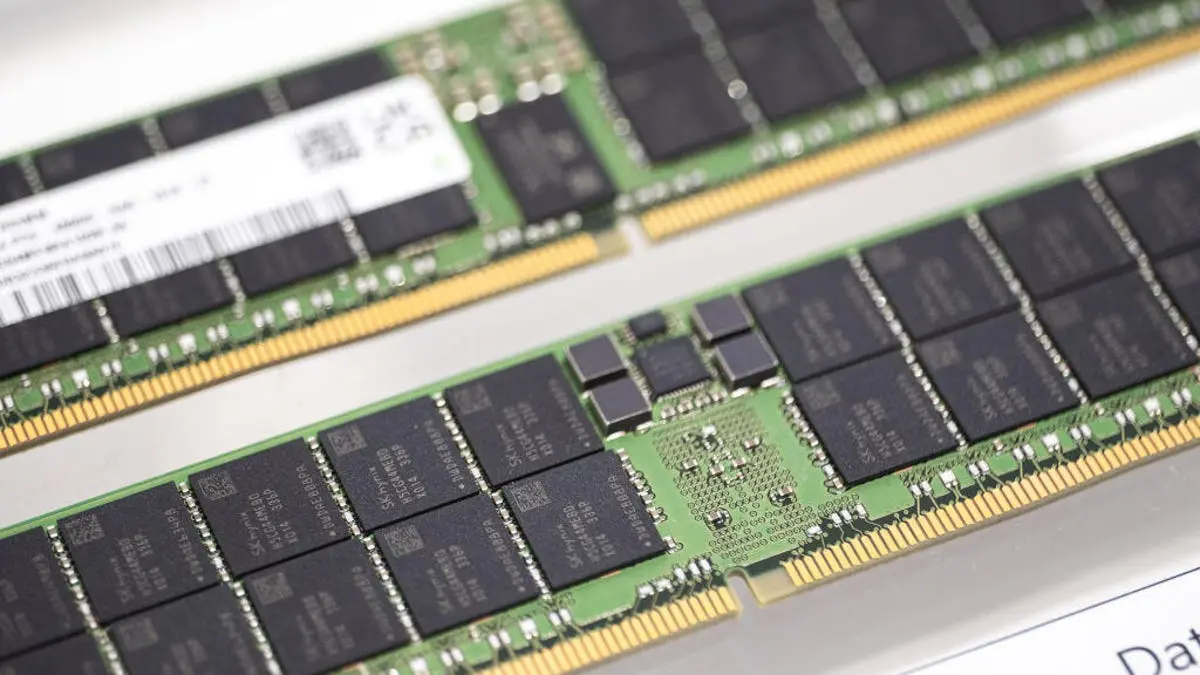
. This AI boom has fundamentally disrupted the global memory supply chain, with manufacturers prioritizing high-margin DDR5 and HBM RAM server chips over consumer products. The shift has been so dramatic that Micron shuttered its entire consumer-facing Crucial memory brand earlier this year to focus on enterprise AI customers1
.
Source: ZDNet
Legacy RAM Prices Spike as Manufacturers Seek Alternatives
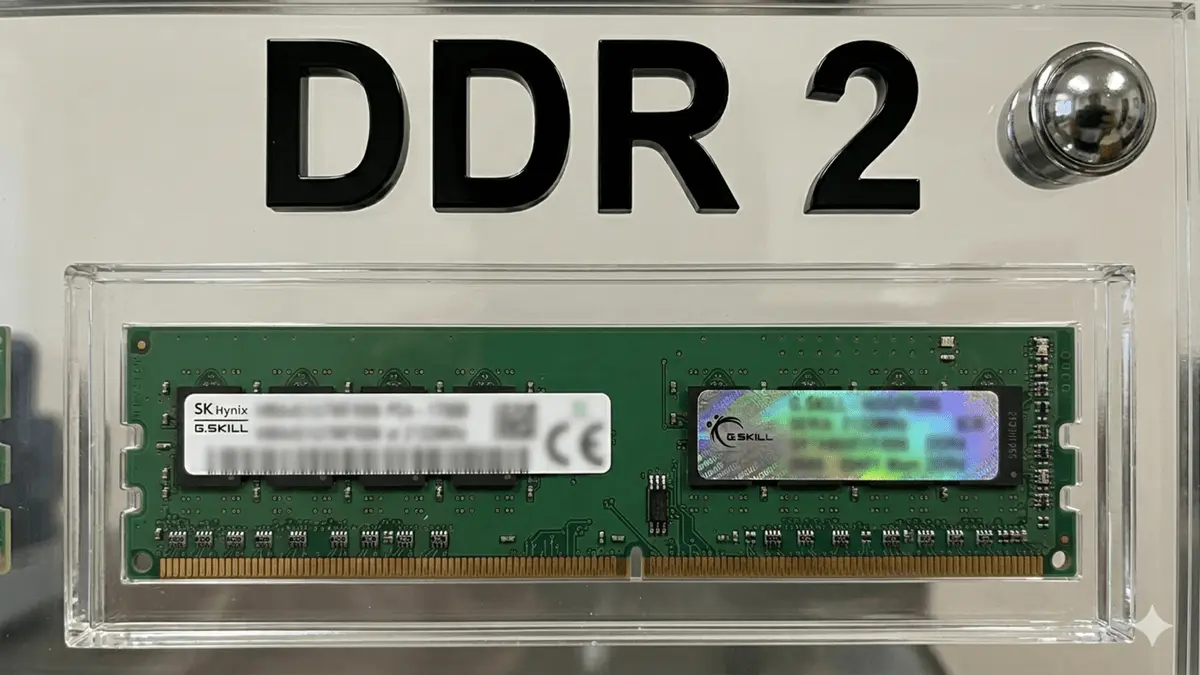
The crisis has created unexpected consequences for technology introduced decades ago. As device manufacturers scramble for affordable memory options, they've turned to legacy RAM in the form of DDR3 and DDR2, technologies released in 2007 and 2003 respectively. These older memory types had largely disappeared from consumer electronics but remained in use for industrial equipment, medical devices, automotive systems, and networking infrastructure that couldn't be upgraded
1
. Now, demand for DDR2 and DDR3 has spiked dramatically, with DDR2 prices surging by approximately 60% in Q2 2026 alone2
.
Source: TechRadar
TrendForce expects legacy RAM prices to climb another 35% to 40% over the next quarter, creating one of the strongest pricing surges seen in the legacy memory segment in years
2
. DDR4 contract pricing has reportedly surged by as much as 2200% at certain points, forcing buyers to move backward through successive memory generations2
. Some manufacturers have replaced DDR4 designs with DDR3 solutions, while certain DDR3-based systems are being redesigned around DDR2 memory to improve component availability2
.Supply Chain Disruptions Compound Memory Crisis
Beyond AI infrastructure spending, supply chain disruptions have intensified the shortage. The 2026 conflict in Iran has affected helium supplies, a critical component in semiconductor chip production. Qatar, the world's second-largest helium producer, has been essentially cut off following repeated attacks and the closure of the Strait of Hormuz, eliminating roughly a third of global helium supply
1
. This helium shortage adds another layer of complexity to memory chip production, constraining manufacturing capacity at a time when demand has never been higher.The situation has strengthened the negotiating position of memory manufacturers. Winbond, one of the key suppliers of DDR2, is reducing production of older standards and redirecting capacity toward DDR3, DDR4, and LPDDR4 products
2
. Meanwhile, Elite Semiconductor Memory Technology (ESMT) is increasing its focus on DDR2 production within existing wafer allocation to capture surging demand2
. Pricing volatility has become so extreme that some suppliers now offer hourly pricing, making planning nearly impossible for companies dependent on stable memory costs1
.Widespread Impact on Consumer Electronics
The memory crisis extends far beyond PCs and servers. Smartphone prices have already increased by as much as 25%, with budget phones under $300 being hit hardest
1
. Raspberry Pi boards have seen dramatic price increases, with a pair of 16GB Pi 5 boards now costing as much as higher-end laptops1
. Industry executives, including Nothing CEO Carl Pei and Framework representatives, have warned that supply constraints and elevated pricing are unlikely to ease in the near term2
.The limited utility of legacy RAM as a solution adds another challenge. DDR2 isn't supported by Windows 11, as processors compatible with DDR2 don't meet the operating system's requirements
1
. This means even if DDR2 were abundantly available, it wouldn't help consumers seeking affordable PC upgrades or new systems. Whether these conditions represent a temporary market distortion or signal a prolonged shortage remains uncertain, but the ripple effects of AI-driven demand for advanced memory now reach even 25-year-old product generations2
.References
Summarized by

Navi
[1]
Recent Highlights
1
Anthropic faces AI export ban as Mythos reportedly breached NSA systems in hours
Policy and Regulation

2
Five Eyes Alliance Warns AI Cyber Risks Could Trigger Crises Within Months, Not Years
Policy and Regulation

3
UN launches transparency initiative demanding AI firms reveal full environmental impact by 2030
Policy and Regulation

Recent Highlights
Today's Top Stories








Don’t drown in AI news. We cut through the noise - filtering, ranking and summarizing the most important AI news, breakthroughs and research daily. Follow topics that matter to you and stay ahead.


