Raspberry Pi raises profit forecast as AI demand drives sales but pushes DRAM costs higher


3 Sources
[1]
Raspberry Pi's profits are up. So is its DRAM bill
Forecasts earnings well ahead of expectations, even as it taps credit facilities to lock in memory supply The AI gold rush is proving good for Raspberry Pi's bottom line, but it's also forcing the low-cost computer maker to borrow money to keep enough memory chips in stock. In a trading update
[2]
Raspberry Pi raises profit forecast as AI demand grows
Raspberry Pi has increased its profit expectations due to strong demand for the small computers amid rapid growth in the AI sector. The Cambridge-based firm said it expected to deliver adjusted earnings of at least $38m (£28.2m) for the first half of 2026. The update sent shares in the company up
[3]
UK's Raspberry Pi lifts annual profit forecast on strong first-half results
June 5 (Reuters) - Single-board computing company Raspberry Pi on Friday raised its full-year 2026 profit forecast, saying strong AI-related demand was expected to result in adjusted core profit "significantly ahead" of market expectations for the year. The company expects first-half core profit
Share
Copy Link
Raspberry Pi expects first-half earnings of at least $38 million from over 4 million unit shipments, nearly matching full-year analyst forecasts. The Cambridge-based firm's shares jumped 20% following the update, tripling its value since January. However, surging AI demand is forcing the low-cost computer maker to tap credit facilities for strategic memory purchases as DRAM costs climb.
Raspberry Pi Delivers Strong First-Half Results Driven by AI Demand
Raspberry Pi announced on Friday that it expects adjusted earnings of at least $38 million for the first half of 2026, with unit shipments exceeding 4 million for the six months ending June 30
1
3
. The Cambridge-based single-board computing company now anticipates its full-year profit forecast will come in significantly ahead of market expectations, which had originally pegged annual earnings at roughly $42 million1
. The strong first-half results reflect robust demand for its products, higher average selling prices, and the benefit of lower-cost memory inventory purchased earlier1
. Investors responded enthusiastically to the trading update, pushing the share price up nearly 20 percent and more than tripling the firm's value since January1
2
.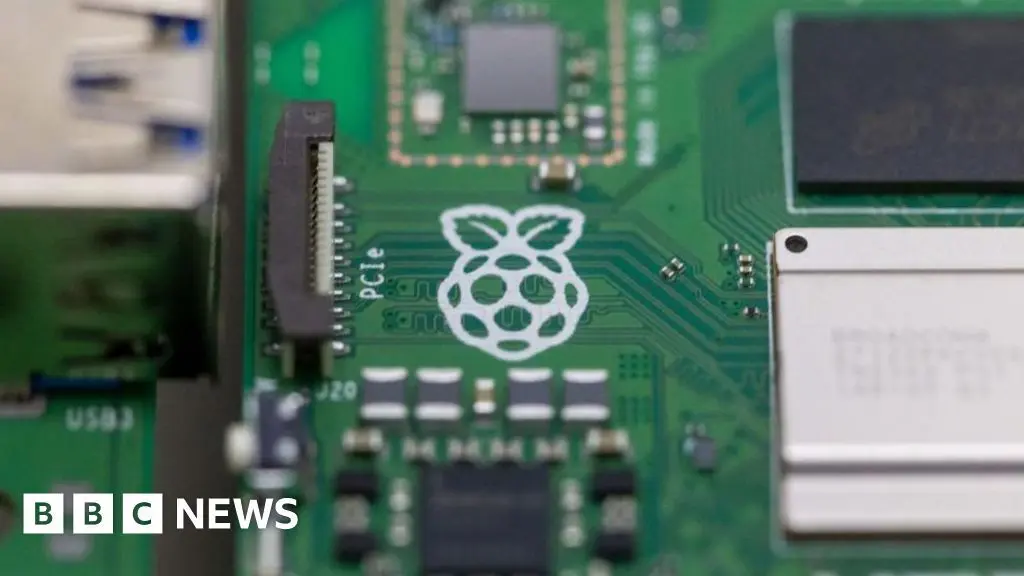
Source: BBC
AI Gold Rush Fuels Demand for AI-Powered Devices
The AI gold rush is proving exceptionally good for Raspberry Pi's bottom line as the credit card-sized computers are increasingly being used to create AI-powered devices, offering a cheaper alternative to more specialised hardware
1
2
. Enthusiasts have begun using the low-cost computer maker's machines to host AI assistants such as OpenClaw2
. The company's devices, which are the most widely sold computers by a UK firm and popular with people who programme as a hobby, are now finding new applications in the rapidly expanding AI sector2
. This shift demonstrates how AI demand extends beyond datacenter operators to affect even makers of compact, affordable computing hardware1
.
Source: The Register
Strategic Memory Purchases Amid Supply Chain Issues
Despite the positive financial outlook, Raspberry Pi warned that pricing and availability of DRAM and non-volatile memory remain challenging, a familiar complaint across the industry as AI infrastructure builders continue vacuuming up components
1
. To ensure it meets production targets, the company said it intends to make strategic memory purchases and will appropriately utilize its debt facilities throughout the year1
3
. The firm increasingly looks less like a hobbyist hardware vendor and more like a company navigating the same semiconductor supply chain issues as much larger technology firms1
. Earlier this year, it raised prices on some products as memory costs climbed, while executives have repeatedly pointed to component availability as a key business risk1
.Related Stories

Higher Component Costs Expected to Moderate Margins
Raspberry Pi acknowledged that first-half profitability benefited from lower-cost DRAM inventory acquired before memory prices moved higher
1
. As that memory chip inventory is consumed, margins are expected to moderate during the second half of the year1
3
. Management seems willing to sacrifice some profitability to secure supply amid an unprecedented scarcity driven by surging AI demand1
3
. The company has raised prices several times for many of its products over the past few months after a global shortage of memory chips, driven in part by demand from AI data centres, pushed up higher component costs2
. Still, Raspberry Pi has a problem that many hardware vendors would happily take: customers are still buying enough boards to keep the memory buyers busy1
.References
Summarized by

Navi
[1]
[3]
Related Stories
Raspberry Pi's Stellar Performance Boosts Share Price in First Half of 2024
24 Sept 2024

Raspberry Pi raises prices up to $25 as AI industry demand strains memory supply
02 Dec 2025•Business and Economy
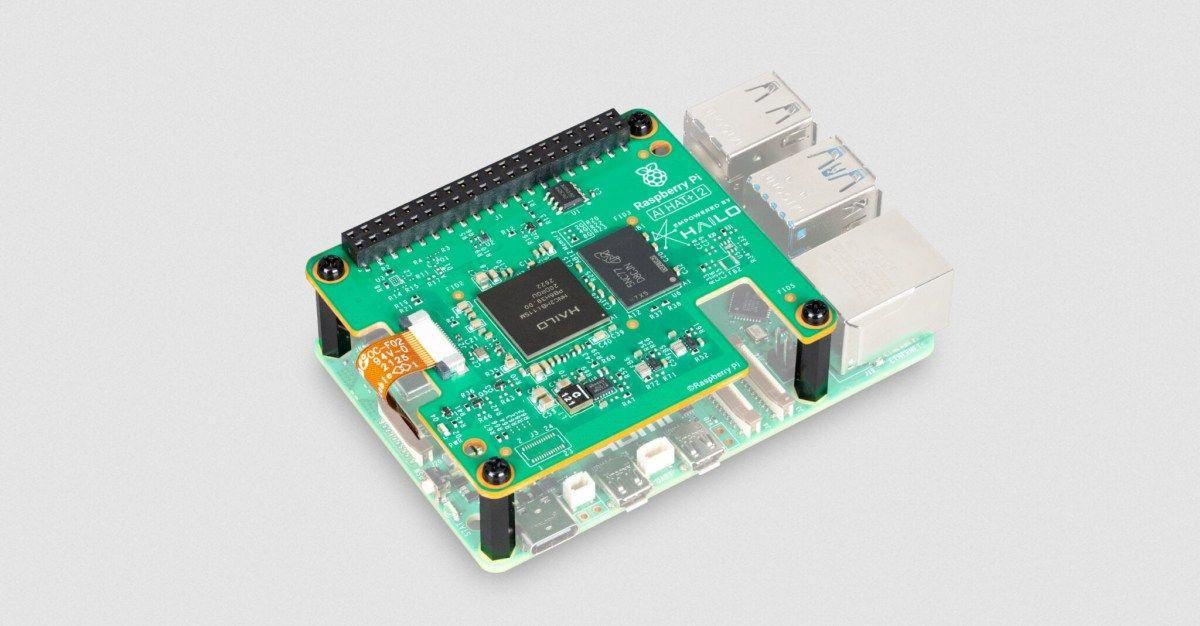
Raspberry Pi AI HAT+ 2 brings 40 TOPS and 8GB RAM to run gen AI models locally on Pi 5
15 Jan 2026•Technology
Recent Highlights
1
Microsoft and Nvidia Launch Surface Laptop Ultra: A $2,599 AI-Ready PC With RTX Spark Chip
Technology

2
OpenAI Releases 722 AI-Generated Math Papers on GitHub, Igniting Fury Among Mathematicians
Science and Research

3
Trump Consulted Grok AI Before Ordering Venezuela Invasion and Capture of Nicolás Maduro
Policy and Regulation

Recent Highlights
Today's Top Stories











Don’t drown in AI news. We cut through the noise - filtering, ranking and summarizing the most important AI news, breakthroughs and research daily. Follow topics that matter to you and stay ahead.


