Reed Hastings says AI revolution will shift focus back to humanities over STEM fields


3 Sources
[1]
Reed Hastings says AI will drive a return back to humanities: 'I'd be doubling down on emotional skills' | Fortune
Reed Hastings, the cofounder, former CEO, and now chairman of the board at Netflix, studied AI and computer science back in the 1980s. Decades later, he thinks today's AI revolution could bring back an emphasis on the humanities as a field of study. After graduating with a degree in Math from
[2]
Netflix Cofounder Predicts That This Unexpected Field Will Experience a Resurgence in the Age of AI
If he were raising a young child today, he said he would "double down on emotional skills" rather than pushing coding. Netflix cofounder Reed Hastings says chasing science, technology, engineering and math (STEM) fields is "overdone" and urges students to refocus on studying the humanities
[3]
Netflix Co-Founder Reed Hastings Says STEM Is 'Overdone' As AI Reshapes Jobs, Urges Shift To Emotional In
AI Driving Shifts Away From STEM Last week, speaking on the "Possible" podcast, Hastings framed his view around what AI does well versus what still depends on human connection. Hastings said AI's strengths lean toward structured, rule-based work, pointing to areas like software development and
Share
Copy Link
Netflix chairman Reed Hastings argues that artificial intelligence will drive a major shift in education and career priorities. The former CEO, who studied AI and computer science at Stanford in the 1980s, now believes STEM fields have become saturated as AI takes over structured tasks like coding and data analysis. He's backing his conviction with a $50 million donation to Bowdoin College for AI and humanity research.
Reed Hastings Predicts Major Shift from STEM Fields
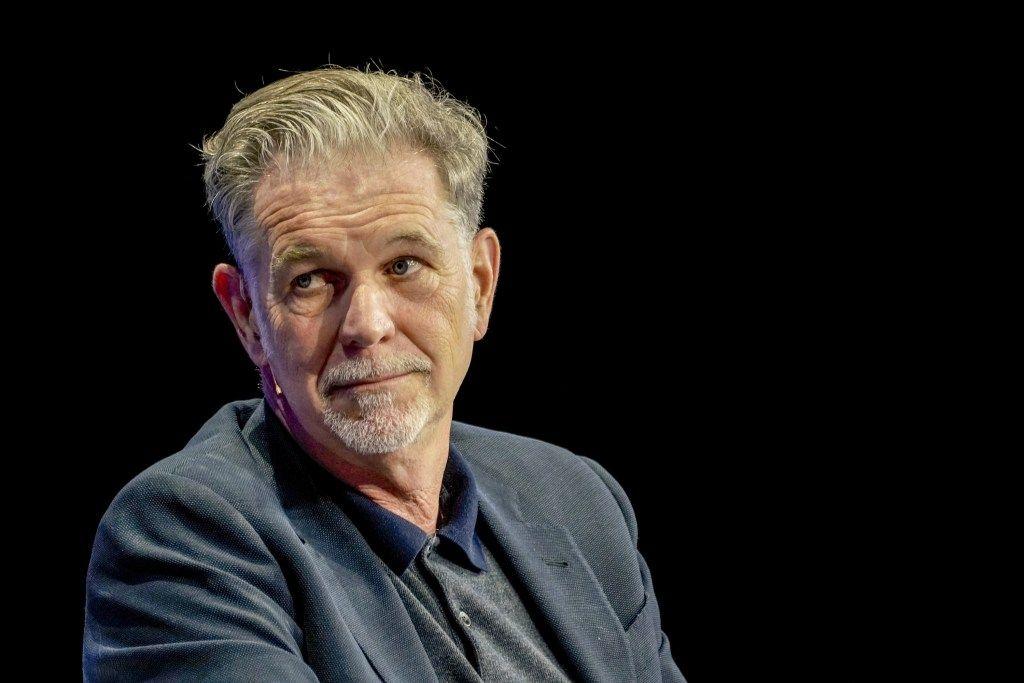
Reed Hastings, the cofounder and chairman of Netflix, is making a bold prediction about how artificial intelligence will reshape education and the job market. Speaking on the Possible podcast, Hastings argued that the current emphasis on STEM fields has become "overdone" and suggested that the AI revolution will drive students and workers back toward the humanities
1
.
Source: Entrepreneur
His perspective carries weight given his background: Hastings graduated with a degree in Math from Bowdoin College before pursuing a Master of Science degree in computer science and artificial intelligence at Stanford in the 1980s
1
."STEM practically took over Stanford University," Hastings said. "Now maybe what we'll see is a rotation back to the humanities and to understanding [the] combination of history and literature"
1
. He added that if he had a three-year-old today, he would be "doubling down on the emotional skills" rather than pushing coding2
.How AI Reshapes Jobs and Education Priorities
Hastings' comments reflect observable shifts in the job market. The share of tech job postings open to people with two to four years experience dropped to 40% in mid-2025 from 46% in mid-2022, according to data from jobs website Indeed
1
.
Source: Fortune
The Netflix chairman explained that AI will advance fastest in areas built on structured problem-solving, like software engineering and medicine. "The kinds of things that you do with a biology background will be done so much better and faster by AI that it'll be hard to compete for jobs in that space," he said
2
.Boris Cherny, the creator of Anthropic's Claude Code, predicted in February that the title of "software engineer" may even go extinct by the end of the year as AI tools give all employees the ability to write code
1
. However, Hastings remains skeptical that AI will replace human software engineers entirely, noting that "while many companies will have reduced software engineering employment, there'll be many other opportunities for more software"1
.Emotional Intelligence and Human-Centric Abilities Gain Value
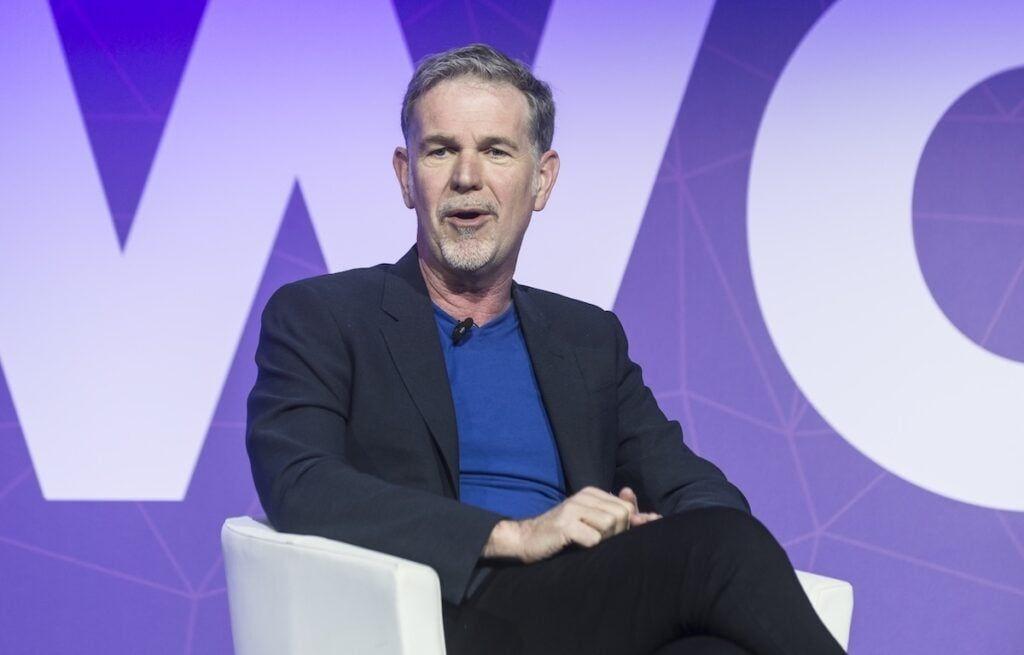
Hastings emphasized that emotional skills—including reading people and working with them—are "quite valuable" because they are much harder for computers to replicate
2
.
Source: Benzinga
He contrasted AI's capabilities with experiences driven by emotion and human connection. "You're not going to watch a basketball game of robots," Hastings said, describing entertainment, art, and sports as emotional domains that won't become the central focus of an AI-led economy
3
.This perspective aligns with views from Anthropic cofounders. Jack Clark, who received a Bachelor's degree in English Literature from the University of East Anglia, said at Semafor's World Economy Summit that his degree was "extremely relevant for AI" because he learned about history and "the kind of stories that we tell ourselves about the future"
2
. Another Anthropic cofounder, Daniela Amodei, who majored in English Literature at the University of California, Santa Cruz, told ABC News in February that she has "zero regrets" about skipping technical coursework. "In a world where AI is very smart and capable of doing so many things, the things that make us human will become much more important," Amodei said2
.Related Stories

The Hastings Initiative and AI's Societal Impact
Reed Hastings has put his money behind his vision for the future of work and education. Last year, the Netflix chairman donated $50 million to his alma mater Bowdoin College to establish the Hastings Initiative for AI and Humanity
1
. The funding will help Bowdoin hire 10 new faculty members and fund research on AI's impact on society. "Our goal is to prepare the next generation of leaders to engage responsibly with the opportunities and challenges presented by AI," says Bowdoin's website for the initiative1
.Hastings suggested that education may swing back toward disciplines that train people to understand stories, history, and how humans relate to one another
3
. He said the past two decades elevated STEM and coding as must-have skills, but he now sees signs of saturation. "As everyone sees that coding is overdone, my guess is we'll see that STEM is overdone," he said3
.Future Leaders Navigate AI's Economic Transformation
The debate over the future of work extends beyond Hastings. Elon Musk has suggested that universal high-income payments could offset AI-driven job losses if automation boosts output enough, though economist Sanjeev Sanyal criticized the idea as economically risky
3
. Bill Gates added that AI was already reshaping work and could eventually shorten the workweek, urging policymakers to prepare for economic changes without backing a single solution3
.Despite the uncertainty, Hastings remains optimistic about AI's potential. "The next 20 years will be super exciting and I think it will usher in this era of abundance," he said
1
. His vision suggests that while AI handles data analysis and structured tasks, creativity and human connection will define competitive advantage in the coming decades. For students and workers, the message is clear: developing emotional intelligence and understanding the humanities may offer more durable career prospects than mastering coding alone.References
Summarized by

Navi
[2]
Related Stories
Anthropic cofounder says human skills will matter more than ever as AI reshapes the job market
08 Feb 2026•Entertainment and Society
Netflix Co-Founder Reed Hastings Donates $50 Million to Bowdoin College for AI and Humanity Initiative
25 Mar 2025•Technology

Google DeepMind CEO Demis Hassabis: AI Will Create 'Very Valuable Jobs', Urges Focus on STEM Education
03 Jun 2025•Technology

Recent Highlights



Recent Highlights
Today's Top Stories



Don’t drown in AI news. We cut through the noise - filtering, ranking and summarizing the most important AI news, breakthroughs and research daily. Follow topics that matter to you and stay ahead.


