6 Sources
[1]
Reid Hoffman is leaving Microsoft's board to go 'founder mode' with startup Manus
After a very profitable decade on Microsoft's board, Reid Hoffman is stepping down, the company announced Thursday. Hoffman joined the board after Microsoft bought his company LinkedIn for $26.2 billion in 2016. Hoffman was on Microsoft's board when it invested its first $1 billion into OpenAI in 2019. Hoffman was one of OpenAI's original investors and served on the model maker's board until he stepped down in 2023, citing too many potential conflicts of interest to continue. He was also on Microsoft's board when the tech giant entered into one of those non-acquisition, acqui-hire deals for $650 million with his AI startup Inflection AI. Microsoft hired Inflection co-founder Mustafa Suleyman through that deal. Hoffman said on a recent episode of his "Possible" podcast, while talking with Microsoft CEO Satya Nadella, that he's ready to go "founder mode" with his latest AI startup, Manus. Manus is a drug discovery company that raised over $50 million through a couple of seed rounds last year. Hoffman is an investor, as is General Catalyst. Hoffman is cited as a co-founder of Manus and chairman of the board, not the CEO, though. That job belongs to Dr. Siddhartha Mukherjee, a physician, biologist, and Pulitzer Prize-winning author of the 2011 book "The Emperor of All Maladies: A Biography of Cancer." Still, Hoffman said he's excited to give Manus more attention. "One of the things I realized over the last month was that, we're seeing such progress with Manus. I need to get back to founder mode," he said. He believes the startup is making progress on "Move 37" AI, meaning AI that supersedes human creativity in chemistry, especially to combat various cancers, he added.
[2]
Reid Hoffman to Leave Microsoft's Board of Directors
Karen Weise reported from Seattle, and Cade Metz from San Francisco. Reid Hoffman, a co-founder of LinkedIn, will not run for re-election to Microsoft's board this year, the company said in a regulatory filing on Friday. Mr. Hoffman has been a key figure in forging Microsoft's relationship with OpenAI, but he also brought challenges. They included financial conflicts with his start-up investments and his relationship with Jeffrey Epstein, which lasted until just months before the financier and sex offender was arrested a second time. In a podcast interview with Satya Nadella, Microsoft's chief executive, that was released on Friday morning, Mr. Hoffman called serving on the board "a huge honor and pleasure." Mr. Hoffman, 58, said he would leave the board because a start-up he co-founded was seeing remarkable progress in its efforts to use artificial intelligence to improve cancer treatment. "I should really be transitioning right now to being founder mode," he said. "You will definitely be missed on the Microsoft board," Mr. Nadella said on the podcast. A spokeswoman for Mr. Hoffman said he was traveling and unable to comment further. Microsoft's filing thanked Mr. Hoffman for his service and said his decision "is not as a result of any disagreement with management on any matter relating to the company's operations, policies or practices." It said he would serve until the company's annual meeting, which is typically in December, and declined to comment further. Mr. Hoffman joined Microsoft's board in 2017, after it bought LinkedIn for $26.2 billion. He was an early investor in OpenAI, and helped forge its relationship with Microsoft when the start-up was looking for more funding to advance its A.I. development. Mr. Hoffman joined OpenAI's board of directors in 2018 but stepped down five years later. Microsoft put $1 billion into OpenAI in 2019, and Mr. Hoffman was there when OpenAI demonstrated its technology to Bill Gates, the Microsoft co-founder, a critical meeting that cemented Microsoft's further investment and close partnership with the start-up. In a lawsuit brought against OpenAI and Microsoft in 2024, Elon Musk, who helped found OpenAI but eventually left the A.I. research lab, accused Mr. Hoffman and another Microsoft executive of violating antitrust laws because of their involvement with both companies. Mr. Musk lost the case after it went to trial this spring, but he has vowed to appeal. The court did not hear the antitrust claims during the trial, focusing instead on claims against Microsoft, OpenAI and two OpenAI founders: Sam Altman and Greg Brockman. Mr. Hoffman was also a co-founder of and investor in Inflection AI, another A.I. start-up. He was part of Microsoft's vetting process when the company paid more than $650 million two years ago to license Inflection's technology, hired much of its staff and made an Inflection co-founder, Mustafa Suleyman, a top Microsoft executive. (The New York Times sued OpenAI and Microsoft on claims of copyright infringement of news content related to A.I. systems. The companies deny any improper actions.) Mr. Hoffman's personal and political entanglements have brought public attention to Microsoft's typically low-key board. He has been a major Democratic donor and has defended his funding of E. Jean Carroll's sexual-abuse lawsuit against President Trump, which has made him a right-wing target. And after being introduced to Mr. Epstein by a leader at M.I.T.'s Media Lab, Mr. Hoffman remained in touch with the financier for several years. He visited Mr. Epstein's island, swapped gifts and at one point told Mr. Epstein that he had been thinking of ways to help with negative media attention online, The Times reported this year. He met with Mr. Epstein over Skype and at times updated him on his interactions with Mr. Gates through at least late 2018, documents show. Mr. Epstein was arrested in July 2019. Mr. Hoffman told The Times this year that he wanted the Trump administration to release all files related to Mr. Epstein and prosecute those responsible for criminal behavior. "I welcome all the work that is being done by the press and those online to look into any and all Epstein connections to expose those who committed crimes," he said.
[3]
Reid Hoffman leaves Microsoft board to go 'founder mode' with AI drug startup Manus
Reid Hoffman is leaving Microsoft's board after a decade to focus on Manus, his AI drug discovery startup. The company has raised over $50 million. Reid Hoffman is stepping down from Microsoft's board of directors after nearly a decade. The company disclosed the departure in a regulatory filing on Thursday. Hoffman said he wants to go "founder mode" with Manus, his AI-powered drug discovery startup. Hoffman joined the board in 2016 after Microsoft bought his company LinkedIn for $26.2 billion. His tenure overlapped with some of the most consequential AI deals in the company's history. He was a board member when Microsoft invested its first $1 billion into OpenAI in 2019, a bet that reshaped the company's trajectory. Hoffman was also one of OpenAI's original investors and served on that company's board until 2023. He stepped down citing too many potential conflicts of interest. Those conflicts multiplied further when Microsoft struck a $650 million acqui-hire deal with Inflection AI, the AI startup Hoffman co-founded. That deal brought Inflection co-founder Mustafa Suleyman into Microsoft, where he now leads a narrower AI division focused on superintelligence. It also raised regulatory questions about conflicts on Big Tech boards. Hoffman's next chapter is Manus, a drug discovery company he co-founded. The startup has raised over $50 million across two seed rounds, with backing from General Catalyst. Its CEO is Dr. Siddhartha Mukherjee, a physician, biologist, and Pulitzer Prize-winning author of "The Emperor of All Maladies." Hoffman holds the title of co-founder and chairman, not CEO. But he signalled on a recent episode of his "Possible" podcast that he plans to be far more hands-on. "One of the things I realized over the last month was that, we're seeing such progress with Manus. I need to get back to founder mode," he told Microsoft CEO Satya Nadella during the conversation. Hoffman said Manus is making progress on what he calls "Move 37" AI. The term refers to AI that supersedes human creativity, borrowed from AlphaGo's famous move against world champion Lee Sedol. He believes the concept applies to chemistry, particularly in discovering novel compounds to combat cancer. The departure comes as AI drug discovery heats up across the industry. ByteDance's Anew Labs recently presented its first AI-designed therapy, and Google DeepMind's Isomorphic Labs has AI-designed drug candidates entering clinical trials.
[4]
LinkedIn co-founder Reid Hoffman to leave Microsoft board after nearly a decade
Reid Hoffman, the LinkedIn co-founder who has served on Microsoft's board since 2017, will not stand for re-election at the company's 2026 annual meeting, ending a board tenure that coincided with some of the most consequential years in the tech giant's history. Hoffman informed Microsoft on June 2 that he will not stand for re-election at its 2026 annual shareholder meeting, according to an SEC filing. He will remain a director until that meeting, later this year. The filing states that Hoffman's decision was not the result of any disagreement with management over the company's operations, policies or practices. Microsoft thanked him for his contributions. On an episode of his "Possible" podcast, released Friday morning, Hoffman told Microsoft CEO Satya Nadella that he wanted to return to "founder mode" to focus on Manas AI, the cancer drug-discovery startup he co-founded, citing early progress there. Nadella thanked him for his board service and said he was eager to see what Hoffman builds next. "I am so grateful for all of your contributions to Microsoft and the board over the years, and excited to see you get back to founder mode with Manas," Nadella wrote in a LinkedIn comment. Hoffman joined the board after Microsoft's $26.2 billion acquisition of LinkedIn, the professional network he co-founded in 2003. A longtime Greylock Partners investor and prominent Democratic donor, he served on the board's Environmental, Social and Public Policy Committee. His exit follows three consecutive years of opposition from the National Legal and Policy Center, a conservative shareholder group that urged investors to vote against his re-election, citing his political activities and other concerns. Shareholders re-elected him each time, most recently in December 2025. Hoffman has been one of Silicon Valley's most active figures in AI, both as an investor and a hands-on experimenter. He was an early investor in OpenAI and sat on its board until resigning in March 2023, citing potential conflicts with his AI investments at Greylock and his role as a founder of Inflection AI, the startup he co-founded in 2022 with DeepMind co-founder Mustafa Suleyman. Microsoft hired Suleyman and most of Inflection's staff in March 2024, installing Suleyman as CEO of a new Microsoft AI division, and struck a licensing deal with Inflection reportedly worth $650 million.
[5]
Why LinkedIn Founder Reid Hoffman Is Leaving Microsoft's Board After Nearly A Decade - Microsoft (NASDAQ:
LinkedIn Founder Returns to Startup Roots Later, Hoffman resigned from OpenAI's board in 2023, citing potential conflicts of interest between his role on the board and his investments through Greylock Partners, as well as his personal holdings in startups building on OpenAI's technology. On a recent episode of his "Possible" podcast with Microsoft CEO Satya Nadella, Hoffman cited rapid momentum at Manus as the catalyst. "We're seeing such progress with Manus. I need to get back to founder mode," he said. Manus is an AI-native biopharmaceutical and cancer drug discovery company backed by Hoffman and General Catalyst, with Hoffman serving as co-founder and chairman. Dr. Siddhartha Mukherjee, a Pulitzer Prize-winning physician and author of The Emperor of All Maladies, serves as CEO. Hoffman believes Manus is advancing what he calls "Move 37" AI, machine intelligence that supersedes human creativity in chemistry to combat cancer. Photo Courtesy: Shutterstock Disclaimer: This content was partially produced with the help of AI tools and was reviewed and published by Benzinga editors. Market News and Data brought to you by Benzinga APIs To add Benzinga News as your preferred source on Google, click here.
[6]
Reid Hoffman leaves Microsoft board to focus on AI startup Manas By Investing.com
Investing.com - Reid Hoffman will step down from Microsoft Corp.'s (NASDAQ:MSFT) board later this year to concentrate on his artificial intelligence company, the LinkedIn co-founder announced in a video posted to his social-media accounts. "We're seeing such progress with Manas, I said 'Look, I think I need to get back to founder mode,'" Hoffman said in the video, which shows a conversation with Microsoft Chief Executive Officer Satya Nadella. Manas is a drug-discovery startup. According to its website, Manas AI describes itself as an,"AI-native biopharmaceutical company combining pioneering AI technology with the first principles of chemistry, physics, and biology to transform the clinical pipeline from target to medicine." The startup most recently partnered with Schrodinger Inc, gaining access to its computational molecular discovery playform. Hoffman joined Microsoft's board in 2017 following the company's acquisition of LinkedIn, which he co-founded in 2002. He remained an active investor, including at Greylock, where he is a partner, and was a link between Microsoft and Silicon Valley AI companies. "It's been a huge honor and pleasure" to serve on Microsoft's board, Hoffman said in the video. Nadella responded: "I am so grateful for all of your contributions to Microsoft and the board over the years, and excited to see you get back to founder mode with Manas." Hoffman was also a onetime board member of close Microsoft partner OpenAI. He came under scrutiny earlier this year after the publication of documents from Jeffrey Epstein that suggested a long and personal relationship between the two men, though there is no indication in the Justice Department documents that Hoffman knew of Epstein's alleged ongoing crimes. This article was generated with the support of AI and reviewed by an editor. For more information see our T&C.
Share
Copy Link
LinkedIn co-founder Reid Hoffman is stepping down from Microsoft's board after nearly a decade to focus on Manus, his AI-powered drug discovery startup. The company has raised over $50 million and is pursuing what Hoffman calls 'Move 37' AI to develop novel cancer treatments that supersede human creativity in chemistry.
Reid Hoffman is leaving Microsoft's board of directors after nearly a decade of service, the company announced in a regulatory filing on Thursday
1
2
. The LinkedIn co-founder joined the Microsoft board in 2017 after the tech giant acquired his professional networking platform for $26.2 billion in 20164
. Hoffman informed Microsoft on June 2 that he will not stand for re-election at the company's 2026 annual shareholder meeting, though he will remain a director until that meeting later this year4
.
Source: GeekWire
His tenure on the Microsoft board coincided with some of the company's most consequential AI deals. Hoffman was a board member when Microsoft invested its first $1 billion into OpenAI in 2019, a pivotal moment that reshaped the tech giant's trajectory
3
. As one of OpenAI's original investors, Hoffman served on that company's board until 2023, when he stepped down citing too many potential conflicts of interest1
. He was also present when OpenAI demonstrated its technology to Bill Gates, the Microsoft co-founder, a critical meeting that cemented Microsoft's further investment and close partnership with the AI startup2
.Hoffman's dual roles created mounting conflicts of interest over the years. He was also a co-founder of and investor in Inflection AI, another AI startup, and participated in Microsoft's vetting process when the company paid more than $650 million two years ago to license Inflection's technology and hired much of its staff
2
. That deal brought Inflection co-founder Mustafa Suleyman into Microsoft, where he now leads a narrower AI division focused on superintelligence3
. The arrangement raised regulatory questions about conflicts on Big Tech boards3
.In a lawsuit brought against OpenAI and Microsoft in 2024, Elon Musk accused Hoffman and another Microsoft executive of violating antitrust laws because of their involvement with both companies
2
. While Musk lost the case after it went to trial this spring, he has vowed to appeal2
. Hoffman also faced three consecutive years of opposition from the National Legal and Policy Center, a conservative shareholder group that urged investors to vote against his re-election, citing his political activities and other concerns4
.
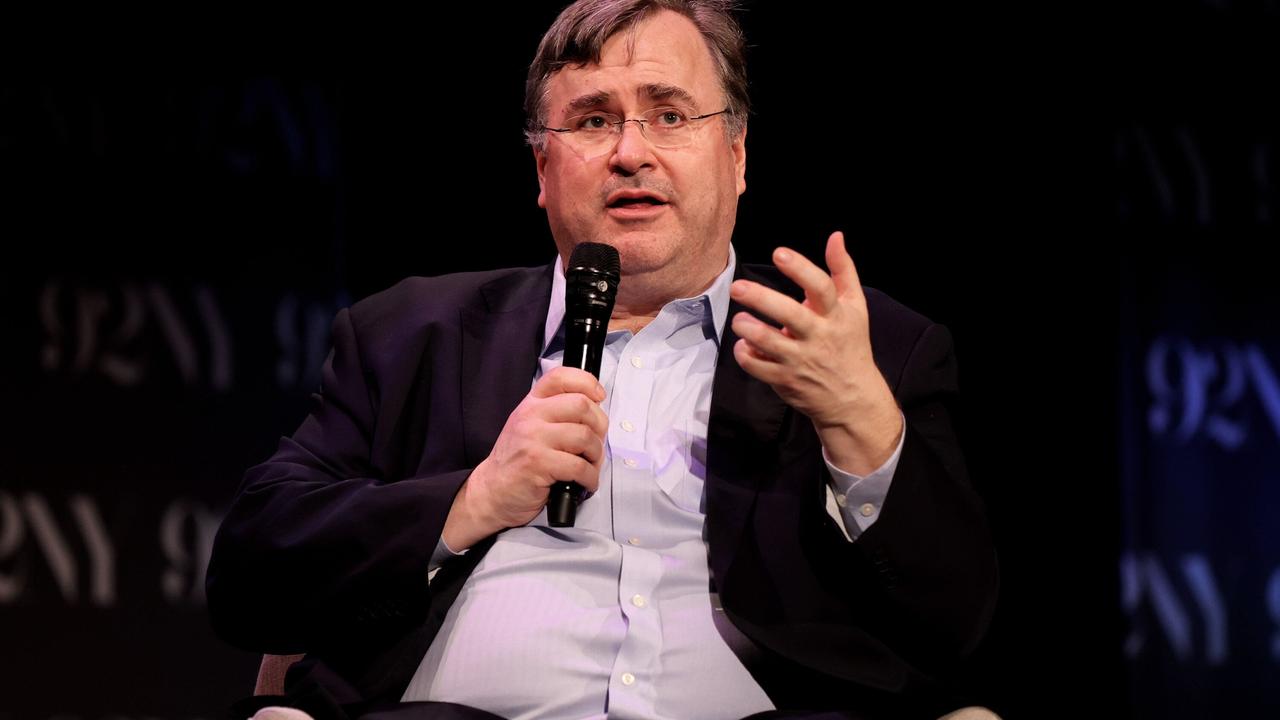
Source: NYT
On a recent episode of his "Possible" podcast with Microsoft CEO Satya Nadella, Hoffman explained his decision to embrace founder mode with his latest venture
1
. "One of the things I realized over the last month was that, we're seeing such progress with Manus. I need to get back to founder mode," he told Nadella1
. The AI startup Manus is an AI-powered drug discovery startup focused on cancer research that has raised over $50 million through a couple of seed rounds last year1
. The biopharmaceutical company has backing from General Catalyst, with Hoffman serving as co-founder and chairman5
.

Source: Benzinga
Dr. Siddhartha Mukherjee, a physician, biologist, and Pulitzer Prize-winning author of the 2011 book "The Emperor of All Maladies: A Biography of Cancer," serves as CEO
1
. Though Hoffman is cited as co-founder and chairman rather than CEO, he signaled on his podcast that he plans to be far more hands-on3
.Related Stories
Hoffman believes Manus is making progress on what he calls Move 37 AI, machine intelligence that supersedes human creativity in chemistry, particularly to combat various cancers
1
. The term refers to AI that supersedes human creativity, borrowed from AlphaGo's famous move against world champion Lee Sedol3
. He believes this concept applies to discovering novel compounds for AI for cancer treatment3
.The departure comes as AI drug discovery heats up across the industry. ByteDance's Anew Labs recently presented its first AI-designed therapy, and Google DeepMind's Isomorphic Labs has AI-designed drug candidates entering clinical trials. Nadella thanked Hoffman for his board service and expressed excitement about his next chapter. "I am so grateful for all of your contributions to Microsoft and the board over the years, and excited to see you get back to founder mode with Manas," Nadella wrote in a LinkedIn comment
4
. Microsoft's filing confirmed that Hoffman's decision was not the result of any disagreement with management over the company's operations, policies or practices2
.Summarized by
Navi
1
Policy and Regulation

2
Policy and Regulation

3
Technology

News Categories


