AI-Generated Food Photos Trigger Customer Backlash as Restaurant Menus Turn Nightmarish


3 Sources
[1]
Restaurants face backlash over AI-generated food photos
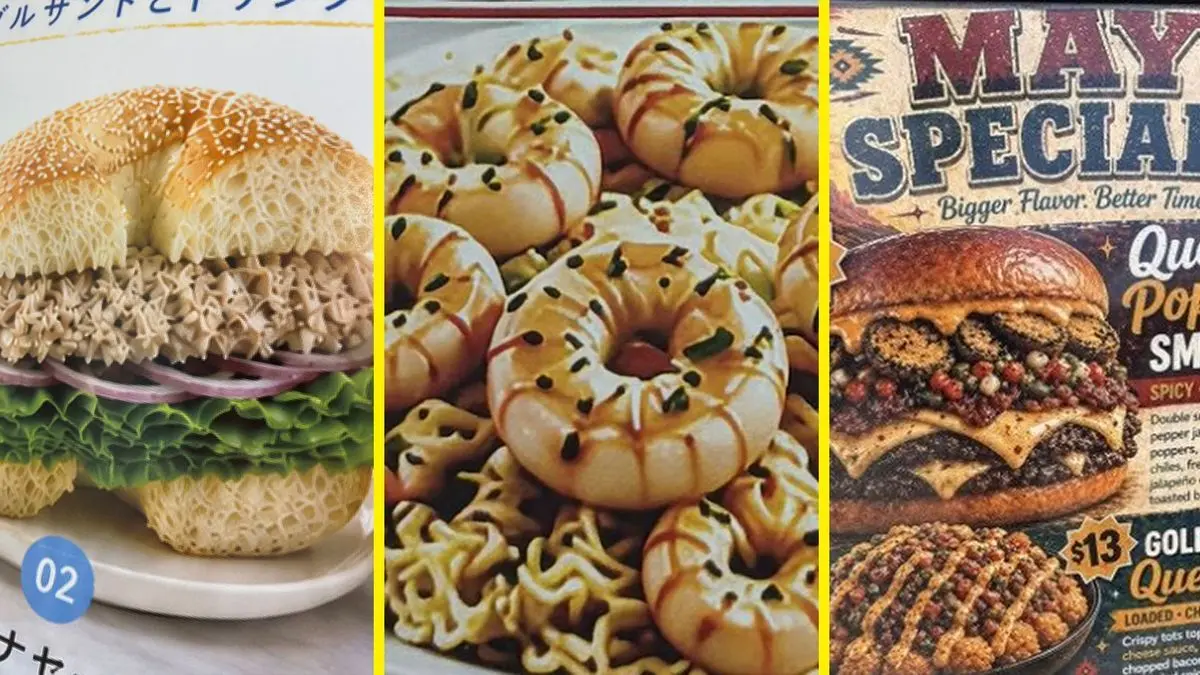
Food photos are supposed to make you hungry, but the ones currently haunting social media look more likely to crawl off the menu than end up on a plate. Over the weekend, tech reporter Sam Biddle shared a deli sign featuring what appears to be a dozen glossy, shrimp-shaped bagels sitting on a pile
[2]
Side of slop? Bizarre AI food images jump from online to IRL menus
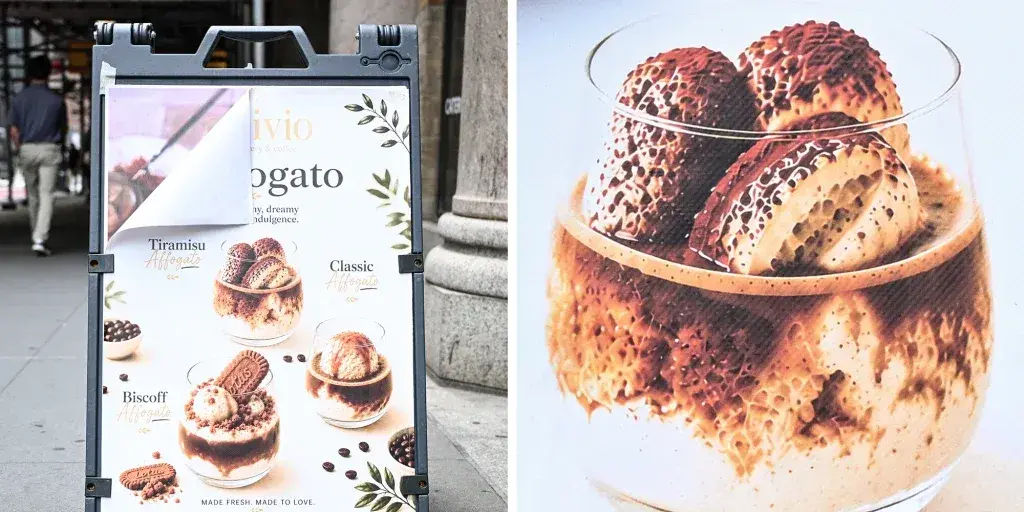
An AI-generated food menu outside of a bakery in New York City.Vanessa Leroy / NBC News AI "slop" is now increasingly on offer at brick-and-mortar establishments. As AI image-making technology has grown more advanced -- and cheaper to use, in some cases being free -- images with a distinct "slop"
[3]
AI is killing folk graphic design, and the resulting "Lovecraftian horrors" are making people want to never eat out again
We've seen businesses complain about automatic AI-generated images thrust upon their products on platforms like Amazon, Reddit and Uber Eats. Some understandably fear that the fake imagery could harm their sales. What some people finding harder to fathom is why, at the same time, other companies
Share
Copy Link
Small restaurants are flooding menus with AI-generated food photos featuring shrimp-shaped bagels and honeycomb buns. The bizarre AI food images are sparking intense customer backlash as platforms like Pinterest and LinkedIn introduce controls to combat AI slop.
AI-Generated Food Photos Replace Traditional Restaurant Menus
Small restaurants, delis, and food trucks across the United States are increasingly deploying AI-generated food photos on their menus, creating a wave of customer backlash over the bizarre and often disturbing results
1
. Tech reporter Sam Biddle ignited the conversation when he shared images of a deli sign featuring shrimp-shaped bagels sitting on noodles, alongside perfectly round pasta piles and strangely smooth sandwiches with ingredients that appeared to melt together1
. The post struck a nerve, with users flooding social media with their own sightings of AI slop appearing on restaurant menus, food truck advertisements, and even in mailboxes1
.
Source: Creative Bloq
The trend represents a significant shift as AI image generation technology has become more advanced and accessible, with some tools now available for free
2
. As overall inflation remains stubborn and cost pressures persist, small businesses using AI are turning to these tools as budget-friendly alternatives to professional photography or traditional folk graphic design2
. Paul Shovlin, an assistant professor at Ohio University who studies AI, noted that many establishments displaying AI-generated content are smaller, likely family-owned businesses running on shoestring budgets2
.The Uncanny Unappetizing Appearance Triggers Physical Responses
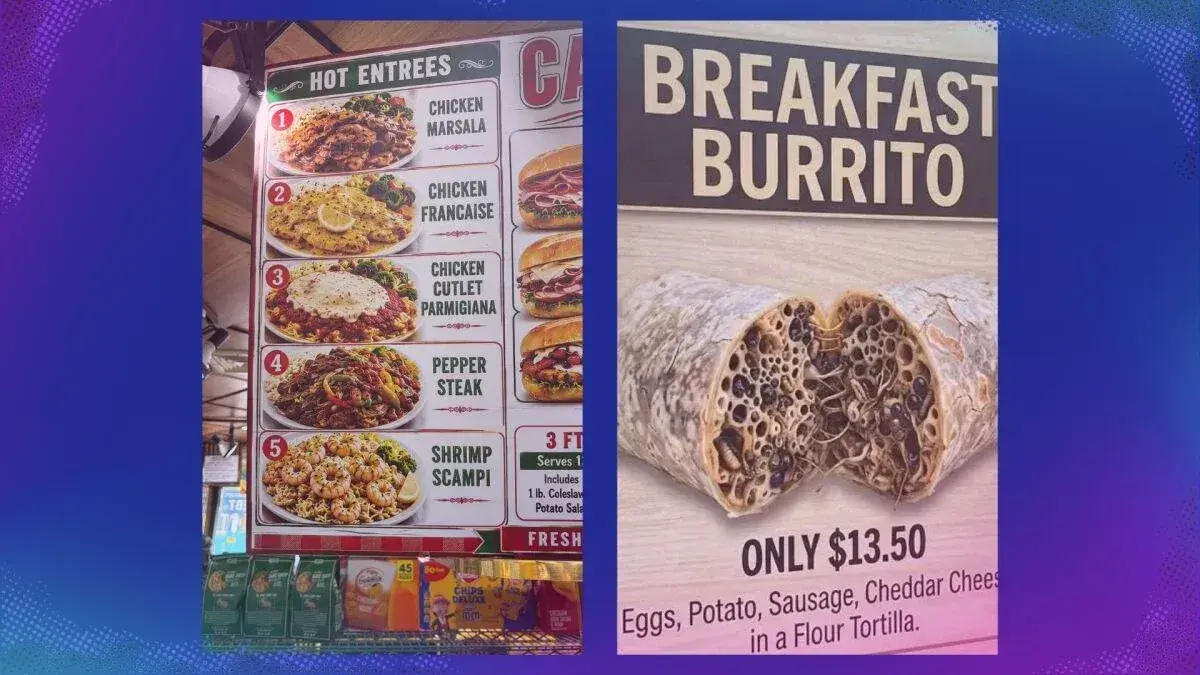
The bizarre AI food images are producing more than just aesthetic complaints. Reddit threads featuring these images are filled with mentions of trypophobia, an aversion to clusters of small holes or bumps that the AI-generated textures often resemble
1
. Commenters have described the food as resembling mold, bugs, intestines, and brain matter, with one user noting that everything looks "grown into position" rather than prepared or assembled1
. The Lovecraftian horrors include burgers with porous, honeycomb-like buns, breakfast burritos with filling resembling something from a horror movie, and protein options that appear covered in bugs1
2
.
Source: Mashable
One X user reported attempting to order an item advertised on a café's outdoor menu, only to learn it didn't exist and was instead the product of ChatGPT
2
. AI-generated text compounds the problem, with one restaurant menu advertising dishes including "Crslay Fried Mussels Pot Ksascte Barno" and "Homemade ice Croams"1
. The disconnect between AI image generation and reality introduces an uncanny effect that differs fundamentally from traditional food photography manipulation1
.Customer Backlash Escalates to Real-World Consequences
The backlash over AI-generated food imagery has moved beyond online complaints to tangible impacts on businesses. A coffee shop in San Francisco paid hundreds of dollars to remove graffiti that appeared in response to its use of AI-generated food images on its facade
2
. Co-owner Lyndsey Lozano expressed confusion over the intensity of the reaction, questioning whether the images were "really that horrific" to provoke such strong consumer behavior2
.
Source: NBC
Social media users have made clear they're staying away from establishments using AI-generated content. "This is a matter of detail orientation and quality control. If this is the level of your attention to detail and your ability to manage quality, no way am I putting anything you make in my mouth," one person wrote
3
. Another commenter predicted bankruptcy for restaurants using such imagery, stating that "nobody wants to eat radioactive food that looks like it was made by brain damaged space aliens"3
. The erosion of trust extends beyond individual establishments, with many questioning why businesses abandoned whatever menus they had just two or three years ago3
.Related Stories

Digital Platforms Respond to Growing AI Slop Fatigue
The restaurant menu controversy reflects broader exhaustion with AI-generated content flooding digital platforms. Merriam-Webster selected "slop" as its 2025 Word of the Year, defining it as "digital content of low quality that is produced usually in quantity by means of artificial intelligence"
1
. AI slop encompasses generic LinkedIn posts, fake celebrity photos, impossible animal-rescue videos, nonsensical recipes, and advertisements filled with people and products that never existed1
.Platforms are implementing controls in response to user demands. Pinterest introduced settings allowing users to request fewer generative AI images, eventually expanding the feature to its food and drink category
1
. LinkedIn launched a "Seems like AI slop" option enabling users to flag posts they consider generic or machine-made, with more than 1 million people reportedly using the button within its first few weeks1
. Snapchat announced that fully AI-generated videos would no longer qualify for recommendations on Spotlight1
.The Death of Folk Graphic Design and Design Authenticity
Communications executive Jules Mossler articulated why small businesses with "razor thin" margins might turn to AI tools promising cheaper, more professional advertising, but argued that doing so erases the handmade details people actually value about local businesses
1
. "We want the sign you and your sister made; the misspellings, the chipped paint," Mossler wrote, adding that people struggle to articulate why AI-generated content leaves them "deeply sad"1
.X user Adam Johnson described the shift as "quirky, low-budget signage being replaced by this grotesque, uncanny monoslop," acknowledging it might not be "the biggest injustice in the world, but a small piece of culture is dying"
1
. For longtime designers, the advent of AI-related image making has proven maddening and damaging to their bottom lines2
. While amateur menu design wasn't always polished, it possessed charm and honesty that AI-generated imagery lacks3
. The trend suggests that while large brands generally avoid AI slop to prevent customer alienation, smaller businesses see easy access to AI image generators as time savers without recognizing the potential damage to customer trust and design authenticity3
.References
Summarized by

Navi
Related Stories
AI-Generated Food Images on Restaurant Menus Trigger Consumer Backlash and Trypophobia
03 Sept 2026•Entertainment and Society
The Rise of AI Slop: How Mass-Produced Content Is Degrading Social Media and Marketing
25 Nov 2025•Entertainment and Society
AI Recipe 'Slop' Threatens Thanksgiving Traditions as Food Bloggers Face Traffic Collapse
25 Nov 2025•Technology

Recent Highlights
1
Microsoft and Nvidia Launch Surface Laptop Ultra: A $2,599 AI-Ready PC With RTX Spark Chip
Technology

2
Google Unveils Gemini 4 Argon AI Model, Restricts Access to Trusted Cyber Defenders
Technology

3
OpenAI Releases 722 AI-Generated Math Papers on GitHub, Igniting Fury Among Mathematicians
Science and Research

Recent Highlights
Today's Top Stories






Don’t drown in AI news. We cut through the noise - filtering, ranking and summarizing the most important AI news, breakthroughs and research daily. Follow topics that matter to you and stay ahead.


