Retiree money is quietly funding AI's debt binge, and critics are worried


2 Sources
[1]
Billions in Insurance Money Is Being Bet on AI Debt, and Analyst Are Nervous
Insurance companies are investing billions of their customers' money into A.I. deals as analysts warn of mounting risks. When Elon Musk needed help financing a large purchase of artificial intelligence chips earlier this year, Wall Street offered an elegant solution. Mr. Musk and his team of
[2]
How billions in safe insurance money are being bet on AI debt
When Elon Musk needed help financing a large purchase of artificial intelligence chips this year, Wall Street offered an elegant solution. Musk and his team of advisers created a financial entity that would borrow billions to buy the chips and then lease them back to xAI, his artificial
Share
Copy Link
US life insurers hold $85.2 billion in AI debt, up 24% in six months. Off-book structures and safe ratings are routing retiree money into deals critics call risky.
The most cautious money in finance finds AI
As of June 30, U.S. life insurers, historically among the most cautious investors in finance, held $85.2 billion in AI debt, up 24% in six months, per Moody's Ratings
1
2
.Moody's projects the holdings could reach up to $185 billion in AI investments by the close of next year
2
. The attraction is that AI debt is regarded as secure while offering market-beating returns2
. AI companies now see the life insurance industry as crucial to funding data center expansion2
.The off-book playbook
The clearest example starts with Elon Musk. He and advisers set up a financial entity that borrowed billions to buy AI chips and leased them back to xAI
1
2
. So xAI was not technically the borrower, and the debt stayed off its official load1
2
. $2.4 billion of that debt was sold to Athene, an insurer that handles life insurance policies and annuities for retirees, per a Moody's report1
2
.The playbook has grown. SpaceX's auditors said chip money it could borrow off its books this year should be recorded as company debt
2
. This month, Musk raised $40 billion for additional AI chips through a financial entity that could keep that debt off SpaceX's books for now2
. In an X post, he said "we're investment grade"2
.Athene is a subsidiary of Wall Street firm Apollo. "Athene finances what we view as the safest and most defensible parts of the A.I. ecosystem," an Apollo spokesperson said
2
.Who rates the risk
The flow depends on ratings. Credit rating agencies determine what insurers may invest in, and Moody's and S&P Global have given the expanding AI debt pool relatively safe ratings that meet those criteria
2
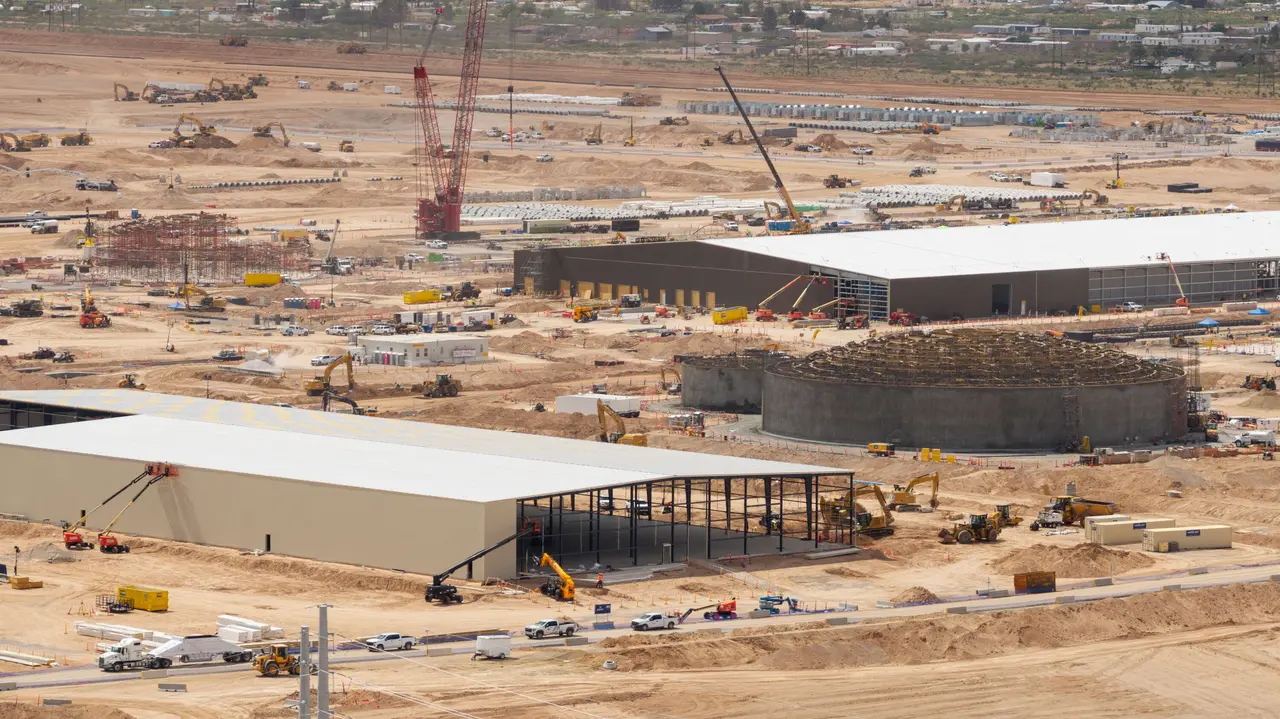
.Consider Meta's data center in Richland Parish, Louisiana. Meta took only a 20% stake, with investment firm Blue Owl owning the rest. Yet S&P Global rated the project's $27 billion of debt just one notch below Meta's corporate rating, even though Meta says it has not guaranteed repayment of the bonds
2
. Insurers funded $3.4 billion of the deal, per Moody's2
. S&P Global's rating rested on guarantees including a $28 billion lease guarantee stretching over 20 years, or an obligation to find a replacement tenant should Meta walk away2
.
Source: Seattle Times
The same logic shows up elsewhere. CoreWeave's own credit sits in junk territory. Yet an $8.5 billion loan tied to its Meta data center deals was rated on Meta's credit rather than CoreWeave's, and insurers were buyers, per S&P Market Intelligence
2
.The commitments behind these structures are large relative to reported debt
2
. Meta has signed $356 billion in leases, including data centers not yet built, four times its reported $84 billion debt2
. It also carries $455 billion in chip and infrastructure deals it cannot cancel2
. S&P Global said last month it had moved its 2027 outlook on Meta's rating to negative, from stable2
. It cited surging future leases and uncertainty over whether AI spending will produce revenue2
. The rating itself is unchanged2
. Meta respectfully disagrees, pointing to what it calls a very strong credit profile2
. Both S&P Global and Moody's acknowledge the off-book risk but do not count future lease commitments as existing debt, which is what keeps them off the books2
.Related Stories
The argument over whether it's safe
The safety insurers rely on rests on guarantees from a handful of companies: Nvidia, Meta, Alphabet, SpaceX, Anthropic and OpenAI
2
. The deals often include ways for those companies to walk away if development is delayed2
.Ares Management, among the largest private credit firms with $691 billion in assets, argued in a newsletter that some of these deals are "two-faced transactions"
2
. "Sometimes structural complexity and financial engineering are not used to improve risk, but to hide it," the firm wrote2
. "The life insurance industry is now in effect backing large swaths of the AI industry," said Andrew Granato, a law professor at the University of Texas at Austin who studies the overlap between private equity and insurers2
."When institutional investors and insurers buy this debt, they are not taking a hidden risk. They are buying exposure to the contractual obligations of some of the strongest corporate credits in the world," a Blue Owl spokesperson said
2
.CoreWeave co-founder Brannin McBee told the Financial Times last month that insurers represent an unlimited pool of capital for future borrowing. "Like, that's all the money in the world that sits in the insurance tranche," he said
2
. CoreWeave's stock dropped sharply the next day, and bonds of other AI-related companies have fallen in recent weeks as investors grow wary2
."We should all be concerned about this, especially as the debt deals get more opaque," Granato said
2
. "These companies are not as safe as they once were. They're sort of playing this game where they can pretend like they don't have these liabilities," said Stijn Van Nieuwerburgh, a professor at Columbia Business School2
.References
Summarized by

Navi
[2]
Related Stories
AI Financing Under Scrutiny as $8 Trillion Investment Boom Raises Systemic Credit Risks
30 Sept 2026•Business and Economy

Big Tech Debt Hits $1.65 Trillion as AI Infrastructure Spending Triggers Credit Concerns
27 Jul 2026•Business and Economy
AI Industry's $10 Trillion Financing Spree Raises Systemic Risks as Borrowing Costs Surge
21 Sept 2026•Business and Economy
Recent Highlights


Recent Highlights
Today's Top Stories




Don’t drown in AI news. We cut through the noise - filtering, ranking and summarizing the most important AI news, breakthroughs and research daily. Follow topics that matter to you and stay ahead.


