Robots in Nursing Homes: Boosting Employee Retention and Enhancing Patient Care


5 Sources
[1]
A glimpse of the future: Robots in nursing homes - Earth.com
Robots are transforming the way nursing homes tackle critical challenges like employee turnover and a shrinking workforce in an aging world. These innovative helpers are stepping in to assist with essential care tasks, offering solutions to ease the burden on caregivers. A new study from the
[2]
Using robots in nursing homes linked to higher employee retention, better patient care
Facing high employee turnover and an aging population, nursing homes have increasingly turned to robots to complete a variety of care tasks, but few researchers have explored how these technologies impact workers and the quality of care. A new study from a University of Notre Dame expert on the
[3]
Robots in nursing homes boost employee retention, enhance patient care
Facing high employee turnover and an aging population, nursing homes have increasingly turned to robots to complete a variety of care tasks, but few researchers have explored how these technologies impact workers and the quality of care. A study by a University of Notre Dame expert on the future
[4]
Robot use associated with increased employee retention, improved quality of care in nursing homes
University of Notre DameJan 8 2025 Facing high employee turnover and an aging population, nursing homes have increasingly turned to robots to complete a variety of care tasks, but few researchers have explored how these technologies impact workers and the quality of care. A new study from a
[5]

Using robots in nursing homes linked to higher emp | Newswise
Yong Suk Lee, associate professor of technology, economy and global affairs in the Keough School of Global Affairs at the University of Notre Dame. Facing high employee turnover and an aging population, nursing homes have increasingly turned to robots to complete a variety of care tasks, but few
Share
Copy Link
A new study reveals that the use of robots in nursing homes is associated with increased employment, improved employee retention, higher productivity, and better quality of care, offering solutions to challenges faced by an aging population.

Robots Addressing Challenges in Nursing Homes
A groundbreaking study led by Yong Suk Lee, associate professor at the University of Notre Dame's Keough School of Global Affairs, has revealed the significant impact of robots on worker retention, productivity, and patient outcomes in nursing homes
1
2
3
. As the world faces an aging population and a shrinking workforce, this research provides crucial insights into how robotics can address critical challenges in long-term care facilities.Types of Robots and Their Functions
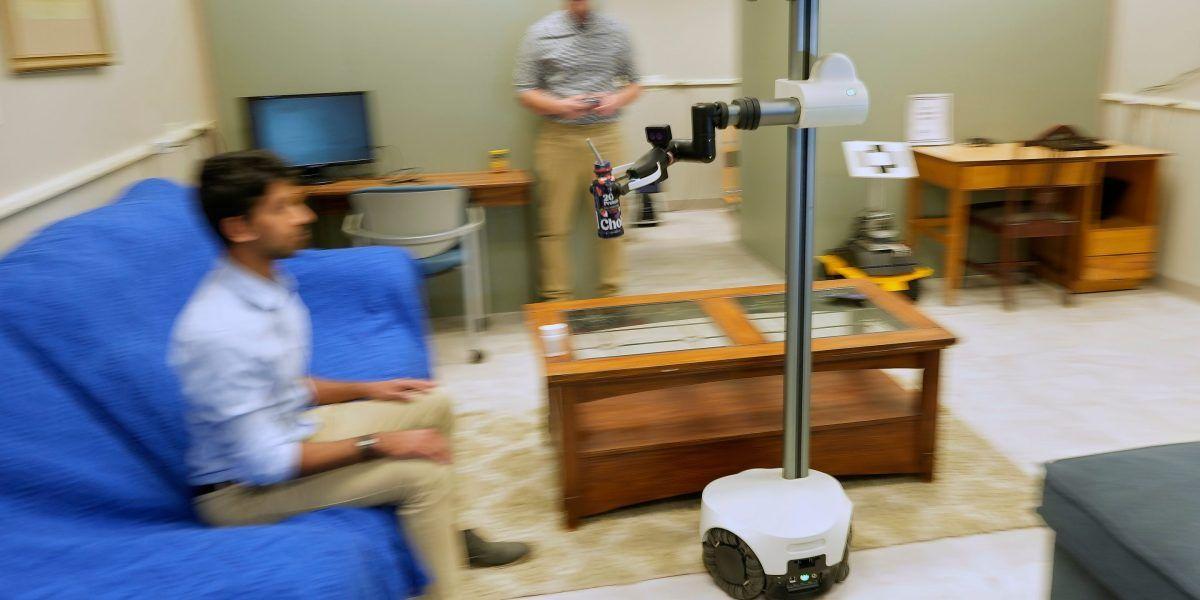
The study identified three main types of robots commonly used in nursing homes:
- Transfer robots: Assist nurses with physically demanding tasks such as lifting and moving patients.
- Mobility robots: Help patients move around and assist with activities like bathing.
- Monitoring and communication robots: Use advanced technologies, including computer vision, to track patient data and relay vital information to caregivers
1
4
.
Impact on Workforce
The adoption of robots in nursing homes has shown several positive effects on the workforce:
- Reduced quit rates and improved employee retention
- Overall increase in employment
- Increased demand for part-time, less experienced employees
- Decreased demand for highly experienced workers
2
3
4
Lee noted, "Turnover is a big concern in nursing homes. Workers typically experience a great deal of physical pain, particularly in their knees and back. The work is hard, and the pay is low. So robot use was associated with employee retention"
1
.Improvements in Patient Care
The study also highlighted significant benefits for patients in facilities using robots:
- Reduced use of patient restraints
- Fewer instances of pressure ulcers (bedsores)
- Enhanced quality of care
2
3
4
These improvements stem from reducing the physical strain on workers, allowing them to focus on tasks better suited to human empathy and dexterity. "Robots can improve productivity by shifting the tasks performed by care workers to those involving human touch, empathy, and dexterity," Lee explained
1
.Related Stories



Future Implications
As the global population ages, the findings of this study become increasingly relevant. In the United States alone, the number of residents aged 65 or older is expected to reach 88.5 million by 2050
1
2
.The research provides valuable insights into how societies can navigate the challenges of caring for aging populations. It also contributes to the broader understanding of how technologies like robotics and artificial intelligence influence inequality and the future of work
3
5
.Collaborative Research Effort
The study, published in Labour Economics, was co-authored by Lee, Toshiaki Iizuka from the University of Tokyo, and Karen Eggleston from Stanford University. It received funding from various institutions, including Stanford's Shorenstein Asia-Pacific Research Center and the Japan Society for the Promotion of Science
2
4
.As societies worldwide prepare for the realities of aging populations, this research offers a roadmap for integrating technology into care settings to enhance both worker and patient experiences, potentially revolutionizing the long-term care industry.
References
Summarized by

Navi
[2]
[4]
Related Stories
Recent Highlights
1
Microsoft and Nvidia Launch Surface Laptop Ultra: A $2,599 AI-Ready PC With RTX Spark Chip
Technology

2
OpenAI Releases 722 AI-Generated Math Papers on GitHub, Igniting Fury Among Mathematicians
Science and Research

3
Trump Consulted Grok AI Before Ordering Venezuela Invasion and Capture of Nicolás Maduro
Policy and Regulation

Recent Highlights
Today's Top Stories












Don’t drown in AI news. We cut through the noise - filtering, ranking and summarizing the most important AI news, breakthroughs and research daily. Follow topics that matter to you and stay ahead.


