Sal Khan launches $10,000 AI degree with Google and Microsoft to challenge elite universities


3 Sources
[1]
This CEO Is Creating a New Elite College Degree With Google and Microsoft -- And Offering It for Only $10,000
Khan Academy founder and CEO Sal Khan is teaming up with Google, Microsoft and McKinsey to offer students a new option for higher education. Khan announced this week that he is launching the Khan TED Institute, a new joint venture with TED and testing giant ETS. The idea is to offer an affordable,
[2]
Khan Academy Partners with Google & Microsoft for Affordable Elite AI Degree
Khan said the new institute will close the gap between higher education and the skills needed to succeed in the workforce by building its courses in partnership with major employers such as Google, Microsoft, Accenture, Bain, and McKinsey. founder and CEO Sal Khan is teaming up with Google,
[3]
Khan Academy to launch AI degree under $10,000 to rival Harvard, Stanford - VnExpress International
The online education platform said the new venture, called the Khan TED Institute, is being developed with TED and testing group ETS. Founder and CEO Sal Khan said the goal is to widen access to higher education while helping people adapt to a fast-changing job market. "Higher education has served
Share
Copy Link
Khan Academy founder Sal Khan announced the Khan TED Institute, a joint venture with TED and ETS offering an affordable AI degree for under $10,000. Partnering with Google, Microsoft, and McKinsey, the program aims to provide accessible higher education and help professionals reskill in an AI-driven job market, with launch expected within 12 to 24 months.
Khan Academy Founder Unveils Affordable Alternative to Elite Universities
Sal Khan, founder and CEO of Khan Academy, announced this week the launch of the Khan TED Institute, a groundbreaking joint venture with TED and testing organization ETS designed to reshape access to higher education
1
. The initiative aims to deliver an affordable AI degree priced under $10,000, positioning itself as a cost-effective alternative to traditional programs at institutions like Harvard and Stanford, where annual tuition approaches $62,226 and $67,731 respectively3
. With more than 42 million Americans carrying federal student loans and the average borrower owing nearly $40,000, the Khan TED Institute addresses a critical gap in accessible, skills-focused education1
.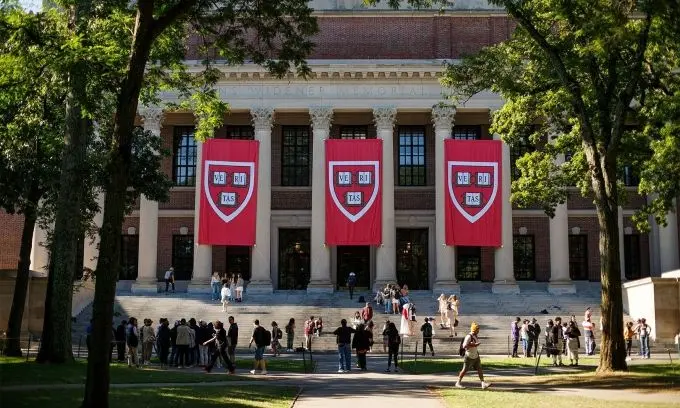
Source: VnExpress
Partnership with Google and Microsoft Shapes Workforce-Ready Curriculum
The Khan TED Institute distinguishes itself through strategic partnerships with major employers including Google, Microsoft, Accenture, Bain, McKinsey, and Replit
2
. These corporate partners will guide curriculum development to ensure students acquire in-demand AI skills alongside soft skills like collaboration, creativity, and communication3
. Khan emphasized the goal is to bridge education and workforce gap by aligning coursework directly with what companies need. "We think there are many good reasons to go to a traditional university, but not everyone has access to those opportunities," Khan explained in his announcement video1
. The program's first offering will be a bachelor's degree in Applied AI, with plans to expand to other qualifications over time3
.
Source: Analytics Insight
Online Asynchronous Competency-Based Learning Model Targets Diverse Audiences
The program adopts an online asynchronous competency-based structure, allowing students to set their own schedules and progress based on demonstrated mastery rather than seat time
1
. This flexible approach targets recent high school graduates, mid-career professionals seeking reskilling, and those already holding degrees who want to stay relevant in an AI-driven job market1
. Khan noted the institute may offer "something like a second Bachelor's program, with opportunity for transferring a significant number of credits if you already have a Bachelor's"1
. The competency-based pathway addresses workforce needs while providing flexibility for those who find traditional higher education inaccessible or impractical.Related Stories

Launch Timeline and Accreditation Plans Address Market Urgency
The Khan TED Institute expects to launch within 12 to 24 months and will pursue formal accreditation as a full degree program
3
. This timeline reflects urgency in addressing current job market challenges, where the Federal Reserve Bank of New York reports that 42.5% of recent college graduates work in jobs not requiring degrees, and the unemployment rate for recent graduates stands at 5.6%1
. An Indeed survey found just over half of Gen Z graduates regret attending college, highlighting growing skepticism about traditional education's return on investment1
. Khan's long-term vision centers on building a global institution with scalable access: "If you're capable, we have as much capacity as you need"3
. He emphasized the initiative complements rather than replaces traditional universities, offering pathways for those seeking low tuition options aligned with evolving workforce demands. Khan told The San Francisco Standard he aims to create credentials serving as alternatives to elite university degrees, imagining "something that, as opposed to $400,000, costs $5,000"3
. Student loans and rising education costs continue pressuring families, making this affordable model particularly relevant for those navigating today's uncertain job market while seeking technical expertise in artificial intelligence.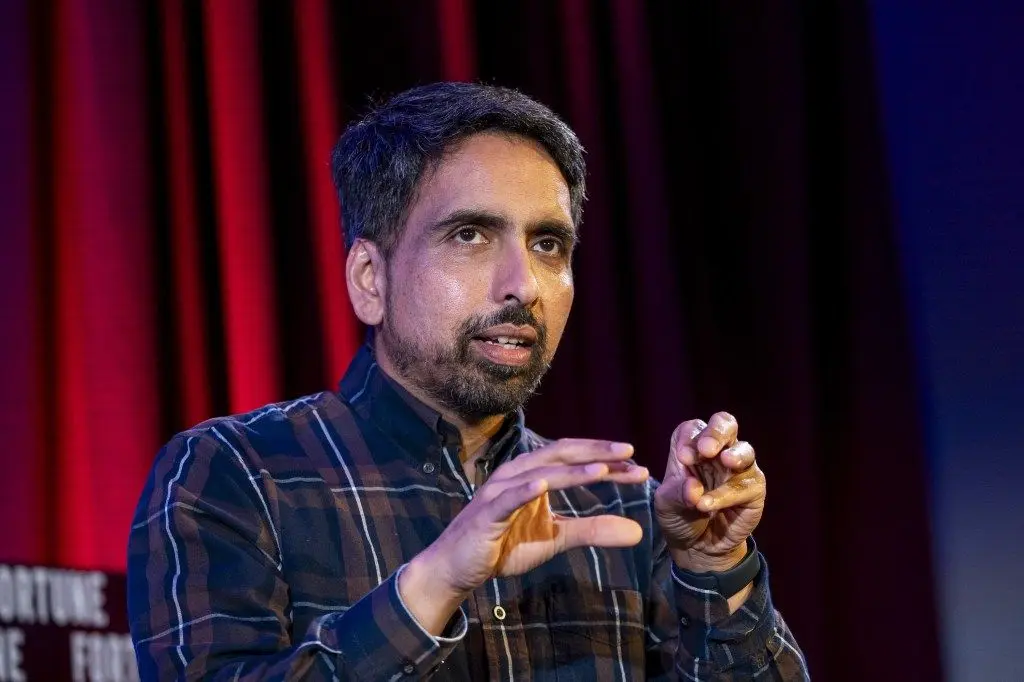
Source: Entrepreneur
References
Summarized by

Navi
[1]
[2]
Related Stories
Andreessen Horowitz Launches $42M AI School as College Alternative for Tech Entrepreneurs
22 Sept 2026•Business and Economy
Andrej Karpathy Launches AI Education Platform for Personalized Learning
18 Jul 2024

Former OpenAI and Tesla Executive Andrej Karpathy Launches AI Education Startup Eureka Labs
17 Jul 2024

Recent Highlights



Recent Highlights
Today's Top Stories



Don’t drown in AI news. We cut through the noise - filtering, ranking and summarizing the most important AI news, breakthroughs and research daily. Follow topics that matter to you and stay ahead.


