Sam Altman feels useless and sad using his own AI tools, exposing a new kind of tech anxiety


4 Sources
[1]
Why AI's biggest champions, like Sam Altman, feel "happy but sad" about the AI boom
Why it matters: The tech executives building and promoting AI are now confronting its downsides firsthand, including the possibility that the technology could diminish their own roles. State of play: For years, there have been predictions of a white-collar job bloodbath thanks to AI. More
[2]
'I felt a little useless and it was sad': Sam Altman feels obsolete using his own AI tools -- and he's not the only one | Fortune
Sam Altman's admission about feeling sad as he watched the incredible advancements of artificial intelligence (AI) tools after using his own company's AI tools has struck a nerve across the tech world. A new kind of workplace anxiety has crystallized: feeling obsolete not in spite of your skills,
[3]
AI Made Sam Altman Feel 'Useless and Sad' -- X Users Tried to Make Him Feel Worse - Decrypt
The backlash was amplified by frustration over OpenAI's planned retirement of GPT-4o, a user favorite whose deprecation has reignited trust and stability concerns. In a moment of raw tech-bro vulnerability, OpenAI CEO Sam Altman took to X last night to confess that building an app with Codex left
[4]
Sam Altman feels useless thanks to ChatGPT Codex, and he's sad about it
It's one thing when a developer on Reddit says AI is taking the fun out of coding. It's another thing entirely when the person running the company says it. Earlier today, Sam Altman shared a candid moment on X which is most likely . He'd been using the new Codex Mac app, which OpenAI officially
Share
Copy Link
OpenAI CEO Sam Altman revealed he felt obsolete after his company's AI coding agent Codex generated better feature ideas than his own. The admission sparked fierce backlash from workers facing job insecurity due to AI, while tech executives like former Dropbox CTO Aditya Agarwal echoed similar feelings of grief and disorientation as artificial intelligence rapidly transforms professional identity.
Sam Altman Confronts AI Anxiety After Using OpenAI's Codex
In a moment of unexpected vulnerability, Sam Altman shared on X that building an app with Codex, OpenAI's AI coding agent, left him feels useless and sad
1
. The OpenAI CEO described the process as "very fun" initially, but the mood shifted when he asked the system for feature ideas and realized "at least a couple of them were better than I was thinking of"2
. This confession from one of artificial intelligence's most prominent champions reveals a psychological challenge now confronting even those building the technology: feelings of obsolescence as AI tools outpace human capability.
Source: Digit
Codex, released as a standalone Mac app for developers, handles everything from writing new features to fixing bugs and proposing pull requests while integrated directly with codebases
3
. For Altman, whose professional identity centers on building software and championing AI progress, watching his own product outperform his ideas landed with unusual force. "I am sure we will figure out much better and more interesting ways to spend our time, and amazing new ways to be useful to each other, but I am feeling nostalgic for the present," he wrote1
.Tech Executives Echo Feelings of Grief and Disorientation
Altman isn't alone in experiencing AI anxiety. The same day, Aditya Agarwal, former CTO of Dropbox and co-founder of health app Bevel, shared similar emotions after coding with Claude, Anthropic's AI assistant
1
. "It's a weird time. I am filled with wonder and also a profound sadness," Agarwal wrote on X, concluding that "we will never ever write code by hand again. It doesn't make any sense to do so"3
. He described coding as "something I was very good at" that is now "free and abundant," leaving him "happy, but disoriented... sad and confused"2
.
Source: Axios
This phenomenon extends beyond tech executives. Chris Brockett, a veteran Microsoft researcher, was rushed to the hospital after encountering an early AI system that could replicate decades of his expertise, initially believing he was having a heart attack
2
. MIT physicist Max Tegmark has expressed worry that AI might "eclipse those abilities that provide my current sense of self-worth and value on the job market"2
.User Backlash Reveals Deeper Frustrations About Job Insecurity Due to AI
Altman's post generated fierce user backlash, with nearly 3 million views and over 2,100 replies
3
. Workers facing diminishing professional roles accused him of shedding tears "into a giant pile of money" while they adjusted to careers reshaped around talking to ChatGPT instead of doing work they trained for2
. An anonymous headhunter with over a decade of experience asked: "What do you think your average white-collar worker will feel when AI takes their job?"2
.A food writer described watching her career "disappear" as AI systems churn out "hollow copies" of her work, trained on data taken "without anyone's consent"
3
. The replies also became a staging ground for broader anger about OpenAI's rapid product shifts, including the planned deprecation of GPT-4o on February 13, with users pleading for more stability and transparency3
. Though OpenAI is also retiring GPT-4.1, GPT-4.1 mini, and o4-mini, GPT-4o remains a particular favorite among users due to its warm, conversational style and multimodal AI capabilities3
.Related Stories

The Future of Work: From Execution to Asking Questions
For years, predictions of a white-collar jobs bloodbath due to artificial intelligence have circulated, and more recently, AI startups are raising billions to develop "brains" for robots that could complete blue-collar and industrial jobs too
1
. AI agents are expected to help shape agendas, coach senior leaders, and reshape business calls with new thinking1
. Erik Brynjolfsson, Stanford Digital Economy Lab director, suggested at an Axios Davos event in January that "more and more people are going to be... chief question officers. Not chief executive officers. People who define the question for a fleet of agents who then carry them out become the CQO" .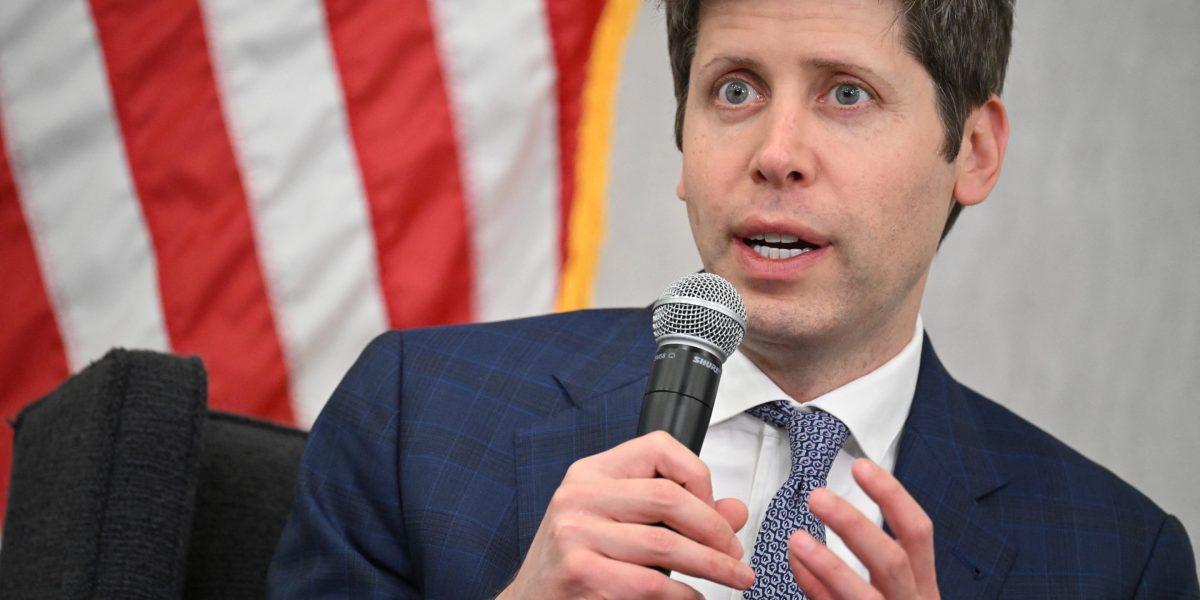
Source: Fortune
Dario Amodei, Anthropic CEO, has called on Congress and policymakers to act faster as AI capabilities accelerate and "test who we are as a species"
1
. Labor economist David Autor argues that if used deliberately, AI could expand "decision-making tasks currently arrogated to elite experts" to a broader swath of workers, improving job quality and moderating inequality. In his view, the future of work with AI is "a design problem," not a prediction exercise2
.For builders whose value is tied to that "Aha!" moment when they think of a solution no one else did, having a model serve that on a silver platter means the project might be better, but the process can feel hollow
4
. A Silicon Valley product manager told Vanity Fair in 2023: "We're seeing more AI-related products and advancements in a single day than we saw in a single year a decade ago"2
. The AI revolution is hitting closer to home than its creators expected, forcing even those championing AGI to reckon with what it means when human intuition is no longer the only game in town4
.References
Summarized by

Navi
[3]
Related Stories
Block's 4,000-person layoff sparks debate: AI revolution or corporate cost-cutting in disguise?
05 Mar 2026•Business and Economy
Tech CEOs backtrack on AI job apocalypse as hype meets reality and investment questions mount
11 Jun 2026•Business and Economy

AI agents reshape software engineering, but human oversight remains critical for complex work
21 Feb 2026•Technology

Recent Highlights
1
Microsoft and Nvidia Launch Surface Laptop Ultra: A $2,599 AI-Ready PC With RTX Spark Chip
Technology

2
OpenAI Releases 722 AI-Generated Math Papers on GitHub, Igniting Fury Among Mathematicians
Science and Research

3
Trump Consulted Grok AI Before Ordering Venezuela Invasion and Capture of Nicolás Maduro
Policy and Regulation

Recent Highlights
Today's Top Stories








Don’t drown in AI news. We cut through the noise - filtering, ranking and summarizing the most important AI news, breakthroughs and research daily. Follow topics that matter to you and stay ahead.


